Has the Era of Abundant AI Computing Power Reached Its Twilight?
 10/28 2026
 560
Industry chatter suggests that DeepSeek's computing resources are a mere fraction—less than one-tenth—of OpenAI's formidable arsenal.
Despite this disparity, DeepSeek manages to hold its own against GPT models in the competitive arena.
One cannot help but marvel at the prowess of Chinese AI researchers.
This scenario hints that computing power scarcity will remain a prevailing trend in the years ahead.
In China, Huawei Ascend undeniably leads the pack in computing power, but who claims the silver medal?
The race is on, with everyone eager to stake their claim.
Backed by the Institute of Computing Technology at the Chinese Academy of Sciences, Cambricon strives to solidify its foothold.
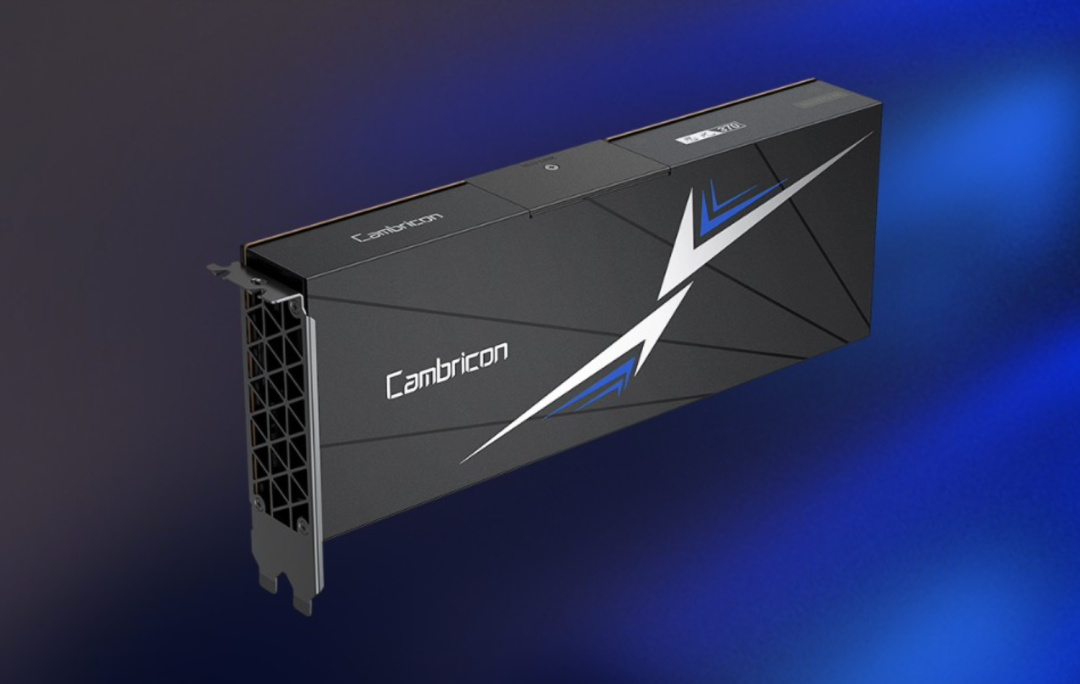
However, Cambricon's R&D approach diverges from Ascend's; it leans more towards crafting specialized inference chips.
The author posits that as large models converge, the path of customized chip development may gain increasing traction in the future.
1. Cambricon's Q3 Earnings Report
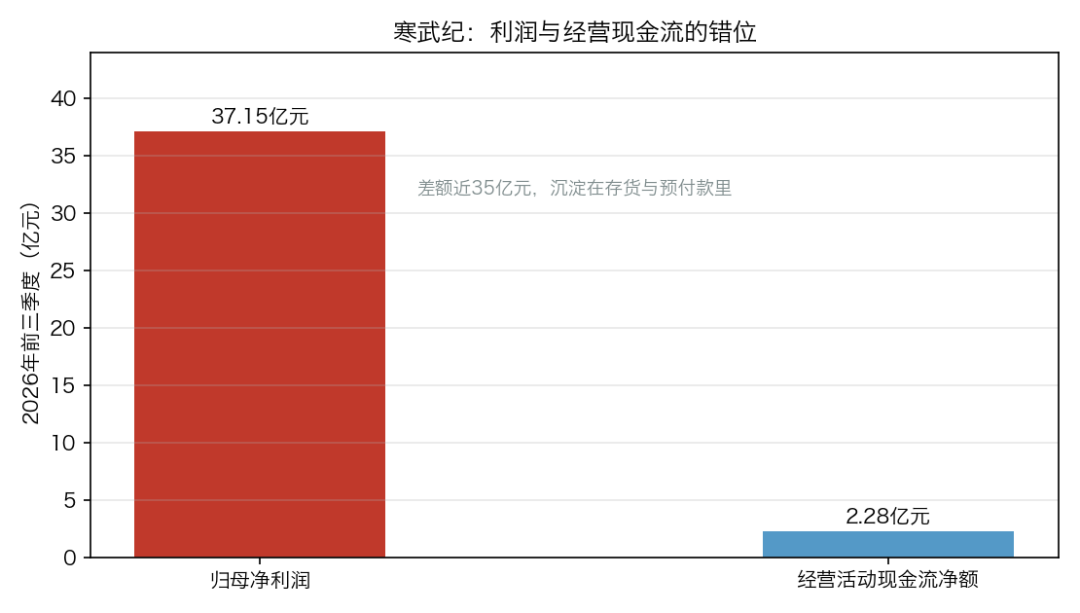
On the evening of October 23, Cambricon unveiled its Q3 2026 earnings report, revealing a net profit attributable to shareholders of 3.715 billion yuan for the first three quarters, marking a 131.49% year-on-year surge.
The spotlight now turns to the new cash flow dynamics.
Net cash flow from operating activities during the same period stood at a mere 228 million yuan.
Where did the nearly 3.5 billion yuan discrepancy between the 3.7 billion yuan profit and the 228 million yuan operating cash flow vanish?
The Q3 balance sheet holds the key: inventory and supplier credit terms. Grasping this disparity is crucial to truly understanding Cambricon's performance this quarter.
Data source: ifind
Not long ago, the market was astounded by Cambricon's 2.311 billion yuan net profit attributable to shareholders in H1 2026; the Q3 report now updates this figure to 3.715 billion yuan.
Non-recurring gains and losses for the first three quarters totaled 191 million yuan, accounting for a mere 5.2% of the net profit attributable to shareholders, with government subsidies contributing 123 million yuan; the profit growth rate, excluding these items, outpaced that of profit attributable to shareholders, indicating that profit was not driven by subsidies and investment returns.
The gross profit margin hovered around 56.5%, up about 1.2 percentage points year-on-year, with growth not achieved through price cuts. Net profit, excluding the impact of share-based payments, reached 3.905 billion yuan, with share-based payments dragging down the financial statements by approximately 190 million yuan.
Furthermore, selling expenses for the first three quarters amounted to 45 million yuan, and administrative expenses totaled 149 million yuan, summing up to less than 200 million yuan and accounting for roughly 2% of revenue. As a chip company with nearly 10 billion yuan in revenue, it hardly relies on sales-driven strategies; customer order intentions are evident amidst the computing power gap.
R&D investment stood at 1.225 billion yuan, a 45.35% year-on-year increase. However, due to faster revenue growth, the R&D expense ratio dipped to 12.86%, a 5.43 percentage point year-on-year decrease. This represents a typical stage of economies of scale, where absolute R&D spending rises while the relative burden decreases. The weighted average return on equity was 27.73%, a 2.52 percentage point year-on-year increase.
2. Computing Power as the Core Business: The Second Year of Cloud Expansion
Cambricon's revenue structure is heavily concentrated in cloud product lines, as fully disclosed in the semi-annual report. The incremental information in the Q3 report is that the industry backdrop for cloud expansion has solidified further.
From an industry standpoint, in the first three quarters, the digital product manufacturing sector contributed over one-third to the growth of above-scale industrial output, with integrated circuit production surging by 23.3%; the national intelligent computing power scale grew by 96% year-on-year, accounting for over 80% of total computing power.
According to data from the China Academy of Information and Communications Technology's blue book, the global AI server market size is projected to reach 121.476 billion US dollars in 2025, a 160.5% year-on-year increase; among them, AI servers equipped with non-GPU type AI chips will see shipments of 639,000 units and a market size of 18.631 billion US dollars, representing a 230.9% growth.
The growth rate of the non-GPU camp is nearly 1.4 times that of the overall market, precisely the track where Cambricon and other dedicated architecture chip manufacturers operate.
From a company perspective, Cambricon disclosed that its products continue to gain traction in the internet, telecommunications, and financial sectors, with its cloud chips widely adopted by large-scale model algorithm companies, server manufacturers, and AI application companies. Public reports indicate that Cambricon's MLU590 chip has been massively deployed in search, advertising, and recommendation systems of cloud service providers such as ByteDance, forming a solid customer base for orders.
A comparison of revenue volumes further underscores that Cambricon's revenue for the full year of 2025 was 6.497 billion yuan, while revenue for the first three quarters of 2026 reached 9.526 billion yuan, with nine months' revenue being 1.47 times that of the entire previous year.
Cash received from the sale of goods and provision of services in the first three quarters was 10.671 billion yuan, a roughly 112% year-on-year increase, with a cash receipt ratio of 1.12, indicating solid cash content in revenue. Accounts receivable were 938 million yuan, accounting for only 4.2% of total assets, a healthy level even in an industry characterized by concentrated procurement from large clients.
Additionally, Huawei's Ascend series continued to expand this year, with public reports stating that ByteDance, Tencent, and Alibaba have all engaged in discussions with Huawei regarding new chip orders, with Huawei's 2026 shipment target for Ascend chips raised to 750,000 units. The overall pie of domestic computing power is growing, and the relationship between Cambricon and Huawei is more about "sharing the incremental market" rather than competing for existing market share. However, the competition for budgets from major internet clients between the two camps will become a tangible market share issue next year.
3. The Cash Flow Conundrum
Now, let's demystify the initial puzzle: why does 3.7 billion yuan in profit correspond to only 228 million yuan in operating cash flow?
First, let's examine cash collection, which is actually quite robust. Cash received from the sale of goods and provision of services in the first three quarters was 10.671 billion yuan, exceeding the 9.526 billion yuan in revenue, with a cash receipt ratio of 1.12, indicating that customers are paying quite promptly. Accounts receivable only increased mildly from 671 million yuan to 938 million yuan.
The issue does not lie in cash collection but in cash payments: the company has converted a significant amount of cash into inventory and advance payments.
Breaking it down by quarter makes it clearer: the net operating cash flow was 834 million yuan in the first quarter, marking the first quarterly positive figure since the company's listing; it was approximately -520 million yuan in the second quarter and -84 million yuan in the third quarter. The data from the three quarters indicate that Cambricon's operating cash flow has shifted from cash collection to inventory preparation, with the pace of inventory preparation determining the direction of cash flow each quarter.
Compared to 2025, when the company's net operating cash flow improved by more than 1.1 billion yuan year-on-year, primarily driven by increased cash collection from sales, this year's first three quarters saw even larger cash collection but only 228 million yuan in net cash flow, with the difference entirely precipitated in inventory and advance payments.
This is not a deterioration in cash collection ability but a change in the use of funds.
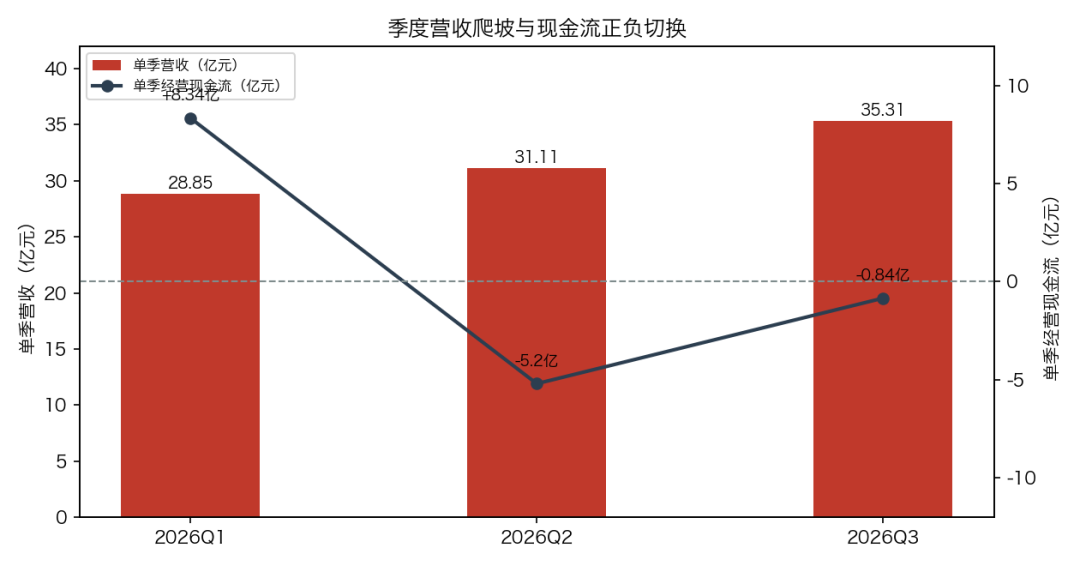
Data source: ifind
The change in monetary funds is most intuitive, decreasing from 1.317 billion yuan at the beginning of the year to 555 million yuan at the end of the third quarter. Even when adding 3.811 billion yuan in trading financial assets, the total cash-like assets amount to approximately 4.37 billion yuan.
On October 23, a simultaneous announcement disclosed that the company would use up to 1 billion yuan of temporarily idle raised funds for cash management, with a duration of 12 months.
The company is not currently short of cash on hand, but money management has become more prudent.
The coexistence of prudent financial management and bold inventory preparation is precisely the state of a growing chip company: nearly all operational funds are invested in areas that can directly generate revenue, while non-core expenditures are highly restrained.
-END-
Disclaimer: This article is based on the public company attributes of listed companies and relies primarily on information disclosed by listed companies in accordance with their legal obligations (including but not limited to interim announcements, periodic reports, and official interaction platforms) as the core basis for analysis and research; Shiyu Xingkong strives for fairness in the content and viewpoints presented in the article but does not guarantee its accuracy, completeness, or timeliness; the information or opinions expressed in this article do not constitute any investment advice, and Shiyu Xingkong assumes no responsibility for any actions taken based on the use of this article.
Copyright Notice: The content of this article is original to Shiyu Xingkong and may not be reproduced without authorization.
-
Could the Three-Row, All-Electric Flagship SUV BMW iX7, Equipped with an 8K Giant Screen and Produced in North America, Become a Bestseller?
-
![]()
WorkBuddy Ignites the AI Office Ecosystem Battle
-
![]()
Second Working Conference on Drafting the Group Standard “Test Method for Optical Parameters of Optical Waveguide Sheets” Held in Suzhou!
-
![]()
Q3 Net Profit Rises by Just 6%! Has Lante Optics Hit the Zenith of Prism-Driven Profits?
-
Hurun Rich List Released: AI Starts Creating Wealth - 1 in Every 10 Billionaires Owes Their Fortune to AI
-
![]()
Top 10 Provinces by GDP in the First Three Quarters of 2026: Diverging Growth Models
-
![]()
Why Is Mobile Phone RAM Shrinking?
-
![]()
Who is Investing in Anthropic?