Musk and Gates's Feud Escalates!
 11/04 2026
 488
Musk and Bill Gates have had a complete falling-out.
Two of the world's wealthiest billionaires have been locked in a dispute for four years—all over a single short position in a stock.
One leads Tesla, SpaceX, and xAI; the other is Microsoft's co-founder and one of the world's most influential philanthropists. Two figures who once seemed entirely unconnected have now squared off yet again—over shorting Tesla, media sponsorship, and online public opinion.
On November 2, the controversy continued to intensify.
A screenshot even circulated online showing the two trading long-distance jabs: Gates claiming "I created Microsoft," and Musk threatening to buy Microsoft and fire Gates.
The screenshot looked fiery and spread quickly. But verification shows that this conversation was not a real exchange between the two—no corresponding original posts could be found online. It is more like an internet meme built on real conflicts.
What truly deserves attention is the accusation Musk made on October 30.
Reports on November 2 once again focused on spreading this controversy, bringing the two men's years of accumulated conflict back into public view.
This feud is far more complex than that fake screenshot suggests.

The Trigger
On October 30 local time, Musk responded on X to a post by former DOGE team member Katie Miller.
Miller noted that the Gates Foundation had placed advertisements on the podcast "On with Kara Swisher," hosted by tech journalist Kara Swisher, and posted a screenshot of the ad library.
She believed this was connected to Swisher's recent criticism of Musk.
Musk then posted directly, accusing Gates of funding people who attack him while still holding a large short position against Tesla.
These remarks brought the old score from four years ago back into the spotlight.
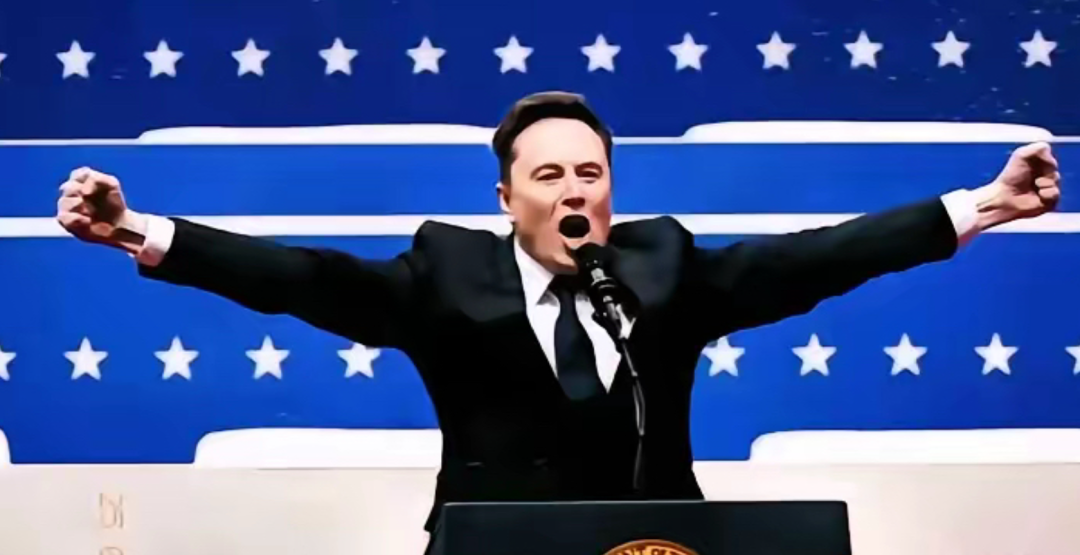
In April 2022, Musk publicly disclosed his text messages with Gates. The content showed that Musk had asked Gates whether he still held a Tesla short position worth about $500 million.
Gates replied that he had not yet closed it and hoped to discuss philanthropic cooperation with Musk.
Musk was highly displeased. He believed that Tesla was promoting the adoption of electric vehicles and helping address climate change, while Gates was betting in the capital market that Tesla's stock price would fall—which contradicted Gates's long-standing advocacy for climate causes.
Musk later also said that, based on the stock price at the time, Gates might need $1.5 billion to $2 billion to close the position. This figure was Musk's statement at the time and cannot be directly treated as Gates's actual loss.
There is another key fact here: as of now, Musk has not provided the latest proof that Gates still holds this short position, and Gates has not publicly stated whether he has closed it.
Therefore, what can be confirmed is that Gates admitted at the time that he had not yet closed the position; what cannot be confirmed is that this short position has been held until today.
The feud between the two has a long history
The conflict between Musk and Gates ostensibly centers on Tesla short positions, but at a deeper level involves different judgments on technology, business, and social issues.
First, investment logic conflicts with entrepreneurial emotion.
From an investment perspective, shorting a company's stock represents an investor's judgment that its share price may fall, and does not equal rejecting the entire industry.
Gates's shorting of Tesla at the time can be understood as an investment judgment. A broad outlook for the electric vehicle industry does not mean that every electric vehicle company deserves a high valuation.
But Musk clearly could not accept this explanation.
Tesla is one of his most important business assets and the core of his personal career and public image. Someone betting that Tesla's stock price would fall seemed to him like questioning the cause he had insisted on for years.
This also explains why a single investment trade turned into a personal feud lasting for years.
Second, the AI industry is forming new competitive relationships.
Musk's xAI is developing large models and AI products, and Tesla is also advancing autonomous driving, robotics, and intelligent computing.
Although Gates has long since withdrawn from Microsoft's day-to-day management, Microsoft remains an important player in the AI industry. Relying on Azure cloud services, Microsoft 365 Copilot, and other products, the company brings AI capabilities to enterprise customers.
Microsoft's fiscal year 2026 annual report shows full-year revenue of $331.839 billion, up 18% year over year; operating profit of $155.237 billion, up 21% year over year; Microsoft Cloud revenue of $214.4 billion, up 27% year over year; and Azure revenue up 41% year over year, exceeding $100 billion for the first time.
This means Microsoft already has a massive cloud computing business and enterprise customer base.
Musk wants to build his own business territory in AI and faces powerful competitors such as Microsoft and Google.
It should be noted that Microsoft's performance belongs to Microsoft the company and cannot be directly counted as Gates's personal business achievement. Gates has long withdrawn from Microsoft's day-to-day management, and his connection with Microsoft today is more at the level of history and equity.
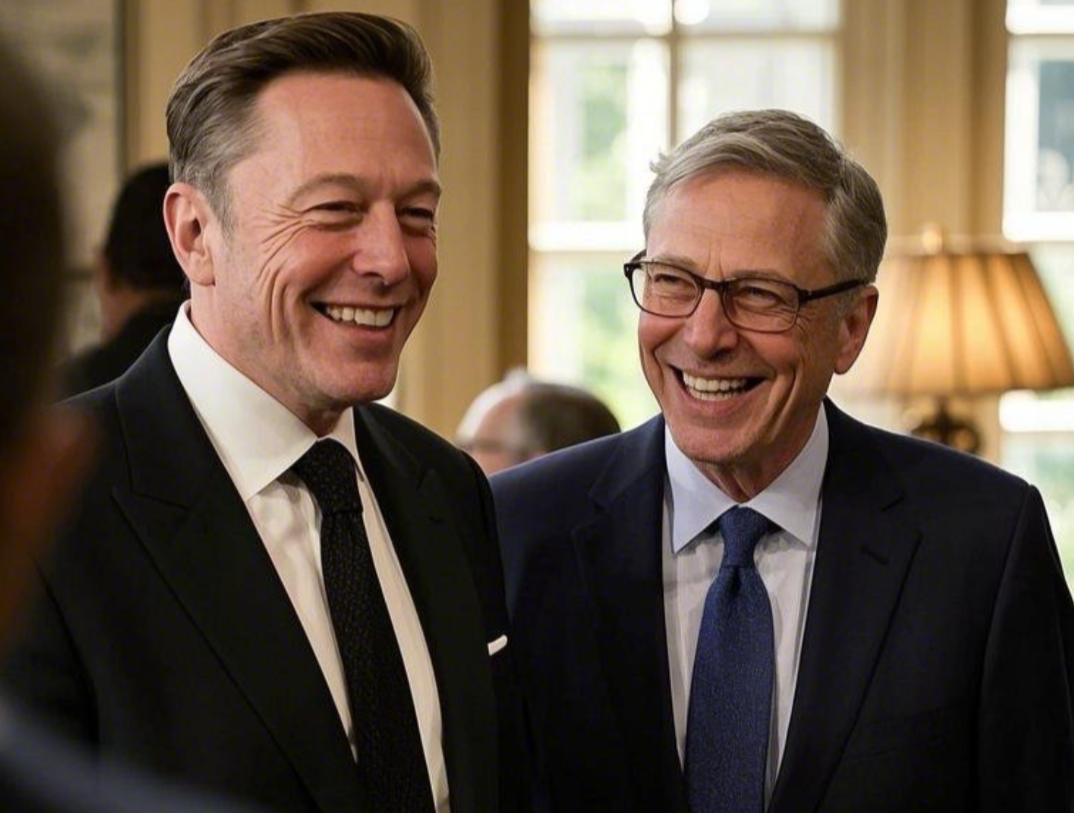
Third, the two sides participate in public issues in different ways.
Musk is accustomed to advancing his positions through companies, technology, and products. He owns the X platform and often directly intervenes in public issues, expressing himself forcefully and even actively engaging with critics.
Gates participates in global health, education, climate, and other fields through foundations, investments, and public policy initiatives. His influence comes from long-accumulated wealth, institutional resources, and international cooperation networks.
Both possess strong public influence, only in different ways.
When Musk believed the media was targeting him, and the Gates Foundation was also accused of having advertising cooperation with related programs, the controversy naturally expanded rapidly.
But advertising alone cannot prove that the foundation instructed the host to criticize Musk. Equating a sponsorship relationship directly with behind-the-scenes manipulation lacks sufficient evidence.
How influential is the Gates Foundation?
Gates's personal wealth and the foundation's funds must be viewed separately.
According to the Gates Foundation's 2025 annual report, the foundation's charitable support that year reached $8.47 billion. Among this, global development programs accounted for about $2.175 billion, global health programs about $1.897 billion, gender equality programs about $952 million, and global growth and opportunity programs about $925 million.
As of the end of 2025, the foundation's cumulative charitable distributions reached $110.9 billion, and the trust fund scale was about $89 billion. As of the end of June 2026, the trust fund scale was about $92 billion, which is unaudited data.
These figures show that Gates's influence has long extended beyond Microsoft.
Through the foundation, he participates in global health, vaccines, agriculture, education, and other fields, possessing a resource system completely different from Musk's.
Musk expands influence through companies and technology, while Gates relies more on foundations and long-term public projects. Their business paths are not the same, yet both hope to occupy an important position in technological and social development.
Personality clashes are only the surface
Diverging interests are the root cause
Musk and Gates: one is flamboyant and likes direct confrontation, the other is more accustomed to exerting influence through institutions and long-term projects.
The differences in their personalities are indeed obvious.

But what truly keeps the conflict fermenting is the underlying clash of interests and judgments.
Gates shorting Tesla touched the corporate value Musk cares about most; competition in the AI industry has brought the technological forces represented by the two into more overlap; and media and public issues have continued to magnify their disagreements.
Although the screenshot of their exchange circulated on November 2 was fake, it shows that this controversy already has extremely strong Dissemination effect. Real conflicts provided the topic, while fictional content further amplified emotions.
For the public, what deserves attention is not who speaks more harshly online, but how the business interests, technological paths, and social influence behind the two tech giants collide.
A personal feud triggered by a single short position has ultimately evolved into a public confrontation between two sets of technological values.
This is the most worthwhile aspect of the Musk-Gates dispute to analyze.
What do you think of this hot topic? We look forward to your civilized and rational comments in the message area.
Disclaimer: This article is only a financial hot topic analysis from a professional perspective. The data and materials cited are from public queries, company announcements, and Tonghuashun iFinD. The views are for reference only and do not constitute any investment or consumption advice.
#FinancialHotTopics #InDepthInterpretation #BusinessFinance #InvestmentBankingCircle #ListedCompanies #PrimaryMarket #IPO #AI
-
Capturing Over Half of the AI Server ODM Market: Foxconn Industrial Internet's Stellar Performance, But Can It Shed the Contract Manufacturer Label?
-
Embarrassing: Apple Paid an Extra 16.7 Billion Yuan in "Memory Tax" This Quarter!
-
![]()
Musk and Gates's Feud Escalates!
-
![]()
ZTE Rumored to Sell Phone Business at 40 Billion Yuan Valuation, with a Major Internet Company Set to Take Over? Official Response Arrives
-
![]()
Prompt Engineering in Practice: Giving Six AI Characters Distinct Speaking Styles
-
![]()
Xingyu Co., Ltd.'s Q3 Net Profit Falls Nearly 40%: Chinese Automotive Lighting Has Won on Styling, but the Profits Are Gone
-
![]()
More like twins: the growth paths of these two automakers are strikingly similar
-
![]()
Chinese Automakers Go Global: Entering the "Export Quota Competition" Phase