More like twins: the growth paths of these two automakers are strikingly similar
 11/04 2026
 521
、
「Hyptec Aion, BAIC BJEV」
As soon as November began, some automakers posted their October sales.
New energy vehicle penetration is rising even as the overall auto market shrinks. The Passenger Car Association estimates that in October, national passenger car retail sales fell about 28% year-on-year, while new energy retail sales came in at about 1.07 million units, with penetration at about 66.9%.
The industry has been issuing one battle report after another, and two brands stand out as rather special.
First, both rank near the top of the growth list—a surprise in itself.
In the south, GAC Hyptec Aion sold 42,400 vehicles in October, up 56.79% year-on-year, achieving positive year-on-year growth for eight consecutive months and setting a new high for the year, with a year-on-year increase of more than 56% in the first three quarters.
In the north, BAIC BJEV sold 32,500 vehicles in October, reaching a high for the year, with cumulative sales of 195,900 vehicles in the first 10 months, up 37.9% year-on-year.
In the same month, AITO, which is better known than them, delivered 22,100 vehicles, down 54.69% year-on-year; the five HIMA brands together delivered 33,500 vehicles, down more than half year-on-year.
Second, they share the same experience.
Although each is on its own journey, the development scripts of Hyptec Aion and BAIC BJEV are astonishingly similar: both are local state-owned enterprises, both bet on new energy early, both reached sales peaks, both fell into troughs, both were labeled as "ride-hailing" brands, and both saw sales surge this year...
Their twists and turns show the volatility of China's new energy vehicle industry.
▍01 Development curves almost overlap
BAIC BJEV's starting point was 2009. That year, BAIC Group established the company in response to the national "Ten Cities, One Thousand Vehicles" demonstration project. From 2013 to 2019, it ranked first in domestic pure electric vehicle sales for seven consecutive years. In 2018, it listed on the Shanghai Stock Exchange through restructuring and became "China's first new energy vehicle stock."
Before BAIC BJEV went public, more than 2,100 kilometers away in Guangzhou, GAC Aion was born. After its establishment in 2017, it caught the explosive window of the operating vehicle market, with sales exceeding 270,000 vehicles in 2022 and reaching 480,000 vehicles at its peak in 2023. There was once a saying in the industry that "one out of every four ride-hailing cars nationwide is an Aion S," and its B-end orders once accounted for more than 60% of total sales.
Of course, both enjoyed the early dividends and also fell hard.
In 2020, BAIC BJEV suddenly entered a dark era, with sales plunging from 151,000 vehicles in 2019 to 26,000 vehicles. Even sensational words such as "halved" and "cliff-like" cannot describe this dramatic change.
At a media communication meeting in August this year, when management reviewed that trough period, they admitted frankly that the label of "synonym for ride-hailing" stayed with them for years, and performance suffered losses year after year.
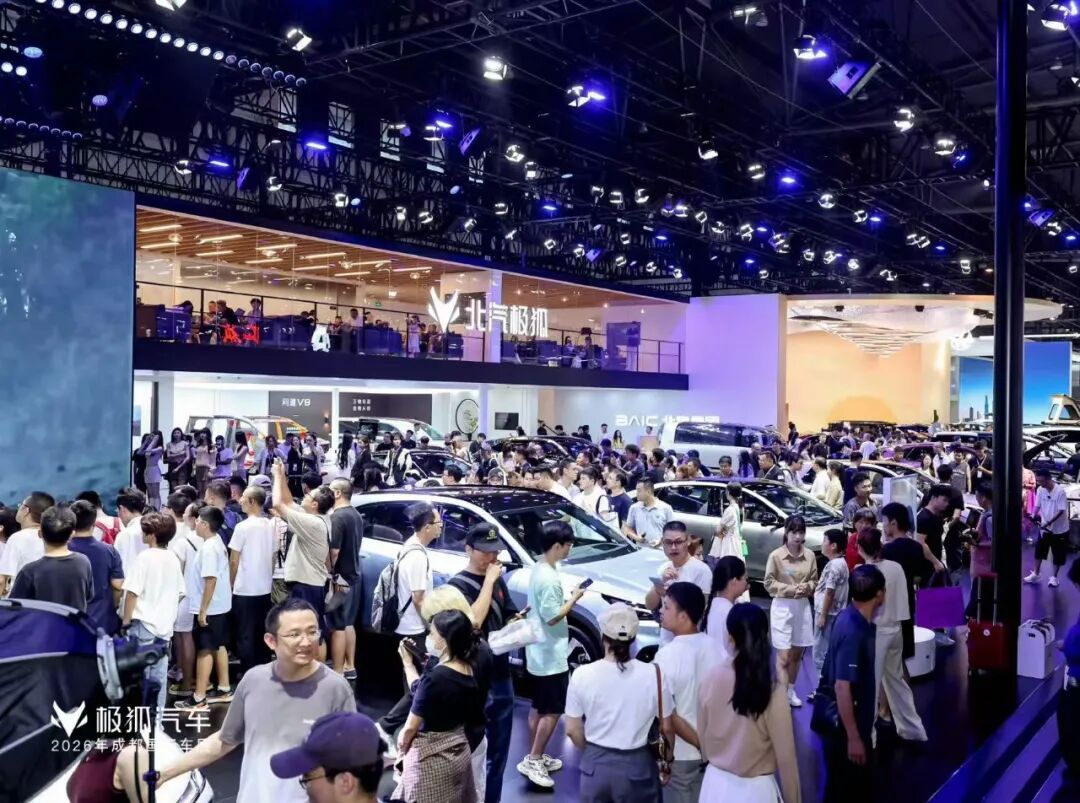
Aion's highlight began to dim in 2024, when sales slid to 375,000 vehicles; in 2025, they shrank further to 290,000 vehicles, with monthly sales once falling below 10,000 vehicles; the main model AION S sold only 4,193 vehicles in March this year, down 44.33% year-on-year.
For Aion, the four words "king of ride-hailing" turned from praise into a shackle. Judging from online feedback, ordinary consumers fear most hearing that a car is "exclusive to ride-hailing" or similar phrases when buying a car.
Soon afterward, both companies began reforms one after another.
In 2024, BAIC BJEV welcomed a new management team, and the positioning of an "entrepreneurial new state-owned enterprise" was written into the company system. It abandoned past impetuous practices and put an end to short-term behaviors such as packaging performance and pushing inventory to dealers. The R&D segment was strengthened simultaneously, and its Arcfox product center was reintegrated, nearly doubling R&D efficiency.
In the south, in December 2025, GAC merged the spun-off Hyptec back into Aion, established the Hyptec Aion BU, introduced the IPD product development system and the IPMS marketing system, integrated channels, and concentrated resources on main models.
The effects of the reforms were realized in a concentrated way in 2026.
On the BAIC BJEV side, the Arcfox brand's 150,000-yuan-class SUV Alpha T7 packed Huawei Qiankun smart driving and CATL batteries into the 130,000-170,000 yuan price range. In 21 days of presale, orders exceeded 60,000 vehicles.
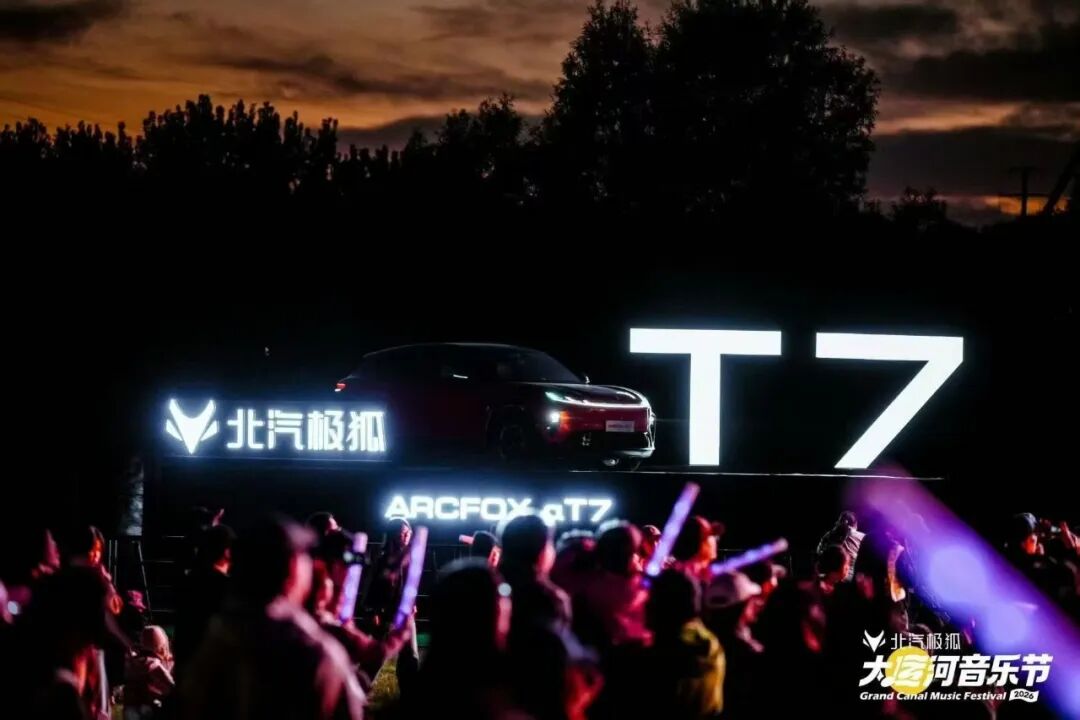
During the same period, the battery-swapping pure electric family sedan Beta S3 and Arcfox's first high-end MPV Wondao V9 gained volume in their respective price bands; the luxury hardcore SUV S9 G9 opened for reservations with a presale price starting at 439,800 yuan, raising the ceiling of the BAIC BJEV brand.
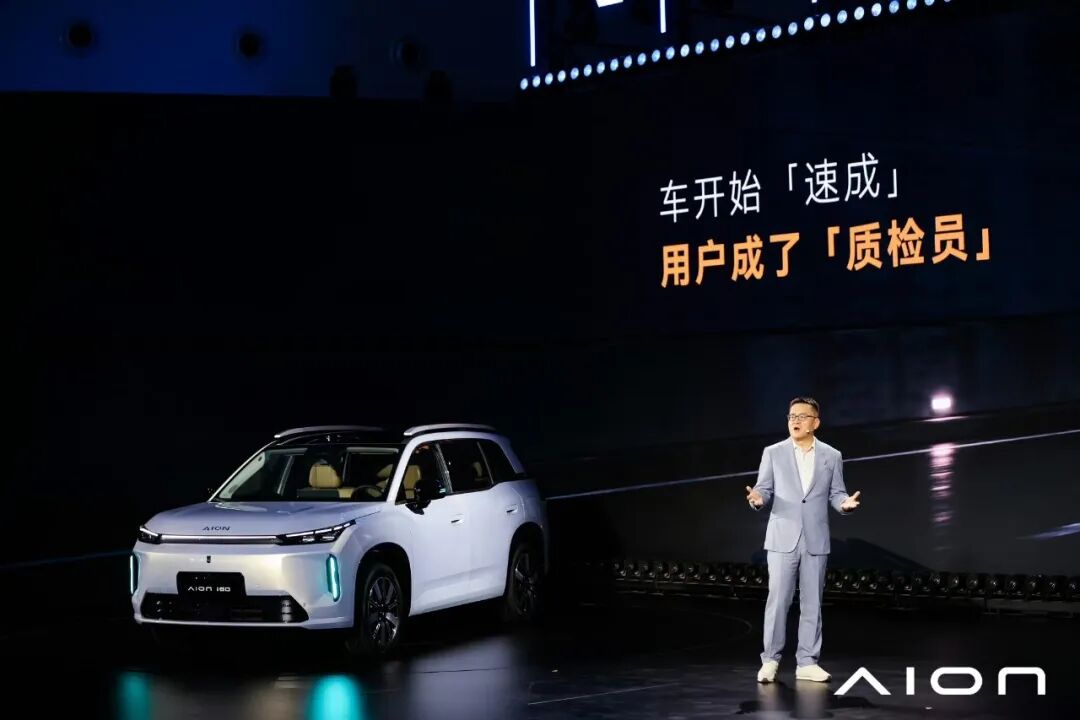
On the Aion side, the i60 sold well. This is a 100,000-yuan-class dual-power family SUV that delivered 100,000 vehicles in 10 months on the market, setting the fastest record in the dual-power SUV segment, with sales exceeding 10,000 vehicles for 10 consecutive months and orders exceeding 20,000 vehicles in each of the past two months.
Both also did the same thing—washing off the "ride-hailing" label and shifting their base from the B-end to the C-end.
Aion's proportion of C-end private users rose from about 50% in 2023 to 80% at present. Public information shows that by the end of July this year, Arcfox's referral rate and in-store conversion rate both reached 50%, indicating that its owners recommend the brand to people around them.
Coincidentally, both brands encountered "black swan events" this year, only to different degrees.
This summer, GAC Aion's existing operating vehicles equipped with CALB 177Ah lithium iron phosphate batteries experienced concentrated battery cell swelling, leakage, and insulation failures. The models involved were mainly the AION S series and also covered AION V and AION Y models with the same configuration.
Some media estimated that more than 210,000 vehicles were involved. The "black swan event" lasted from July to October, online statements about the recall process changed repeatedly, and owners' dissatisfaction was difficult to appease. According to media reports, some vehicles encountered failures at 166,000 kilometers, while others lasted until 320,000 kilometers before problems occurred, with most cases falling between 150,000 and 300,000 kilometers.
Arcfox was also troubled for a time. Multiple models continued to appear on the Auto Quality Network complaint list: the Beta T1 once topped the complaint list in its class for five consecutive months; just three days after the Alpha T7 was delivered, videos appeared online of the first batch of owners disassembling cars to find faults.
▍02 One contracts, one expands
In terms of operations, Aion and BAIC BJEV show characteristics of contraction and expansion, respectively.
Aion's approach is "contraction." The Hyptec brand was independent for two years without obvious sales improvement. The flagship SUV HL was backed by GAC with unlimited resources, and when it launched in April 2025, the company said it would benchmark against the AITO M8 and Li Auto L8, but its full-year sales were less than 5,000 vehicles, with monthly sales once falling to single digits.
Having no choice, GAC Group took it back and merged it with Aion into one BU, then pushed channel integration, brand convergence, and resource concentration, using subtraction to gain efficiency.
This reform is backed by GAC's "Panyu Action," aimed at solving the common problems of traditional automakers: cumbersome processes and long decision-making chains.
The Aion brand abandoned the industry-popular "car sea tactic" and poured R&D, supply chain, and channel resources into a major single product like the i60. With the straightforward logic of "rather than letting 10 models each sell a few thousand units, it is better to let one model sell 100,000 units," the i60 maintained steady volume, validating the feasibility of this playbook from market insight and production delivery to user recognition.
In terms of product layout, Aion uses the N60 to guard the 100,000-150,000 yuan smart-driving SUV market and uses the i60's pure electric plus extended-range dual power to cover family users.
BAIC BJEV's side is "expansion."
Its Arcfox brand focuses on the mainstream market, with three product lines—Alpha, Beta, and Wondao—positioned at 80,000-300,000 yuan respectively. For example, the Alpha T7 guards the 150,000-yuan-class SUV market, the Beta S3 enters the battery-swapping market starting at 59,800 yuan, and the Wondao V9 brings Arcfox into the family and business market above 200,000 yuan.
The S9 brand, jointly created by BAIC BJEV and Huawei, focuses on the high-end market. Among them, the S9 and S9T remain the sales champions of new energy sedans above 300,000 yuan; the G9 received more than 15,000 orders within 72 hours of presale; in the second half of this year, the V8 completed the MPV category.
BAIC BJEV's two brands each do their own work. Official information shows that in the first quarter, the S9 brand achieved more than 60% of BAIC BJEV's revenue with 30% of sales.
The most obvious difference between the two is their premiumization paths.
On Aion's side, after Hyptec returned, it shares channels and systems with Aion and no longer expects Hyptec to fight alone as an independent brand.
Among them, the Hyptec GT Lite pushed the price of a mid-to-large pure electric coupe down to the 150,000 yuan range, first seeking to regain a sense of presence. For Hyptec, this is almost the only choice. After two years of independent operation, Hyptec proved the difficulty of fighting alone in the high-end market.
BAIC BJEV, by contrast, handed its high-end brand S9 to the Huawei ecosystem, with BAIC providing manufacturing heritage and supply chain and Huawei providing intelligence.
Overall, in terms of premiumization, Hyptec Aion digests it itself, while BAIC BJEV leverages external forces.
This brings different growth rhythms. Aion's growth is accelerating: up 34.53% year-on-year in August, 21.91% in September, and surging to 56.79% in October, with the overall curve trending upward.
BAIC BJEV is in a shifting period: up 29.88% year-on-year in August, 17.24% in September, and 6.42% in October, with growth slowing month by month. However, in terms of performance, BAIC BJEV has significantly reduced losses for seven consecutive quarters, and its operations have clearly improved.
Obviously, both are rising, but the former rises in scale, while the latter rises in structure.
Both are also accelerating overseas layout. Aion has a factory in Thailand, mainly targeting the Southeast Asian market.
BAIC BJEV Chairman Liu Guanqiao once said that in the second half of this year, the company would promote both brands globally and open a second overseas growth curve. Arcfox's overseas monthly sales exceeded 1,000 in July, and its sales network has covered the Middle East, South America, and Africa. The next step is to shift from product export to system capability output.
On the other side of the coin, both still have many issues to resolve.
For Aion, it must settle old accounts from the battery issue, Hyptec's high-end premium capability has not yet been realized, the proportion of volume models is too high and dependence is excessive, and per-vehicle value has not yet been fully established.
BAIC BJEV, meanwhile, must solve the problem of shifting growth gears: after the low-base dividend is exhausted and T7 orders are digested, where is the next wave of growth?
Moreover, its profit improvement currently relies only on the structural contribution of the S9 brand, and large-scale profitability has not yet been achieved. In addition, in the order structure of the Beta S3, the battery-swapping version accounts for 76%, indicating that the model still relies on operating scenarios...
There is a long list of such issues for both.
After more than a decade of turbulence in the new auto industry, there is no shortage of aggressive expanders or conservative defenders among automakers. What is rare is knowing where one stands and what one can do.
"After these years of adjustment, we can say that we have returned to the main competitive table of new energy vehicles," Liu Guanqiao said.
One in the south and one in the north, Hyptec Aion and BAIC BJEV both need to think about how far this round of growth can go.
-
Capturing Over Half of the AI Server ODM Market: Foxconn Industrial Internet's Stellar Performance, But Can It Shed the Contract Manufacturer Label?
-
Embarrassing: Apple Paid an Extra 16.7 Billion Yuan in "Memory Tax" This Quarter!
-
![]()
Musk and Gates's Feud Escalates!
-
![]()
ZTE Rumored to Sell Phone Business at 40 Billion Yuan Valuation, with a Major Internet Company Set to Take Over? Official Response Arrives
-
![]()
Prompt Engineering in Practice: Giving Six AI Characters Distinct Speaking Styles
-
![]()
Xingyu Co., Ltd.'s Q3 Net Profit Falls Nearly 40%: Chinese Automotive Lighting Has Won on Styling, but the Profits Are Gone
-
![]()
More like twins: the growth paths of these two automakers are strikingly similar
-
![]()
Chinese Automakers Go Global: Entering the "Export Quota Competition" Phase