Yonyou Shifts to Enterprise AI: AI Revenue Soars 275% YoY — Can It Escape the Loss Trap?
 11/04 2026
 483
By Yang Jianyong
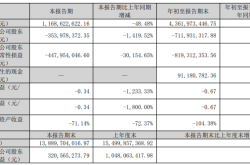
In the first three quarters of 2026, Yonyou reported revenue of 5.755 billion yuan, a modest year-over-year increase of 3.06%; losses amounted to 1.247 billion yuan, bringing the total loss over the past four years to as high as 5.66 billion yuan. Notably, after posting its first annual loss since going public in 2023, Yonyou has yet to turn the tide, with sluggish revenue growth and persistent losses.

Persistent Losses Force Yonyou to Trim the Fat and Boost Efficiency
In 2023, an upgrade to its business organization model led to headcount expansion, while increased marketing efforts and other factors drove up costs and expenses, dealing a heavy blow to Yonyou's performance. Meanwhile, competitors are closing in fast.
It is worth noting that Yonyou and Kingdee are the two most representative vendors in China's enterprise management software sector, and competition between them draws particular attention. Kingdee, in particular, has solidified its foothold in the SME market while continuing to push into the large-enterprise segment, putting enormous competitive pressure on Yonyou and creating a stark contrast in their performance.
Kingdee has accelerated its penetration into the large-enterprise market through product lines such as Cosmic and Xinghan, gradually realizing economies of scale in its large-enterprise business. This has driven strong performance growth, bringing its revenue scale close to Yonyou's and making it the first to achieve profitability — ending five consecutive years of losses in one stroke.
Faced with ever-worsening losses, Yonyou has also been continuously optimizing its workforce structure in recent years, cutting headcount and effectively reining in costs and expenses. In December 2023, Yonyou had 24,949 employees; that number has since been reduced to 17,513 — a cut of 7,436. Under its focus on slimming down and improving efficiency, although the loss trend has not yet reversed, revenue has shown signs of stabilizing and improving, and losses have narrowed. Gross margin in the first three quarters was 50.2%, up 3.5 percentage points year-over-year.
From Enterprise Software to Enterprise AI: AI Business Revenue Surges 275% YoY
Riding the market opportunities presented by large models, Yonyou is actively advancing its AI transformation, shifting strategically from "enterprise software" to "enterprise AI," vigorously developing AI-based enterprise service products and new business models — and its AI business has achieved explosive growth. Contracted AI-related deals totaled 1.54 billion yuan, up 108.6% year-over-year. Of this, AI-related revenue reached 760 million yuan in the first three quarters of 2026, up 275.4% year-over-year.
Crucially, under its AI strategy, large-enterprise customers — Yonyou's core business segment — accounted for 64% of revenue and have stabilized and rebounded. In the first three quarters, revenue from large-enterprise customers was 3.677 billion yuan, up 1.6% year-over-year.
As large-model capabilities grow stronger, applications have evolved from basic knowledge Q&A to AI assistance and are now beginning to move toward human-machine collaboration, driving the deployment of Agent intelligent agents at an astonishing pace. IDC predicts that active AI agents worldwide will increase from about 28.6 million in 2025 to 2.216 billion in 2030.
These figures mean that five years from now, the number of digital workers capable of helping enterprises execute tasks will be nearly 80 times today's number, with a compound annual growth rate of 139%. As intelligent agent development systems continue to mature, more and more enterprises are deploying agents in real business scenarios, pushing Agent applications into a new stage and rebuilding the logic and efficiency of enterprise management from the ground up.
As enterprises are the main battlefield for AI application deployment, Wang Wenjing sees them as ushering in unprecedented strategic development opportunities. As a domestic enterprise management software provider, Yonyou has never clung to traditional development paths and has always driven change with resilience — from ERP in the informatization era to digital-intelligent BIP, and now to full artificial intelligence, launching the enterprise service large model YonGPT and deploying BIP 6.
Yonyou BIP 6 has completed a major upgrade from "X+AI" (human execution, AI assistance) to "AI+X" (human authorization, AI execution), launching the enterprise super intelligent agent YonClaw and the enterprise-level AI coding platform YonCode. AI is no longer merely an auxiliary tool but goes deep into enterprise operating scenarios and runs through business processes — achieving AI not only entering enterprises, but also permeating the entire process of enterprise operations and management.
At present, BIP 6 has built four layers covering data, models, platforms, and applications. Its applications span all business domains and operating scenarios — finance, human resources, collaboration, procurement, marketing, supply chain, manufacturing, projects, assets, and R&D — including 65 vertical-domain intelligent agents, accumulating 623 AI-related skills and more than 26,000 application and service interfaces, forming a systematized, powerful intelligent product system that supports enterprise AI deployment.
Final Thoughts
As AI large models continue to iterate, the capability boundaries and value space of enterprise software are expected to expand. AI intelligent agents are driving traditional management software to no longer be passively executed tools, but intelligent agents and digital employees with capabilities for perception and insight, forecasting and early warning, intelligent decision-making, and even autonomous execution.
In this context, for enterprise software vendors that actively embrace and harness AI, AI will not devour software, but will bring new and larger market space to enterprise software vendors and unleash a new round of growth opportunities. However, whether the rapid growth of AI business can help Yonyou escape the quagmire of persistent losses still needs time to verify.
Yang Jianyong is a Forbes China contributor. The views expressed are personal only. He focuses on in-depth observation of technology fields such as large models, artificial intelligence, robotics, IoT, cloud computing, and smart hardware.
-
![]()
Baidu AI Redraws Its Battle Lines
-
![]()
Memory Prices Are Soaring, and Better Days Are Coming for Longcheer Technology and Its Peers
-
![]()
Audi's North-South Split: Volkswagen Can't Afford to Wait
-
![]()
Doubao Phone Hits the Market: ByteDance's Bigger Game on the Phone Ecosystem
-
![]()
OpenAI's Mysterious Ghost Model Briefly Appears, API Pulled Within Minutes
-
![]()
Shenzhen Computing Power Chip Company Secures Nearly 2 Billion Yuan in Back-to-Back Financing
-
![]()
Najing Technology Secures Series A+ Funding in the Tens of Millions of Yuan!
-
![]()
Q3 Net Profit Plunges 30,154.65%: Lianchuang Electronics' Cracks Can No Longer Be Hidden