Audi's North-South Split: Volkswagen Can't Afford to Wait
 11/04 2026
 508
Once the brands are redrawn, a seismic shift will follow.
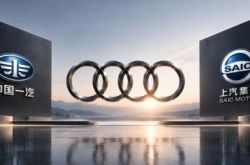
On the evening of September 7, media reports revealed that Audi's brand restructuring in China has entered a new phase. The rumored plan is as follows: SAIC Audi will in the future operate only the AUDI brand without the four-ring logo, while the four-ring brand will be fully assigned to FAW Audi, covering its globally unified fuel vehicle, imported vehicle and PPE platform pure electric product lines; the design, production and sales rights and responsibilities for four-ring models will all be consolidated under FAW Audi. FAW Audi will in principle take over the existing user rights and after-sales services for SAIC Audi's four-ring models, and connect with dealer rights.
Rumors of Audi's brand restructuring in China are nothing new. On March 17, in response to market rumors of a merger of Audi's north and south partners, Audi Global CEO Gernot Döllner publicly denied them, stressing continued commitment to the dual-partner strategy; in May, there were reports that an adjustment plan was about to be announced.
Although there has been no official confirmation each time, one question cannot be avoided: why would Audi do this?
Why Split
Audi's cooperation with FAW has a long history. In October 1987, the chairman of Volkswagen Group and the president of Audi visited FAW for the first time. On May 17, 1988, FAW and Audi signed in Changchun the "Technology Transfer License Contract Concerning the Production of Audi in FAW"—the first luxury car technology transfer cooperation in the history of China's automobile industry, producing 499 Audi 100 vehicles by assembly that year. In August of the same year, FAW and Volkswagen signed a long-term cooperation memorandum in Wolfsburg; on November 20, 1990, the two sides signed a 150,000-unit passenger car joint venture project at the Great Hall of the People; on February 6, 1991, FAW-Volkswagen was established. On December 18, 1995, FAW, Volkswagen and Audi revised the joint venture contract, and Audi series products were formally included in the joint venture's production; on May 20 of the following year, the first Audi 200 (V6) rolled off the production line.
In 1999, the Audi A6 rolled off the line in Changchun, and FAW-Volkswagen subsequently introduced Audi's global sales and service system into China. For about fifteen years thereafter, Audi was the first choice in China's high-end official vehicle market: in 2007 it became the first premium brand in the Chinese market to exceed annual sales of 100,000 vehicles, and in the first three quarters of 2010 it became the first premium brand to surpass cumulative sales of 1 million vehicles. In January 2006, the FAW-Volkswagen Audi Sales Division was established in Changchun, absorbing the personnel, brand promotion and imported car business of the former Audi China company; after-sales service for domestically produced Audis also shifted from mixed operations with Volkswagen to separate operations.
But the same signing in December 1995 also planted a disagreement that remained unresolved for the next thirty years. When FAW-Volkswagen was established in 1991, the equity split was: FAW 60%, Volkswagen 25%, Volkswagen (China) 10%, Audi 5%; after the 1995 adjustment it became FAW 60%, Volkswagen 30%, Audi 10%. In other words, Audi—the owner of the brand—received only 10% of the joint venture, while the Volkswagen system held 40% in total. By comparison, SAIC Volkswagen, established in the same period, had equal shareholding between SAIC and Volkswagen at 50% each. In terms of revenue, according to Audi's financial report, in 2013 it received 382 million euros from FAW-Volkswagen based on this 10% stake, and media used this to infer that FAW-Volkswagen's overall profit that year was about 3.82 billion euros.
Audi tried many times to change this equity ratio. From 2011 to 2014 it applied to FAW and relevant authorities, but at that time the passenger car joint venture equity ratio was still subject to policy restrictions, and the equity reform applications were not approved. Meanwhile, the channel was expanding rapidly. The FAW-Volkswagen Audi Sales Division was established in 2006, nominally under FAW-Volkswagen, but the pace of network expansion, channel penetration and dealer access was led by the FAW system, and Audi had no final decision-making power; by 2016, FAW-Volkswagen Audi had 431 dealers nationwide, with another 52 approved and under construction. Under such circumstances, Audi failed to achieve its demands on either equity or channels.
What Audi could not get from FAW, it sought elsewhere—and two developments pushed it to make up its mind. The first was the disappearance of its identity dividend: starting in 2011, relevant domestic authorities issued documents to standardize procurement standards for general official vehicles, and Audi's "official car" positioning was hit hard; in May 2014, the Audi A6L sold 15,637 vehicles, falling to 14,454 in June and further to 12,328 in July, a month-on-month decline of 14.71%. In August of the same year, Audi also lowered the prices of original equipment parts for domestically produced models due to an antitrust investigation, and the zero-to-whole ratio of the A6L dropped from 411% to 291%.
The second was that the group itself ran into trouble. On September 18, 2015, the United States disclosed that Volkswagen had installed emissions cheating software on diesel vehicles, involving about 11 million diesel vehicles worldwide, of which about 2.1 million were Audi brand; in October 2016, a U.S. court approved Volkswagen's $14.7 billion settlement; by 2019, the cumulative economic cost of the emissions scandal exceeded 30 billion euros. With the North American market hit and the group's cash flow under pressure, tapping China—which accounts for about one-third of its global sales—as a profit space became Audi's main strategy.
The motivation on SAIC's side was equally clear, even more proactive: SAIC Volkswagen was established in 1984 and was Volkswagen's earliest partner in China, with mature plants in many locations and the conditions to directly introduce platforms; but at that time SAIC's entire system did not have a luxury brand that truly belonged to it—Cadillac belonged to the GM system and was not SAIC's brand asset, and its previous cooperation project with Porsche had already stalled, so it lacked a high-end card to raise its brand structure and per-vehicle profit. CCTV reporting at the time also mentioned a detail: before the framework agreement was signed, SAIC Volkswagen had repeatedly approached Audi on its own initiative, expressing complaints that Audi cooperated only with FAW.
But this agreement immediately sparked controversy. After the news spread, the preparatory committee of the FAW-Volkswagen Audi Dealer Association sent a letter of inquiry; on November 21, 2016, it met with Audi directors in Foshan, and the talks broke up within an hour; the preparatory committee then threatened that "if cooperation with SAIC is not terminated before December 1, we will join with dealers nationwide to stop taking deliveries," and demanded compensation of more than 20 billion yuan; on November 30, Audi suspended some cooperation negotiations with SAIC on sales and networks.
What followed was a long game and the finalization of cooperation details: on February 16, 2017, the Audi Dealer Association was established in Sanya and issued the "Sanya Statement," demanding that dealers agree to work with Audi to achieve the goal of one million vehicles by 2020, but making the one million vehicles a precondition—before it was achieved, they opposed Audi finding another partner; at the same time they demanded a solution to the 28 billion yuan loss over three years caused by network surplus, and the signing of a five-year dealer agreement.
On May 19 of the same year, Audi, FAW Group, FAW-Volkswagen and the dealer association signed a four-party document stipulating that the third party would not sell earlier than January 2022, that a single sales company in China would manage the dealer network, and that all Audi products sold and serviced in China would be provided by the existing FAW-Volkswagen Audi network; in June 2018, Audi acquired 1% of SAIC Volkswagen for 115 million yuan, and SAIC Volkswagen's equity became SAIC 50%, Volkswagen 38%, Volkswagen China 10%, Skoda 1%, Audi 1%—this 1% was not for dividends, but to obtain the qualification to produce and sell Audi products; by December 2020, the three parties finally settled on "product separation, channel sharing": SAIC Audi had cars to sell, and sales and after-sales relied on the existing network.
Since then, the two joint ventures have been selling the same logo, but this also led to two cars with the same name undercutting each other in the same showrooms. The result so far: FAW Audi's sales have slid from a peak of more than 720,000 vehicles in 2020 to less than 600,000 in 2025; SAIC Audi's retail sales in 2025 were 47,258 vehicles, which, although growing for the third consecutive year, were still less than one-third of the annual sales of FAW's A6L alone—in fact, the A6L's annual sales were more than 3.6 times SAIC Audi's full-year sales. From January to July 2026, FAW Audi sold a cumulative 218,200 vehicles (third-party wholesale figures, excluding imports), while SAIC Audi sold a cumulative 25,200 vehicles.
However, the broader background of Audi's restart of brand adjustment cannot be ignored. According to Audi's half-year report, in the first half of 2026 the group's revenue was 29.177 billion euros, down 10.4% year on year; global deliveries were 727,200 vehicles, down 7.2% year on year; the financial income contributed by the Chinese business fell from 279 million euros in the same period last year to 73 million euros. At the end of July, Audi lowered its full-year revenue target from 63–68 billion euros to 58–63 billion euros, and its operating margin expectation from 6%–8% to 5%–7%. Although the operating margin recovered from 3.3% to 3.8%, that relied on cost, not sales. On September 3, the Supervisory Board of Volkswagen Group held a special meeting in Wolfsburg, Germany, and approved the comprehensive restructuring plan "Future Plan 2030." This plan, which went through months of internal wrangling, pushes cumulative layoffs to 100,000 people and cuts about 50% of the model lineup by 2035—marking that Europe's largest automaker is swinging the reform knife at itself with unprecedented force.
Who Loses and Who Gains
If the brands are divided according to the rumored plan, one question needs to be considered: who loses and who gains.
What FAW gets is something ready-made. Under the rumored plan, the design, production and sales rights and responsibilities of all domestically produced and imported four-ring brand models go to it, as do pricing power and unified channel power for the four rings. What cannot be ignored is after-sales: Audi's cumulative sales in China exceed 10 million vehicles, with a car parc of nearly 8 million, and the after-sales output value of these existing owners is considerable. According to the China Automobile Dealers Association's statistics on 100 leading dealers, after-sales business accounts for only 9.5% of total revenue but contributes 64.6% of gross profit, with a gross margin stable at around 41%.
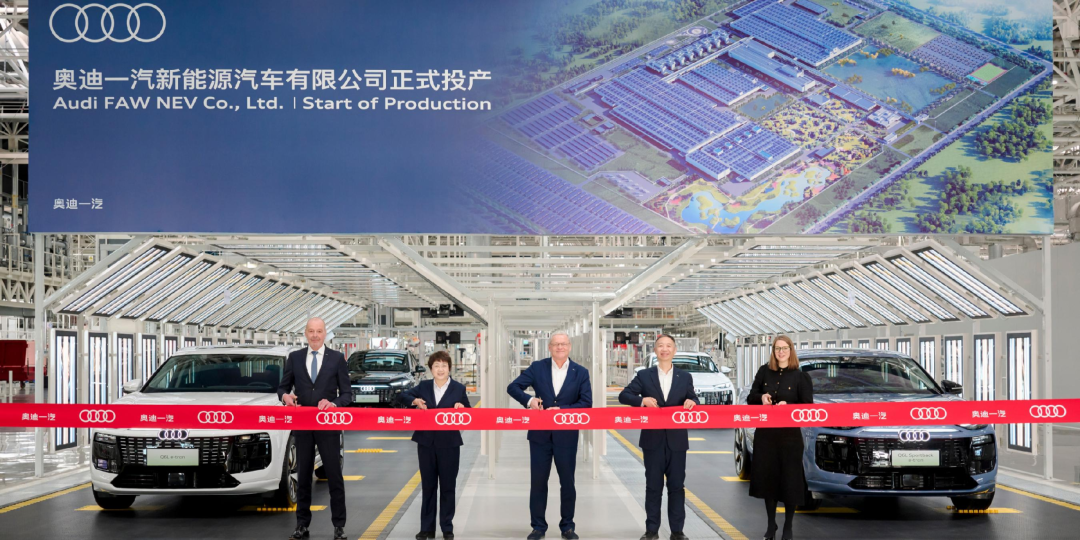
The costs and burdens have also been taken over, but they are all pressed into the detailed rules: who will share the cost of taking over existing after-sales, how the exit and compensation of non-FAW investors will be determined, and how long the transition period will be for four-ring model inventory and after-sales parts. More realistic is its own base—from January to July 2026, FAW Audi sold a cumulative 218,200 vehicles (wholesale figures), a year-on-year decline of more than 19%, of which the A6L sold about 62,000 vehicles cumulatively, a year-on-year decline of more than 57%, the Q5L fell about 52%, and the A4L fell nearly 60%. In pure electric models, from January to July FAW Audi's pure electric models totaled less than 6,000 vehicles, and in July the four-ring-badged pure electric models totaled 1,495 vehicles.
As for the part SAIC is giving up, the scale of the loss is also bearable. In July, SAIC Audi's four-ring-badged models sold a total of 1,642 vehicles at wholesale, and 12,541 vehicles cumulatively from January to July, an annualized rate of less than 22,000 vehicles, accounting for about 5% of Audi's 246,800 vehicles in China during the same period.
But what these models bring back is an exclusive brand and its own set of R&D. Previously SAIC Audi wore the four-ring logo but could not push the real four-ring mainstays such as the A6L and Q5L, and in pure electric it had to compete for resources with FAW's PPE models; after the split, AUDI is operated exclusively by it. The Audi Innovation Technology Center (AITC), established on September 3, has SAIC holding 49%, making it the single largest shareholder in the company, with Audi holding 41% and Volkswagen China 10%. This is the first time in more than 30 years of joint ventures that SAIC has deeply participated in product definition and full vehicle development for luxury models, rather than merely doing localization adaptation. Supporting this are the Audi ADP 2.0 intelligent digital platform and a plan for four new models, with the first planned to arrive in 2028.
The risks are equally clear. At AITC, the German side holds 51% in total, so control remains in Audi's hands. What SAIC gets is participation rights, not decision-making power, and as a non-controlling shareholder it must still contribute proportionally to R&D investment. Brand recognition is a harder hurdle: the first AUDI model, the E5 Sportback, launched in September 2025 with a limited-time subsidized starting price of 205,900 yuan. Its hardware configuration is not unimpressive at that price point, but monthly retail sales went from 1,150 in the first month, to 1,626 in December 2025, to 2,630 in March 2026 (of which Shanghai alone accounted for 47.6%), then fell sharply to 800 in April, 487 in May, 270 in June and 173 in July. The second model, the E7X, is priced from 269,800 to 359,800 yuan, putting it in direct competition with the Xiaomi YU7 and AITO M7 price ranges, and sold 1,993 vehicles at wholesale in July. In the same month, the cutoff for the top ten in the large SUV retail ranking was 3,403 vehicles, with the NIO ES8 leading at 10,284, the Leapmotor D19 at 10,043, the AITO M9 at 9,639 and the Li Auto L9 at 4,158—all ten were domestic new energy vehicles.
The first product truly defining the AUDI brand will not arrive until 2028. The landscape of China's new energy market has largely taken shape over the past two years, and Audi has assigned the existing inventory to the north and the future to the south, while what it keeps for itself is written into another corner of the plan.
Audi's backup move
According to the rumored plan, what Audi is truly committing to SAIC lies in the field of technological innovation. According to public information, AITC has three R&D directions: full vehicle and driving control performance, AI intelligent cockpits for Chinese users, and next-generation advanced driver assistance systems. The head of the Audi-SAIC cooperation project publicly stated that the center's full vehicle development cycle has been kept to 24 months, while traditional joint venture systems generally exceed 48 months; the iteration cycle for intelligent driving systems has been compressed to 3 months, and nearly 90% of test scenarios can be completed through simulation. This line is clearly different from FAW Audi—FAW Audi's R&D core is localization adaptation based on Audi's globally introduced PPE pure electric platform and PPC fuel platform, with the definition rights to the underlying platform still in Germany. AITC is responsible for the entire process from product definition to full vehicle development, and is Audi's first R&D entity outside Europe with full vehicle development and end-to-end capabilities. In Audi's own words, this is a shift from "product localization adaptation" to "core technology localization definition." Audi Global CEO Gernot Döllner admitted in March 2026 that the model of developing in Germany and launching directly into the Chinese market is no longer applicable.
Under this model, AUDI models could in theory switch to another brand logo and be exported to Southeast Asia, the Middle East and Latin America—markets that are more receptive to 800V high-voltage platforms, lidar and Chinese intelligent cockpits, while bypassing the three thresholds of EU tariffs, capacity politics at German plants and data compliance.
SAIC also has a strong motivation to expand overseas. Public information shows that the AUDI smart manufacturing base has an annual capacity of 360,000 vehicles. The AUDI brand sold a cumulative 12,650 vehicles from January to July, an annualized rate of about 22,000 vehicles, putting capacity utilization at roughly 6%. SAIC's messaging in investor communications is very clear: the joint venture segment will evolve over the long term toward "localized R&D, intelligent electric transformation, and export expansion," and the overseas strategy is "self-owned brands leading the way, with joint venture brands leveraging brand influence for coordinated expansion." What is truly worth examining is Volkswagen Anhui: this company, 75% held by the German side, is Volkswagen's only controlled vehicle joint venture in China. The Cupra Tavascan it produces must bear both the 10% base tariff and, starting in 2024, the 20.7% countervailing duty, totaling 30.7%. The high tariffs have nearly wiped out SEAT/Cupra's operating profit in the first three quarters of 2025. On February 10 this year, the European Commission accepted Volkswagen Anhui's price undertaking, replacing that 20.7% with a "minimum import price + annual quota + investment commitment in Europe," making it the first individual exemption case after the EU's final countervailing ruling on Chinese electric vehicles took effect.
The constraints are therefore also clear. Brand structure is the first: once AUDI goes overseas, Audi would have to explain abroad why there are two Audis, which would erode the Four Rings' global premium. German employment is the second: at a moment when a contract won through two strikes has just been overturned and the fate of four factories remains undecided, selling China-made cars back to Europe would amount to a direct collision with domestic capacity and the unions. The third is tariffs and compliance. On September 2, the president of Audi China stated that there are currently no export plans for AUDI brand models. But there are three clearer signals: whether AUDI models will appear in Audi's global product lineup; whether the export businesses of FAW-Volkswagen and SAIC Volkswagen will extend from the Volkswagen brand to the Audi brand; and whether "technology feeding back into the global system" will one day become whole-vehicle exports.
Whether the rumored split of the Audi brand can actually materialize is still unknown, but once it does, it will be the starting point of tremendous change for FAW, SAIC, Audi, and even Volkswagen.
-
![]()
Baidu AI Redraws Its Battle Lines
-
![]()
Memory Prices Are Soaring, and Better Days Are Coming for Longcheer Technology and Its Peers
-
![]()
Audi's North-South Split: Volkswagen Can't Afford to Wait
-
![]()
Doubao Phone Hits the Market: ByteDance's Bigger Game on the Phone Ecosystem
-
![]()
OpenAI's Mysterious Ghost Model Briefly Appears, API Pulled Within Minutes
-
![]()
Shenzhen Computing Power Chip Company Secures Nearly 2 Billion Yuan in Back-to-Back Financing
-
![]()
Najing Technology Secures Series A+ Funding in the Tens of Millions of Yuan!
-
![]()
Q3 Net Profit Plunges 30,154.65%: Lianchuang Electronics' Cracks Can No Longer Be Hidden