Eliminating Set-Top Boxes: A Panacea for the TV Industry’s Woes?
 09/10 2026
 511
511
"

Making TVs more “user-friendly” is no longer just a catchphrase. However, turning this aspiration into reality is easier said than done.
Cover image source: Unsplash"

Public dissatisfaction with “unfriendly” TV interfaces has reached a fever pitch.
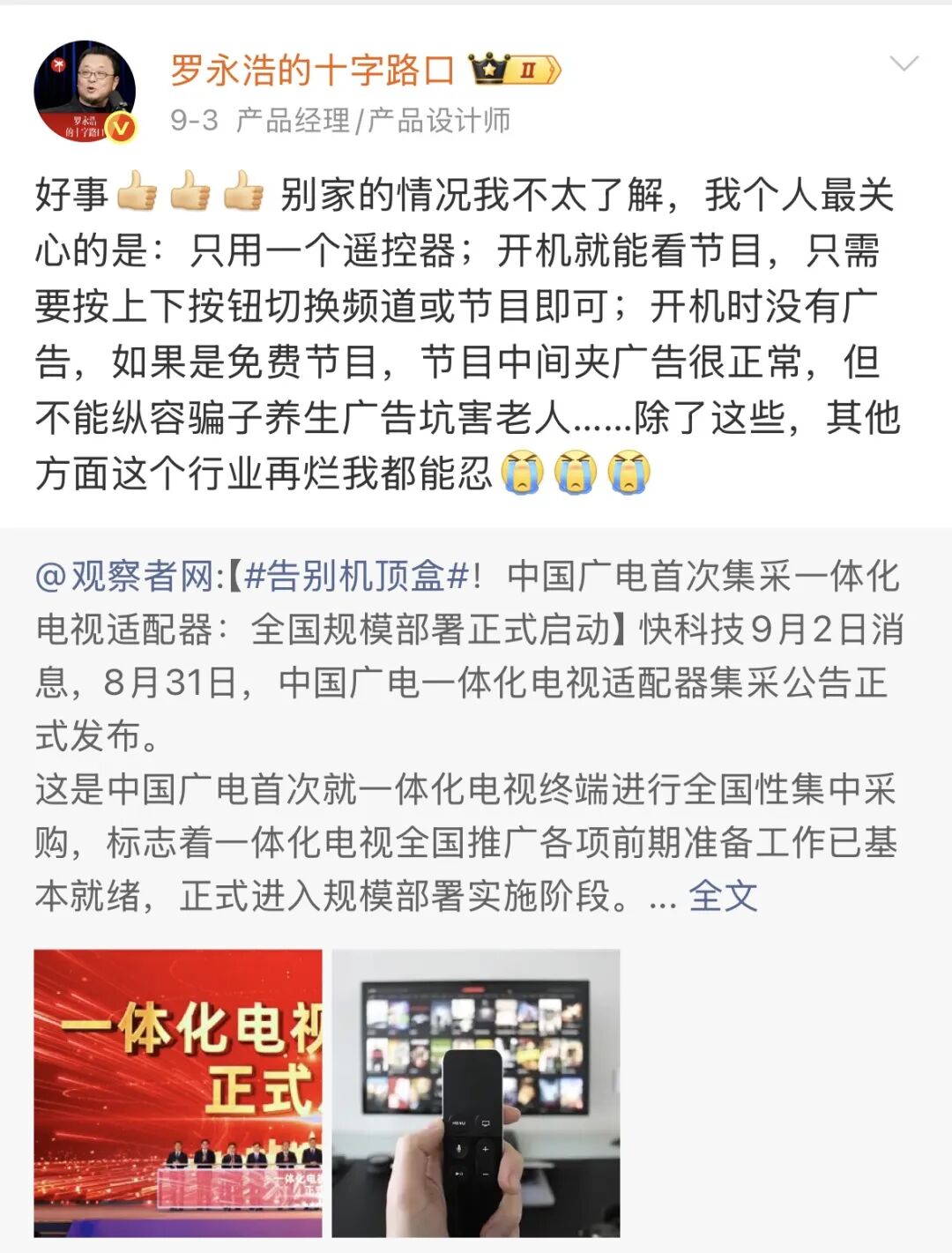
Two months ago, Luo Yonghao took to social media to voice his frustration over the increasing complexity of TV usage. Recently, he reiterated his stance, stating that if TVs with “plug-and-play” functionality for seniors are not available by year-end, his software team will step in to develop a solution.
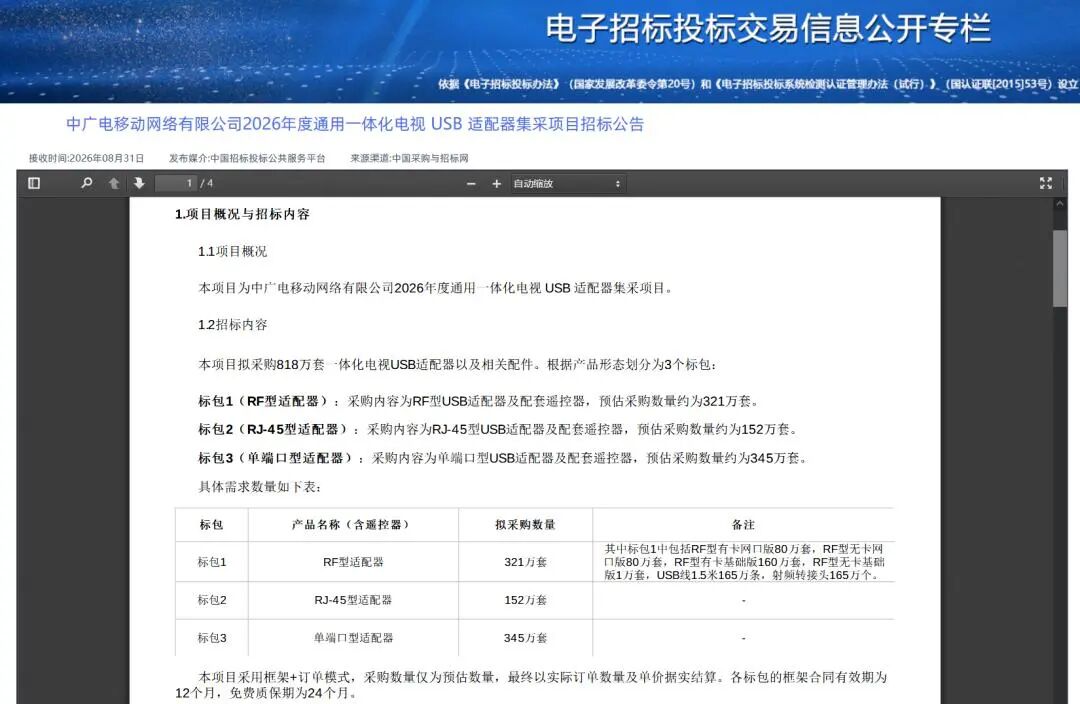
Around the same time, China Broadcasting Network (CBN) officially launched a nationwide procurement drive for integrated TV adapters, marking the first large-scale centralized purchase of integrated TV terminals. This move signals the impending phase-out of external set-top boxes for TVs.
These developments underscore a growing disconnect between audiences and traditional TVs. According to the China Video Industry Association, the national average TV power-on rate plummeted to 30.2% in 2025, down from 70% in 2016.
Today, televisions have largely become decorative fixtures in living rooms, with sales taking a nosedive.
In the first half of 2026, mainland China’s TV market shipped only 14.947 million branded TV sets, marking a fifth consecutive quarter of year-on-year decline. Institutions predict annual shipments will reach just 30.12 million units, a 17-year low.
The silver lining is that persistent complaints about “user-unfriendly” TVs have finally caught the industry’s attention. However, the question remains: Can eliminating set-top boxes and introducing new operating software truly revive the TV industry?
1. It’s Not Entirely the TV Manufacturers’ Fault
Televisions, once the centerpiece of living rooms, are now struggling to find buyers.
Mobile smart devices like smartphones, tablets, and computers are gradually usurping TVs, capturing users’ attention spans. New forms of digital content, such as short and long-form videos and gaming, are also eating into TV’s content market share.
Coupled with a sluggish home appliance market in recent years, the idea of a TV lasting a decade is no longer far-fetched. However, blaming the decline solely on market and technological shifts seems overly simplistic.
The primary deterrent for most users is the multi-step process required to start watching TV. As Luo Yonghao pointed out, if users can’t even figure out how to operate a TV, how can they be expected to watch it?
However, is TV’s “user-unfriendliness” solely due to manufacturers creating operational barriers? A clearer picture emerges when examining the paid content ecosystem.
Typically, users have several avenues to watch TV programs:
The first method involves traditional digital set-top boxes connected to cable TV. Consumers can open an account at a local CBN office, receive a set-top box, and pay subscription fees to access live channels like CCTV and provincial satellites, as well as some on-demand content.
The second option is IPTV, which operates through dedicated networks provided by telecom operators. Consumers can subscribe to IPTV services from China Mobile, China Unicom, or China Telecom to access both live channels and online video content from partners like BesTV and Wasu.
The third approach involves using internet video apps pre-installed on smart TVs. Under China’s licensing system for internet TV, the NRTA has issued seven integrated broadcasting licenses, with no plans for additional licenses.
Video platforms like iQIYI, Tencent Video, and Youku must partner with these licensed entities to legally operate on TV screens. For instance, Tencent Video collaborates with Guangdong Southern New Media’s “Cloud Audiovisual Aurora,” while Youku partners with CIBN’s “CIBN Coolview.”
Building on the third method, consumers with non-smart TVs can purchase standalone TV boxes to bypass some manufacturers’ pre-installed restrictions and install their preferred video apps.
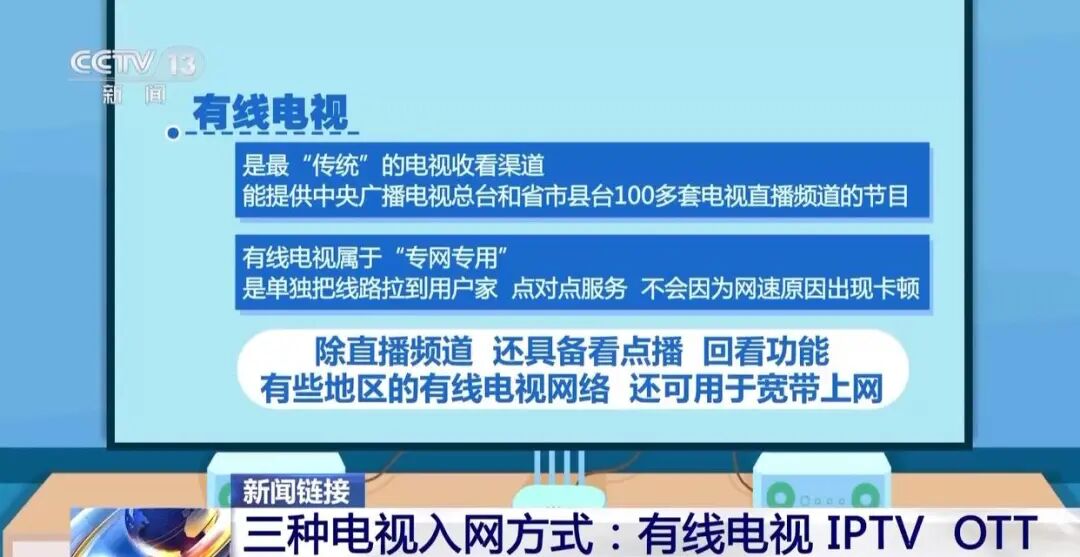
Overall, these viewing methods cater to distinct user segments.
Traditional digital set-top boxes offer the most straightforward TV experience, meeting the needs of elderly viewers who primarily watch local channels. Smart TVs or TV boxes appeal to younger consumers seeking newer and more diverse content. For users who simply want a TV in their home but rarely watch it, opting for IPTV when subscribing to broadband services is more convenient.
For years, these viewing models coexisted without significant overlap, each occupying its own market niche and profit chain:
Traditional digital TV forms the foundation of CBN’s business, IPTV serves as a value-added service for telecom operators’ broadband packages, and internet TV represents growth opportunities for TV manufacturers and long-form video platforms.
However, as content providers, all stakeholders share a common goal in this ecosystem: generating revenue through content.
From a commercial standpoint, it’s understandable that these providers, occupying the primary entry point for consumer attention, would insert boot-up advertisements and premium subscription prompts.
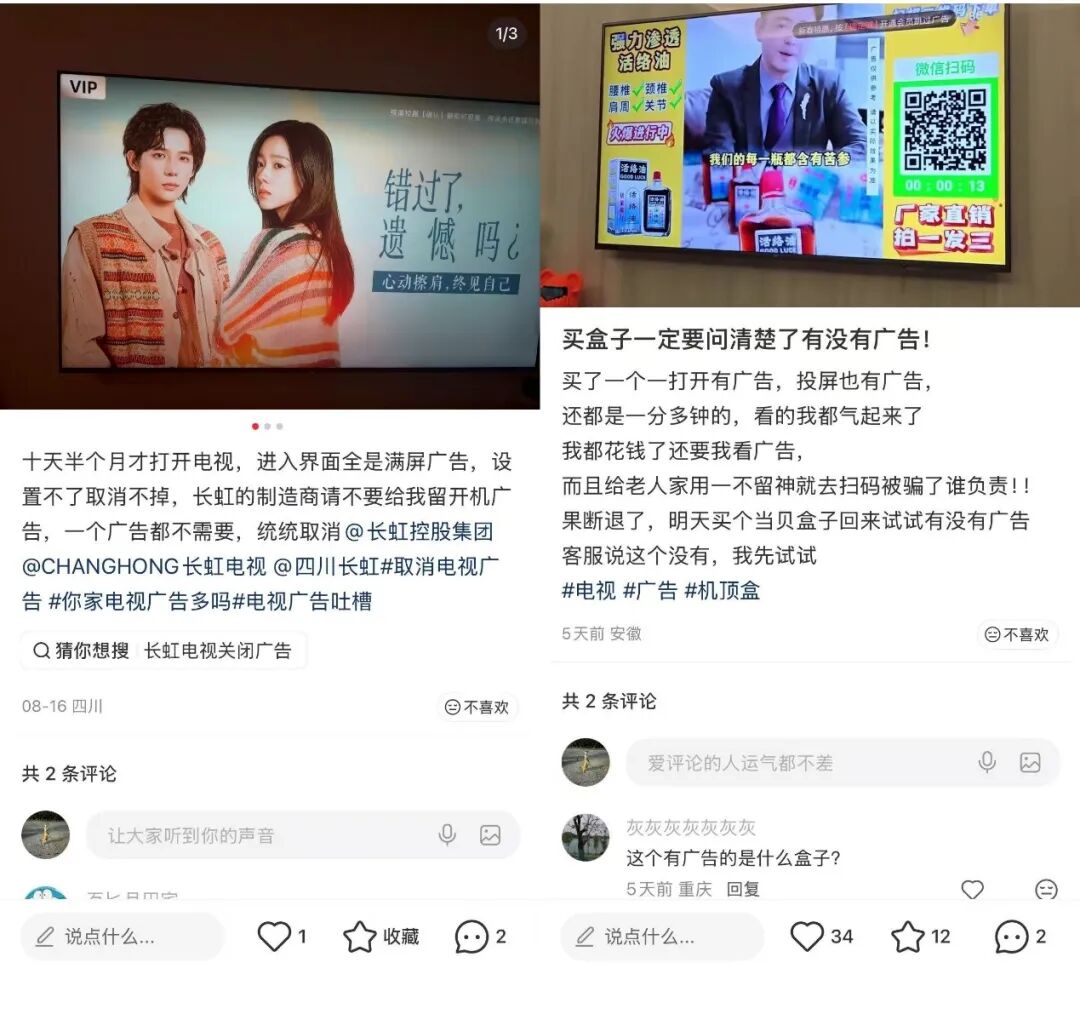
However, when every link in the content supply chain seeks a share of the profits—TV manufacturers pre-install software, consumers must purchase separate set-top boxes and TV boxes to access both live channels and long-form video content—the cumulative effect erodes consumer patience, ultimately leading them to abandon TVs altogether.
2. Will Eliminating Set-Top Boxes Work?
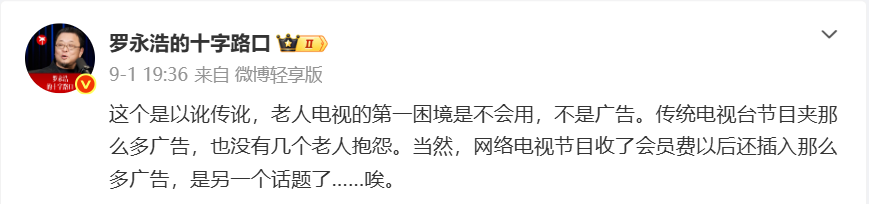
This explains why Luo Yonghao’s public criticisms have resonated with so many netizens frustrated by complex TV operations.
Recently, Luo reiterated that if TVs with “plug-and-play” functionality for seniors are not available by year-end, his software team will develop a solution and license it to traditional TV manufacturers, emphasizing that his goal is “not for profit but to reform industry practices.”
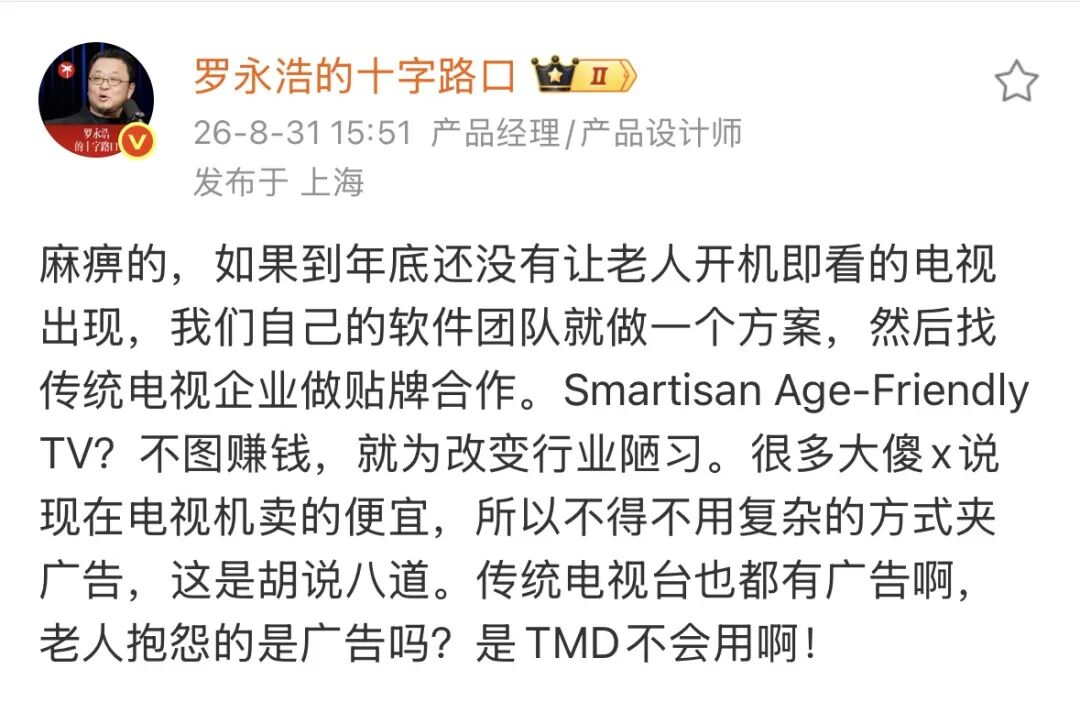
Of course, Luo is not the only one identifying these issues. The NRTA has been taking action for several years.
In 2023, the NRTA launched a campaign to address “nested” subscription fees and complex TV operations, promoting the removal of set-top boxes as an industry direction. By 2025, the administration aimed to deploy millions of integrated TVs.
Simply put, integrated TVs incorporate the core functions of set-top boxes into the TV’s software, deeply integrating them into the TV system. Users no longer need external set-top boxes; connecting to the internet allows them to watch live broadcasts, catch-up TV, and on-demand content with a single remote control for “plug-and-play” functionality.
In April of this year, the NRTA collaborated with CBN, China Telecom, China Unicom, and China Mobile to officially promote integrated TVs nationwide. In June, it released industry standards for integrated TV dedicated network services, providing technical guidelines for their implementation.
Official data reveals that by the end of 2025, cable TV and IPTV services across China had largely achieved “plug-and-play” live broadcasting, eliminated boot-up advertisements on set-top boxes, and enabled 93% of models to allow users to skip boot-up ads with a single click. As of February this year, the total number of subscription packages for cable TV, IPTV, and internet TV had been reduced from 2,766 to 701, a decrease of over 74.6%.
Making TVs more “user-friendly” is no longer just a catchphrase. However, turning this aspiration into reality is easier said than done.
When technical standards are applied across diverse TV manufacturers and operators—each with unique product structures and business systems—aligning these standards with all industry links requires time for adjustment.
Moreover, with hundreds of millions of existing TVs, not all can achieve integration through software updates. Many older traditional TVs will likely continue to rely on set-top box signals.
Most critically, the issue of profit distribution remains unresolved.
It’s important to note that relevant policies primarily focus on “removing set-top boxes” as a hardware solution. While this may make it easier for consumers to access content, it does not prevent TV manufacturers, operators, and video platforms from inserting advertisements in subsequent interfaces.
Ultimately, the volume of advertising on TVs is not determined by hardware manufacturers but by the broader TV industry ecosystem.
When TV manufacturers earn only meager profits from hardware production, they inevitably seek additional revenue through advertising. Similarly, when long-form video platforms reach membership growth ceilings, they must explore alternative revenue streams.
As long as advertising remains a viable business model for TVs, industry stakeholders are unlikely to relinquish this “golden egg” easily.
3. Can Luo Yonghao Deliver a “Software Solution”?
Consider these statistics.
According to Aowei Interactive Entertainment’s advertising data, China’s OTT (smart TV) advertising market was valued at approximately 19 billion yuan in 2025, with boot-up advertisements accounting for over 30%, or roughly 5.7 billion yuan.
TCL’s 2025 financial report reveals a 16.8% gross margin for its large-size display business, compared to a 56.4% gross margin for its internet business, which includes boot-up advertisements and content royalties.
These figures highlight a simple truth: While removing set-top boxes from TVs is relatively straightforward, eliminating advertisements entirely is far more complex.
This is where Luo Yonghao’s proposed “software solution” offers an intriguing perspective.
His “software solution” does not entail creating a new TV operating system but rather adjusting software to enable fixed entry points, reduce interface layers, and provide one-click live broadcasting.
Ideally, this platform could integrate TV manufacturers and content providers, balancing simplicity of operation with strategic advertisement placement while ensuring a rich variety of live and video content.
However, numerous challenges may arise in practice.
Currently, live broadcasting and video content involve operators, broadcasting control platforms, content suppliers, and channel service providers. Consolidating all these links into a single software platform—achieving cross-platform data access, content search, and unified payment systems—presents significant collaboration difficulties.
TV manufacturers aim to profit from hardware sales, operators seek subscription fees, broadcasting platforms demand revenue shares, content providers sell memberships, and channel service providers pursue advertising revenue. No stakeholder is willing to surrender its share of the profits.
The extent to which Luo Yonghao’s envisioned “TV software” can integrate these diverse forces remains to be seen.
Nevertheless, his approach offers valuable industry insights.
As complaints about declining TV viewership grow, the industry must reconsider why users are abandoning TVs. Is it due to complex startup operations and excessive advertising, or simply because the TV’s role is evolving?
According to Gozen Data, 52% of China’s smart TVs achieved daily power-on rates in 2025, with average viewing durations exceeding 5.6 hours—indicators of strong user engagement. However, another dataset suggests that overall TV power-on rates have declined to approximately 30%.
Behind these contrasting figures lies an often-overlooked truth: It is not that people have stopped watching TV, but rather that they have stopped watching traditional TVs.
The 52% smart TV power-on rate indicates that smart TVs are emerging as another “large screen” alongside computers and smartphones. Meanwhile, traditional TVs are fading from view. The 30% overall power-on rate reflects the inclusion of countless traditional TVs gathering dust in living rooms.
Therefore, to retain users, the TV industry should not attempt to force them back into “old roles” but rather excel in defining “new roles.” The key lies in offering cross-platform premium content that users are willing to pay for and engage with.
What the TV industry lacks is a compelling reason for users to turn on their TVs. This reason could be exclusive content, an irreplaceable large-screen experience, or unique value in family entertainment scenarios.
If TV manufacturers focus solely on “pulling users back” without considering why users would want to return, then eliminating set-top boxes and simplifying software will not be sufficient to revive the industry.
After all, persuading someone who does not want to watch TV to start again is far more challenging than enhancing the viewing experience for those who do.

-
![]()
The Loss Conundrum and the High-End Wager: Xiang Xingchu Declares, 'JAC Embarks on Its Third Trailblazing Journey'
-
![]()
'Problematic Stock' Plummets for a Decade, Then Suddenly Surges to Limit Up for Two Straight Days! Is the Auto Sector Making a Resurgence?
-
Value and Cost: Validations from Anthropic and Zhipu
-
![]()
Eliminating Set-Top Boxes: A Panacea for the TV Industry’s Woes?
-
Who Defines 'AGI' Defines the Future
-
![]()
What Unfolded Following Tesla's Substantial Price Reduction?
-
![]()
4-Minute Surge: 10,000 Orders Secured for Xiaomi Pengcheng, Sparking Hot Search Trend. Lei Jun: Extended-Range Vehicles Hold Immense Promise
-
The Future Trajectory of AI Large Models