4-Minute Surge: 10,000 Orders Secured for Xiaomi Pengcheng, Sparking Hot Search Trend. Lei Jun: Extended-Range Vehicles Hold Immense Promise
 09/10 2026
 379
379
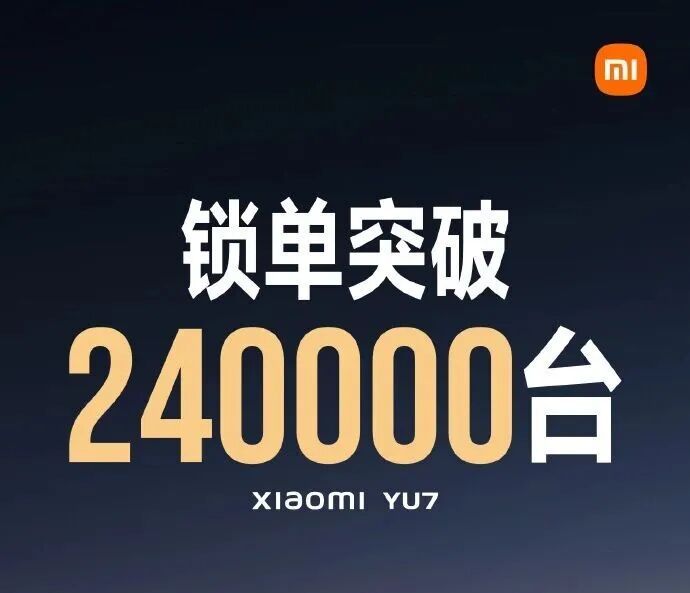
Following the remarkable feat of Xiaomi YU7, which garnered 289,000 reservations within an hour and surpassed 240,000 confirmed orders in just 18 hours, the entire automotive industry is now eagerly anticipating the order figures for Xiaomi Pengcheng post-launch.
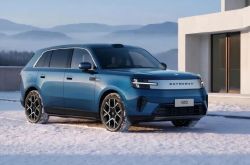
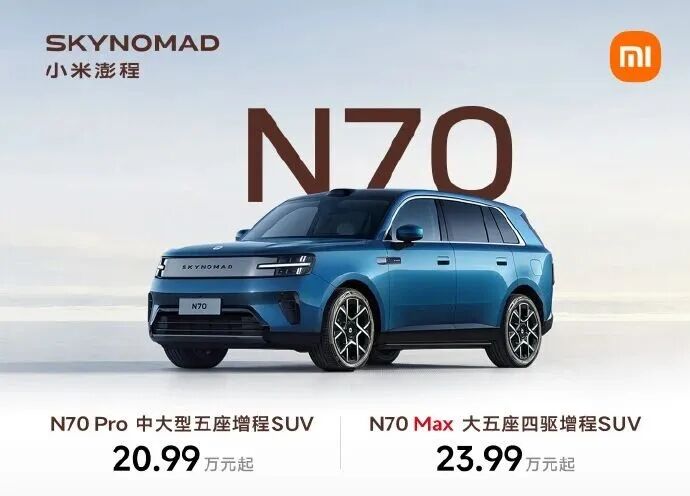
On the evening of September 7, Xiaomi Pengcheng unveiled two groundbreaking models: the N70 and N90, priced at starting ranges of RMB 209,900 and RMB 269,900, respectively. Distinct from Xiaomi's previous offerings, these new vehicles are extended-range hybrids rather than pure electric models, and they fall under the new brand “Pengcheng” within the Xiaomi ecosystem, rather than the main Xiaomi brand.
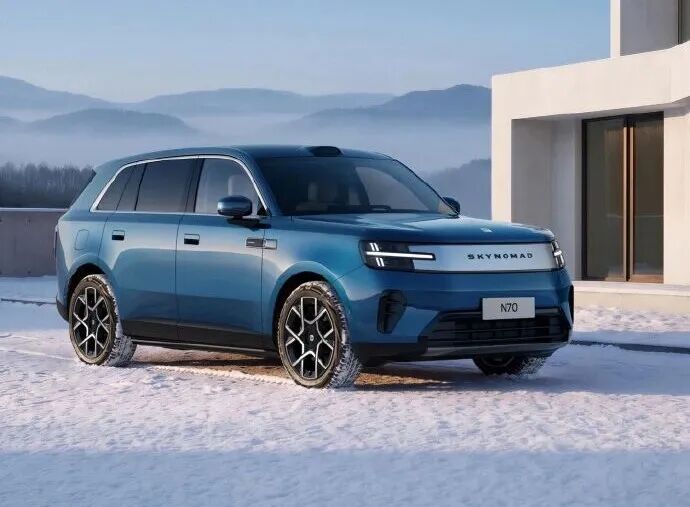
In terms of market positioning, the N70 is a mid-to-large extended-range SUV with a wheelbase of 2,950mm, competing directly with popular models such as the Li Auto L6, Seres M7 Extended-Range Edition, and IM LS6 Extended-Range Edition.
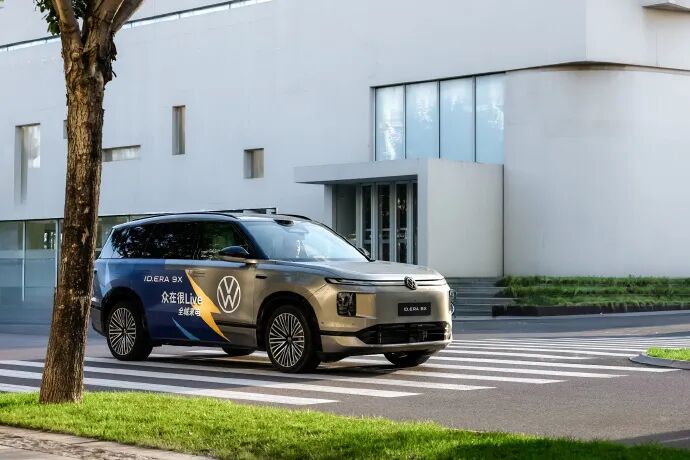
The N90, on the other hand, is a large extended-range SUV with a length of 5.2 meters and a wheelbase of 3,080mm, positioning it alongside the Li Auto L9, IM LS9, and SAIC Volkswagen ID. ERA 9X.
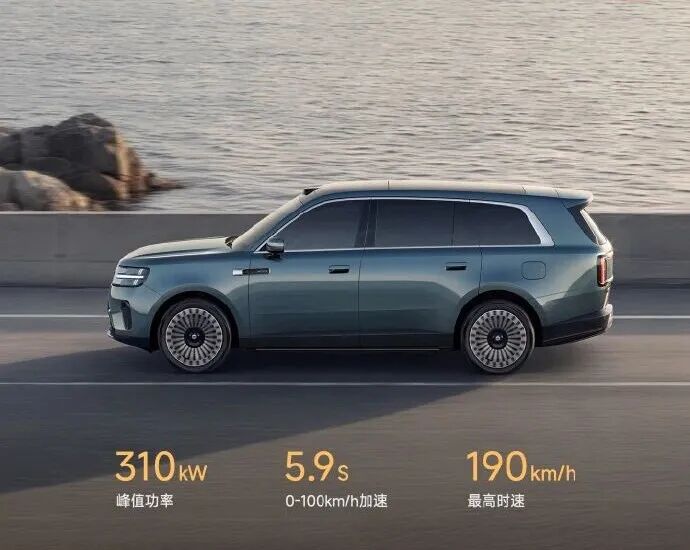
On the launch night, Xiaomi Pengcheng announced via social media that it had secured over 10,000 confirmed orders for the Pengcheng series within just four minutes. As of our report, no further order updates have been disclosed by Xiaomi Pengcheng.

The explosive momentum witnessed with Xiaomi YU7, which achieved 240,000 confirmed orders in 18 hours a year ago, appears to have shifted with the introduction of the Pengcheng N70 and N90. What could be the reason behind this change?
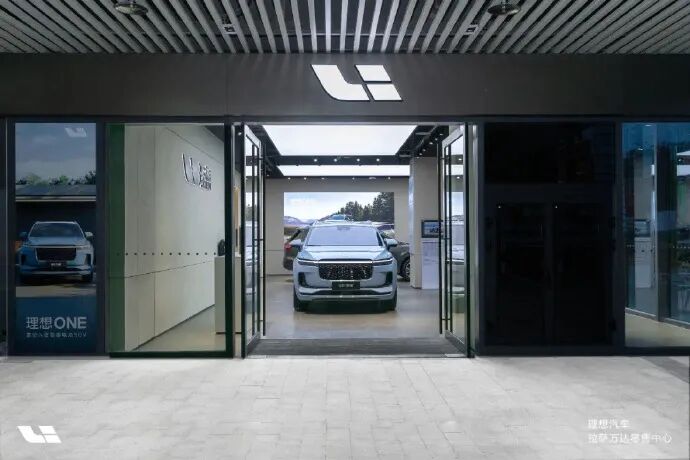
Extended-range vehicles, a unique segment in China, were pioneered and subsequently expanded by Li Auto, reaching approximately 1.235 million units in sales by 2025, accounting for roughly 10% of total new energy vehicle sales.
In response to the strong sales of the Li ONE, during a Volkswagen PHEV technology exchange event in September 2020, then-CEO of Volkswagen China, Stephan Wöllenstein, publicly criticized extended-range technology, stating, “From the perspective of a single vehicle, extended-range electric vehicles have some merit, but from a national and global standpoint, it's nonsensical and the worst possible solution!” He further elaborated, “The ultimate goal of electric vehicle development is to reduce carbon emissions, but burning fossil fuels to generate electricity defeats the purpose.”
In 2020, when Wöllenstein made these remarks, only a few brands, such as Li Auto and Seres, were producing extended-range vehicles. That year, Li Auto had only one model on sale, the Li ONE extended-range vehicle, priced at RMB 328,000 for a single variant, with annual sales of 32,624 units. The pricing and strong sales of the Li ONE sparked widespread market discussion, prompting brands like Seres and VOYAH to follow suit.
As a newcomer to vehicle manufacturing, Li Auto achieved its first profit in 2023, reporting a net profit of RMB 11.704 billion, which sent shockwaves through the industry. By 2024, Li Auto's sales of extended-range vehicles surpassed 500,000 units. In response, numerous domestic brands entered the extended-range vehicle market, with total sales reaching 1.167 million units in 2024 and 1.235 million units in 2025.
Today, even Volkswagen, which initially dismissed extended-range vehicles, has launched multiple extended-range models in the Chinese market. Leapmotor has established itself as the “affordable version of Li Auto.” Brands like Geely and Chery, which originally focused on plug-in hybrids, have also introduced multiple extended-range models around 2025-2026, intensifying market competition. Some argue that extended-range technology, as a transitional market solution, will eventually give way to pure electric vehicles. Brands holding this view include NIO, which has yet to enter the pure electric vehicle market.
However, in terms of the development trajectory of extended-range vehicles, many large extended-range models, including the Xiaomi Pengcheng N70 and N90, are incorporating increasingly larger batteries. Data indicates that the Pengcheng N70 has a minimum battery capacity of 52kWh, with a maximum range of up to CLTC 505km (76kWh variant). The Pengcheng N90 comes standard with a 76kWh battery capacity across all variants. In comparison, popular pure electric models like the Geely Galaxy Star and BYD Seagull have starting battery capacities of less than 50kWh. Models with battery capacities below 76kWh are even more prevalent, including the Tesla Model 3 Rear-Wheel Drive/Model Y Rear-Wheel Drive, BYD Seal 550km, and Zeekr 007 75kWh variants. In essence, in terms of battery capacity, the “extended-range” Xiaomi Pengcheng N70 and N90 already surpass mainstream pure electric models, allowing them to operate for extended periods without relying on the range extender for power. Thus, the N70 and N90 are practically embodying the market judgment that “the endpoint of extended-range technology is pure electric” through their product design—equipping them with large batteries.
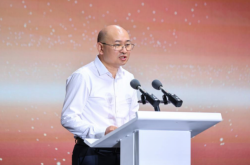
On September 6, Lei Jun expressed the following view via social media: “There is no absolute superiority in technical routes between extended-range and pure electric vehicles; the difference lies in product experience.” In Lei Jun's view, the Xiaomi Pengcheng N70 and N90 achieve travel freedom through large battery solutions, spatial freedom through spatial reconfiguration, lower fuel consumption when the battery is depleted, and reduced noise when the range extender is activated, all of which are key selling points of Xiaomi Pengcheng.
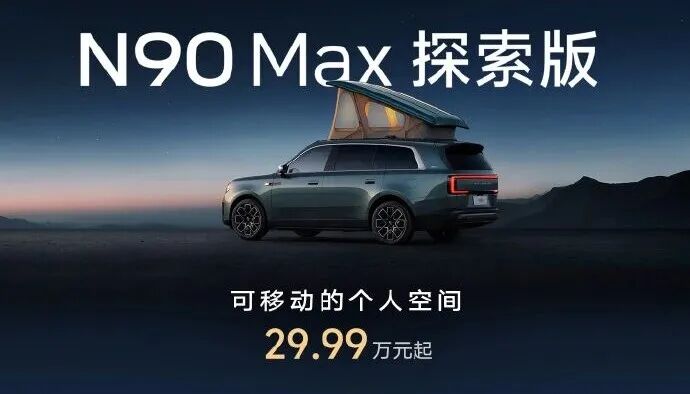
In terms of product experience, the Xiaomi Pengcheng N90 introduces an Explorer Edition featuring a native electrically retractable roof module. When the roof is raised, the second-floor activity space is approximately 2 square meters. “The most significant meaning of the retractable roof is that you can stand up inside an SUV, just like in a real house,” Lei Jun stated at the new car launch event. This kind of innovation in product experience by Xiaomi Pengcheng has indeed left the industry astounded. Many consumers have raised questions: Why stand up inside a vehicle? Public information shows that very few models on the market feature a retractable roof design. The Ford Bronco is one of the few models that offers an optional retractable roof, but its sales performance has been lackluster.
Given the impressive product performance of the new Xiaomi Pengcheng N70 and N90, does this mean their market prospects are bright? From a pricing perspective, it is evident that Xiaomi Pengcheng has come well-prepared.
First, from the perspective of the range extender, the Xiaomi Pengcheng series has opted for the most “cost-effective” solution by using range extenders from Dongan Engine rather than developing their own, as other brands do. Dongan Engine's range extenders are mature and inexpensive, eliminating the need for Xiaomi to invest in “self-developed” range extenders.
Additionally, since the range extender is solely used for power generation and does not need to output torque across the entire RPM range to drive the wheels, the requirements for component strength and NVH performance under complex operating conditions are lower than those for internal combustion engine vehicles.
In contrast, brands like Li Auto, BYD, Chery, Seres, Deepal, and Volkswagen all develop their own range extenders. From this standpoint, the Xiaomi Pengcheng series can significantly reduce the costs associated with self-developing range extenders.
Second, in terms of vehicle pricing, the Xiaomi Pengcheng series is clearly much more affordable. Comparing the Xiaomi N70 and N90, taking the N70 as an example, its starting price is the lowest among the Li ONE L6, IM LS6 Extended-Range Edition, and Seres M6 Extended-Range Edition. The only exception is that the dealer price for the IM LS6 Extended-Range Edition has dropped to a starting price of RMB 189,900 (data from Autohome), which is lower than the N70's starting price. The starting prices of other models are significantly higher than the N70's. The same applies to the N90, whose starting price is much lower than that of models like the IM LS9, SAIC Volkswagen ID. ERA 9X, and Li Auto L9.
In fact, the pricing of the Xiaomi Pengcheng series is entirely justifiable from a product perspective. Taking the turning radius, a point of public concern, as an example, models like the IM LS9 and Li Auto L9 are equipped with the latest steer-by-wire technology, allowing the IM LS9 to achieve a minimum turning radius of 4.77 meters and the Li Auto L9 to achieve 5.3 meters. The SAIC Volkswagen ID. ERA 9X, while not equipped with steer-by-wire, features ±10° rear-wheel steering, enabling a minimum turning radius of 4.85 meters. In contrast, the Pengcheng N90 has a minimum turning radius of 5.95 meters, slightly better than the Tesla Model Y's 6.06 meters.
From the perspective of range extenders, brands like Li Auto, Seres, IM, and Volkswagen all develop their own, with SAIC's IM and Volkswagen possessing strong capabilities in self-developing engines. The range extender for the Volkswagen ID. ERA 9X is derived from Volkswagen's flagship EA211 engine, incorporating Porsche-derived VTG variable geometry turbocharging technology, offering higher thermal efficiency, low-speed response, and NVH performance compared to the Pengcheng series. Compared to the Li Auto L9, not only is the L9's chassis superior, but Li Auto has even switched to self-developed chips for its intelligent driving system, with significantly higher computing power than competitors. From these perspectives, the Pengcheng series can set a much lower price because it does not need to invest heavily in research and development. These significant differences allow the Xiaomi Pengcheng series to be priced much lower.
To a certain extent, the Xiaomi Pengcheng series lags far behind brands like IM, Li Auto, Seres, and Volkswagen in terms of core technology. However, does this mean that Xiaomi Pengcheng lacks sufficient competitiveness? The answer is probably no.
Take BYD's DM-i single-speed hybrid system as an example. Initially, the industry widely believed that single-speed hybrid systems had limited performance at high speeds compared to multi-speed DHT systems. Manufacturers like Chery and Geely initially focused on developing multi-speed DHT systems, valuing their performance advantages at high speeds and under high-power conditions. However, BYD's DM-i adopted a highly simplified single-speed design with fewer components, lower material costs, and simpler maintenance, excelling in fuel efficiency during urban commuting when the battery was depleted, and gaining recognition from a large number of home consumers. Subsequently, Chery, Geely, and other automakers also introduced single-speed hybrid products.
In the extended-range vehicle market, Leapmotor has, in fact, taken a low-cost approach, sourcing its range extenders from Dongan Engine, similar to Xiaomi, but focusing on self-developed electric control, electric drive technology, and vehicle electronic architecture. The Pengcheng series also uses range extenders from Dongan Engine, with its electric drive reportedly sourced from CRRC. In other words, in terms of self-developed technology, Xiaomi Pengcheng lags far behind Leapmotor. However, compared to Leapmotor, Xiaomi Pengcheng has a much greater influence in terms of design, space, interactive experience, and branding. This positions Xiaomi Pengcheng as an “upgraded version” of Leapmotor, which is the core reason for its pricing strategy that slots it between Leapmotor and brands like IM, Li Auto, and Volkswagen. From this perspective, it is unrealistic for Xiaomi Pengcheng to capture market share from Leapmotor downward. However, it could potentially seize market share from IM, Seres, Li Auto, and Volkswagen, similar to how BYD's DM-i single-speed hybrid system completely outperformed the multi-speed hybrid systems of Geely, Great Wall, and Chery. From this standpoint, the Xiaomi Pengcheng series still has the strength to compete in the market.
The bad news is that from January to June of this year, sales of extended-range vehicles in the Chinese market reached 504,000 units in wholesale, a significant year-on-year decline of 13.1%. Additionally, from a market environment perspective, Li Auto, a major player in the extended-range vehicle market, reported a net loss attributable to shareholders of RMB 3.994 billion in the first half of 2026, with both marketing and sales volumes decreasing year-on-year. Combining these two points, the entire extended-range vehicle market seems to be on a downward trend, posing a considerable challenge for Xiaomi Pengcheng, which has just entered the market. Our view is that from the moment Xiaomi Pengcheng announced the pricing of the N70 and N90, a new phase of “price competition” in the extended-range vehicle market has begun. Xiaomi Pengcheng is clearly entering another highly competitive market.
-
![]()
The Loss Conundrum and the High-End Wager: Xiang Xingchu Declares, 'JAC Embarks on Its Third Trailblazing Journey'
-
![]()
'Problematic Stock' Plummets for a Decade, Then Suddenly Surges to Limit Up for Two Straight Days! Is the Auto Sector Making a Resurgence?
-
Value and Cost: Validations from Anthropic and Zhipu
-
![]()
Eliminating Set-Top Boxes: A Panacea for the TV Industry’s Woes?
-
Who Defines 'AGI' Defines the Future
-
![]()
What Unfolded Following Tesla's Substantial Price Reduction?
-
![]()
4-Minute Surge: 10,000 Orders Secured for Xiaomi Pengcheng, Sparking Hot Search Trend. Lei Jun: Extended-Range Vehicles Hold Immense Promise
-
The Future Trajectory of AI Large Models