The Loss Conundrum and the High-End Wager: Xiang Xingchu Declares, 'JAC Embarks on Its Third Trailblazing Journey'
 09/10 2026
 535
535
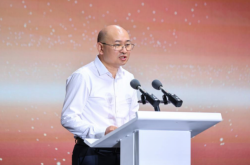
On September 6, at the Youthful Chapter event held in Hefei, Anhui, when posed with a student's query, "JAC Motors is now 62 years old. Does it still resonate with the younger generation?" Xiang Xingchu, Chairman of JAC Group, responded with conviction: "We are currently on our third trailblazing journey. Trailblazers are perpetually youthful. Our R&D team boasts an average age of merely 33."
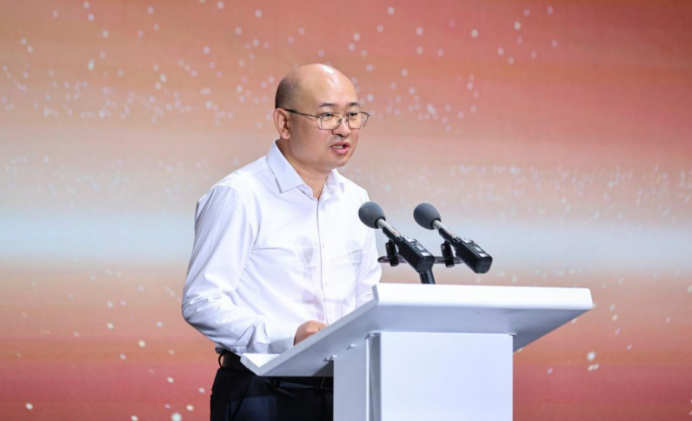
While the pioneering spirit is undeniably invigorating, financial reports unveil a more intricate scenario: revenue is on the rise, losses are narrowing, yet underlying losses linger. All hopes are now pinned on a high-end gamble intricately linked with Huawei.
As per the 2026 interim report, JAC Motors reported a revenue of RMB 22.13 billion in the first half of the year, marking a 14.31% year-on-year increase; however, the net profit attributable to shareholders remained in the red at RMB 749 million, albeit a slight improvement from the RMB 773 million loss recorded in the same period last year.
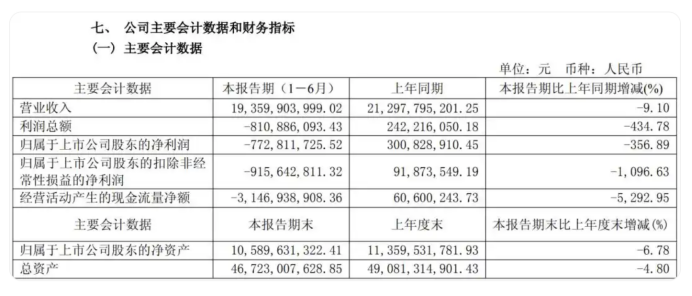
A glimmer of optimism emerges from the significant loss reduction in the second quarter. The first quarter witnessed a loss of RMB 606 million, which narrowed to RMB 143 million in the second quarter, representing a sequential decrease of approximately 76.4%. The gross margin also improved from 8.98% to 11.14% year-on-year, while the average selling price per vehicle surged from RMB 101,600 to RMB 128,400. Despite selling 18,200 fewer vehicles, the company's revenue increased by RMB 2.77 billion, achieving the intended outcome of Xiang Xingchu's 'third trailblazing journey'—prioritizing value over volume.
Nevertheless, concerns loom large. The net cash outflow from operating activities stood at RMB 5.288 billion, a 68% year-on-year surge. This indicates that the company's core business is still 'hemorrhaging,' with its cash-generating capacity yet to be restored. The core profit, excluding non-recurring items, recorded a loss of RMB 991 million, an 8.22% year-on-year increase, suggesting that the foundation for enhancing the profitability of the main business remains shaky.
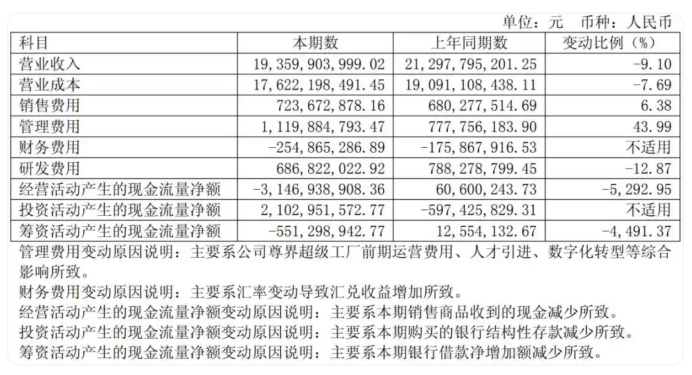
The primary causes of these losses are twofold: firstly, a sharp rise in selling expenses, with advertising and sales service fees soaring from RMB 102 million to RMB 650 million, marking a 68.97% year-on-year increase in selling expenses; secondly, exchange rate fluctuations leading to exchange losses, with financial expenses shifting from a negative RMB 255 million in the same period last year to a positive RMB 139 million, a net increase of RMB 394 million.
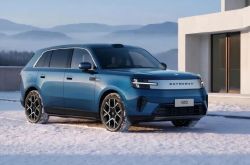
Zunjie stands as the cornerstone of JAC's high-end transformation. Since its inception, the Zunjie S800 has delivered over 19,000 units, maintaining its position as the best-selling luxury vehicle in the RMB 1 million+ segment for 10 consecutive months, with cumulative sales of approximately 18,800 units in the past 12 months, far outpacing competitors in the same price bracket.
However, beneath this radiant aura, a downward trend is discernible. S800 sales peaked at 4,223 units in December 2025 and have been on a decline ever since, plummeting to 367 units in July 2026. On August 5, the Zunjie V800/V680 MPVs were launched, garnering over 3,500 orders within 24 hours. Whether they can sustain this momentum and reverse the decline remains to be seen in the market.
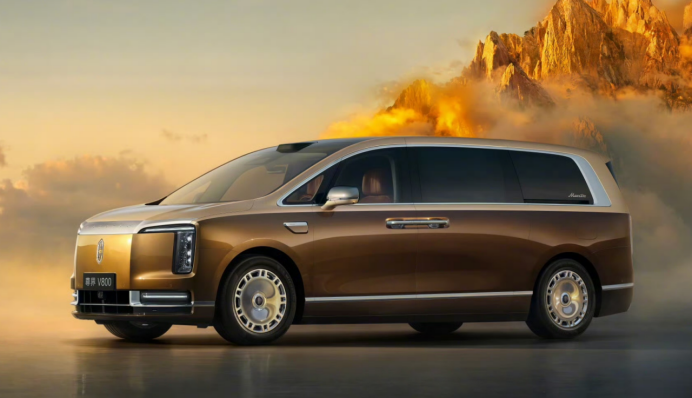
A more pressing issue is striking a balance between investment and returns. To develop Zunjie, JAC and Huawei have assembled an R&D team of over 5,000 individuals and constructed a dedicated super factory, with cumulative investments surpassing RMB 10 billion. Whether sales can dilute these colossal costs is a pivotal question that will determine the success of this strategy.
Reflecting on JAC's partnerships with NIO and Volkswagen, one can appreciate why JAC places such immense importance on its collaboration with Huawei.
After eight years of contract manufacturing for NIO, JAC Motors gained exposure to high-end manufacturing standards. However, its autonomous passenger vehicle performance did not witness any improvement after NIO acquired the contract manufacturing assets in 2023, demonstrating that contract manufacturing did not translate into autonomous capabilities. Meanwhile, the partnership with Volkswagen is still in the investment phase, with returns expected to materialize over time. These experiences underscore that external collaborations, if not internalized, ultimately yield only fleeting gains.
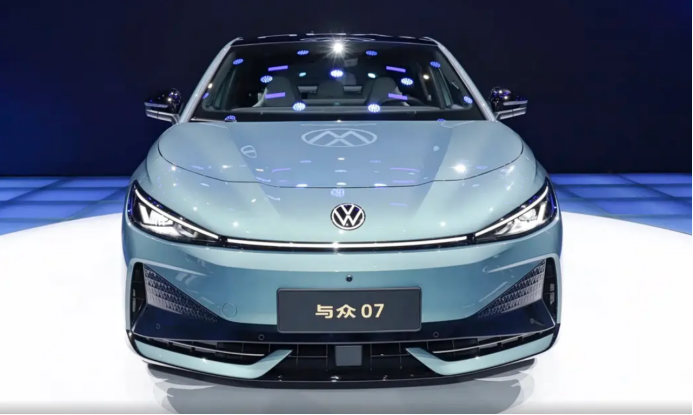
From the 'Rust Scandal' that shattered its passenger vehicle aspirations to contract manufacturing and joint ventures failing to reverse its fortunes, JAC is now staking everything on Zunjie.
Fortunately, JAC's commercial vehicle segment continues to thrive. It contributed RMB 11.35 billion in revenue in the first half of the year, with N2-class light trucks ranking second in the industry and new energy light truck sales surging by 78.1% year-on-year. This provides some breathing room for the transformation, but breaking through in the high-end passenger vehicle market is crucial to determining the company's future.
"Trailblazers are perpetually youthful," Xiang Xingchu's words exude confidence. Yet, the reality test is equally stringent: Can Zunjie sustain objective sales? When will the RMB 10 billion investment with Volkswagen yield self-sufficiency? How will the cash flow gap be bridged? The answers may only emerge in the latter half of the 'third trailblazing journey.'
(Images sourced from the internet; removal upon receipt of infringement notice)
-
![]()
The Loss Conundrum and the High-End Wager: Xiang Xingchu Declares, 'JAC Embarks on Its Third Trailblazing Journey'
-
![]()
'Problematic Stock' Plummets for a Decade, Then Suddenly Surges to Limit Up for Two Straight Days! Is the Auto Sector Making a Resurgence?
-
Value and Cost: Validations from Anthropic and Zhipu
-
![]()
Eliminating Set-Top Boxes: A Panacea for the TV Industry’s Woes?
-
Who Defines 'AGI' Defines the Future
-
![]()
What Unfolded Following Tesla's Substantial Price Reduction?
-
![]()
4-Minute Surge: 10,000 Orders Secured for Xiaomi Pengcheng, Sparking Hot Search Trend. Lei Jun: Extended-Range Vehicles Hold Immense Promise
-
The Future Trajectory of AI Large Models