Mobile Phone Prices Soar: Can Changxin Offer a Cost-Effective Solution?
 09/22 2026
 489
489
Purchasing a 256GB iPhone Pro now comes with a 1,000 yuan premium compared to the previous year.
The iPhone 18 Pro, launched in September with 256GB storage, is priced at 9,999 yuan for the Chinese version, up from 8,999 yuan for the iPhone 17 Pro. These new models also boast upgrades in processors, imaging, and other features. For consumers, while Apple's cost allocation strategies are of some interest, the additional 1,000 yuan at checkout is a direct concern.
Chinese smartphone manufacturers are also striving to maintain their pricing. Earlier this month, Lu Weibing, in an interview with 21st Century Business Herald and other media outlets in Berlin, emphasized that rising costs cannot simply be passed on to consumers through higher prices. Instead, manufacturers must ensure that users perceive the value in their products. According to reports, Xiaomi has proactively signed annual supply agreements and is managing cost pressures by adjusting prices on select models and refining its product lineup.
Supplier quotes and consumer willingness to pay are narrowing the options available to phone manufacturers.
On September 20, Changxin introduced another significant development. At the World Manufacturing Convention, the company announced the mass production of its fifth-generation DRAM technology platform. Sources indicate that this new platform boosts the number of dies per wafer by at least 50% compared to the fourth generation, with LPDDR5X products based on this platform targeting mid-to-high-end smartphones and other portable devices.
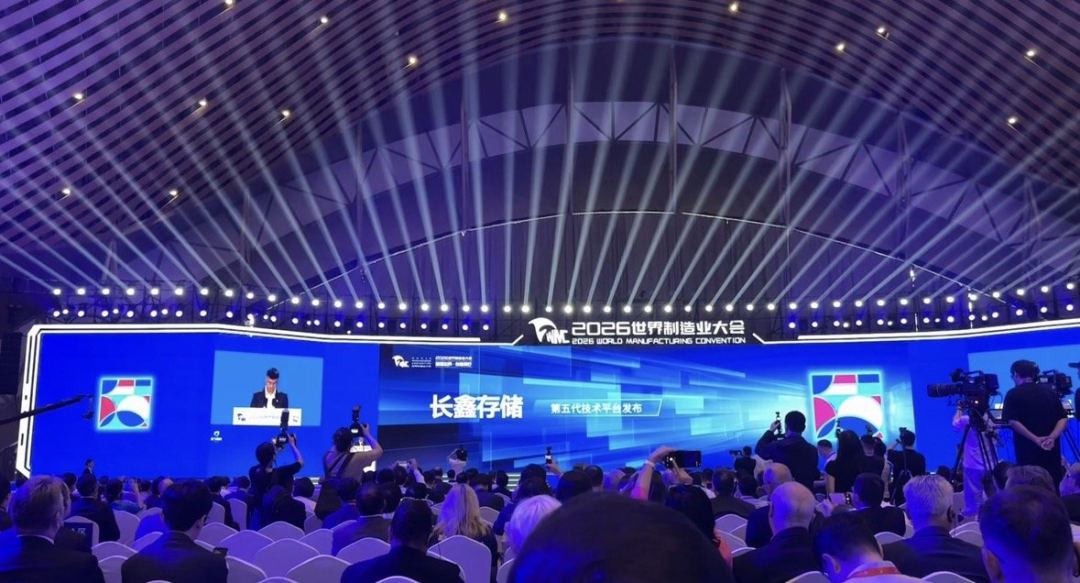
Changxin Unveils Mass Production of Fifth-Generation DRAM Technology Platform at the 2026 World Manufacturing Convention
As phone prices rise and domestic memory manufacturing efficiency improves, consumers are wondering: Can Changxin drive down prices?
Achieving this goal, however, may not be straightforward.
Changxin's ability to produce more compliant memory means phone makers have an additional supply option. The extent to which each chip can be cheaper depends on actual costs and procurement negotiations. Whether phone prices decrease still hinges on the brand's overall pricing strategy.
There is, however, positive news: the push for high-end domestic substitution is progressing relatively swiftly.
01
A New Round of Bargaining
The new flagship phone release season is here, yet memory procurement prices for phone makers remain elevated. TrendForce, in its September 9 analysis of mobile DRAM, predicted that contract price increases in the third quarter would moderate due to a high base and increased buyer inventories, with prices expected to stabilize at high levels in the fourth quarter. Meanwhile, original manufacturers continue to allocate resources towards servers and high-bandwidth memory.
With procurement prices staying high, phone makers must continue to absorb these costs. The configuration, pricing, and profit margins of their upcoming models must be adjusted accordingly.
Manufacturers like Samsung, SK Hynix, and Micron face orders from multiple markets and allocate resources based on profitability, customer demand, and manufacturing conditions. The growing demand for servers and AI has altered the competitive landscape for phone makers seeking supplies. The direction of new investments and the sequencing of capacity expansions for different products will influence the future supply of mobile memory.
Phone makers find it challenging to sway the entire upstream resource allocation based solely on their sales volumes.
The tug-of-war between upstream and downstream players is already apparent. On July 21, Jiemian News reported that OPPO and Vivo had rejected Samsung's third-quarter quotes, with neither company responding as of the report's publication. According to the report, the two phone makers were negotiating with upstream suppliers for better pricing.
Phone makers can also adjust product configurations. A phone initially planned with 16GB of RAM might switch to 12GB, reducing memory procurement but potentially putting it at a disadvantage against competitors in the same price range. Maintaining configurations and prices requires absorbing the cost difference elsewhere or reducing profits. Raising prices poses another issue: consumers may simply stick with their old phones.
On-device AI adds another layer of complexity to configuration decisions. Running models locally requires sharing memory with the operating system and other apps. Larger capacities provide room for models and runtime data, but actual performance also depends on bandwidth, power consumption, processor capabilities, and software optimization. Overly compressing memory could limit the phone's future capabilities.
This means phone makers must manage current procurement costs while considering the functions their products can support post-sale.
Price hikes necessitate new experiences to justify them, and these new experiences may demand additional investment. For brands that once relied on configurations and pricing to compete, this contradiction is almost永恒 (eternal, though "perennial" might be a more natural fit in English to convey ongoing challenge).
More competitive domestic memory thus has an opportunity to be included in phone makers' procurement plans. Maintaining intended configurations or keeping the next generation's price hike in check can offer tangible benefits to brands.
02
Changxin Targets Flagship Models
Changxin enters these negotiations with an established product lineup and customer base.
In October 2025, the company announced that its 8533Mbps and 9600Mbps LPDDR5X products had entered mass production in May of that year, with higher-speed variants entering the sampling phase. In other words, the fifth-generation platform's mass production followed Changxin's establishment of LPDDR5X products.
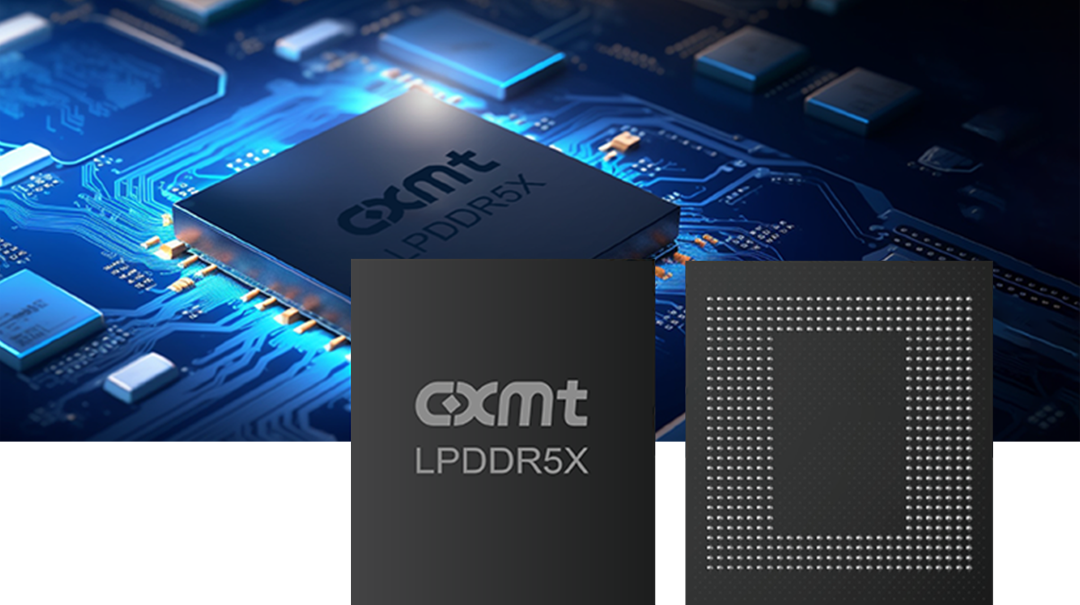
Changxin's LPDDR5X Product Information, Released in October 2025
Changxin's publicly disclosed top speeds now rank among high-end overseas equivalents. Phone makers can now compare products in the same category, with procurement evaluations delving deeper into power consumption, reliability, cost, and sustained delivery capabilities. The fifth-generation manufacturing platform's value lies in enhancing competitiveness across these supply conditions.
Changxin's upgrade focuses on the manufacturing platform, with LPDDR5X being one product leveraging this platform.
Phone makers require consistent, sufficient delivery volumes and competitive pricing. The new manufacturing platform helps improve both supply and cost conditions.
Several specific process metrics were announced: through quadruple patterning, the memory array's active area half-pitch was reduced to 11.95 nanometers; storage capacitor aspect ratios reached 45:1; and core functional area heights were reduced to 6762 nanometers. These changes occur within the memory array and its local structures. Calculated on a uniform capacity basis, a single wafer can now produce more dies, allowing Changxin to supply more memory with the same wafer input.
Overseas manufacturers are also enhancing manufacturing efficiency. Micron claims its 1γ process increases wafer bit density by over 30% compared to the previous 1β generation; Changxin's announced improvement of at least 50% refers to die output per wafer relative to the previous platform. Both companies are boosting wafer utilization through process iterations, with Changxin's overseas suppliers also continuously improving costs.
If the same wafer input yields more qualified, saleable capacity, manufacturing costs can be spread across more products. When equipment and wafer starts are constrained, improved unit wafer efficiency also increases output. This affects procurement conditions for every phone maker's order.
From increased dies per wafer to stable supply, yields must climb and mass production must scale. Die count multiplied by qualification rates determines saleable output; the new platform's adoption scope and delivery progress determine how many orders this efficiency gain can cover.
Changxin has already disclosed some phone maker clients.
Its 2026 interim report lists Xiaomi and Transsion as LPDDR5/5X supply chain customers; OPPO, Vivo, and Lenovo collaborate on LPDDR4X, while Honor is listed as a company-wide cooperation partner. Changxin's collaborations with these brands span different product generations and business scopes.
The Nubia NaviX Ultra, launched on September 16, disclosed specific suppliers. A ZTE announcement that day explicitly stated the phone uses LPDDR5X products with speeds up to 10667Mbps from Changxin, Samsung, and other manufacturers. Domestic and overseas original manufacturers thus supply the same phone model, allowing brands to arrange procurement across multiple suppliers.
This case brings competition directly to Samsung: Changxin has secured supply opportunities within the same phone model. Procurement departments must now compare prices, lead times, and actual performance when deciding which supplier receives more orders next.

Figure 3: Nubia NaviX Ultra Collaboration Poster with Changxin. Source: Nubia, Changxin.
Xiaomi has also deepened its cooperation. On September 7, Changxin officially announced that its LPDDR6 achieved first mass production in the Xiaomi 18 Fold. Beyond LPDDR5/5X supply chain collaboration, both sides extended their partnership to next-generation flagship memory.
Supply chain reports also mention Apple and Huawei. On August 6, National Business Daily cited foreign media reports stating that Apple had negotiated LPDDR5X prices with Changxin, but its pressure for lower prices was rejected; the same report claimed Huawei and Xiaomi secured capacity through long-term contracts. These negotiation and reservation messages make pricing and supply arrangements another negotiating thread between brands and Changxin.
Phone brands may also procure through distributors. Changxin's interim report discloses that the company uses both distribution and direct sales models, with distributors purchasing products before selling them to end customers and independently determining distribution methods and sales prices. Manufacturing cost savings may translate into different quotes for phone brands after passing through various procurement channels.
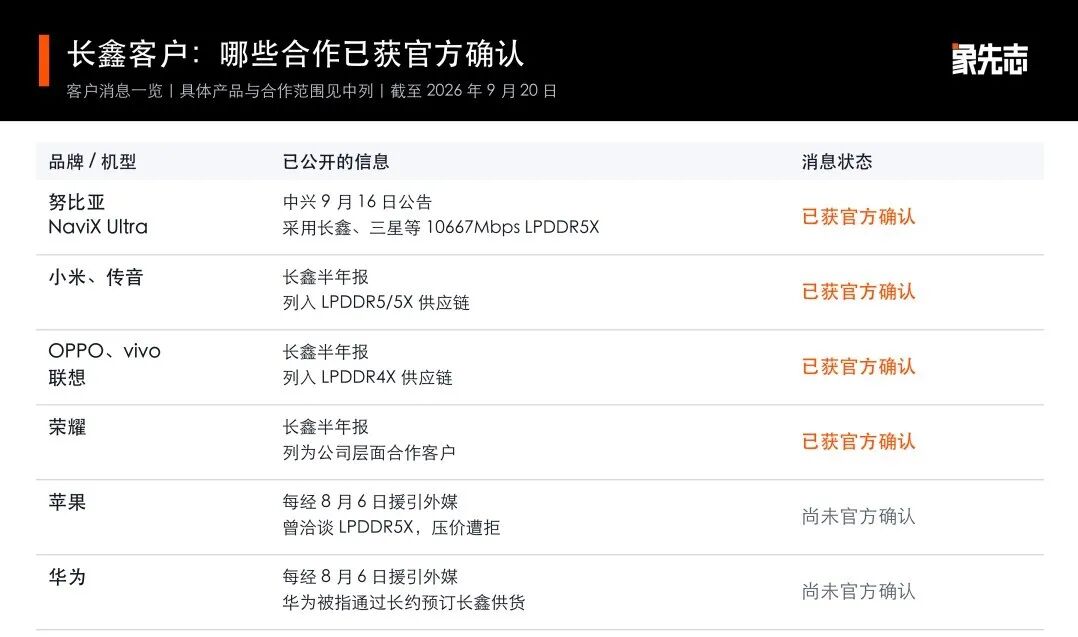
Changxin's Phone Maker Clients and Cooperation Scope
Share changes observed so far stem more from older-generation products. TrendForce, in its August 28 update on second-quarter mobile DRAM, linked Samsung's exit from LPDDR4X to Changxin's expanding share, noting Micron strategically reduced supplies to phone brands in the second quarter. This gave Changxin room to supplement supply, while LPDDR5X pushed its order competition into higher-end models.
SK Hynix already has clear Chinese phone clients: in August 2023, the company announced supplying 24GB LPDDR5X to the OnePlus Ace 2 Pro; in November, it announced supplying 16GB LPDDR5T to the Vivo X100 series. Domestic brands' high-capacity, high-speed memory procurement has long involved overseas original manufacturers. To compete for this market, Changxin must pass verification on subsequent models and secure orders from procurement departments.
Xiaomi and Transsion's existing LPDDR5/5X collaborations, along with Nubia's specific adoption, provide more direct starting points for Changxin to expand subsequent orders. OPPO, Vivo, and other LPDDR4X clients also form a potential customer base for new product collaborations.
Changxin's competition with three overseas original manufacturers has taken different paths. Nubia's co-supply arrangement puts Changxin directly against Samsung; SK Hynix's historical orders with OnePlus and Vivo represent existing partnerships Changxin must navigate when targeting high-end models. Micron's reduced phone supplies leave room for Changxin to meet demand.
Changxin's new orders may also come from growing phone memory capacities or unmet needs from other suppliers. Overall, Changxin's existing customer base remains stable, and in the era of on-device AI, it is likely to expand new business scopes rapidly.
The value of supplier competition becomes evident during procurement negotiations. Another verified option capable of sustained delivery increases phone makers' leverage when negotiating prices and lead times with original suppliers.
This marks a noteworthy step in high-end memory domestic substitution. Phone makers once accepted whatever quotes and delivery schedules a few original manufacturers offered; only when local suppliers entered the same product tier did comparison and choice become concrete.
For Changxin, entering a flagship model is just the beginning. Sustained participation in clients' subsequent products means keeping pace with smartphone processor and overall device iterations. Securing orders during price hikes differs from remaining in the supply chain after market conditions ease, requiring different competitive approaches.
03
Cost Reductions Face Two Hurdles
How much can phone makers save from a 50% increase in output?
Let's calculate based on manufacturing conditions. Assuming die count per wafer increases by 50% on a uniform capacity basis, with identical yields and unchanged manufacturing costs per wafer, the front-end manufacturing cost per unit of qualified capacity drops to two-thirds of the original, a roughly 33.3% reduction.
This estimate targets front-end manufacturing, with finished product costs also incorporating packaging, testing, and other expenses. Actual yield and per-wafer manufacturing fee changes would alter the cost reduction magnitude.
Between manufacturing costs and sales prices lies supply and demand.
Changxin itself is caught in this round of price hikes. On August 3, TrendForce projected in its third-quarter mobile DRAM contract price analysis that Changxin and SK Hynix might narrow their price gaps with other suppliers through more pronounced increases, motivated by strong demand to improve selling prices. For phone makers to share in the manufacturing efficiency gains, procurement negotiations remain essential.
If the orders are ample enough to swiftly absorb the newly produced output, Changxin can retain a portion of its efficiency-driven profits. To attract a larger client base or in the face of intensified supply competition, it may opt to lower its quotes to secure orders. Factors such as procurement volume, delivery arrangements, client certification, and switching costs all play a role in shaping the final negotiated terms.
Both phone manufacturers and Changxin share a common goal of boosting domestic supply, yet they differ in their stance on per-chip pricing. Phone makers aspire to procure chips at lower costs, whereas Changxin and its investors require profits to sustain R&D, manufacturing, and subsequent investment rounds. Both parties must, therefore, distribute efficiency gains through commercial negotiations.
To elucidate procurement changes, let's consider a scenario where the cost of a specific memory specification, previously at 100 units, escalates by 10% to 110 in the current cycle. Suppose there's another supply option that costs 10% less than the concurrent 110 quote, priced at 99. If a phone maker procures half of its requirements at 110 and the other half at 99, the average cost would be 104.5.
In this hypothetical situation, procurement costs still experience a 4.5% increase from the original cost but are 5% lower than if all orders were placed at 110. Consequently, the phone maker bears less price pressure and preserves some profit margin.
The magnitude of savings in this scenario hinges on price differentials for the same specification and the actual volumes adopted. The greater the number of orders covered by lower-priced supplies, the more significant the impact on average procurement costs.
Mobile phone brands still retain their pricing flexibility.
They can choose to retain the saved funds as profit to offset previous costs, maintain the original price while upgrading configurations, or directly reduce the price. Variations in processors, screens, imaging, and other components will also influence the overall cost of the phone. Thus, even if one type of memory becomes more affordable, the entire phone may still become pricier.
In fiercely competitive price segments, reduced procurement costs will provide brands with more leeway for adjustment. For instance, a phone that could previously only maintain its price with a 12GB configuration may now have the opportunity to offer a 16GB option; or the next generation, which initially required a substantial price hike, may ultimately only see a partial increase. The benefits for consumers will also be evident in these trade-offs between configuration and price.
When the market remains constrained, the newly added capacity may initially be utilized to fulfill previously unmet orders. For mobile phone manufacturers, mitigating the risk of production plan adjustments due to shortages also holds inherent value.
ChangXin's progress this time around will contribute to enhancing the supply of high-end mobile phone memory. The adoption in specific models, consistent delivery, and procurement quotes for identical specifications will further gauge its impact on prices. It will become clearer how far substitution has advanced when industry prices decline, whether customers persist in their purchases, and whether ChangXin can sustain its competitiveness.
Mobile phone consumers undoubtedly have grounds to anticipate that domestic memory will render products more affordable. From wafer production to chip quotes and ultimately to the price of the entire device, there are companies at each stage that need to recoup their investments, and competition will inevitably influence prices.
-
RSI: How Much Valuation Can It Support for Zhipu?
-
Young People Are Secretly Enjoying 4399 Game Suite on Xiaohongshu
-
![]()
China’s Premier Independent Token Factory: Secures 2.9 Billion Yuan in Funding
-
FAW and GAC Toyota: Collaborating Without Full Merger?
-
Honor Expands Partnership with Alibaba: Who Will Lead the AI Smartphone Revolution?
-
![]()
Yunqi Conference Heralds Computing Power Growth: Alibaba Cloud’s Data Center Capacity to Surpass 20GW by 2032, T-Head Reveals AI Chip Zhenwu V900
-
![]()
Singapore Hardware Veteran Creates an AI Golf Personal Trainer
-
![]()
Data Integration Throughout the Production Chain! Haomi Optics Initiates MES and ERP System Upgrade Project