150 Billion Yuan Spent in 18 Months: The Food Delivery Trilogy Concludes in a Deadlock
 09/23 2026
 392
392
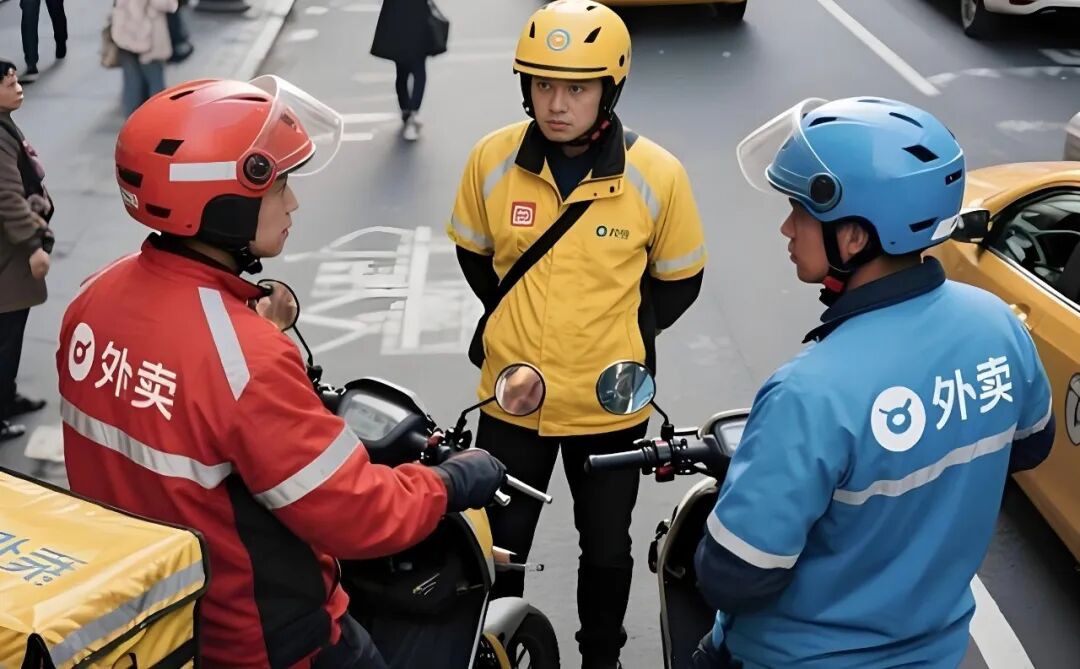
Last year, during lunch breaks in Beijing office buildings, everyone was fixated on one thing: which food delivery service was offering free coupons again.
Some individuals formed special groups to hunt for deals, relying entirely on platform subsidies for their daily meals, with their refrigerators stocked full of drinks bought for just a dime.
A video showing Liu Qiangdong, the founder of JD.com, personally delivering food in a rider's uniform went viral, sparking discussions about a "business tycoon coming down to earth" and garnering unanimous praise in the comments: "Brother Dong is so grounded."
A year and a half later, as people scrolled through their food delivery orders, many suddenly realized that they hadn't snagged a deal in a long time.
Subsidies had quietly vanished, yet the signs of the three major brands still hung neatly at the entrance of residential complexes.
iResearch's latest data clearly outlined the war's outcome: Meituan holds a 43% market share, Taobao Flash Delivery trails closely with 42%, and JD.com is left with 15%.
Over the course of a year and a half, the three platforms burned through roughly 150 billion yuan, ending in a stalemate where none managed to knock out the others.
1
Three Players, No Clear Victor
Let's tally up the score.
This 18-month food delivery war was the most intense close-quarters battle in the internet sector in a decade. According to TMTpost, the three platforms invested a cumulative total of approximately 150 billion yuan.
Meituan was the first to be put on the defensive.
Wang Xing, looking visibly more stressed at a shareholders' meeting, admitted that this irrational competition "nearly wasted an entire year." At its peak, Meituan's core local commerce business suffered a loss of 2 billion yuan in a single quarter. To defend its market share, it rolled out free deals and pre-order campaigns.
However, things changed by the second quarter of this year.
Meituan's core local commerce business swung from a 2 billion yuan quarterly loss to a 5.7 billion yuan profit. The key metric—profit per food delivery order—finally turned positive, at roughly 0.14 yuan per order. The gains were modest but pointed in the right direction: cost savings from reduced subsidies on one hand, and lower fulfillment costs from higher order density on the other. Meituan maintained a 55% share of the food delivery market while shedding its "monopoly" label.
Alibaba entered the fray later but fought the hardest.
Taobao Flash Delivery's debut saw order volumes that "recreated another Meituan" in just two months. The cost? A loss of 4-5 yuan per order, with up to 100 million orders delivered daily. Today, Alibaba's instant retail revenue has reached 53.295 billion yuan, up 45% year-on-year, with loss reduction outpacing market expectations. The market share numbers are even more striking: 42%, just one point behind Meituan.
JD.com took a different approach.
It waved the banner of "anti-overcompetition" the loudest while repeatedly ramping up its 10 billion yuan subsidy program, ultimately securing a 15% share. The cost? A roughly 4.8 yuan loss per food delivery order, even in Q2—the peak season. JD.com stopped flaunting order volumes in earnings calls, instead focusing on "high-net-worth users in core business districts."
After three rounds of intense competition, no one was eliminated, and no one truly won.
2
The Open War Ends, But the Shadow War Continues
The subsidy war was paused by regulators. Yet, the details on the streets show that the fight never truly stopped—it just shifted from cash-burning to cost-accounting.
The most visible sign? Taobao Convenience Stores. Their orange signs popped up one after another at residential complex entrances, with franchise terms that seemed too good to be true: rental subsidies covering half the rent, inventory sourced through e-commerce channels, and permission to list on all food delivery platforms. In just nine months, Taobao Convenience Stores expanded to 800 locations, nearing Meituan's "Squirrel Convenience" chain.
JD.com's strategy was colder—and more controversial. It equipped riders in core business districts with smart delivery boxes that could both refrigerate and insulate, claiming to "let workers enjoy dine-in-quality meals." In reality, it funneled delivery capacity toward high-margin orders. The result? Users outside these zones often waited half an hour for no one to accept their orders, with delays becoming routine. JD.com already has over 150,000 full-time riders—plenty of capacity, just not enough willing to serve your area.
Meituan wasn't idle, focusing its efforts behind the scenes. Wang Puzhong, head of core local commerce, revealed that Meituan is accelerating the integration of AI into workflows. A system called "Smart Shopkeeper" already serves over 1.3 million catering (restaurant) merchants nationwide, while more than 13,000 merchants use "Kangaroo Butler."
Another cost deserves separate mention.
In September, Taobao Flash Delivery was fined 6.55 million yuan for failing to verify the qualifications of 51 catering (restaurant) merchants on its platform.
This marked its second major fine for the same issue this year.
Subsidies may end, but issues like "ghost restaurants" won't disappear just because you burn less money.
3
The Real Battleground? The Warehouse Downstairs
With the market share war ending in a draw, the real competition lies elsewhere: front warehouses.
Over the past two months, Hema, Alibaba's grocery chain, shuttered three eight-year-old stores in Beijing—Jinyuan, Lize, and Economic Development Zone.
At the same time, Hema's front warehouses are expanding nationwide, surpassing 500 locations. The strategy of closing large stores and opening smaller warehouses is dubbed "store-to-warehouse" conversion in the industry.
Meituan's Xiangxiang Supermarket operates over 2,000 front warehouses, with plans to add 800 more this year.
JD.com's 7Fresh uses a "one store, multiple warehouses" model to expand its network, while RT-Mart has opened new front warehouses in four cities.
Jiang Fan, head of Alibaba's e-commerce group, offered this assessment: non-food instant retail transaction volume will surpass food delivery in the next fiscal year, potentially contributing 30% of Alibaba's China e-commerce platform GMV long-term.
The subtext? Food delivery is just the gateway to instant retail. The real prize is delivering everything from groceries to electronics, beauty products to medicines—all within 30 minutes.
Commerce Ministry data backs this up: instant delivery orders topped 30 billion in the first half of the year, with categories expanding from food and groceries to electronics, appliances, beauty products, and pharmaceuticals.
Looking back, this 150 billion yuan war wasn't just about food delivery orders—it was about securing a ticket to the next decade of instant retail. The winner will be the one who first fills "the warehouse downstairs."
Subsidies have stopped. The reckoning has begun.
Note: This article’s content and images are sourced from the internet. If there is any infringement, please contact us via private message for removal. This article does not constitute investment advice.
-
![]()
More Than 50 Crashes: A Chinese Farmer Takes Flying Cars to the Emirates Palace in Abu Dhabi
-
Enterprises Embracing AI Truly Miss the 'Contextual' Mark
-
![]()
Chinese Brands Ascend to Dominance in Global Handheld Smart Camera Rankings: DJI and Insta360 Command 93% Market Share
-
![]()
Meta’s Market Value Rockets by Nearly $200 Billion Overnight, Cloud Town Conference Takes the Lead: AI Applications Begin to Boom, Six Key Beneficiaries Unveiled
-
![]()
World Model: The First Year of AGI for Robots
-
![]()
Is the Second-Generation Doubao Smartphone a Wise Purchase?
-
![]()
Is the Second-Generation Doubao Smartphone a Worthy Purchase?
-
Zhou Jingren Steps Down from Center Stage