Overseas Markets Embrace Chinese Cars Amid Industrial Barriers
 09/23 2026
 365
365
Amidst rapid expansion, automotive firms are navigating a landscape of 'encirclement and pursuit'.
On September 22, the German automotive trade union spearheaded a significant protest movement.
This marked the largest automotive industry demonstration in Germany in recent memory, with 175,000 workers from the automotive sector rallying in over 280 cities nationwide. Employees from leading automakers such as Volkswagen, Mercedes-Benz, BMW, and Bosch collectively voiced their concerns.
The catalyst for this nationwide protest was Volkswagen's profit warning on September 18, which projected an operating profit margin of just up to 1% for the year. Volkswagen plans to lay off 100,000 employees by 2030. However, some experts also blame the layoffs, declining sales, and industry transformation challenges squarely on the 'unfair competition' from Chinese automobiles.

Christiane Benner, President of IG Metall, has publicly asserted that 'the immense pressure faced by German industry stems primarily from U.S. tariffs, escalating energy costs, and the pivotal factor—unfair competition from China.' She urges Germany to adopt an 'EU-made' strategy to counter unfair competition and has called on the EU to impose higher tariffs on Chinese imported automobiles to safeguard EU domestic manufacturers.
The European Dream Faces Reality
Contrary to union president Benner's stance, the German public holds divergent views, rendering her remarks somewhat ironic.
German media statistics reveal that 60% of Germans are inclined to choose Chinese new energy vehicles, with 80% of potential electric vehicle buyers prioritizing Chinese brands. Many German consumers even purchase high-end Chinese-made models cross-border, as cost-effectiveness and intelligent features have gained recognition in the end market.
Recently, German parallel importer Auto China imported the Audi E7X and E5 Sportback, models tailored for the Chinese market, into Germany for sale, but faced legal action from Audi's headquarters.
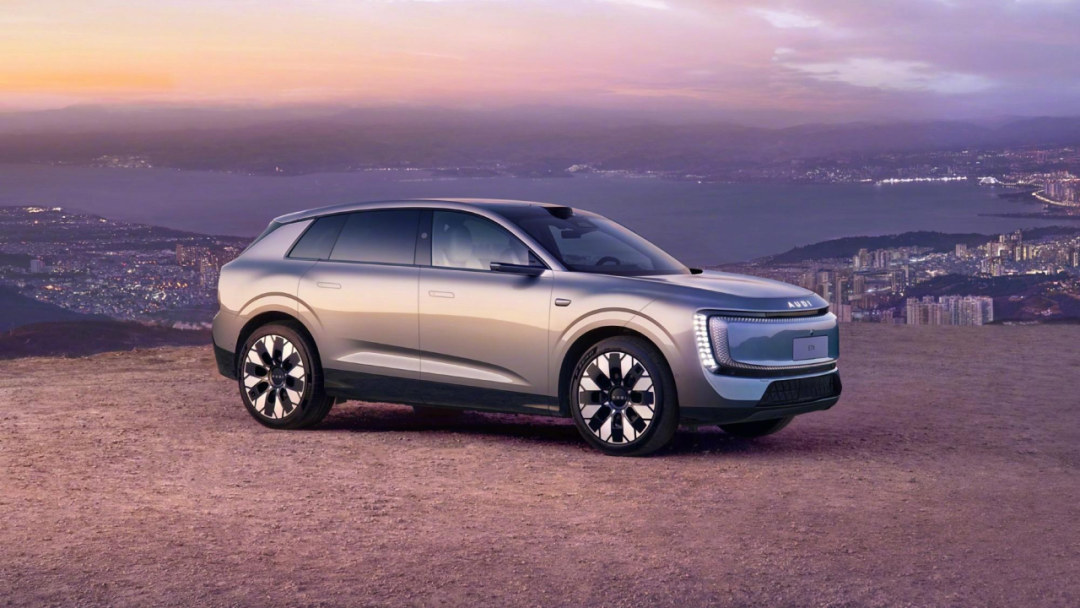
The Audi E7X sold over 4,000 units in its debut month on the Chinese market, achieving remarkable success. After being parallel exported to Germany, the car's price nearly doubled, yet its intelligence and electric performance outshone local German products in the same price bracket.
German dealers, not naive, are willing to risk legal action from their parent company to import the Audi E5 Sportback and E7X into Germany, precisely because these models hold strong appeal in the local market.
The public has spoken with their wallets, acknowledging the quality of Chinese automobiles, while capital and industrial unions lead the charge in erecting trade barriers.
Delving deeper, the anxiety of the German automotive industry stems not from 'Chinese cars being inferior,' but rather from their superiority, affordability, and rapid iteration, which have shattered the century-old brand premiums and technological barriers accumulated in Europe.
Historically, Europe leveraged technological monopolies in engines, transmissions, and chassis to dominate the global automotive industry, reaping excessive profits. Chinese new energy vehicles, with their differentiated advantages in pure electric architecture, intelligent cockpits, and advanced intelligent driving, have bypassed these technological barriers, achieving a paradigm shift and directly impacting the foundation of the German automotive industry.
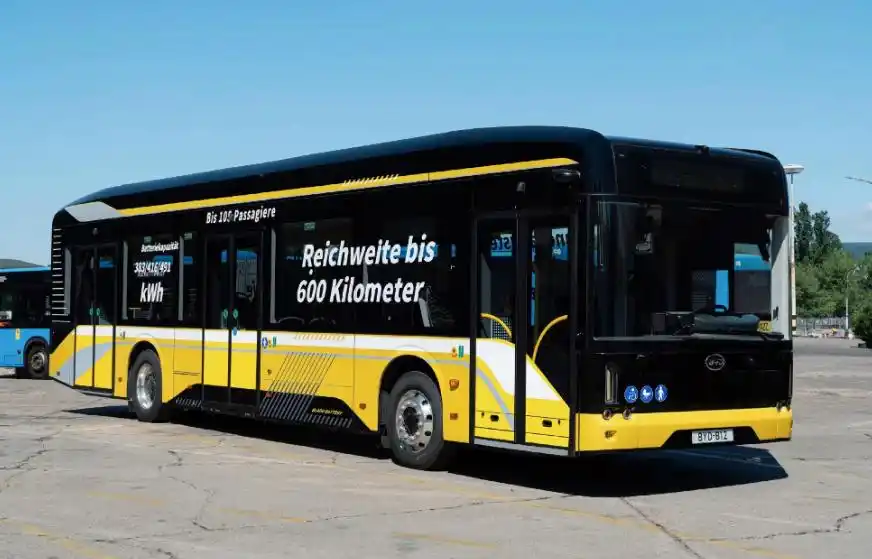
Late last year, Deutsche Bahn (DB) procured a substantial number of electric buses, with roughly 200 sourced from Chinese electric vehicle giant BYD. Union president Benner expressed indignation, arguing that as a German state-owned enterprise, Deutsche Bahn should adhere to local procurement principles and avoid purchasing products from foreign companies like BYD.
While tinged with local protectionism and nationalism, her stance, as the union head, is understandable in advocating for workers' welfare.
Indeed, the EU has not only imposed high tariffs on Chinese new energy vehicles but has also broadened the scope of investigations, including plug-in hybrid models in its anti-subsidy review system, continually raising the entry barriers for Chinese automakers.
More paradoxically, while the German government recognizes the necessity of cooperation with China, and some automakers still rely on Chinese market revenue for operations, it deliberately exaggerates narratives of 'overcapacity' and 'unfair competition,' echoing the logic of the Plaza Accord that once suppressed the Japanese industry, attempting to weaken the export competitiveness of Chinese automobiles through exchange rate pressure and trade restrictions.
On September 9, 2026, Italian unions even proposed imposing an 80% tariff on the excess portion of Chinese brand registrations in Europe once they exceed 8%, revealing their anxiety.
This divergence between market demand and policy regulation underscores that Europe's blockade is unrelated to product competitiveness but is a passive counterattack for industrial self-preservation.
Redneck Warnings: U.S. Unions' Plight
If Europe's containment of Chinese automotive companies is marked by hesitation and contradiction, U.S. unions reflect a sense of helplessness.
Six core industry associations representing U.S. automakers, parts suppliers, and dealers jointly wrote to the Trump administration, seeking to restrict Chinese automakers from entering the U.S. market, including through local production, overseas transshipment, or any other form of presence in North America.
This joint letter stripped away the veneer of so-called 'free trade' in the United States, exposing its exclusionary industrial protection logic.

The alliance also listed potential security risks and economic threats that Chinese electric vehicles and intelligent connected vehicle technologies might pose to the United States.
Just days ago, Trump ambiguously stated that if a Chinese automaker could employ American workers to produce cars in the United States, he would permit factory construction there.
This is not Trump's first signal of openness toward Chinese automakers entering the U.S. market. Earlier this year, he mentioned that if Chinese automakers wish to build factories in the United States, he would 'be very happy to see that happen.'
In the era of fuel vehicles, the United States relied on giants like General Motors and Ford to dictate industry rules and could firmly defend its domestic market and even extend its influence globally. However, in the era of new energy and intelligence, U.S. automakers have lagged in transformation, falling behind Chinese brands in electric technologies, intelligent driving, and overall vehicle cost-effectiveness.
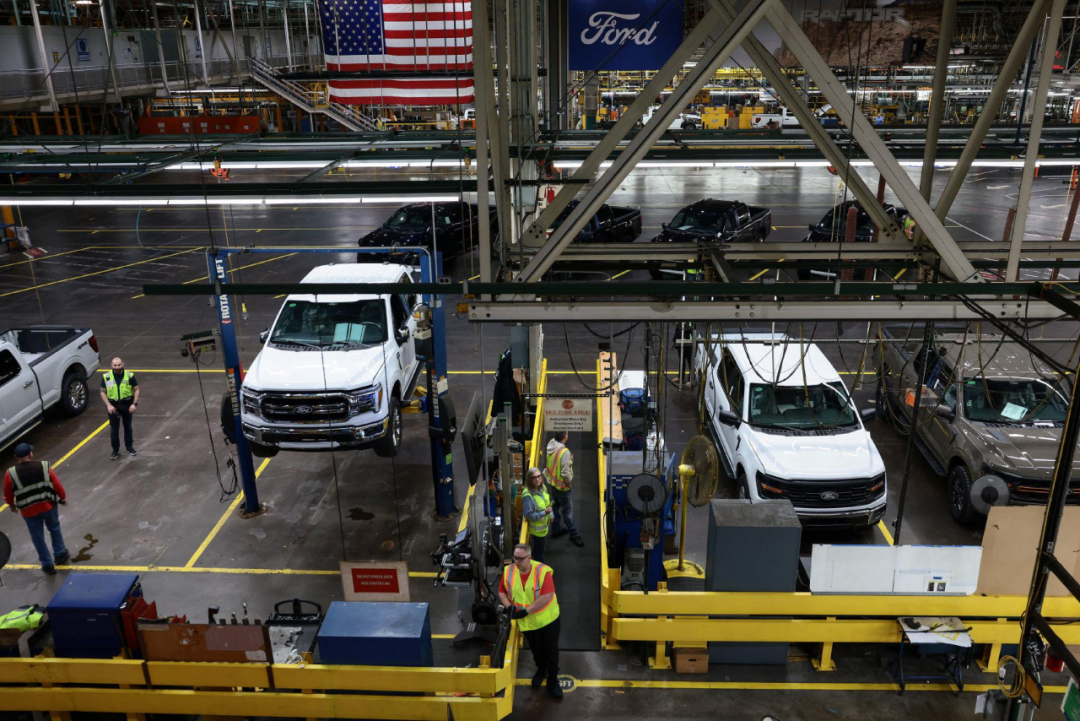
Moreover, U.S. consumers are eager for intelligent, cost-effective Chinese new energy vehicles. Even three-wheeled vehicles have sold out in the United States, and low-speed electric vehicles have had a transformative impact on the market.
More absurdly, the United States has introduced stringent rules of origin, requiring that the local value content of automobiles exported from Southeast Asia be no less than 70%, strictly controlling the transshipment and rebranding of Chinese parts.
Even under such protectionism, it has failed to dampen American enthusiasm. In the Rio District of Tijuana, Mexico, Chinese domestic automobile dealerships are perpetually filled with cars bearing California license plates, with vehicles typically driven into San Diego on the day of sale.
The BYD Seagull, renamed Dolphin Mini in Mexico, starts at the equivalent of $21,000. The funds for purchasing an average new car in the United States suffice for two and a half units, with change left over for a year's worth of electricity bills.

This is the so-called flat substitution.
Some American consumers, not even residing in border cities, specifically buy plane tickets to fly to Tijuana, enjoy a Mexican meal along the way, pick up their car, and drive it back to Arizona, Nevada, or even Oregon. Buying a car has become a destination travel experience, a way to pay tribute to the new generation of the 'Beat Generation' through being 'on the road.'
Southeast Asia's Ambitions and Challenges
Following the complete closure of high-end markets in Europe and the United States, Southeast Asia and Latin America, once considered fundamental export markets for Chinese automobiles, have also begun to tighten policies.
Historically, relying on RCEP tariff benefits and geographical advantages, Southeast Asia was a core incremental market for Chinese automobiles going overseas. With cost-effectiveness advantages, Chinese brands quickly gained local market share. However, driven by sustained pressure from the United States and the need for local industrial protection, many Southeast Asian countries have adjusted their trade policies and tightened entry rules.

Mexico took the lead in implementing stringent tariff policies, raising tariffs on Chinese imported light vehicles from 20% to 50%, directly impacting Chinese automotive布局 (layout) in the Latin American market. Southeast Asian countries followed suit, with Indonesia introducing stringent SNI mandatory certifications for complete vehicles and batteries, lengthening entry review cycles and raising compliance costs.
This January, Chinese brands achieved a historic moment in Thailand, with a 47.34% market share, surpassing Japanese brands that had dominated the market for over 60 years for the first time. BYD ranked second in the market with 12,800 units sold.
However, just a month later, the situation took a sharp turn. In February this year, the market share of Chinese brands plummeted to 11.6%, with BYD's sales dropping from 12,800 units to 295, a 97.7% month-on-month decline. Not a single Chinese brand ranked among the top five in the Thai market, while Japanese brands rebounded to a 78.9% market share.
Currently, Thailand's top ten industry associations have jointly petitioned the government, calling for a significant increase in the consumption tax on imported complete vehicles and strengthening local production barriers, with the shadow of Japanese automakers behind this move.
On September 10, Thailand's National Electric Vehicle Policy Committee agreed in principle to adjust the automobile consumption tax, linking tax incentives for electric vehicles to companies' investments, production, and local procurement contributions in Thailand. According to this direction, companies that only import and sell without local manufacturing will face higher tax burdens.
Clearly, this is a significant advantage for Japanese automakers, which are already deeply rooted in Southeast Asia.
Malaysia is even more direct, having terminated electric vehicle import incentives in December 2025. It now requires 'automakers to have a local production rate of no less than 40%, with 80% of capacity dedicated to exports, and setting minimum production value thresholds for locally sold models.'
Over the past decade, the Chinese automotive industry has achieved an epic comeback.
From a joint venture-dominated market and core technologies controlled by others to becoming the global leader in new energy vehicle production and sales for multiple consecutive years, with self-developed electric and intelligent driving technologies leading the world, Chinese automobiles have completely rewritten the global automotive industry landscape that has lasted for a century.
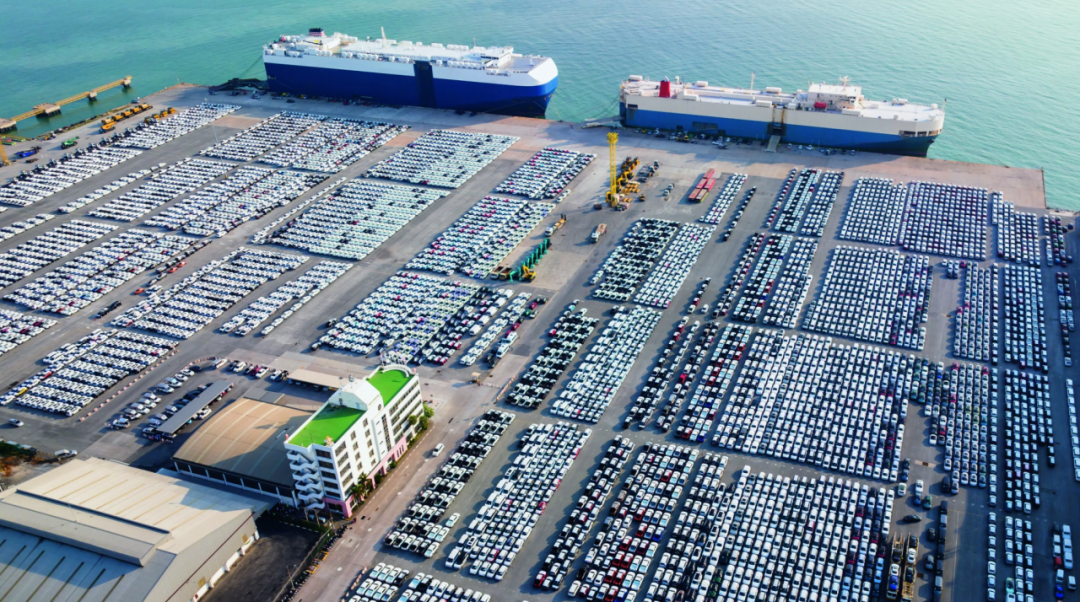
The latest release from the China Association of Automobile Manufacturers: From January to August this year, China exported 7.153 million automobiles, a year-on-year increase of 66.7%. The total exports for the entire year of 2025 were 7.098 million units. In eight months, China has exported the same volume as the entire previous year. According to authoritative institution (institutions) predictions, Chinese automobile exports may reach 10 million units in 2026, a year-on-year increase of 41%, becoming the first country globally to exceed 10 million units in exports, approximately 2.5 times that of Japan, the second-largest automotive exporter.
Amidst rapid growth, Chinese automobiles are facing 'encirclement and pursuit.'
German industrial workers are collectively protesting, the entire U.S. automotive industry has signed a joint letter calling for a blockade, and tariff barriers in emerging markets like Southeast Asia are escalating... This targeted blockade can be seen as the ultimate strategic containment of China's emerging automotive capacity by established powers amid the transition between old and new orders in the global automotive industry.
When the automotive industries of Japan and South Korea rose, they also encountered comprehensive trade blockades from Europe and the United States. Ultimately, they stood firm in the global market through technological deep cultivation (cultivation), brand breakthroughs, and rule-breaking.
The landscape of the century-spanning automotive industry is undergoing a profound transformation. The genuine epoch for Chinese automobiles has never been characterized by effortless progress or passive growth riding the waves of prevailing trends; rather, it is defined by the courage to break through barriers and achieve rebirth after enduring formidable storms and blockades.
Note: Certain images featured in this article are sourced from the internet. Should any infringement occur, kindly reach out to us for prompt removal.
-END-
-
![]()
More Than 50 Crashes: A Chinese Farmer Takes Flying Cars to the Emirates Palace in Abu Dhabi
-
Enterprises Embracing AI Truly Miss the 'Contextual' Mark
-
![]()
Chinese Brands Ascend to Dominance in Global Handheld Smart Camera Rankings: DJI and Insta360 Command 93% Market Share
-
![]()
Meta’s Market Value Rockets by Nearly $200 Billion Overnight, Cloud Town Conference Takes the Lead: AI Applications Begin to Boom, Six Key Beneficiaries Unveiled
-
![]()
World Model: The First Year of AGI for Robots
-
![]()
Is the Second-Generation Doubao Smartphone a Wise Purchase?
-
![]()
Is the Second-Generation Doubao Smartphone a Worthy Purchase?
-
Zhou Jingren Steps Down from Center Stage