Day 4 of National Day: How are new energy vehicles performing for travel?
 10/08 2026
 381
381
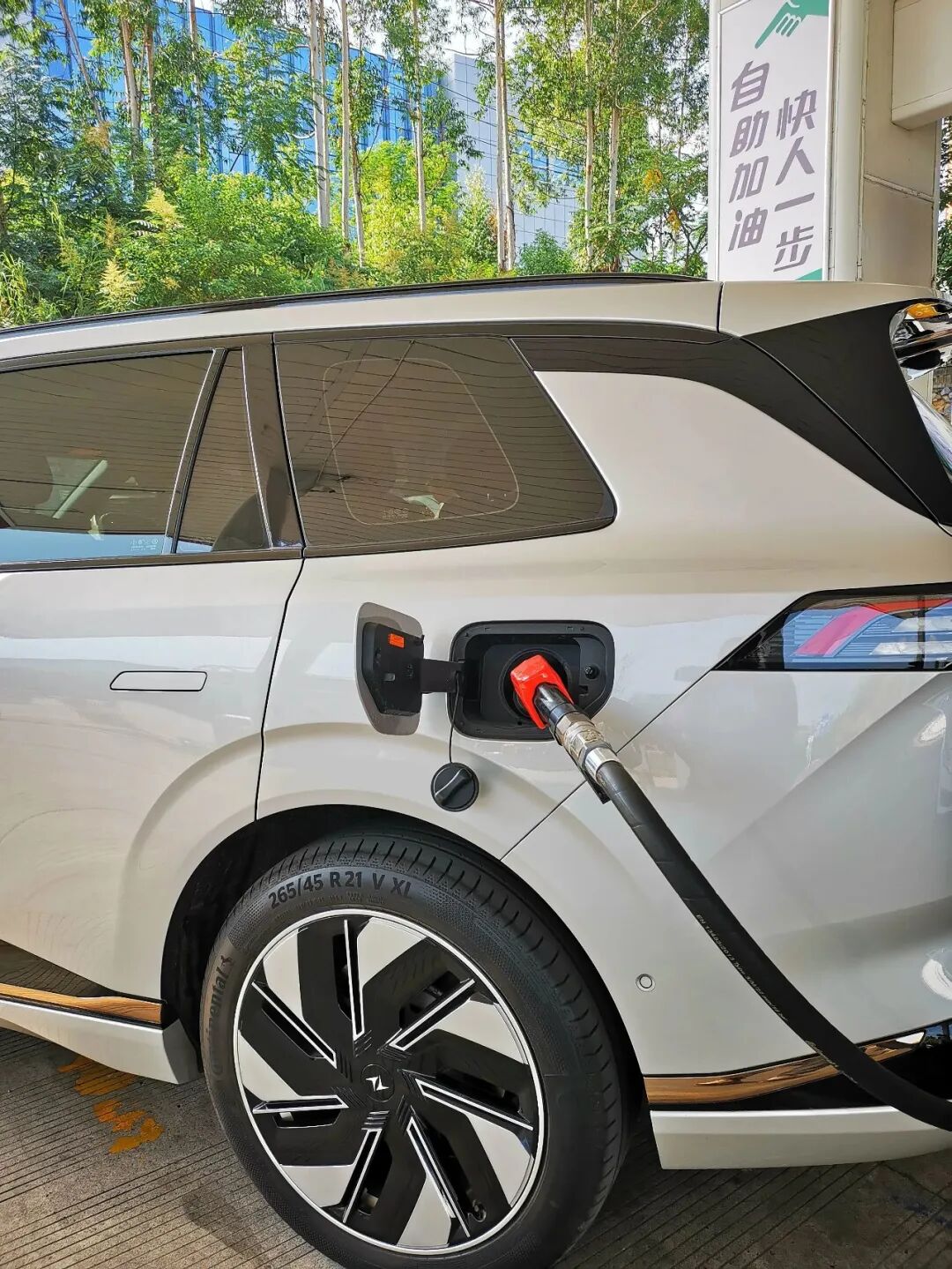

The performance of new energy vehicles still depends on travel during the National Day holiday
Image Source | Internet (Please contact for deletion if infringing) Partially AI-generated
More than halfway through the National Day holiday, the popularity of long-distance self-drive trips and short periphery (zhōu biān, 'surrounding') excursions remains high.
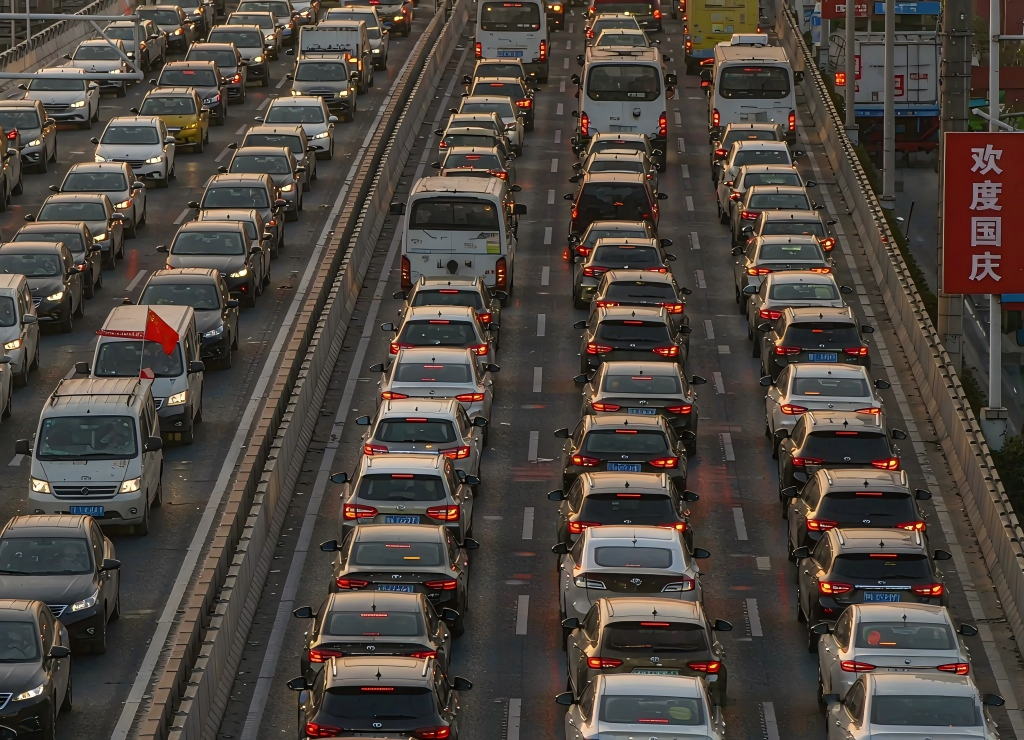
Compared to the peak travel congestion on the first day of the holiday and the initial return rush on the second day, road traffic on the fourth day of the National Day holiday shows characteristics of peak decline, diverse road conditions, and rich scenarios.
Slow-moving traffic on highways, congestion in suburban areas, mountain roads, and complex conditions with rain and fog intertwine, providing a 'natural testing ground' for assessing the comprehensive capabilities of new energy vehicles.
Unlike previous National Day holidays, which focused solely on the topic of 'new energy vehicle owners queuing for charging,' the public opinion trend in this year's National Day automotive market has completely shifted.
From major road condition platforms, automotive media tests, and real feedback from users across the internet, it is clear that new energy vehicles have long shed the single label of 'range anxiety.' The actual combat capabilities of advanced intelligent driving, stability in complex road conditions, safety boundaries in vehicle use, and real energy consumption during holidays have become the core discussion topics for this year's National Day travel.
However, road condition data from the fourth day of the holiday also exposed shortcomings in specific scenarios: energy replenishment facilities remain scarce in remote scenic areas, mountainous sections, and townships.
Many owners traveling to niche attractions and rural areas reported extremely low coverage of charging stations in some remote sections, along with issues such as equipment failures and poor signal reception, posing major obstacles to new energy self-drive trips.
At the same time, the combination of low temperatures, rainy weather, and steady highway speeds led to a slight increase in energy consumption for some pure electric models, with actual range slightly lower than daily urban commuting performance, remaining a frequent concern for owners.
The noticeable improvements are due, on one hand, to the continuous expansion of charging infrastructure nationwide, with holiday-specific operation and maintenance and emergency replenishment points fully operational. On the other hand, owners' travel habits have become more rational, with a significant increase in awareness of planning replenishment routes in advance and avoiding peak travel times.

From 'auxiliary function' to 'long-distance necessity,' performance shows polarization
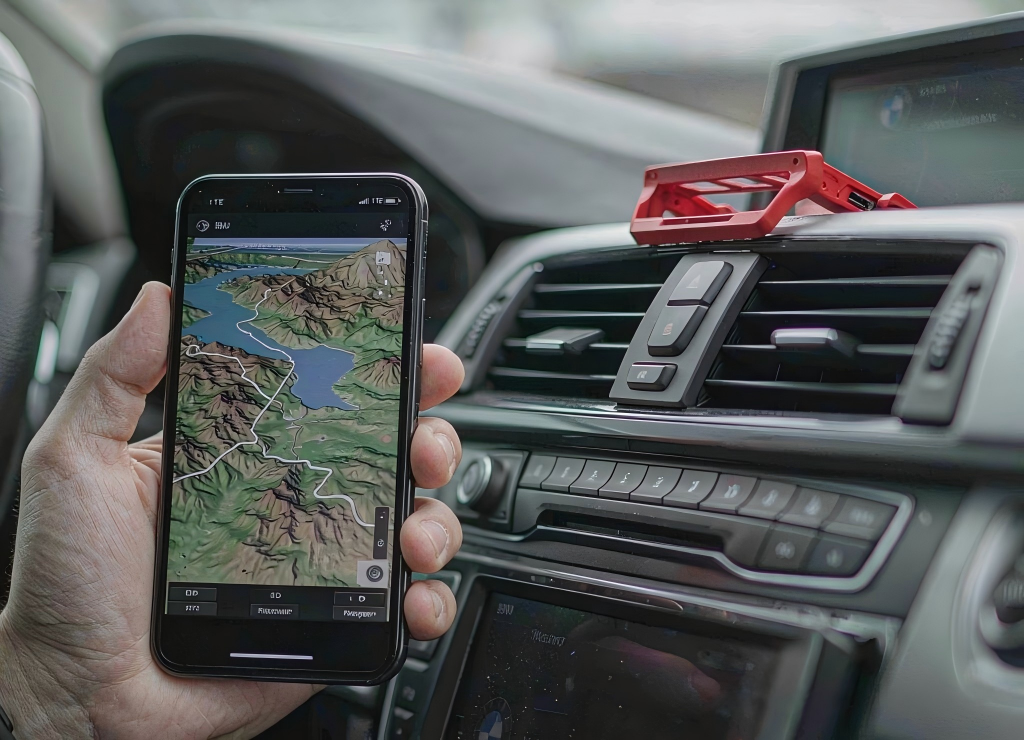
If intelligent driving was merely a 'novelty function' for a few owners during previous National Day holidays, this year's diverse holiday road conditions have thoroughly proven that advanced intelligent driving has become a standard and essential feature for long-distance new energy self-drive trips.
Complex and changing holiday road conditions have left no hiding place for the true capabilities of intelligent driving systems from various brands, with actual combat performance showing clear polarization.
Leading intelligent driving systems have undergone large-scale holiday combat verification. According to official data, on the first day of the National Day holiday alone, user activity for mainstream advanced intelligent driving systems exceeded one million, with cumulative assisted driving mileage surpassing 70 million kilometers in the early holiday period. The average mileage driven with intelligent driving per user reached three times the daily average, with this data continuing to rise steadily throughout the holiday.
This shows that more and more owners are willing to actively enable assisted driving functions to alleviate driving fatigue during long-distance congestion and highway travel.
From continuous media tests, the advantages of mature advanced intelligent driving systems are prominent: highway NOA (Navigate on Autopilot) navigates lane changes decisively and smoothly, actively shifts to avoid large vehicles, controls curvature smoothly when entering and exiting ramps, and follows vehicles steadily without jerking in slow-moving highway congestion.
In urban congestion scenarios, it can accurately identify traffic lights, non-motorized vehicles, and pedestrians, with significantly improved adaptability to sudden road conditions such as cut-ins and lane encroachments.
The intelligent parking function has solved parking difficulties in narrow spaces at holiday attractions and shopping districts, allowing novice owners to easily complete automatic and remote parking.
At the same time, the shortcomings and controversies of intelligent driving systems have also been exposed during the holiday, becoming a focus of online discussion:
First, insufficient adaptability to extreme scenarios. During the National Day holiday, low-visibility conditions such as rain and fog occurred in many places, leading to decreased recognition sensitivity, lane keeping deviations, and overly abrupt active deceleration in some mid-to-low-end intelligent driving systems. A few models experienced temporary system exits, requiring timely manual takeover.
Data shows that under complex highway conditions, ordinary intelligent driving systems require manual intervention every few dozen kilometers on average, with stability far inferior to advanced versions.
Second, user cognitive biases pose safety risks. During the holiday, there were dangerous cases in multiple places where owners enabled intelligent driving and took their hands off the wheel and eyes off the road, even falling asleep, with no response despite multiple external horn reminders, relying solely on the vehicle's automatic braking for passive risk avoidance.
In response to this phenomenon, relevant traffic management departments have clearly reiterated: All current civilian intelligent driving systems are at the L2 level of assisted driving, not fully autonomous driving. The primary responsibility for vehicle operation always lies with the driver, and violation (wéi guī, 'violating regulations') operations such as taking hands off the wheel or lying down will face multiple levels of accountability.
Third, homogenization and uneven adaptability of intelligent driving experiences. High-speed intelligent driving stability in joint-venture new energy models is impressive, but adaptability in urban scenarios is weak; new force models offer more comprehensive coverage of all-scenario intelligent driving, but some models exhibit overly aggressive highway lane changes and overly conservative low-speed following, with differences in intelligent driving logic among brands causing adaptability issues for owners test-driving across models.

Real feedback from users across the internet
Combing through tens of thousands of user comments on major social and entertainment platforms, it is evident that ordinary owners no longer dwell on the paper parameters released by automakers. Instead, practicality, stability, and safety in real road conditions are the core issues of greatest concern, with user sentiment showing three distinct trends.
First, there has been a significant increase in recognition of 'intelligent driving for workload reduction.' Most long-distance self-drive owners stated that on congested highway sections during the National Day holiday, the intelligent driving follow and navigation functions greatly alleviated the fatigue of long-distance driving, especially during night driving and long periods of steady-speed travel, where the fault tolerance rate of assisted driving far exceeds manual driving, becoming the 'most practical function' for holiday self-drive trips.
Many users Speak frankly (zhí yán, 'said bluntly'): 'Now, when choosing a new energy vehicle, having reliable advanced intelligent driving is more important than interior and configuration.'
Second, there is a rejection of 'intelligent driving myths,' with a return to rational cognition. After several days of real combat in complex road conditions, users' understanding of intelligent driving has become increasingly sober.
Numerous owners commented that intelligent driving can only serve as an auxiliary tool, with limitations in system judgment when facing scenarios such as rainy day reflections, direct strong light, roads without markings, and sudden obstacles, and should never be fully relied upon.
Previously excessive hype about 'fully autonomous driving' has significantly decreased, with rational views on assisted driving becoming the mainstream consensus.
Third, energy consumption and replenishment details remain pain points and essential needs. User complaints are highly concentrated on two points: First, the excessively high energy consumption and significant range reduction of pure electric models in rainy and low-temperature conditions, requiring frequent replenishment planning for long-distance travel; second, the inadequate matching (pèi tào, 'supporting') charging infrastructure in remote scenic areas and townships, with issues such as equipment failures, failed scanning, and disordered queuing still affecting the self-drive experience.
Plug-in hybrid models, with their ability to run on both fuel and electricity without frequent replenishment, have received significant praise from users for cross-province long-distance and remote road condition travel.
From an industry perspective, the overall market performance of new energy vehicles in the first four days of the National Day holiday sets a clear tone for industry development in the last quarter of 2026: Competition among new energy vehicles has completely moved beyond 'range parameter competition' and entered a refined stage of all-scenario user experience, intelligent driving actual combat capabilities, and safety and stability.
On one hand, advanced intelligent driving is accelerating its popularization. Previously, advanced intelligent driving was mostly equipped on high-end flagship models, but this National Day holiday, the intelligent driving functions of a large number of mid-range mass-produced models have undergone large-scale real combat deployment, with continuous popularization of all-scenario capabilities on highways, in urban areas, and for parking.
Industry data shows that the usage and activation rates of intelligent driving functions reached new annual highs during the National Day holiday, marking intelligent driving as truly becoming a frequently used essential function for users, rather than just a marketing point for automakers.
On the other hand, industry safety regulations continue to tighten. In response to frequent cases of violation (wéi guī, 'violating regulations') use of intelligent driving during the holiday, authoritative platforms and traffic management departments have continued to provide education and guidance, clarifying the safety boundaries of assisted driving and pressuring automakers to optimize human-machine interaction reminders and driver monitoring systems to prevent dangerous behaviors of excessive reliance on intelligent driving by users.
At the same time, several leading automakers have introduced intelligent driving scenario coverage guarantees and accident supplementary compensation policies to further improve the safety system for intelligent driving travel.
In addition, the shortcomings of energy replenishment infrastructure have once again become a focus of industry attention.
Industry point of view (guān diǎn, 'viewpoints') point out that while the energy replenishment system on urban and highway main roads has become relatively complete, the lagging matching (pèi tào, 'supporting') replenishment facilities in sinking markets and remote cultural and tourism scenarios have become a core bottleneck restricting the all-domain travel of new energy vehicles. Subsequent infrastructure sink (xià chén, 'sinking'), intelligent operation and maintenance, and emergency replenishment system construction will be key focus areas for the industry.
The popularization of intelligent driving functions has bid farewell to fatigue in long-distance self-drive trips.
The improvement of the energy replenishment system has significantly reduced travel anxiety.
The safety awareness, extreme scenario adaptability, and sinking matching (pèi tào, 'supporting') shortcomings exposed in real combat have also brought the industry back to rational development.
In the latter half of the holiday, the return rush is about to begin, and new energy vehicles will face a new round of high-density, high-intensity road condition tests.
The future core competitiveness of new energy vehicles has never been about extreme parameters but rather stability in complex scenarios, safety in millions of trips, and practical experiences that meet user needs.
-
Second-Generation Doubao Phone Falls Short in Resolving Previous Limitations
-
![]()
"Dark Side of the Moon" Completes Final Pre-IPO Funding Round with Valuation of Approximately $50 Billion, Kimi Set to List in Hong Kong!
-
![]()
Apple Imposes Mandatory Adaptation Directive for iPhone Duo, Marking Unprecedented Assertiveness
-
![]()
Huawei's Xu Zhijun: The Real Challenge of Super Nodes Transcends Technology
-
The Long-Standing Foldable Adaptation Challenge: Solved by Apple, Eluding Huawei, Xiaomi, and Samsung for Years
-
![]()
Impressive Annual Output: 1 Million Pieces! Zhongteng Huasheng's Ultra-Precision High-Performance Optical Film Project Commences Trial Production
-
![]()
Tens of Millions in Funding Secured! Can Yuanxi Photonics Surmount the Mass Production Hurdle for Metasurface Optics?
-
AMD Invests Massively in Physical AI? Acquires World Labs for $8.2 Billion