BAIC New Energy: Double-Legged Progress, But How Far Can It March?
 10/10 2026
 496
496
Original content from New Energy Perspective (ID: xinnengyuanqianzhan)
Full text: 2,759 characters | Reading time: 7 minutes
For a summary, watch the video; for details, delve into the article.
BAIC New Energy, once at rock bottom, is now "flourishing" once again.
According to the September 2026 production and sales report released by its parent company, BAIC BluePark, BAIC New Energy produced 24,843 vehicles in September, marking a 23.94% year-on-year increase, and sold 24,080 vehicles, up 17.24% from the previous year. For the first nine months of 2026, cumulative sales reached 163,376 vehicles, a 46.52% year-on-year surge.
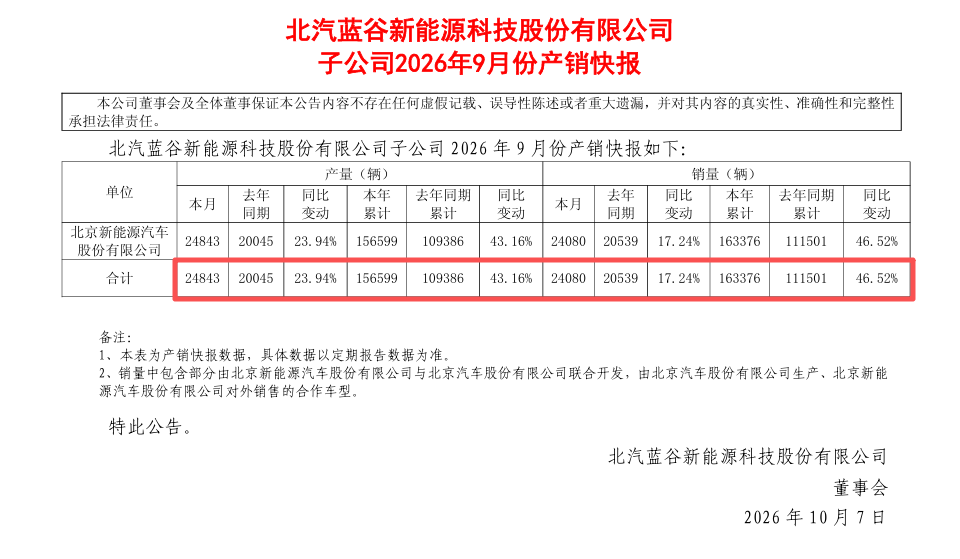
Figure/BAIC BluePark's September 2026 Production and Sales Report
Source/BAIC BluePark Announcement
While the results are promising, they fall short of Chairman Liu Guanqiao's expectations. At the 18th XuanYuan Auto Blue Book Forum, Liu set an ambitious annual sales target of 400,000 vehicles. This implies that BAIC New Energy needs to sell nearly 80,000 vehicles per month in the last three months of 2026 to meet this goal—a daunting task for a company relying on ARCFOX and XIANGJIE. Moreover, financial gaps are evident in BAIC BluePark's data, raising concerns.
It's undeniable that ARCFOX and XIANGJIE have made significant strides, progressing at a faster pace than before. BAIC New Energy's aspiration to join the top tier of the new energy vehicle industry by 2027 remains alive.
1. Sales Surge: BAIC New Energy on the Rise
Rewinding more than a decade, BAIC New Energy was China's leading seller of pure electric vehicles, even surpassing Tesla in 2017 to claim the global sales crown for pure electric vehicles.
However, impacted by factors such as a significant reduction in new energy subsidies, BAIC New Energy's sales plummeted in 2020, with only 25,900 vehicles sold. As the ARCFOX brand gained momentum, BAIC New Energy embarked on its recovery journey.
In 2021, BAIC New Energy saw minimal growth, with sales of 26,100 vehicles. In 2022, sales rebounded to 50,200 vehicles. In 2023, during the recovery phase, sales skyrocketed by 80% year-on-year to 92,000 vehicles. In 2024, BAIC New Energy sold over 110,000 vehicles, a 23.53% year-on-year increase.
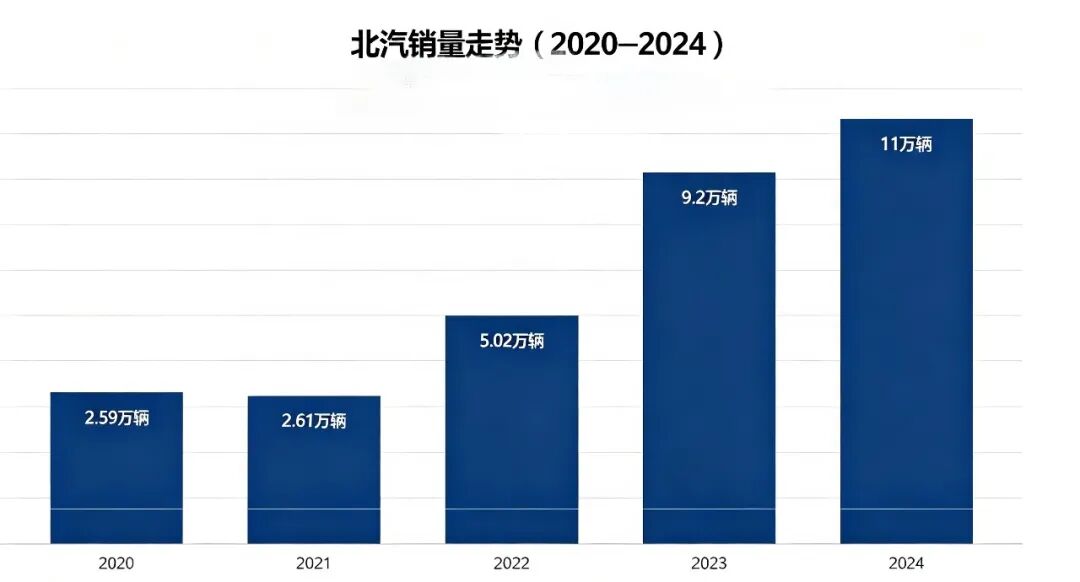
Figure/BAIC Sales Trend
Source/AI-generated
BAIC New Energy reached its recent sales peak in 2025, with 209,600 vehicles sold, of which ARCFOX contributed 161,000 vehicles, accounting for nearly 80%. By September 2026, ARCFOX remained the cornerstone. According to BAIC BluePark's announcement, ARCFOX sold 21,518 vehicles in September, representing 90% of the group's total sales.
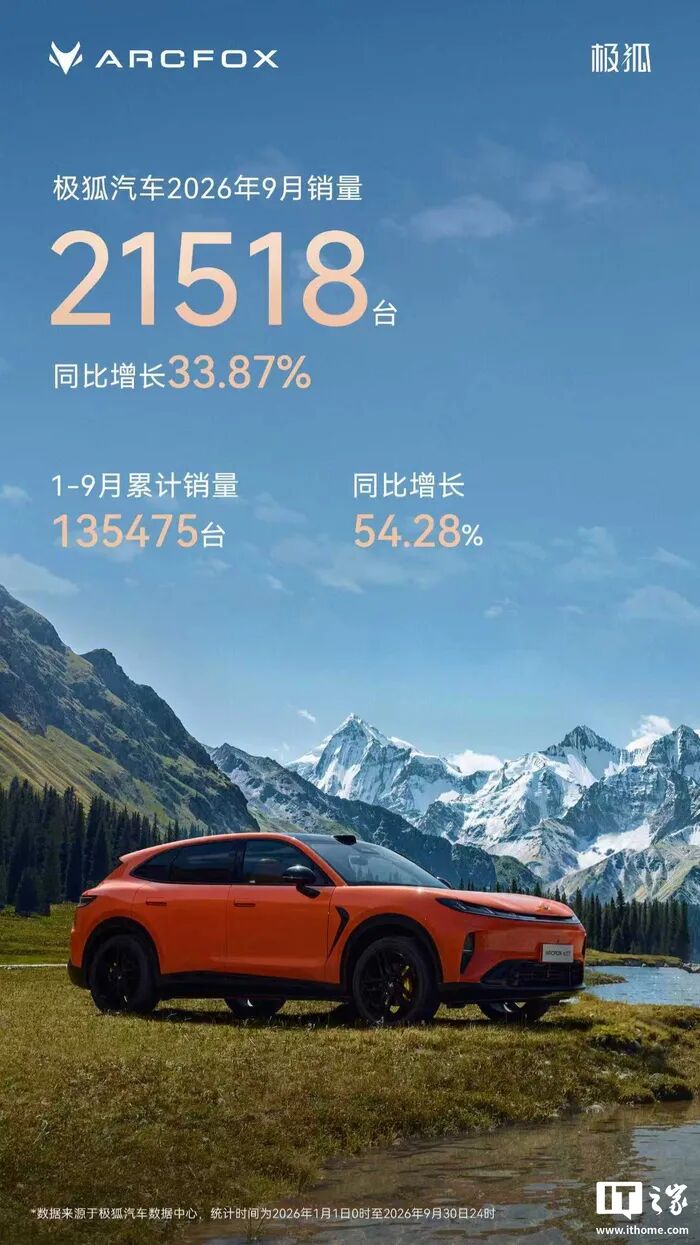
Figure/21,518 ARCFOX Vehicles Sold in September 2026
Source/Internet, screenshot from New Energy Perspective
On the XIANGJIE front, while less prominent than ARCFOX, its positioning is higher. The XIANGJIE S9 and S9T models have cumulatively delivered over 60,000 vehicles, winning the sales championship for luxury new energy sedans priced above 300,000 yuan for nine consecutive months.
The XIANGJIE G9, a large SUV launched in August, is priced between 429,800 and 549,800 yuan. On September 28, the first XIANGJIE MPV model, the V8, opened for pre-sale starting at 329,800 yuan. Developed jointly by BAIC and Huawei, it offers both pure electric and extended-range powertrains. From a product lineup perspective, BAIC New Energy's offerings are indeed more robust than before.
Notably, the ARCFOX Alpha T7, launched on September 16, is priced between 132,800 and 168,800 yuan and offers both pure electric and extended-range versions, equipped with CATL batteries and Huawei's ADAS technology.

Figure/ARCFOX Alpha T7 Launch Price
Source/Internet, screenshot from New Energy Perspective
Pre-orders for this model exceeded 10,000 units within two hours of launch, surpassed 30,000 units in 72 hours, and broke 60,000 units in 21 days. Within one hour of launch, confirmed orders exceeded 30,000 units.
It is reported that to minimize customer wait times, BAIC Magna's factory switched to full-capacity production mode starting October 5.
BAIC New Energy's sales are on the rise, and its factories are ramping up production. This indicates that BAIC New Energy has won over many consumers with its "solid build quality," "spacious interiors," "reliable range," and "cost-effectiveness." However, we have also encountered some differing opinions, such as complaints about the "infotainment system being the biggest weakness, occasionally lagging or even going black."
For XIANGJIE, users are generally satisfied with Huawei-enabled smart driving and cabin experiences but have also criticized issues like the "narrow storage slot on the front door panel, making it difficult to securely place a thermos, and the shallow center console cup holders causing tall bottles to tip during sudden braking."
These cases suggest that there is still room for improvement in product quality control.
2. Heavy Losses Persist: Survival Crisis Lingers
However, BAIC New Energy's biggest challenge is not product competitiveness or sales performance but the fact that the more it sells, the more it loses.
Since 2020, BAIC BluePark has accumulated losses of 34.102 billion yuan over six years. Although its gross margin improved from -55% in earlier years to -2.18% in 2025, it has not yet turned positive.
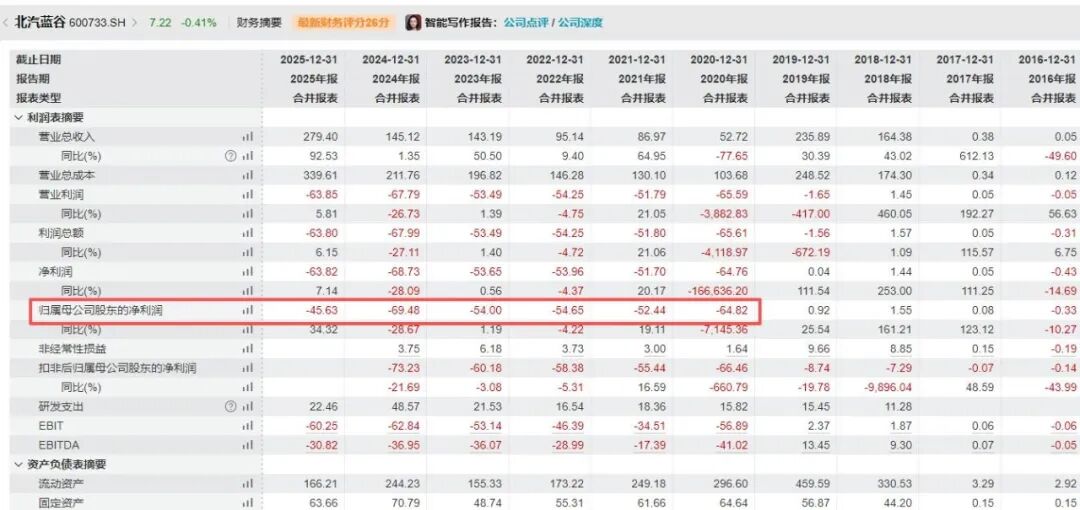
Figure/BAIC BluePark's Six-Year Cumulative Losses of 34.102 Billion Yuan
Source/Internet, screenshot from New Energy Perspective
In 2025, despite selling over 209,000 vehicles, BAIC New Energy still reported a net loss of approximately 4.563 billion yuan. In the first half of 2026, BAIC BluePark's revenue reached 11.597 billion yuan, up 21.86% year-on-year, but its net loss widened to 1.938 billion yuan, with operating cash flow at -1.750 billion yuan.
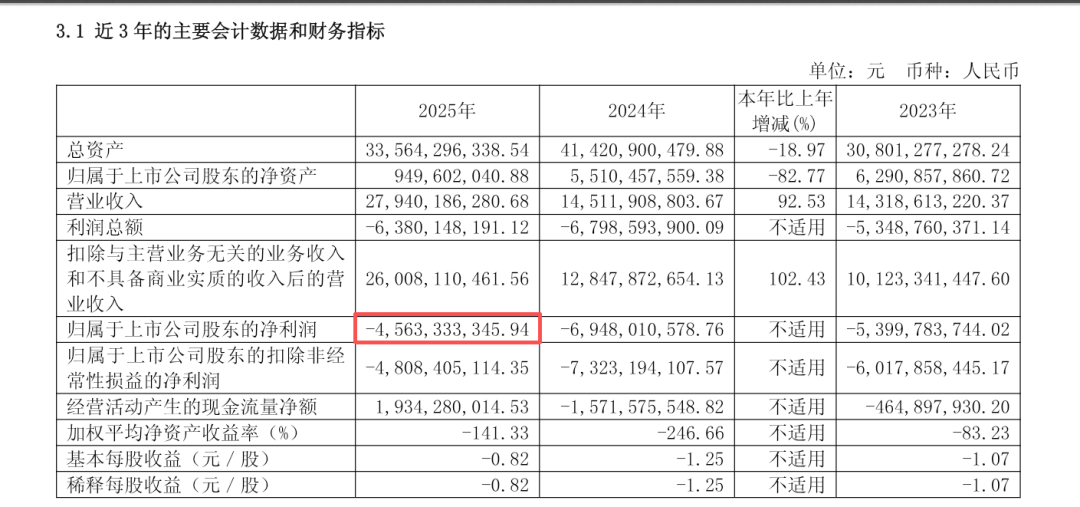
Figure/BAIC's Net Loss Still at 4.563 Billion Yuan
Source/Internet, screenshot from New Energy Perspective
While revenue and scale are growing, losses are not narrowing, indicating that BAIC New Energy has not yet achieved true self-sufficiency.
More critically, BAIC BluePark's asset-liability ratio remains high, reaching 81.66% at the end of the second quarter of 2026. Despite multiple private placements, financial pressure has not been fundamentally alleviated. Meanwhile, BAIC New Energy is acquiring assets related to the Miyun factory for approximately 1.516 billion yuan (including tax). While this deal helps integrate XIANGJIE's production capacity, it also poses new financial challenges amid ongoing losses and cash flow pressures.
Simply put, BAIC New Energy faces the dual pressures of funding expansion and delivery while relying on external capital to cover losses—a challenging situation.
Another often-overlooked issue is the fragility of BAIC New Energy's sales growth. ARCFOX's current best-selling models are concentrated in the low-price segment below 120,000 yuan, accounting for over 80% of sales. Low-margin volume models struggle to offset significant upfront fixed costs, and if price wars intensify, BAIC New Energy could easily fall into a "sell more, lose more" trap.
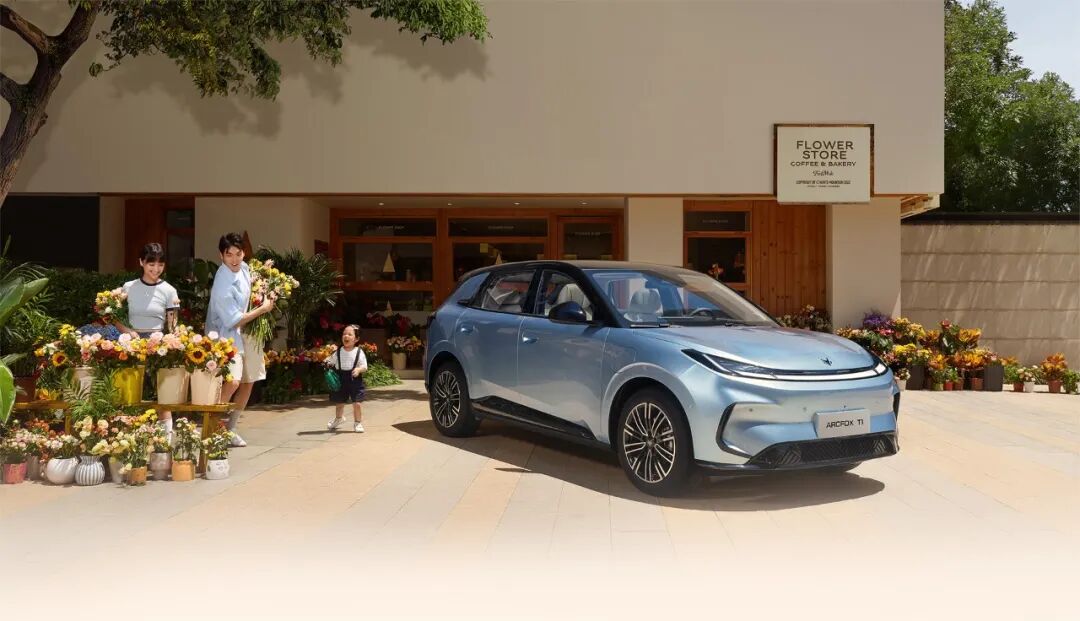
Figure/ARCFOX T1
Source/Internet, screenshot from New Energy Perspective
On the other hand, while XIANGJIE has a higher average selling price, the premium market is fiercely competitive, with traditional luxury brands cutting prices and new entrants continuously upgrading features. It remains uncertain how much market share XIANGJIE can retain and whether it can consistently deliver high-value models.
Notably, in September 2026, Huawei and Seres adjusted their cooperation model for the AITO brand, raising concerns about whether other brands in Huawei's Harmony Intelligent Mobility ecosystem would be affected. BAIC BluePark quickly clarified that the adjustment applied only to AITO, with XIANGJIE maintaining Huawei's deep involvement. The cooperation has been upgraded to a "automaker + Huawei tech ecosystem" strategic partnership.
Some analysts believe that after the AITO cooperation model adjustment, XIANGJIE's role within Harmony Intelligent Mobility has become clearer. It serves as both BAIC's flagship brand for high-end new energy vehicles and a core member of the Harmony Intelligent Mobility ecosystem.
3. The Path Forward for BAIC New Energy
This may clarify BAIC New Energy's current strategy: XIANGJIE targets the high-end market, while ARCFOX drives sales volume. Importantly, this strategy is now supported by actual sales figures.
For XIANGJIE, with AITO no longer its "biggest competitor," it may gain better resources and more attention, further solidifying its position in the high-end new energy vehicle market.
Currently, XIANGJIE has established a full lineup in the high-end new energy market, including sedans, station wagons, SUVs, and MPVs. Its four flagship models—S9, S9T, G9, and V8—cover major market segments.
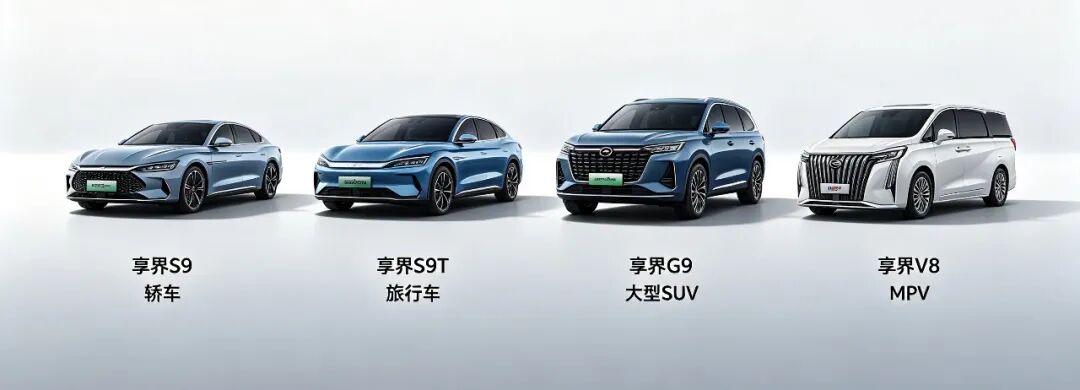
Figure/XIANGJIE S9, S9T, G9, and V8
Source/Internet, screenshot from New Energy Perspective
The XIANGJIE G9 has also obtained Beijing's L3 autonomous driving road test license, becoming the first model approved for L3 testing at speeds up to 120 km/h. The XIANGJIE Super Factory has recruited talent from the original Beijing Benz manufacturing system, combining BAIC's luxury vehicle manufacturing expertise with Huawei's intelligent technologies to create a unique identity distinct from other Harmony Intelligent Mobility brands.
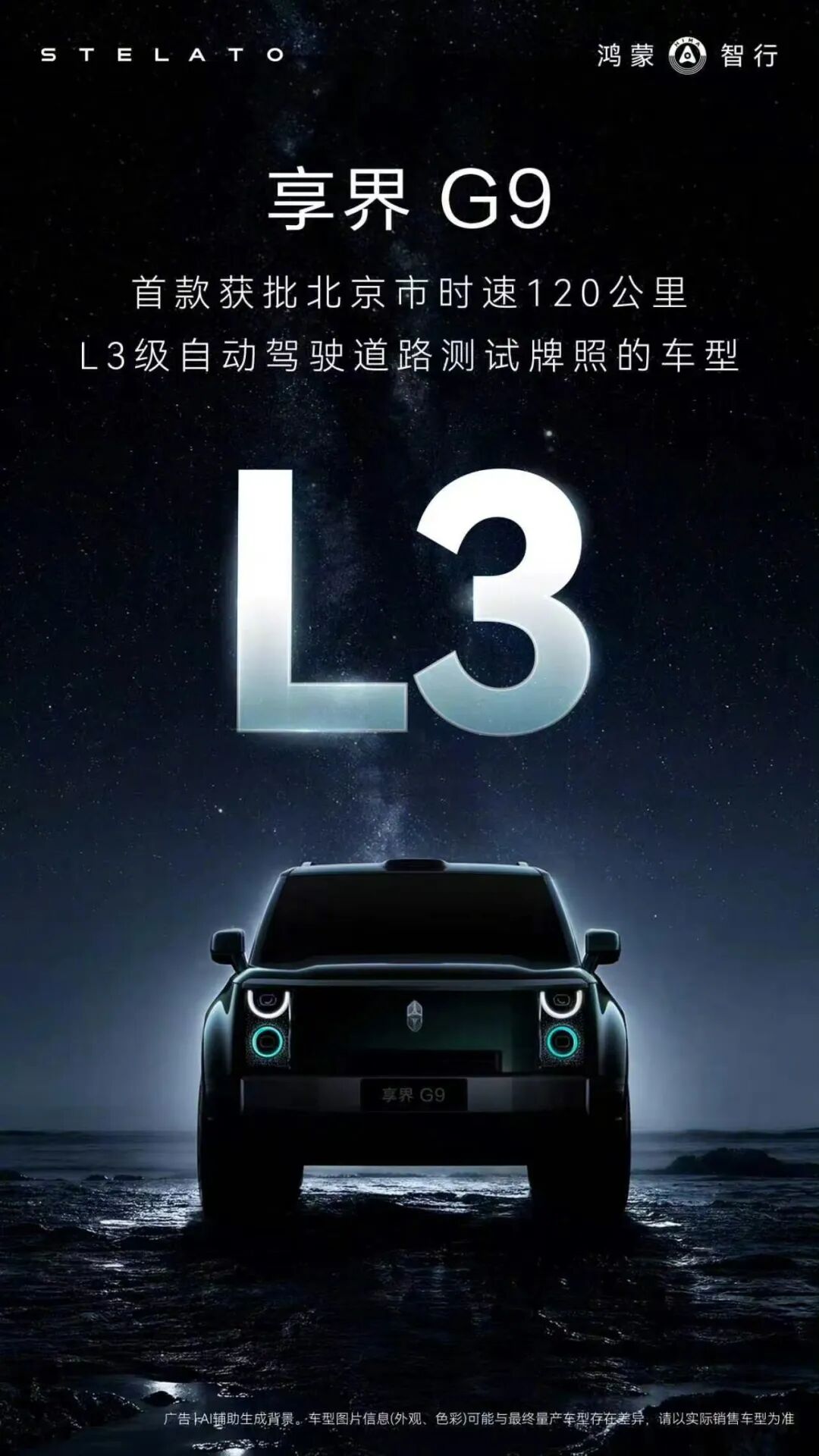
Figure/XIANGJIE G9 Obtains Beijing's L3 Autonomous Driving Road Test License
Source/Internet, screenshot from New Energy Perspective
ARCFOX, meanwhile, focuses on "technological breadth." For example, the ARCFOX Beta S3 offers pure electric, extended-range, and battery-swap powertrains, with battery leasing for the swap version starting at 64,800 yuan. A single body architecture supporting three powertrain types is rare among domestic automakers.
ARCFOX has also established three product lines—Alpha, Beta, and Wendao—with differentiated positioning effects beginning to emerge.
Another advantage for BAIC New Energy lies in its supply chain layout, particularly the BAIC-CATL Battery Factory. Jointly invested by CATL, BAIC Group, Jingneng Group, and Xiaomi Group, CATL holds a 51% stake, while BAIC holds 39%.
The factory plans to produce 7.5 GWh of battery cells in 2026 and will have an annual production capacity of 15 GWh once fully operational. Designed as a "lighthouse factory + zero-carbon factory," it is located near Xiaomi Auto's Yizhuang factory and will supply battery products to automakers in the Beijing-Tianjin-Hebei region, including BAIC and Xiaomi.
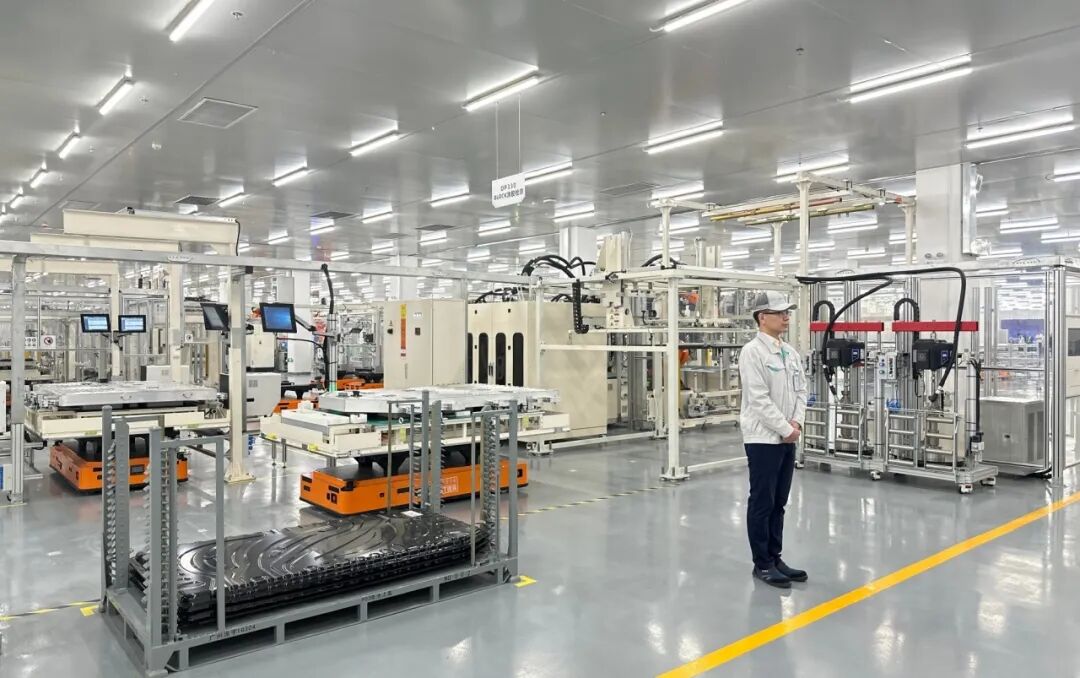
Figure/BAIC-CATL Battery Factory
Source/Internet, screenshot from New Energy Perspective
The significance of this lies in the fact that batteries account for the largest share of new energy vehicle costs. With its own battery factory, ARCFOX and XIANGJIE gain greater control over the stability of core component supply and procurement costs. While a single factory with an annual capacity of 15 GWh cannot solve all problems, it at least demonstrates that BAIC New Energy is beginning to make genuine strides in deepening its industrial chain layout.
Returning to the original question: With both legs now moving, how far can BAIC New Energy go? ARCFOX's sales base is expanding, XIANGJIE's high-end positioning is solidifying, and the battery factory is operational—these fundamentals are indeed improving. However, cumulative losses exceeding 34 billion yuan, negative gross margins, and an asset-liability ratio exceeding 80% all serve as reminders: Taking strides is not difficult; the challenge lies in finding a self-sustaining, sustainable pace.
BAIC New Energy still has a long road ahead.
[Header image generated by AI]
-
Kuaishou’s ‘Kling’ Edges Closer to IPO, Eyeing Hong Kong Listing by 2027
-
Muse One Month After Launch: Personal Agents Have the New BAT Trio Hooked
-
![]()
BAIC New Energy: Double-Legged Progress, But How Far Can It March?
-
![]()
Case Amount Hits 201.085 Million Yuan! Optical Enterprise Faces Charges for Smuggling State-Prohibited Goods
-
![]()
Optical Giant Changes Leadership: Transition and Challenges During a Period of Performance Pressure
-
![]()
Better Not Expect Too Much from the Domestic Muse
-
The Race to Become the ‘First Video Large Model Stock’: Kling AI Eyes Hong Kong IPO, Targeting Launch as Soon as Next Year
-
![]()
Holiday Sales of Communication Devices Soar by 119.8%: Is It Volume or Pricing Driving Growth?