Li Bin Proves Prescient Again: Huawei Qiankun Dives into Battery Swapping
 10/20 2026
 451
The Battery Swapping Circle Expands Even Further
Author: Wang Lei
Editor: Qin Zhangyong
Li Bin has made another winning bet.
Because Huawei is now venturing into the battery swapping arena.
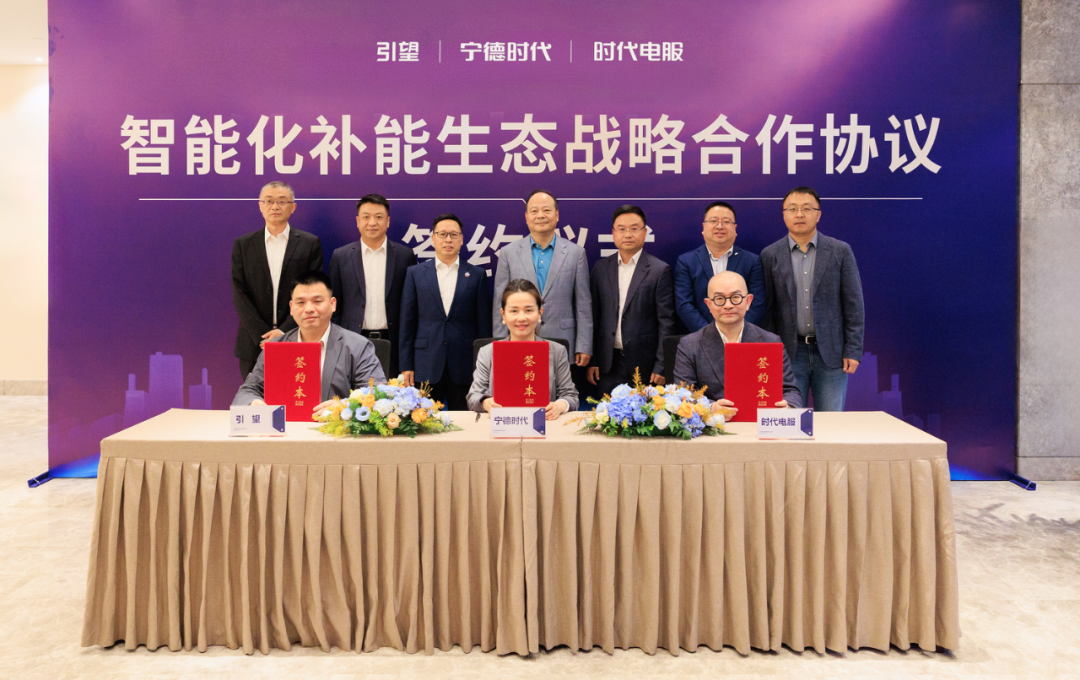
Just yesterday, Yinwang, the core entity of Huawei's automotive business unit (BU), announced a comprehensive collaboration with Contemporary Amperex Technology Co. Limited (CATL) and Contemporary Electric Service Technology Co., Ltd. Their goal? To develop an intelligent battery swapping ecosystem for new energy vehicles.
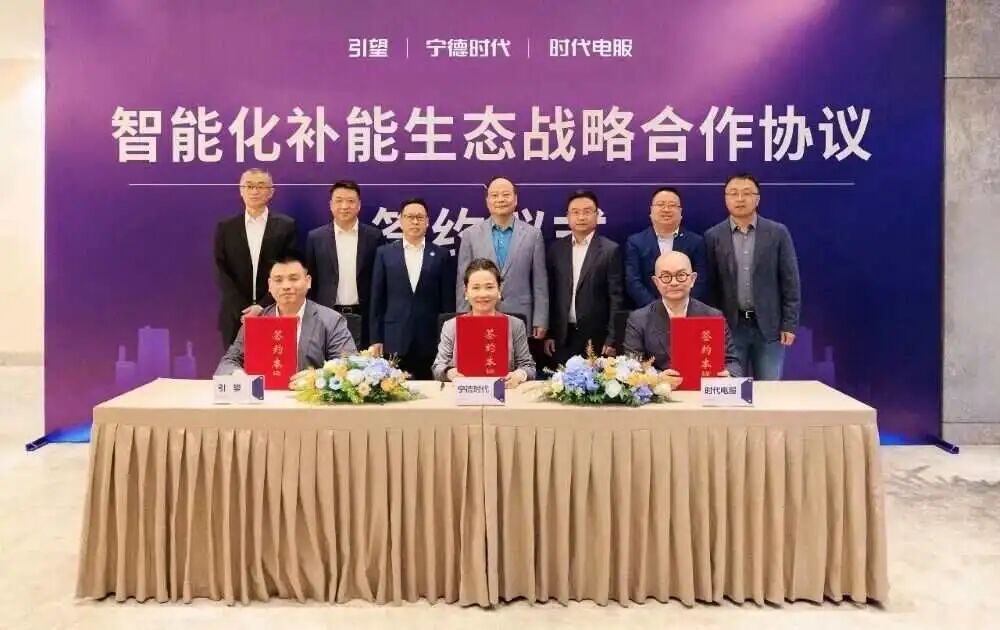
The event was graced by none other than Zeng Yuqun, Chairman and CEO of CATL, and Jin Yuzhi, CEO of Huawei Yinwang, highlighting the strategic importance of this partnership within their respective ecosystems.
Under this cooperation framework, the three entities will bolster their collaboration in battery swapping technology and network infrastructure. They aim to work alongside ecological partners to construct an intelligent battery swapping ecosystem that goes beyond merely setting up a few battery swapping stations. Instead, the focus is on deeper integration of vehicle services with the battery swapping system.
The cooperation will primarily zero in on two key areas: First, the trio will achieve system-level integration across vehicle, station, and cloud platforms. By linking CATL's Chocolate battery swapping network with Huawei Qiankun Intelligent Driving, intelligent predictions and proactive scheduling can be executed based on real-time battery status and user travel patterns. Vehicles will autonomously determine their energy replenishment needs, locate stations, enter garages, align automatically, complete a fully automatic battery swap in just 99 seconds, and exit independently, forming a seamless closed-loop process.
Second, Yinwang will join forces with strategic partners to expand the battery swapping energy replenishment ecosystem. This will be achieved by ensuring compatibility and integration between cooperative vehicle models and CATL's Chocolate battery swapping network.
This implies that any vehicle model equipped with Huawei's Qiankun solution could potentially be compatible with CATL's Chocolate battery swapping system. Notably, it was previously reported that the second model of Yijing, a new energy brand co-developed by Dongfeng and Huawei, is considering a battery swapping version, with the project currently in the pre-research stage.
Furthermore, the three parties will intensify their cooperation in battery swapping technology and network infrastructure, continuously expanding Yinwang's "10-Minute Qiankun Intelligent Driving Life Circle" to provide users of Huawei's Qiankun Intelligent Vehicle Solution with richer and more convenient intelligent battery swapping options.
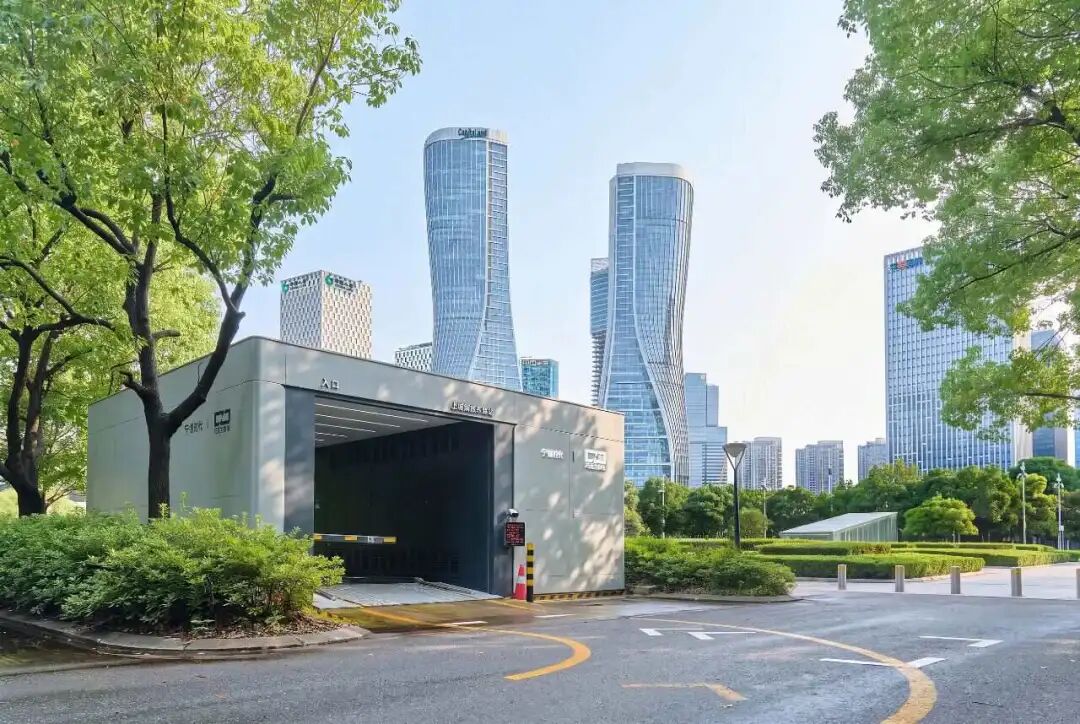
As of September 29, CATL has already established 2,520 Chocolate battery swapping stations across 200 cities, with plans to expand to 30,000 stations. The aim is to connect cities and highways under a unified battery swapping standard.
Yinwang had previously launched the "10-Minute Qiankun Intelligent Driving Life Circle," integrating common vehicle usage scenarios such as assisted driving, parking fee payment, intelligent charging, and intelligent vehicle maintenance. This collaboration now completes the energy replenishment ecosystem for Qiankun Intelligent Driving by incorporating both charging and battery swapping options.
For the Qiankun ecosystem, this fills in the "last mile." But for the entire battery swapping sector, it may introduce the most critical variable yet.
As is widely acknowledged, battery swapping is a business that heavily relies on network effects. No matter how many stations are built, if no vehicles come to swap batteries, the assets remain underutilized. For CATL, the challenge has never been the ability to construct stations but rather the scarcity of compatible vehicle models.
Behind Yinwang lies a vast pool of over 25 automotive brands, more than 50 vehicle models, and a combined existing and incremental vehicle fleet of 1.9 million—far more valuable than any bilateral agreement.
The fact that Huawei is embracing battery swapping sends a significant signal to the industry.
NIO is likely to be one of the primary beneficiaries, and for a straightforward reason: In the past, whenever NIO was discussed, battery swapping almost always became a focal point of debate. Was the massive investment in building stations worthwhile? With charging speeds improving, was battery swapping still necessary? Did consumers even desire battery separation?
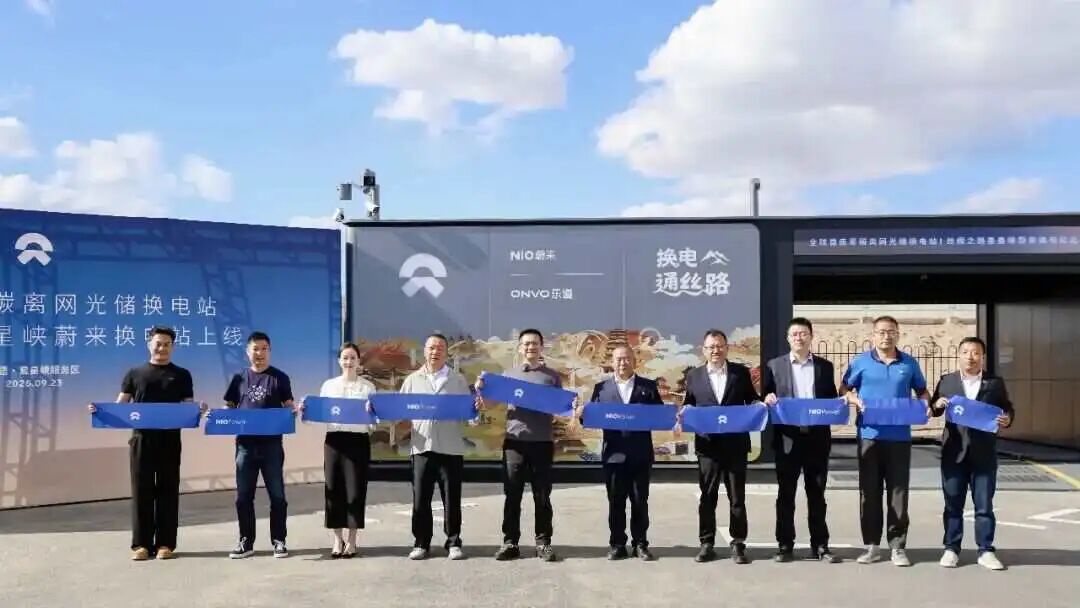
Now, with CATL continuing to expand its battery swapping network and Huawei Qiankun entering the battery swapping ecosystem, these tangible actions will prompt more people to reevaluate the value of battery swapping. When key industry players begin investing resources, dismissing this approach with a simple "battery swapping has no future" becomes increasingly untenable.
Correspondingly, as more influential companies join the fray, market recognition and industrial foundations for battery swapping are likely to mature more swiftly. The higher the recognition of battery swapping, the more NIO's previous market education costs can be transformed into a first-mover advantage.
As battery swapping evolves from NIO's exclusive narrative into a "stage" for industry giants to collaborate and compete, the real competition has only just begun.
-
![]()
Self-Developed Chip Valued at 10 Billion Yuan: Can Li Auto’s Second Growth Curve Succeed?
-
![]()
The Year of High-Intensity Action: What Is Ant Group Betting On?
-
![]()
DeepSeek V4 Pro Officially Launches with Price Increase Effective August 17
-
![]()
Keynote Speaker | Li Yanming, Volcano Engine’s Senior Enterprise Solution Expert, Confirmed for WAIE (10th) 2026 AI Industry Conference & AI Agent Industry Application Conference
-
![]()
Nvidia Brings in Wall Street, Potentially Revolutionizing Valuation Logic for Computing Power
-
![]()
High-Profile Guest | Qiao Yuchuan, Director of Embodied Intelligence Solutions at SenseTime, Confirmed to Attend WAIE (10th) 2026 AI Industry Conference & AI Agent Industry Application Conference
-
![]()
Conant Optical Claims Spot in Alibaba’s Qianwen AI Glasses Core Optical Supply Chain!
-
![]()
Breaking Away from Integrated Assembly: What’s the Wager of This Domestic FTIR ‘Little Giant’?