Net Profit Tumbles! Musk Persists in Investing, Tesla Faces a ‘Crucial Challenge’ in 2027
 10/23 2026
 541
Written by | Guanchejun
After three quarters, Tesla has once again presented a financial report indicating a decline in both revenue and profit.
On the evening of October 21, Beijing time, Tesla released its financial results for the third quarter of 2026. Revenue dipped by 0.17% year-on-year, GAAP operating profit plummeted by 56%, and the operating profit margin dwindled to 2.6%. In Guanchejun's opinion, this is one of Tesla's least impressive profit reports in recent memory.
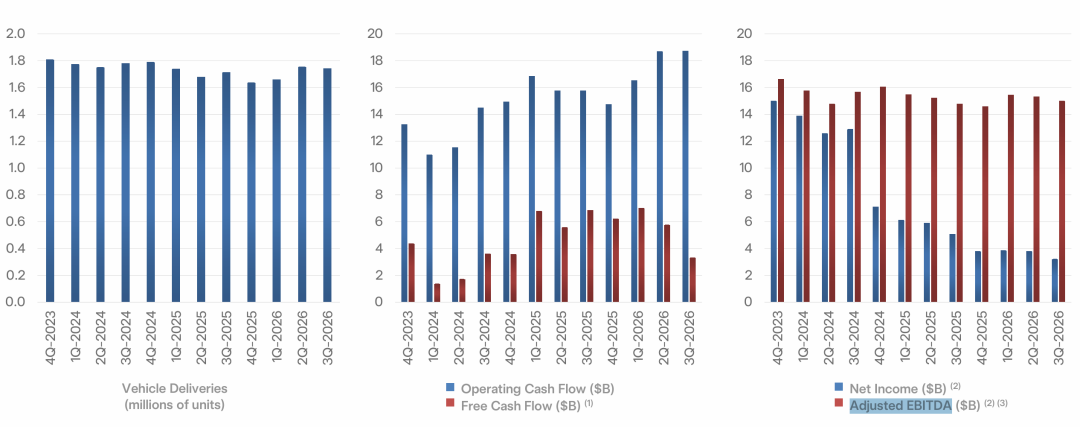
However, paradoxically, Tesla's order backlog at the end of the quarter reached a four-year peak, and the 10 millionth vehicle just rolled off the production line. What accounts for this disparity?
01
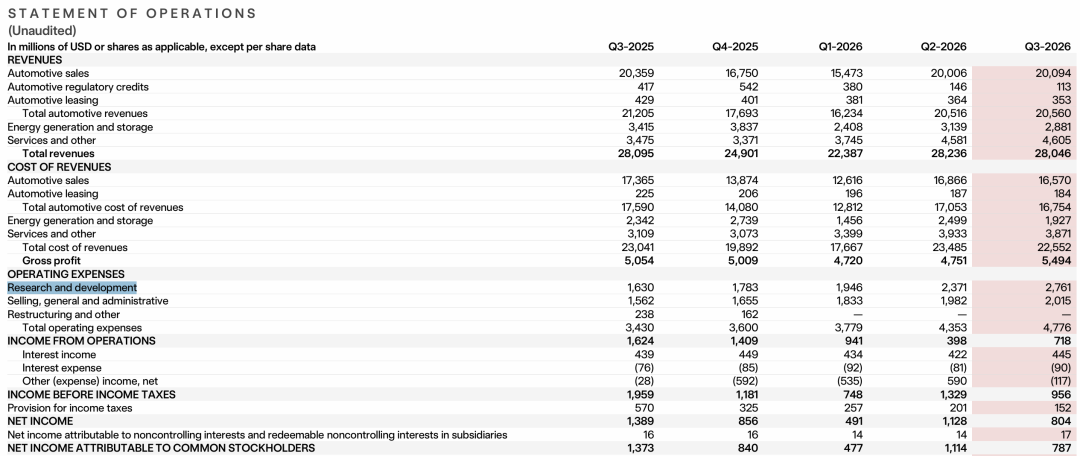
First, let's examine revenue. In the third quarter, Tesla's total revenue stood at $28.046 billion, a slight decrease of 0.17% year-on-year. GAAP operating profit was $718 million, a 56% year-on-year decline; the operating profit margin was 2.6%, compared to 5.8% the previous year. GAAP net profit was $787 million, marking a 43% year-on-year drop.
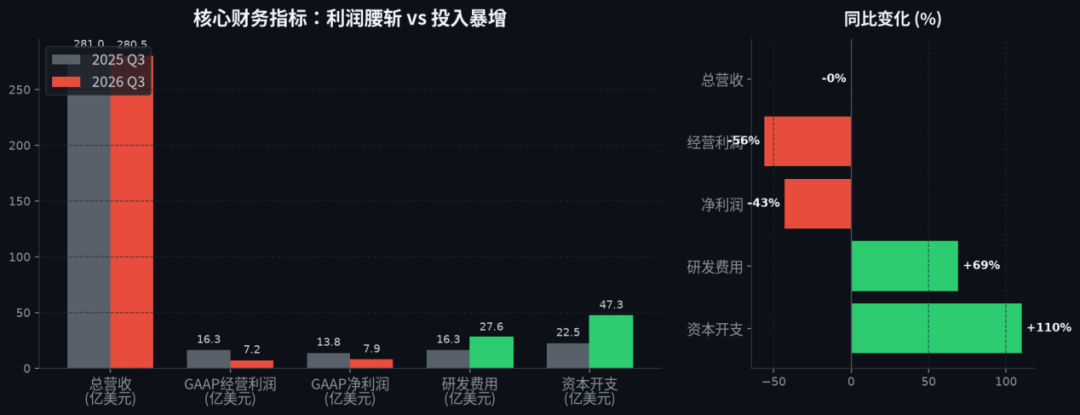
Breaking down the revenue by business segment, in the third quarter, Tesla still primarily relied on vehicle sales for its revenue, but the focus of growth has shifted.
During this period, Tesla's automotive revenue was $20.560 billion, a 3% year-on-year decrease, with 486,532 vehicles delivered, a 2% year-on-year decline. Regulatory credit revenue shrank from $417 million in the same period last year to $113 million. The phase of reaping policy-driven profits is waning.
Tesla's energy business revenue was $2.881 billion in the third quarter, a 16% year-on-year decrease, making it the weakest segment among the three. Although the gross margin increased from 20.4% to 33.1%, the company itself acknowledged that this was primarily due to tariff rebates confirmed this quarter and a downward adjustment in warranty provisions. Therefore, the quality of this 33.1% margin should be viewed with caution.

The only bright spot was the services and other businesses: in the third quarter, Tesla's revenue from this segment was $4.605 billion, a 33% year-on-year increase, with a gross margin of 15.9%, a record high.
02
Now, let's turn our attention to profits.
As Guanchejun mentioned earlier, Tesla's profits took a significant hit in the third quarter. So, where did the money go?
According to the financial report, Tesla's R&D expenses in the third quarter were $2.761 billion, a 69% year-on-year increase, almost entirely invested in AI development, depreciation of new chips, and the ramp-up of Optimus, Megapack 3, and Semi production.
Additionally, capital expenditures were $4.732 billion, a 110% year-on-year increase, with the full-year capital expenditure guidance raised to about $20 billion. This is to build SI training computing power (with a year-end target of 400MW), battery material production lines, and a wafer fab.
Musk also remarked during the earnings call that this is a "bet on the future."
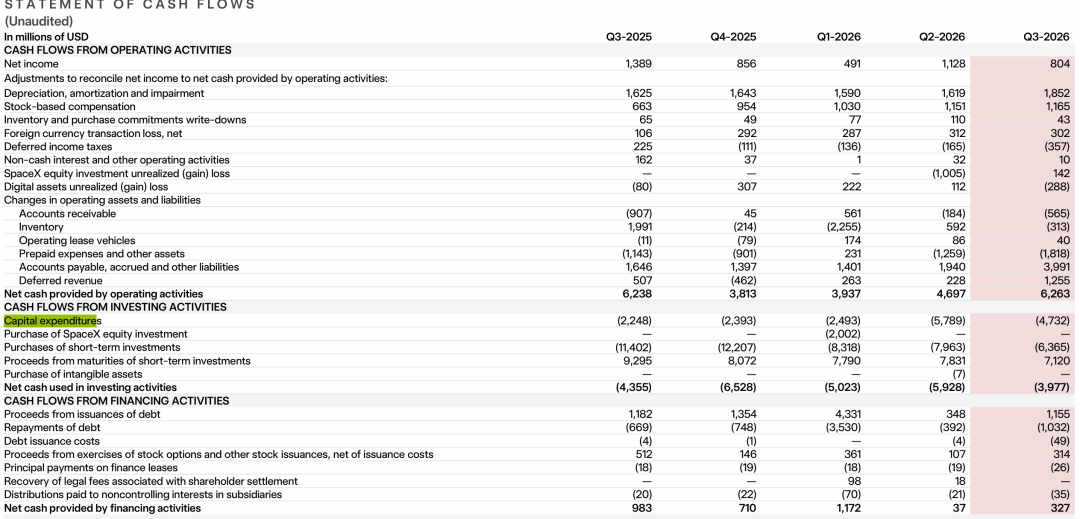
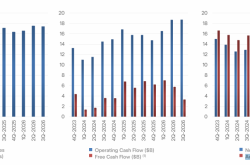
In Guanchejun's view, Tesla is treating its profit statement like a balance sheet, exchanging current profits for investments in robots and computing power. The full-year capital expenditure guidance has been raised to about $20 billion, with plans to finance it primarily through operating cash flow; meanwhile, the company secured a borrowing capacity of up to $30 billion this quarter. However, this is a high-stakes gamble measured in years.
Another point Guanchejun noted is that, excluding regulatory credits, Tesla's automotive gross margin in the third quarter was 18.1%, up 1.8 percentage points sequentially. Global inventory was only 11 days.
03
In Guanchejun's view, several figures are even more noteworthy: in North America, the FSD adoption rate in new vehicle deliveries exceeded 75%, a nearly 20 percentage point increase sequentially.
Globally, the number of paid FSD users exceeded 1.7 million, a 67% year-on-year increase; the subscription model accounted for 50% for the first time.
During the earnings call, an analyst from New Street estimated on the spot that FSD's annual recurring revenue (ARR) is approaching $1 billion. The CFO's response was: "Your estimate is accurate."
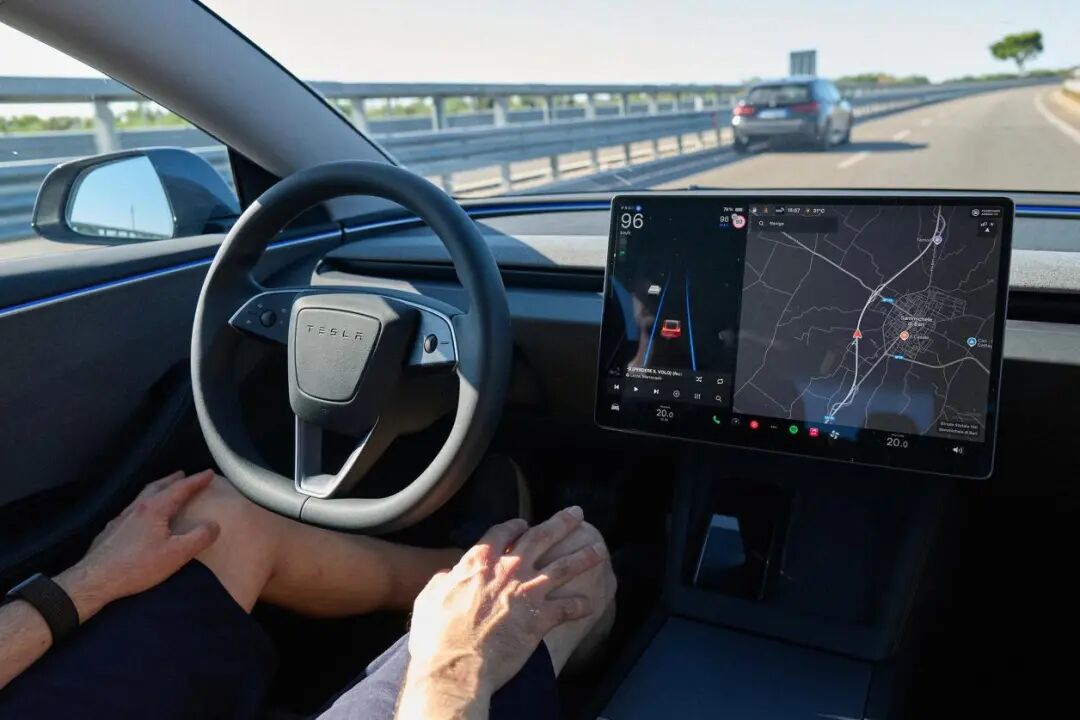
Musk said that now, when customers walk into U.S. stores, they don't inquire about the Model 3 or Model Y; instead, they ask: "Can I experience FSD?"
From this perspective, software seems to have become Tesla's core competitive edge. It's now a reason to buy a car, not just an added bonus.
Thus, Tesla's revenue model is also shifting, moving from one-time hardware sales to a steady stream of income from subscriptions, services, and software.
04
Traditional automakers' metrics clearly no longer apply to this company. While Toyota and Volkswagen focus on gross margins and delivery volumes, Tesla is venturing into areas beyond Tesla vehicles, such as Robotaxi, robots, and AI computing power.
Cybercab was launched in Austin on September 3, with unsupervised mileage surging eightfold quarterly and nearing 2 million miles in total; it will launch in Dallas in November; by 2027, it will become a significant contributor to revenue and profit.
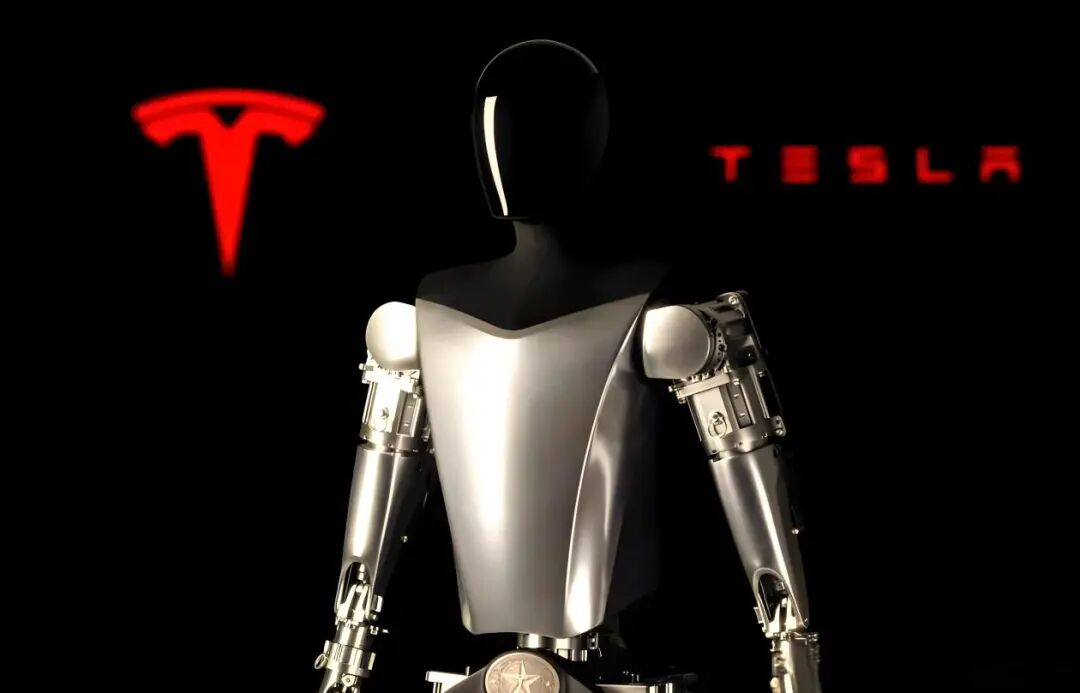
Optimus production has commenced on a high-volume line in Fremont, with the first batch of mass-production robots rolling off the line, aiming for 20,000 units per week and delivery to non-Tesla customers by the end of next year.
For the Terafab wafer fab, Musk provided a long-term capital investment figure that could exceed $100 billion.
But ultimately, stories need to deliver results. In Guanchejun's view, 2027 will be a year of many challenges for Tesla. For example, the promised unsupervised FSD is set to launch in the second quarter; Robotaxi needs to transition from six pilot cities to a "significant source of revenue and profit" within a year; Optimus must be delivered to external companies by the end of the year.
Thus, 2027 will be a pivotal year for Tesla. No matter how grand the vision is, if it can't deliver results, it won't be rewarded with a revaluation.
In this light, this third-quarter financial report may mark a turning point in Tesla's transformation from an automaker to an AI empire. After that, time and data will reveal all.
The charts in this article, unless otherwise noted, are sourced from public disclosures through various channels. We hereby acknowledge and express our gratitude! The views expressed herein are for reference only and do not constitute investment advice.
-
![]()
When Each Car Brings Only 3,000 Yuan in Profit, How Long Can Upstream Auto Parts Suppliers Hold On?
-
![]()
Net Profit Tumbles! Musk Persists in Investing, Tesla Faces a ‘Crucial Challenge’ in 2027
-
![]()
Post-National Day Sales of Xiaomi Revealed, Netizens: Pengcheng's Sales Take a Dive!
-
![]()
Understanding NVIDIA GTC Berlin at a Glance: AI in Manufacturing, Physical AI, and Three Key Strategies
-
![]()
Final Verdict: Can Battery Swapping Become the Mainstream Energy Replenishment Approach for Electric Vehicles?
-
With a 350,000-Yuan Budget for a Luxury Off-Road SUV, Is the 2027 Tank 500 a Wise Purchase?
-
![]()
Why Are Interpersonal Relationships Emerging as a Business Superpower in the AI Era?
-
![]()
Hot Topic | Microsoft's 2nm Self-Developed Chip Hits Third Iteration, Shifting Inference Workloads Away from NVIDIA