【Intelligentization】Over 20 Million Intelligent Connected Vehicles Recalled in First Three Quarters, Regulators Criticize 'Aggressive Innovation'
 10/23 2026
 531
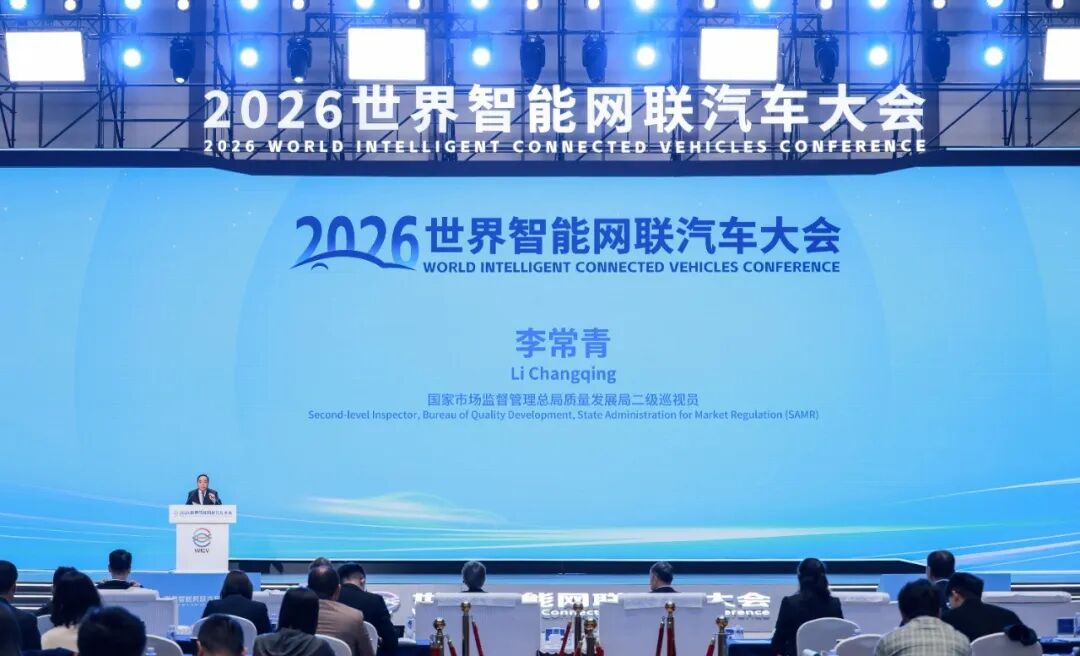
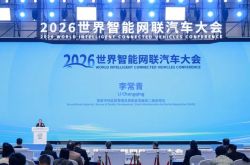
On October 22, Li Changqing, a second-level inspector at the Quality Development Bureau of the State Administration for Market Regulation, disclosed at the 2026 World Intelligent Connected Vehicles Conference that from January to September this year, China conducted 617 recalls of intelligent connected vehicles, involving 20.3938 million vehicles. Among these, 14.5268 million vehicles were recalled following investigations and discussions by regulatory authorities, accounting for 71.23% of the total recalls.
Behind these figures lies a significant shift in the nature of defects in intelligent connected vehicles. Li pointed out that risk patterns are expanding from "tangible hardware" to "intangible software," with defect characteristics shifting from "visible and reproducible" to "digital and difficult to reproduce." Safety boundaries are also extending from individual vehicle products to the systemic ecosystem of vehicles, roads, clouds, and networks.
The concentrated recall on August 21 this year serves as a typical case (typical case). Nine automakers, including Tesla, Leapmotor, XPeng, Geely, Zeekr, and Xiaomi, recalled nearly 8 million vehicles in a single day. The core defect was that the emergency mechanical handles inside the vehicles were similar in color to the interior trim, affecting escape after collision-induced power outages. This defect was not a traditional quality issue with components but rather a new blind spot exposed by the changes in traditional human-machine interaction habits due to electrification and intelligent design. Hidden door handles, electronically controlled door locks, and electronic buttons enhance the technological feel but increase recognition and operation thresholds in extreme scenarios.
Regulators have taken a clear stance on this issue. Li stated at the conference that they are determined to curb low-price, low-quality competition and promote a shift from "price wars" to "quality competition," making companies that ignore safety pay the price. At the same time, they are resolute in combating exaggerated and false advertising, stating, "Marketing must not become a fig leaf for safety hazards." He particularly emphasized that while encouraging companies to reach new heights in cutting-edge technologies, the principle of safety first must be embedded in the entire process of research and development, verification, and iteration. "Short-sighted behaviors that sacrifice safety for speed to market must be eliminated, and 'aggressive innovation' that pursues hot trends without scenario verification must be prevented from being implemented," he said.
Regulatory tools are also being upgraded simultaneously. In March this year, the Ministry of Industry and Information Technology and the State Administration for Market Regulation jointly issued the Notice on Regulating the Remote Online Upgrade (OTA) Behavior of New Energy Vehicles, setting out four red lines: prohibiting silent forced upgrades, prohibiting OTA-based "battery locking" and configuration downgrades, prohibiting the use of OTA to cover up vehicle defects and evade recall obligations, and requiring all OTA upgrades to be fully filed and subject to supervision. The accompanying GB 44496-2024 General Technical Requirements for Automotive Software Upgrades specifies safety assurance requirements during the upgrade process from a technical perspective. In June and July, two mandatory national standards for combined driving assistance and high-level autonomous driving were successively introduced and will be formally implemented in 2027, setting comprehensive and rigid norms for OTA upgrades involving intelligent driving algorithms and perception logic adjustments.
Against the backdrop of the industry, competition in the domestic automotive market continues to intensify, with fierce price competition in the new energy sector. Some automakers have compressed quality control and safety investments to quickly seize market share, while marketing exaggerations of product performance and false labeling of functional configurations have frequently led to complaints. Four departments have recently jointly launched a one-year special action to strictly inspect vehicle production consistency, reliability, and intelligent driving testing and verification, requiring automakers to conduct self-inspections and corrections of defective vehicles and proactively file for recalls before the end of December 2026.
For automakers, recalls are no longer just crisis public relations events but public tests of their quality system capabilities. OTA technology makes remote repairs possible, but remote upgrades cannot become a gray channel to avoid recalls. Software can be quickly pushed, but hardware defects cannot be radically cure with patches. The core logic behind tightened regulation is clear: innovation can be fast, but safety verification cannot be skipped.
-
![]()
People Trapped in Algorithms
-
![]()
Musk’s Computing Power Venture Recoups Investment Within a Year, Meta’s Muse Faces Uncertain Rollout Timeline
-
![]()
AI: From ‘Accelerator’ to ‘Paradigm Reconstructor’ in Metaphotonics
-
![]()
"You've Been Replaced by AI": The Future Landscape for Short Drama Creators in 2026
-
![]()
【Intelligentization】Over 20 Million Intelligent Connected Vehicles Recalled in First Three Quarters, Regulators Criticize 'Aggressive Innovation'
-
![]()
Tesla's Gross Profit Increased by 440 Million, Yet Operating Profit Fell by 900 Million: Where Did Tesla's Money Go?
-
![]()
While Competitors Struggle, GM Stands Firm with $4.1 Billion Profit
-
![]()
Three Presidents in Five Years: What Audi China Truly Needs is Decentralization