Huawei Steps into Battery Swap Arena, NIO Welcomes the Move
 10/26 2026
 499
Lead-in
Introduction
The battery swap business has reached a pivotal moment!
NIO is no longer the sole champion of battery swapping. On October 19, Yinwang inked a strategic cooperation deal with CATL and Contemporary Amperex Service Ltd. (CASL) to foster a smart battery swap ecosystem. The trio aims to integrate vehicles, battery swap stations, and cloud services, facilitating collaboration between Huawei's Qian Kun platform and CATL's chocolate battery swap network.
Two pivotal aspects were underscored:
Firstly, crafting an 'intelligent, seamless energy replenishment' experience. Vehicles will autonomously evaluate energy needs, locate stations, enter, align, and execute a fully automatic battery swap in just 99 seconds before driving off—a fully intelligent, closed-loop process.
Secondly, Yinwang officially becomes part of CATL's chocolate battery swap ecosystem. Alongside strategic allies, they will focus on adapting and integrating cooperative vehicle models with CATL's network to jointly expand the energy replenishment ecosystem.
In essence, this entails harnessing Huawei's intelligent driving prowess and CATL's battery swap network, with the intelligent driving system autonomously deciding whether and where to swap batteries, thus achieving an intelligent and seamless energy replenishment experience. With the technology validated, Yinwang-affiliated brands, including the Jing series, will further roll out battery swap vehicle models.
Rumors abound that CATL and Yinwang are fast-tracking the development of five initial battery swap vehicle models, with plans to launch them in 2027.
Coincidentally, on October 22, BAIC Group officially unveiled a 'million-unit' battery swap strategic cooperation agreement with CATL.
Under this pact, BAIC Group will facilitate the integration of multiple adapted models from its brands into CATL's chocolate battery swap ecosystem, targeting one million battery swap vehicles.
Notably, BAIC Group will also leverage its dealer network resources, while CATL's chocolate battery swap will expedite station deployment through dealer outlets, with both sides jointly exploring a joint operation model.
Although Huawei's and BAIC's battery swap vehicle models, along with their specific launch timelines, are yet to be officially confirmed, this series of collaborations indeed heralds a new trend—in the pure electric vehicle market, flash charging and ultra-fast charging are not the only solutions, as battery swapping is gaining traction among more industry players.
01 NIO Anticipates More Than Just Huawei's Foray
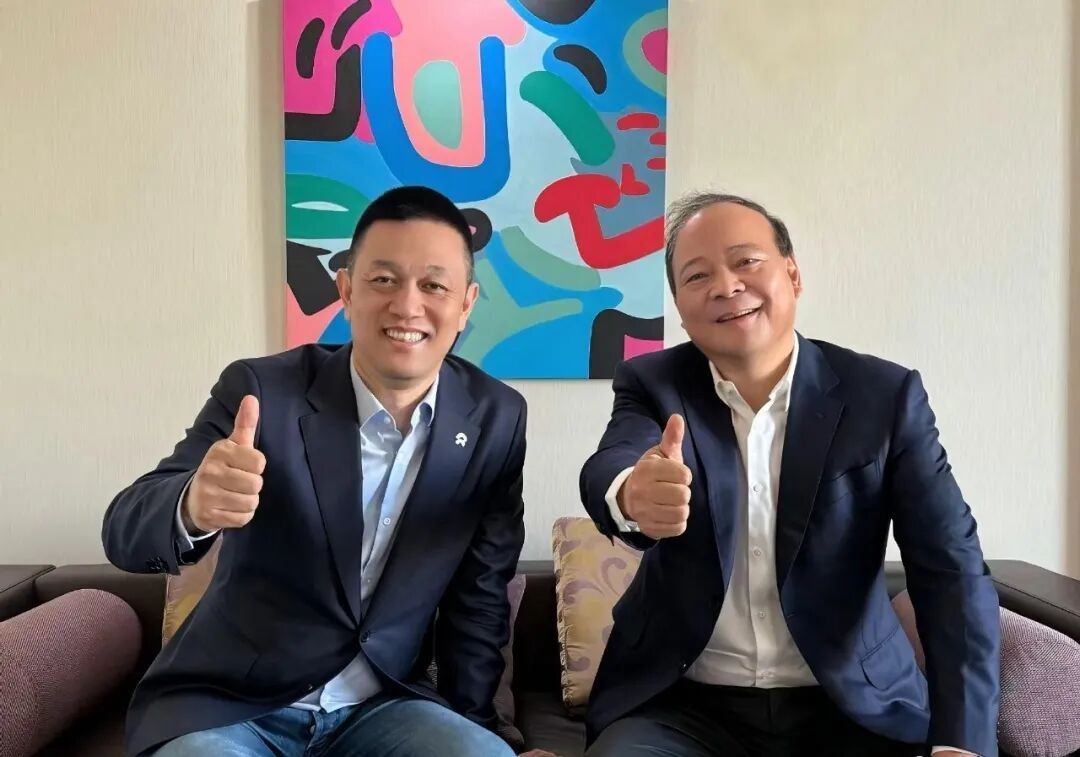
When discussing battery swapping, NIO is an inevitable focal point. For over a decade since its inception, NIO has viewed its battery swap system capabilities as its 'competitive moat'.
However, battery swapping is a capital-intensive endeavor, necessitating investments in construction, maintenance, and battery reserves. Relying solely on its own vehicle models, the scale and utilization of NIO's battery swap network would ultimately be constrained by sales volume.
Therefore, from the outset, NIO has hoped that more players would join the battery swap ecosystem. From another vantage point, NIO's battery swap experience can also be transformed into a tangible competitive advantage in this shared arena.
In fact, since November 2023, NIO has forged battery swap cooperation agreements with Changan Automobile, Geely Holding Group, Chery Automobile, JAC Group, Lotus, GAC Group, and China FAW Group. However, these 'cooperation frameworks' pale in significance compared to the collaboration NIO and Geely finalized.
On September 28, NIO and Geely Holding forged a comprehensive strategic cooperation in the charging and battery swap sector. Under the agreement, Geely will acquire a 30% stake in NIO Power through equity in Yi Yi Interconnection and cash. Geely will develop consumer-oriented battery swap vehicle models, with NIO Power providing battery swap services.
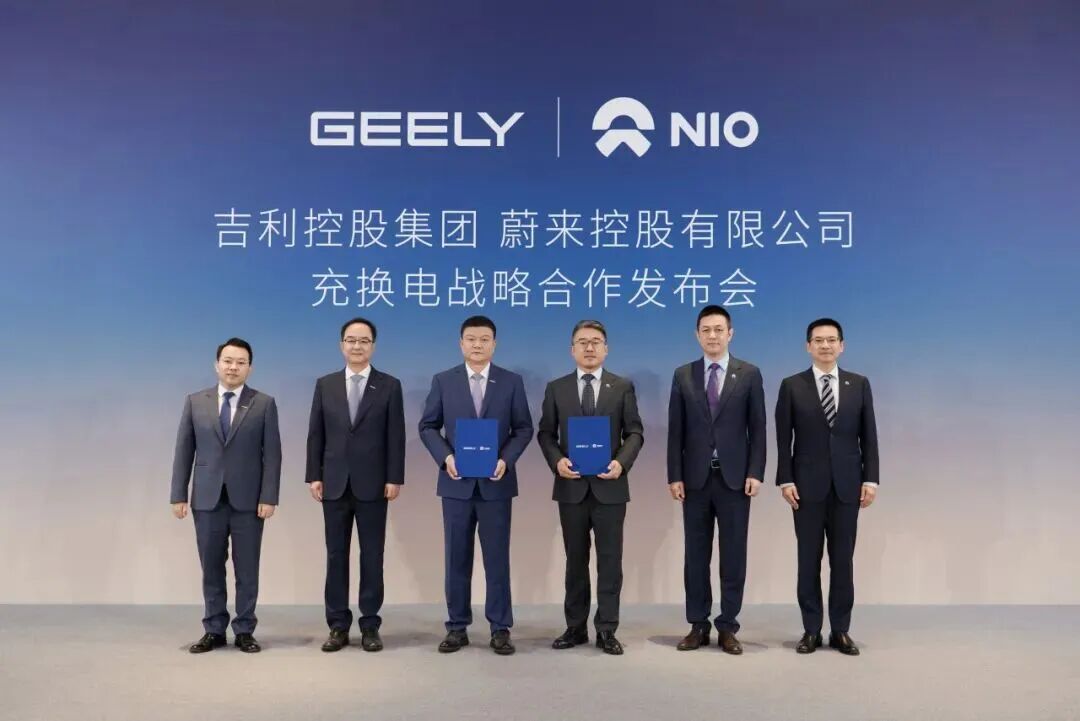
The rapid formation of multiple industry battery swap collaborations is no trivial matter. Instead, it signals that, in the mainstream passenger vehicle market, battery swap models will no longer be exclusive to NIO. Brands like Geely and Huawei's Jing series will also introduce competitive offerings.
From a competitive standpoint, NIO now faces more rivals, which could impact its product sales. However, NIO remains confident due to its first-mover advantage in battery swapping.
Moreover, building a battery swap station does not guarantee success in the battery swap business; the bigger 'challenge' lies in operation.
Battery swap stations require a sufficient number of vehicles to continuously use them to amortize the costs of equipment, sites, battery reserves, and operational staff. Vehicle owners hope for more stations nearby, while operators desire higher order volumes per station.
Caught in this mutual 'constraint', battery swapping can easily fall into a vicious cycle: an insufficiently large network deters users from choosing it, while a lack of users makes network expansion difficult.
This is why NIO continuously seeks partners.
However, one thing must be clarified: as more players enter the battery swap industry, whether replenishment networks can interconnect and standards can remain compatible remains a practical concern.
02 Battery Swapping Ascends to a New Strategic Echelon
If NIO promotes battery swap openness to have more vehicles use its network and thereby amortize costs, then CATL's choice adds an industrial dimension to this market shift.
In fact, CATL has long been involved in battery swapping.
In 2021, Contemporary Amperex Service Ltd. (CASL) was officially established as CATL's battery swap operation entity, initiating research and development of the EVOGO modular chocolate battery swap solution.
The following year, EVOGO was officially launched, with CATL announcing the chocolate battery swap block, debuting in collaboration with FAW Pentium for the NAT battery swap version. The initial pilot cities numbered 10, targeting the ride-hailing and taxi operation markets.
In 2025, CATL's battery swap vehicle models witnessed a concentrated boom: GAC Aion UT, Aion RT; Changan Benben A05, Benben A07; FAW Hongqi EH7; Chery iCAR V23, and other chocolate battery swap models were officially announced, initiating a new cycle of home battery swapping.
Now, with Yinwang and BAIC joining, CATL's battery swap ecosystem welcomes a powerful new force.
Beyond this, it is noteworthy that CATL's vigorous promotion of battery swapping can further alleviate its 'interest conflicts' with automakers.

'We are now collaborating with many manufacturers, saying, 'Let me handle your batteries. My batteries are high-quality, and I will continuously lease them to you. You can rest assured, and consumers can rest assured, thereby proving my own value,'' Zeng Yuqun, Chairman of CATL, stated in a media interview in June this year. CATL will use battery swapping to address price competition in the battery industry. It is no exaggeration to say that CATL's leadership in battery swapping is a win-win-win approach.
For consumers, leasing batteries is more cost-effective than purchasing them outright, offering tangible savings and lowering the barrier to vehicle purchase, without worrying about battery degradation or quality.
For automakers, CATL underwrites battery costs, indirectly achieving 'cost reduction' and preserving some of their profits amid shrinking market demand.
From CATL's perspective, batteries are its core business.
The so-called heavy assets and significant investments are already familiar territory for CATL. Moreover, by vigorously developing battery swapping, CATL has the opportunity to extend battery technology into battery asset management, energy replenishment services, and even full-lifecycle operations, continuously expanding market boundaries and incremental opportunities.
In summary, while everyone may not share the same vision, they converge on the path of battery swapping. The actions of various parties prove that both CATL and automakers have elevated battery swapping to a new strategic echelon.
03 Could 2026 Mark the 'Dawn of Battery Swapping'?
With ultra-fast and flash charging already so rapid, why do automakers still want to venture into the battery swap market?
Since the beginning of this year, BYD has taken the lead in launching the 'energy replenishment battle,' introducing the second-generation Blade flash-charging battery and 1500kW flash-charging stations, while simultaneously initiating the construction of the 'Flash Charge China' energy replenishment network.
Subsequently, Geely and Chery unveiled their self-developed flash-charging solutions, forming a complete closed loop from cell technology and thermal management to megawatt-level charging stations, directly following suit in the flash-charging sector at the vehicle level.
Battery manufacturers are also key drivers of this flash-charging proliferation wave. CATL's third-generation Shenxing high-rate batteries and Sunwoda's 15C flash-charging solutions are supplied to the entire industry.
However, no one could have anticipated that this lively flash-charging arms race would first drive industry progress in the battery swap model.
Considering the actions of NIO, Geely, CATL, BAIC, and Yinwang together, this year could indeed mark the 'dawn of battery swapping'.
Here, 'dawn' does not mean battery swapping will replace charging, nor does it imply that all automakers will shift to battery swapping. The real change is that battery swapping is moving from independent exploration by a few companies to joint deployment by more industry participants.
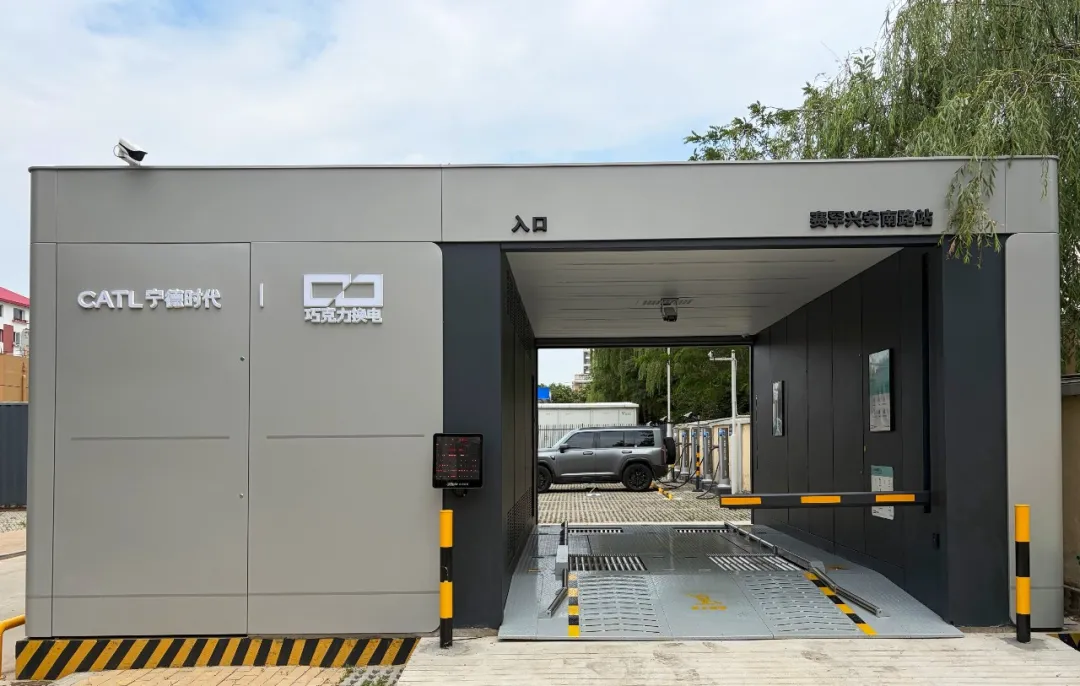
In the past, battery swapping was most often discussed in terms of speed: Can a battery be swapped in a few minutes, making it more convenient than charging?
Now, more questions arise:
Can vehicles from different brands use the same battery swap network? Can battery standards be gradually unified? Who will bear the investment in battery swap stations? How much time and cost can users save by using battery swapping? Can operators achieve reasonable returns after continuous investment?
These questions are fragmented but determine how far battery swapping can go.
From the consumer's perspective, there is no need for an absolute winner among energy replenishment methods, as preferences often vary by scenario.
Those with fixed parking spaces and short daily commutes prefer overnight charging for its affordability.
Long-distance travelers and those with tight replenishment schedules focus on charging efficiency and station queue times along highways.
For high-frequency operational vehicles, where downtime directly impacts income, battery swapping holds strong appeal.
Thus, whether it's ultra-fast charging, flash charging, or battery swapping, as long as they can alleviate energy replenishment anxiety and save time and enhance convenience during vehicle use, they can meet most consumer needs.
Of course, companies must consider more. At the very least, the allocation of various interests must be calculated clearly before taking action. Now that Huawei has entered the fray, who will be next?
-
The “Model Deluge” Strategy: Once a Boon, Now a Bane for Domestic Smartphone Makers
-
![]()
Significant Move! General Office of the State Council: Mitigate the Impact of AI Applications on Employment Substitution
-
![]()
Is There Still Time for the Audi Q9 to Make Its Mark?
-
The 'Little Golden Dragon' from Xiamen Faces Challenges in Going Global
-
![]()
Huawei Steps into Battery Swap Arena, NIO Welcomes the Move
-
![]()
Electrification Drives BBA to Delegate Authority
-
![]()
A8 Made in China, Embracing Huawei: Audi's Greatest Opportunity
-
Guangdong's 'Province-Wide Pass' for Autonomous Vehicles Comes into Force: Five Departments Collaborate on Regulations, Yet Cross-City Operations Still Require City-Specific 'Permits'