Is There Still Time for the Audi Q9 to Make Its Mark?
 10/26 2026
 337
In China's domestic luxury car market, the trio of German brands—Mercedes-Benz, BMW, and Audi—are often collectively referred to as BBA. However, among discerning car enthusiasts, Audi is sometimes perceived as lagging behind Mercedes-Benz and BMW. Why is this the case? The answer is straightforward. Firstly, nearly all models from Mercedes-Benz and BMW feature rear-wheel drive, paired with either 9AT or 8AT transmissions, which are hallmarks of luxury performance.
Audi, in contrast, takes a different approach. Models such as the Audi A4L and A6L not only lack the prestigious rear-wheel drive configuration but also come equipped with dual-clutch transmissions, akin to those found in Volkswagen vehicles. This, coupled with the prevailing belief that "no rear-wheel drive, no luxury," has somewhat diminished Audi's luxury brand appeal.
Another significant factor is Audi's absence in the full-size SUV segment, where it has long lacked a model to rival the Mercedes-Benz GLS and BMW X7. While Audi has the A8L to compete with the Mercedes-Benz S-Class and BMW 7 Series in the sedan category, it has been missing a key player in the SUV arena. However, Audi is poised to change that.
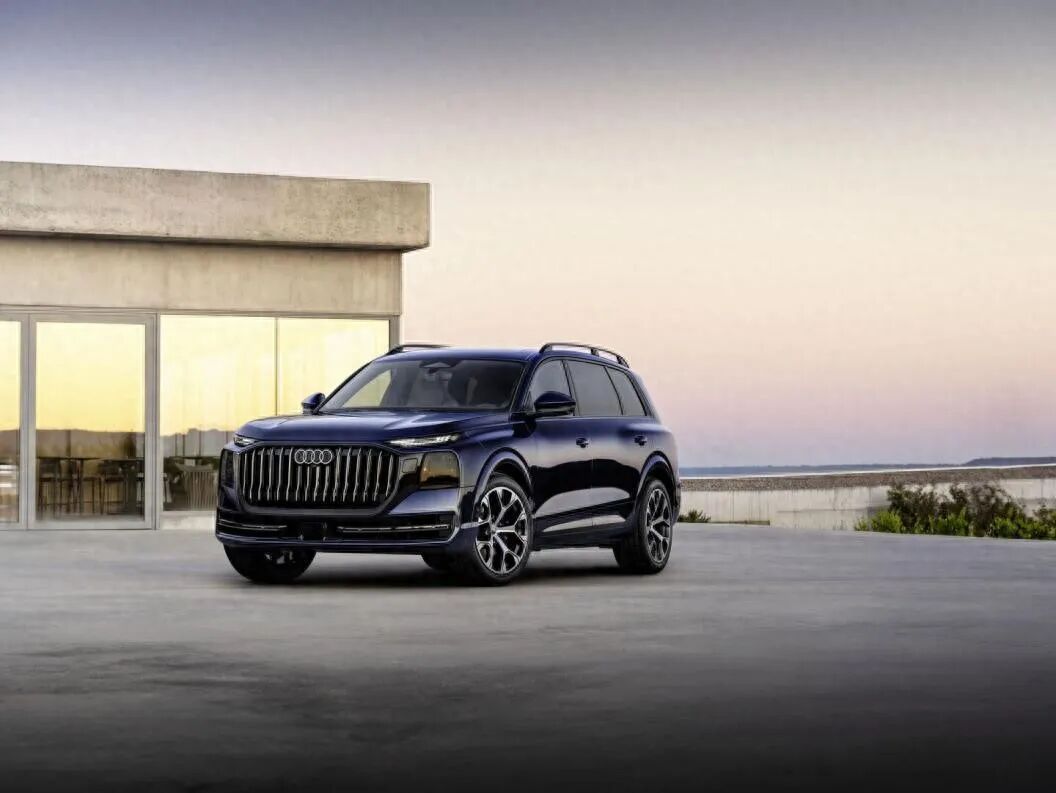
According to media reports, Audi unveiled a set of real-life photos of the Q9 on October 23. Furthermore, Guo Yongfeng, the Executive Deputy General Manager of FAW-Audi Sales Co., Ltd., had previously confirmed that Audi's full-size SUV model, the Audi Q9, will make its official debut in the domestic market in early 2027.
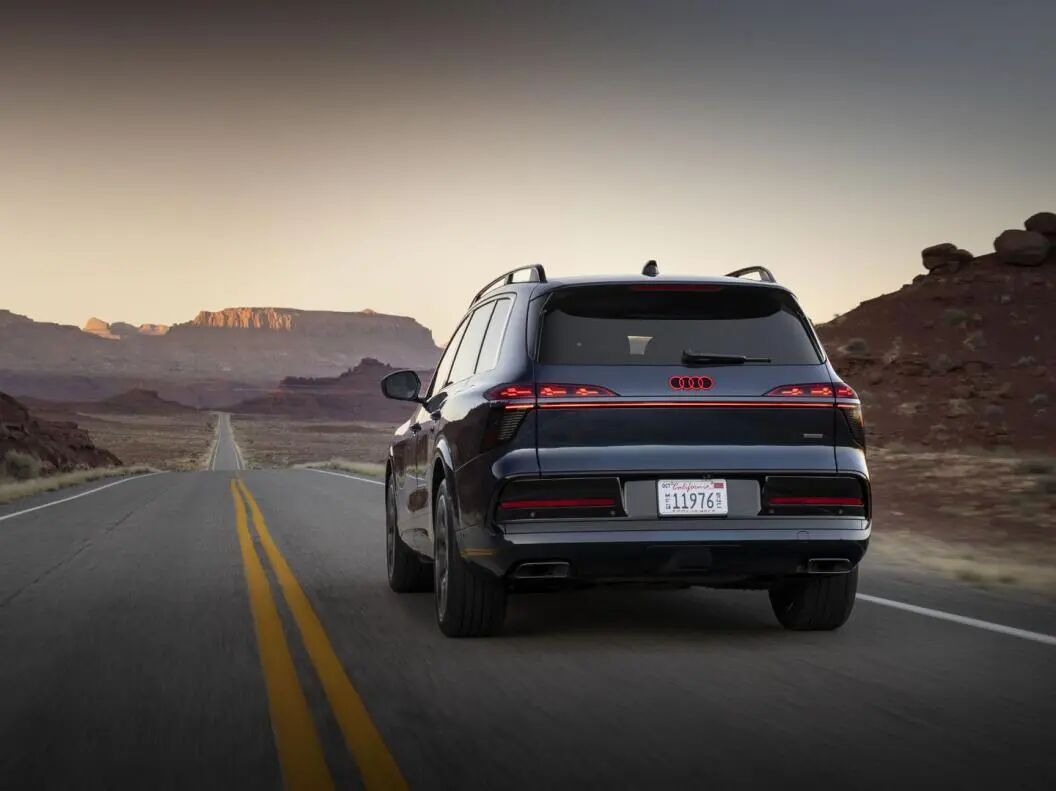
From an exterior design standpoint, the Audi Q9 retains Audi's signature family design language. With a length exceeding 5.3 meters, a width of 2.21 meters, and a wheelbase of 3.14 meters, it stands as the largest production model in Audi's current lineup.
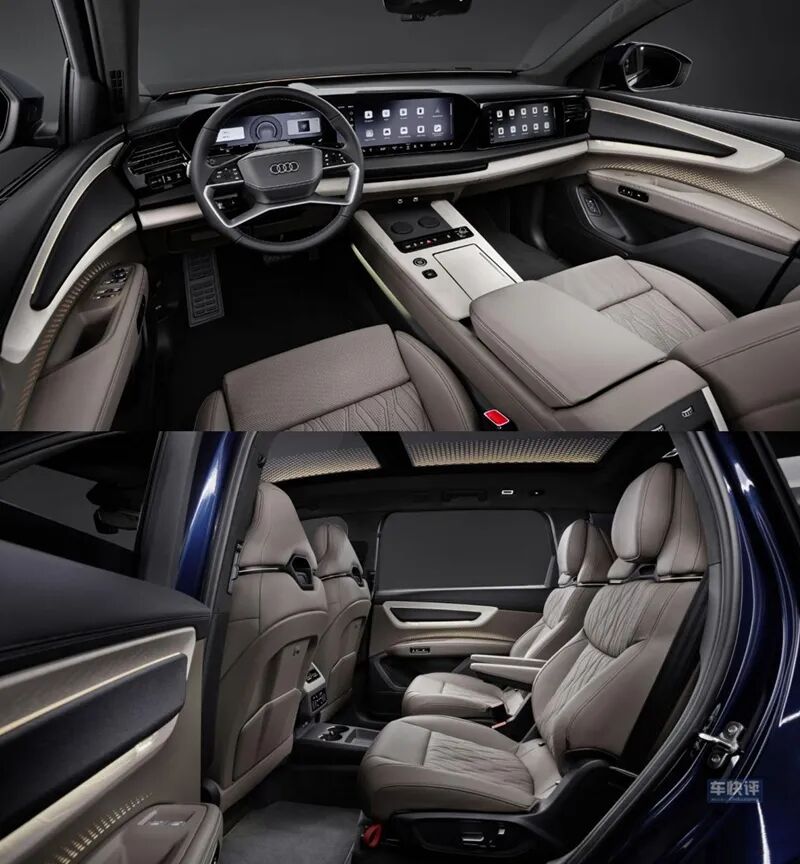
The interior of the Audi Q9 exudes luxury, with extensive use of solid wood and genuine leather materials. It boasts an 11.9-inch full-LCD instrument cluster, a 14.5-inch curved central control screen, a 12.3-inch front passenger entertainment screen, and a rear control screen, showcasing cutting-edge technological sophistication. Additionally, the vehicle features independent air conditioning with five-zone climate control and offers both 2+2+2 six-seat and 2+2+3 seven-seat configurations. Notably, it includes independently powered second-row seats and supports electrically folding third-row seats.
In terms of intelligent driver assistance, the Audi Q9 will be equipped with Audi's latest-generation ADAS, enabling hands-off driving assistance on highways.
Moreover, the new vehicle will come standard with air suspension and rear-wheel steering, achieving a minimum turning radius of just 5.3 meters. This represents a clear advantage over its competitors, the Mercedes-Benz GLS and BMW X7, as the latter two require optional upgrades or high-end trims for air suspension, and rear-wheel steering is also an optional feature.
Regarding the powertrain, the model currently available overseas is equipped with a 3.0T V6 diesel mild-hybrid system, along with 2.9T V6 and 4.0T V8 engine options, achieving a zero-to-100 km/h acceleration time as quick as 3.8 seconds. It is paired with an 8-speed automatic transmission, and the quattro all-wheel-drive system ensures exceptional off-road capability.
Reservations for the Audi Q9 officially commenced in Germany at the end of July this year, with the entry-level model priced at approximately RMB 813,000. The first batch of vehicles is slated for delivery in the fourth quarter. It remains to be seen whether Audi will introduce a plug-in hybrid version of the Q9 when it enters the domestic market next year or if its pricing will be more competitive than in Germany.
However, one thing is certain: given the current landscape of the domestic large SUV market, the timing of the Audi Q9's entry may not be optimal. Compared to domestic new energy SUVs in the same segment, it lacks a distinct competitive edge. In essence, it has arrived somewhat late to the party.
Copyright Notice: This article is original content from CheKuaiping. Reproduction requires authorization. Any unauthorized reproduction, plagiarism, or misappropriation of text or images will be subject to legal action. Some images in the article are sourced from the internet, with copyright belonging to the original authors. If your work has been used, please contact us for royalties or removal.
-
The “Model Deluge” Strategy: Once a Boon, Now a Bane for Domestic Smartphone Makers
-
![]()
Significant Move! General Office of the State Council: Mitigate the Impact of AI Applications on Employment Substitution
-
![]()
Is There Still Time for the Audi Q9 to Make Its Mark?
-
The 'Little Golden Dragon' from Xiamen Faces Challenges in Going Global
-
![]()
Huawei Steps into Battery Swap Arena, NIO Welcomes the Move
-
![]()
Electrification Drives BBA to Delegate Authority
-
![]()
A8 Made in China, Embracing Huawei: Audi's Greatest Opportunity
-
Guangdong's 'Province-Wide Pass' for Autonomous Vehicles Comes into Force: Five Departments Collaborate on Regulations, Yet Cross-City Operations Still Require City-Specific 'Permits'