Audi China Undergoes Division: Splitting the Brand, Taking a Risk on Destiny
 10/27 2026
 462
Written by | Guanchejun
Audi is set to make substantial changes in China!
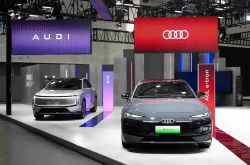
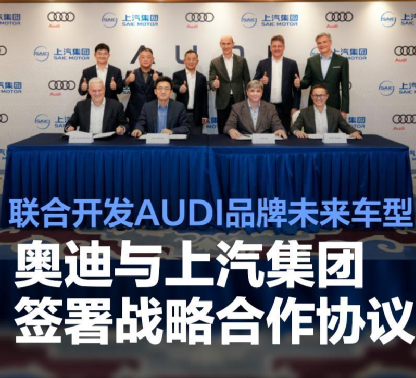
On October 26, Audi revealed the signing of strategic agreements with Chinese partners. Under this new arrangement, the iconic four-ring brand will be exclusively operated by FAW, encompassing both traditional fuel vehicles and new energy vehicles. Meanwhile, the AUDI letter emblem will be allocated to SAIC Audi, with a focus on new energy models. Notably, SAIC Audi will be permitted to continue selling four-ring models until the end of 2027.
What challenges is Audi confronting in China that necessitate such a drastic division of one brand into two? From Guanchejun's perspective, this move transcends mere sales considerations; it's fundamentally an organizational restructuring.
Examining the sales figures alone, Audi remains a formidable force in the luxury car market, far from being in decline.
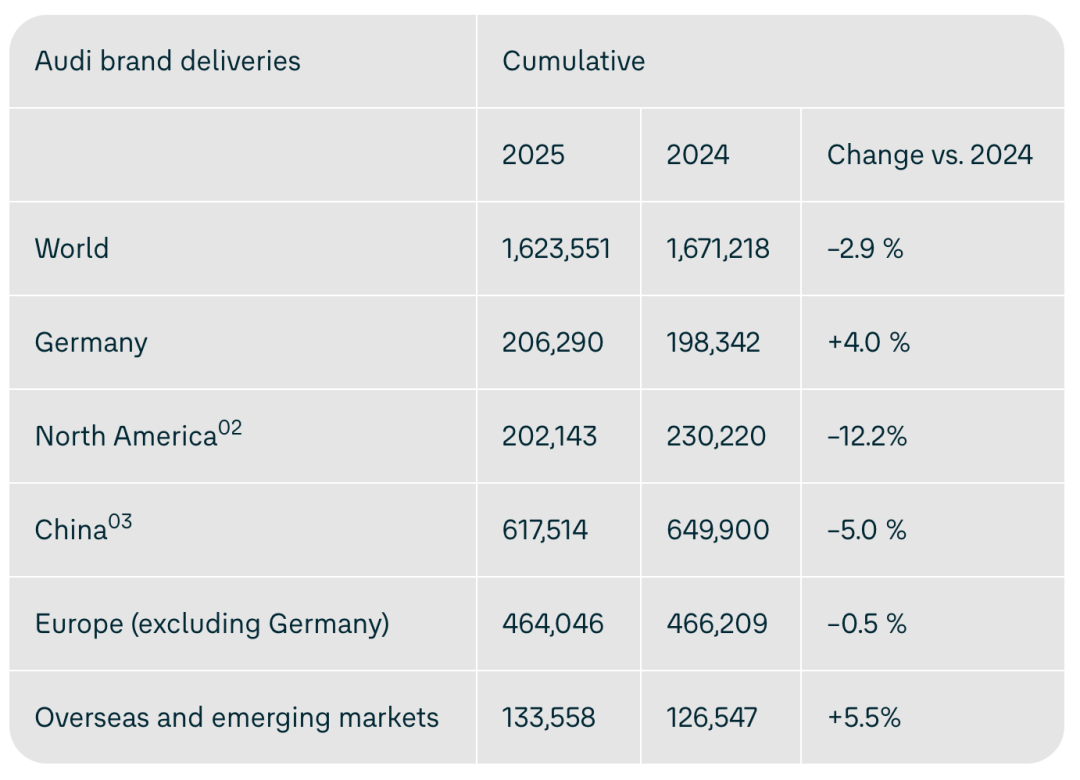
According to previous disclosures from the Volkswagen Group, Audi delivered 617,514 vehicles in China in 2025, marking a 5% year-on-year decrease. In the same year, FAW Audi's retail sales reached 570,088 units, while SAIC Audi's retail sales stood at 47,258 units.
The collective downturn experienced by BBA (BMW, Benz, and Audi) is not unique to Audi; the entire traditional luxury vehicle sector has been affected by the rise of new energy vehicles. In 2025, BMW sold 625,500 vehicles in China, a 12.5% year-on-year decline, while Mercedes-Benz sold 575,000 vehicles, experiencing an approximate 19% year-on-year decrease.
Thus, the time has come to seek organizational efficiency. Previously, the same four-ring logo was being marketed by two joint ventures, targeting the same user base through two distinct channels, and managing the same product planning for two partners simultaneously. This inevitably led to issues such as product overlap, channel price competition, and resource fragmentation.
Following this division, FAW gains complete operational control over the four-ring brand, streamlining decision-making processes and establishing a single point of responsibility. Meanwhile, SAIC Audi acquires the AUDI letter emblem, freeing itself from the constraints of four-ring models to focus solely on new energy vehicles, with clearly defined responsibilities and rights.
The four-ring brand's strengths lie in its vast user base and mature fuel vehicle system, with models like the A6L and Q5L continuing to lead their respective segments.
However, in Guanchejun's view, the brand also faces significant pressure. Audi's sales in China have already declined by 5% in 2025, while the penetration rate of new energy vehicles in the Chinese luxury car market continues to surge. In the era of intelligent electric vehicles, what will enable the four-ring brand to maintain its leadership?
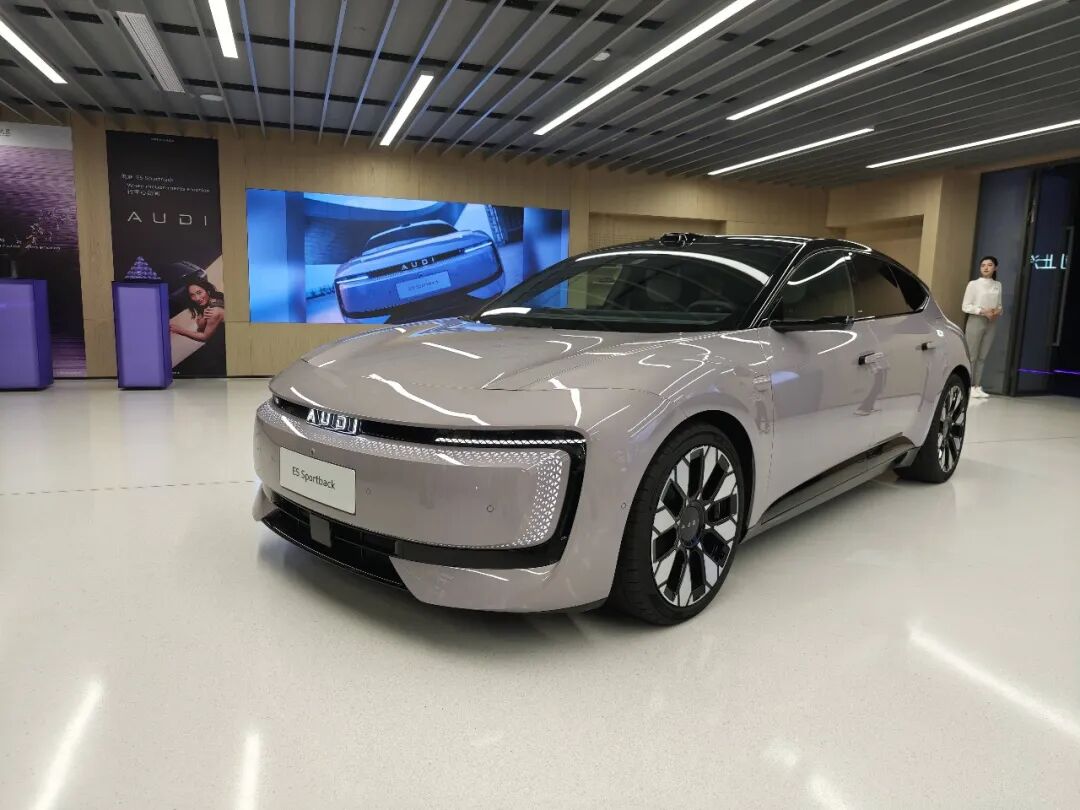
Now, let's turn our attention to AUDI. Its 2025 performance was lackluster, with cumulative sales of the E5 Sportback reaching only 6,650 units, indicating some market feedback but insufficient to sustain an independent brand.
The core dilemma here is that AUDI must both shed the historical baggage of the four-ring brand and inherit Audi's luxury DNA. If its product strength fails to keep pace, it will quickly be engulfed by the fierce competition in the new energy vehicle market.
For AUDI to truly establish itself, it requires formidable strength. For instance, can its intelligent experience rival that of China's leading new energy vehicle manufacturers? Can its product iteration speed match the rapid pace of the Chinese market? Can its service system support an independent brand?
After all, structural adjustments can only address the issue of 'who does it,' not 'how well it's done.'
In Guanchejun's view, the end of 2027 represents a critical juncture. SAIC Audi still relies on four-ring models to sustain its channel operations, while FAW must complete intensive new energy product launches. This window serves as both a buffer and a countdown. If evidence of both brands standing independently does not emerge within two years, the division may prove unsuccessful.
In summary, this division resembles a gamble: a bet that FAW can uphold the four-ring brand's foundation and that SAIC can establish AUDI as a representative of new luxury.
If either bet fails, Audi will find itself in a precarious position in China.
Charts in this article, unless cited otherwise, are sourced from public disclosures through various channels. We hereby acknowledge and appreciate these sources! The views expressed herein are for reference only and do not constitute investment advice.
This article is original content from Leverage Auto Observations and is prohibited from being reproduced without authorization. For reproduction, please obtain authorization. Additionally, when authorized for reproduction, please indicate the source and author at the beginning of the article. Thank you!
-
![]()
Lula Wins Election! His Policies Helped a Bricklayer’s Daughter Become an Engineer at BYD
-
![]()
"The New Generation of PayPal Mafia"? Young Chinese Are Seizing Silicon Valley
-
![]()
Can SAIC Audi, a Brand Yet to Excel in Gasoline Cars, Find Success in the New Energy Vehicle Market?
-
![]()
Why Has the Underestimated HDD Become the 'Data Terminal' for AI?
-
![]()
Survey | With Shanghai Factory Nearing Completion, Lexus Embarks on Electric Redemption
-
![]()
The Largest IPO Ever: Anthropic’s Prospectus Reveals a Valuation Nearing $2 Trillion, Blending Cutting-Edge Tech with Business Strategy
-
![]()
The Spectacle of the Flying Car Can't Rescue Tesla's Core Operations
-
![]()
Seagull vs. Starwish: A Clash of Titans in the Electric Compact Car Market