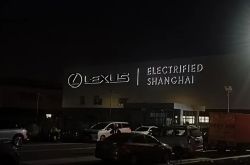
Survey | With Shanghai Factory Nearing Completion, Lexus Embarks on Electric Redemption
 10/27 2026
 442
Lead
Introduction
It is reported that the Lexus Shanghai Factory is just two months away from completion, with recruitment for some workshops already finalized, preparing for a major push.
During a research visit to the Lexus Shanghai Jinshan Factory in April,
Recently, it was reported that the Jinshan Factory has been largely completed, prompting another research visit by
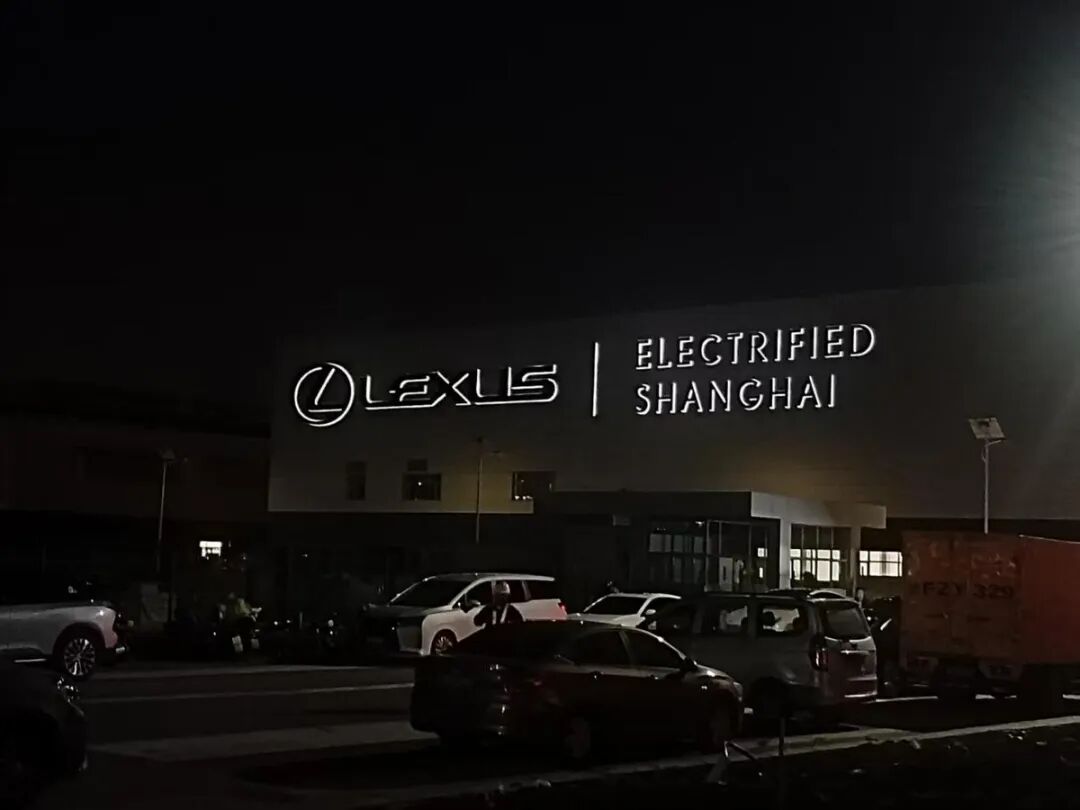
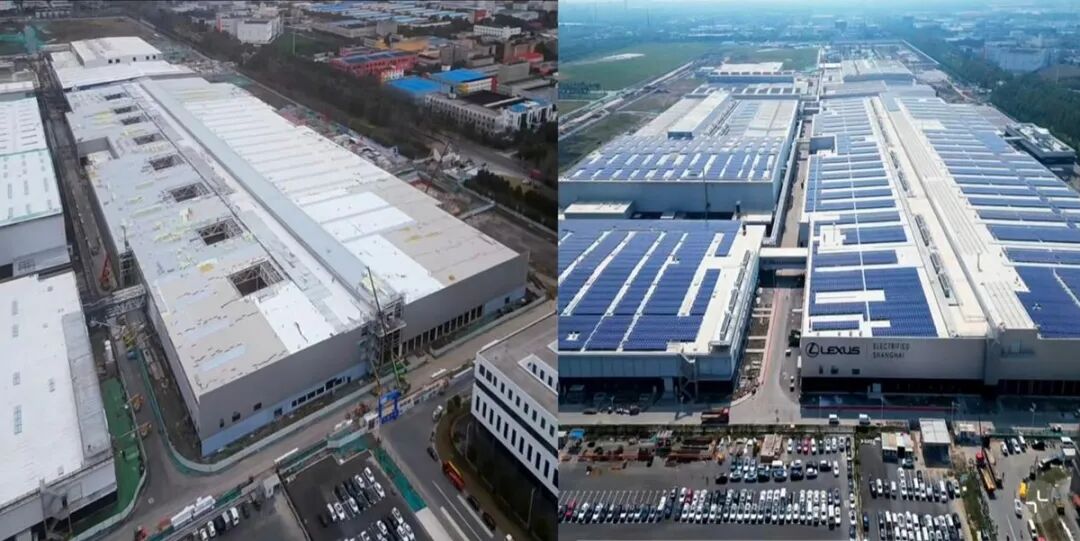
A Lexus dealer in Shanghai posted a video in mid-October stating that the main structures of six buildings, including the die-casting workshop, stamping workshop, stamping-welding combined workshop, painting workshop, final assembly workshop, and battery assembly workshop, have all been completed, with the rooftop photovoltaic power station also nearly finished.
Although direct access to the construction area was difficult and drones were unavailable, the lack of metal fencing allowed a glimpse into the workshops through the gaps in the fence (fences).
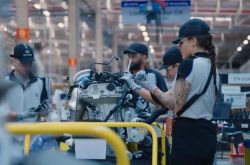
A significant amount of equipment has already arrived at the final assembly workshop, with workers engaged in installation and debugging. However, based on the progress of installation, completion will still take some time.
There was limited information available regarding staff recruitment, which is of great concern to readers. From the actual research findings, it appears that the current Lexus staff at the factory consists mainly of engineering supervisors and technical personnel, with production staff yet to arrive.
01 Completion Expected in “About Two Months”
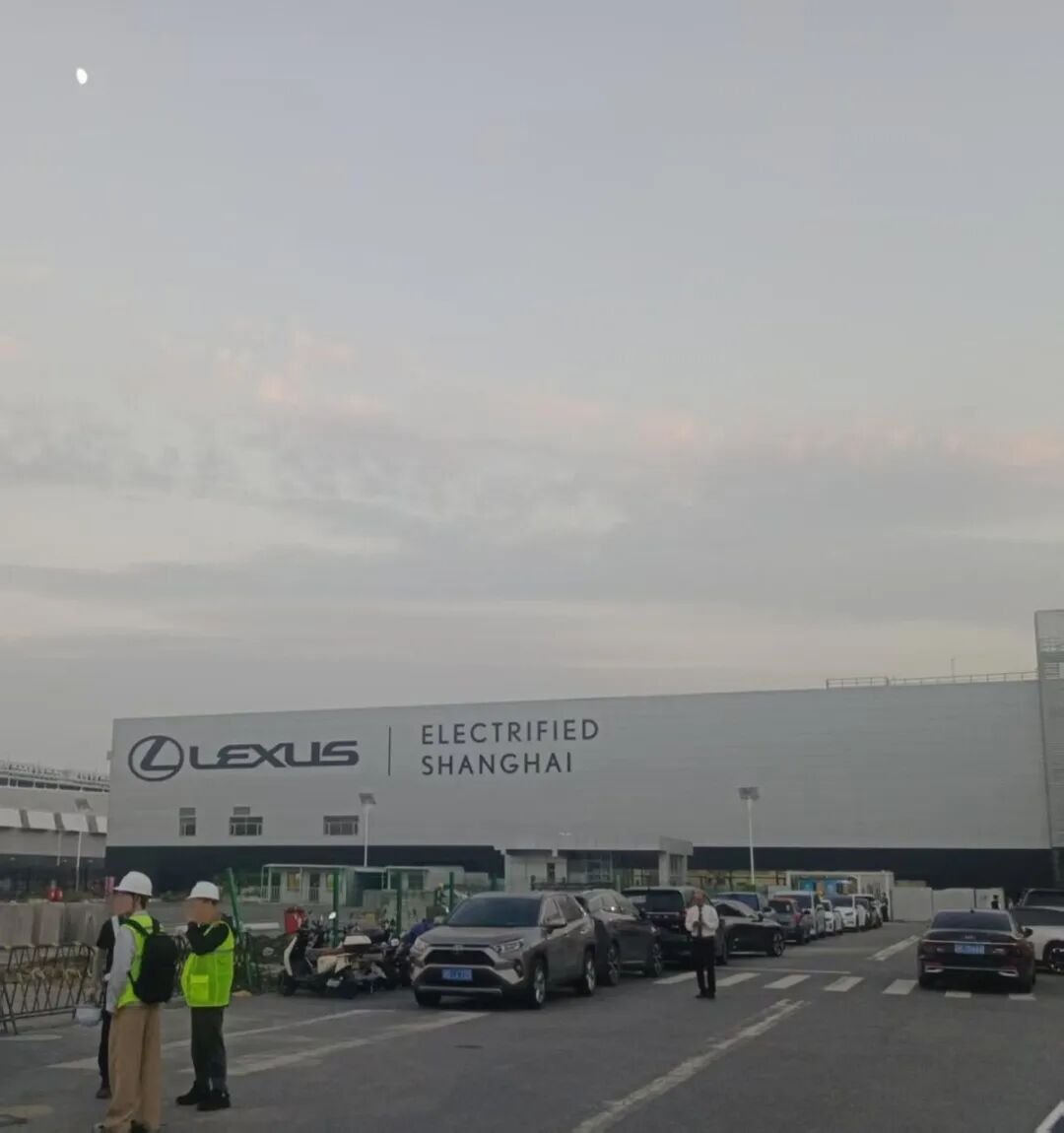
Due to time constraints, the author arrived at the factory at 5 PM, close to quitting time. Workers in orange vests and yellow helmets, along with supervisors in black jackets bearing the Lexus logo, white ID badges, and white helmets, were seen exiting the final assembly workshop in groups through the turnstiles.
About 100 meters in front of the workshop, there was a container-like canteen and supermarket where construction workers were smoking and resting at the entrance. When asked about their current main tasks and knowledge of the factory's construction progress, several modest, lean middle-aged men shyly waved their hands and replied in heavily accented Mandarin, “We're just workers; we don't know. You should ask the people wearing white hats; they're from the client side.”
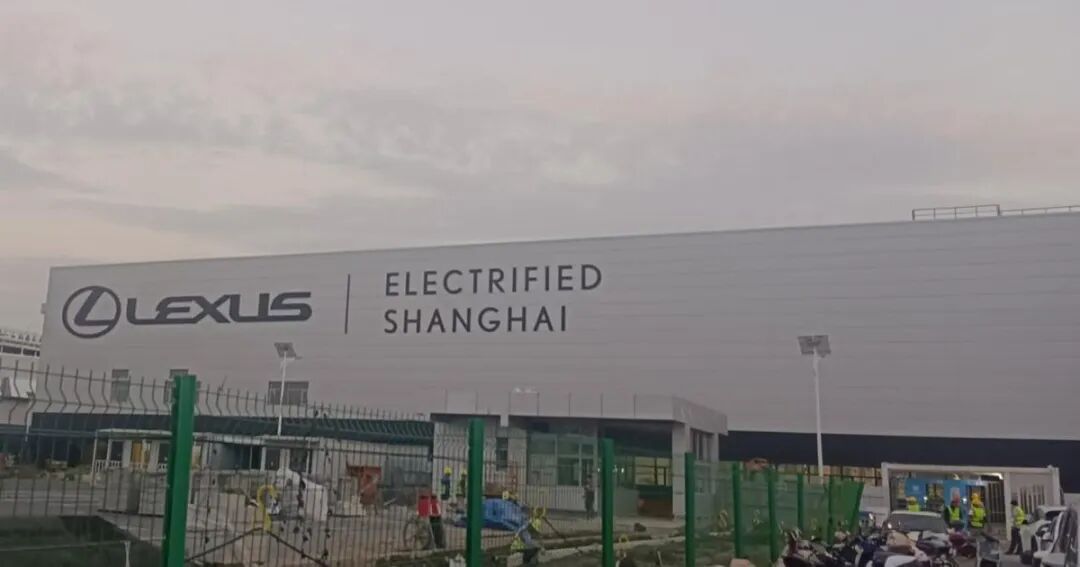
Photo 丨 Workers leaving work
Unlike the workers' lack of awareness, Lexus employees were very cautious when questioned. After stating the purpose of the visit, the author attempted to ask questions about recruitment, factory progress, and current staff duties, but all were refused. “We can't really say; you need to apply through official channels,” was the response from the six or seven individuals interviewed. Although their attitude was particularly amicable, their reluctance to speak was evident.
Only one Lexus employee dining at the canteen provided a somewhat informative response. “Currently, the employees at the factory are involved in construction work; production line workers have not yet arrived,” he revealed. He mentioned that production workers for welding and assembly in the workshops have all been recruited, but their specific start dates are unknown.
This statement was not corroborated by other sources. Although some readers had previously commented under articles about the Lexus Shanghai Factory that frontline workers had already been recruited and several colleagues had already started, numerous frontline production positions, including painting, final assembly, die-casting, welding, and stamping, were still advertised by Lexus (Shanghai) New Energy Co., Ltd. on a well-known domestic recruitment website.
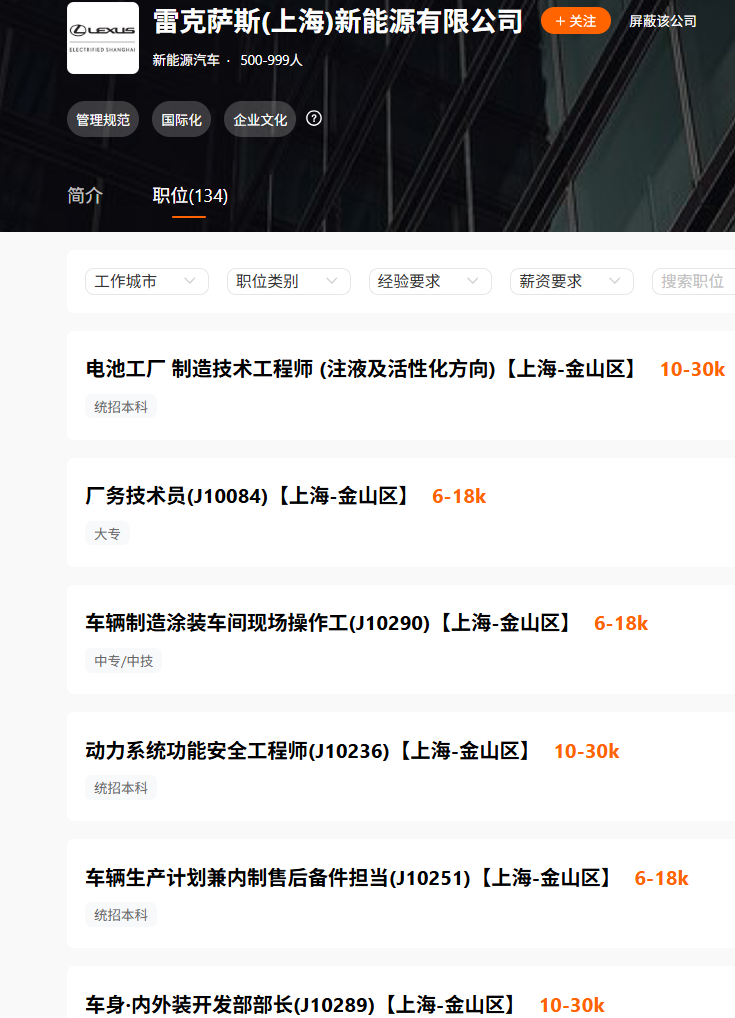
Regarding the withdrawal of construction workers upon factory completion, similar to inquiring about school holidays from a convenience store manager, the response from canteen staff might serve as an indirect reference.
“In about two months,” said the canteen auntie, holding a trash bin with her right hand and gesturing two with her left.
It was learned that the canteen opened in March last year and has only been serving during the factory's construction period, primarily to address workers' dining needs. Once the Lexus Shanghai Jinshan Factory is completed, the container canteen will no longer be retained and will be removed along with the workers. The cooperation expiration date is in two months.
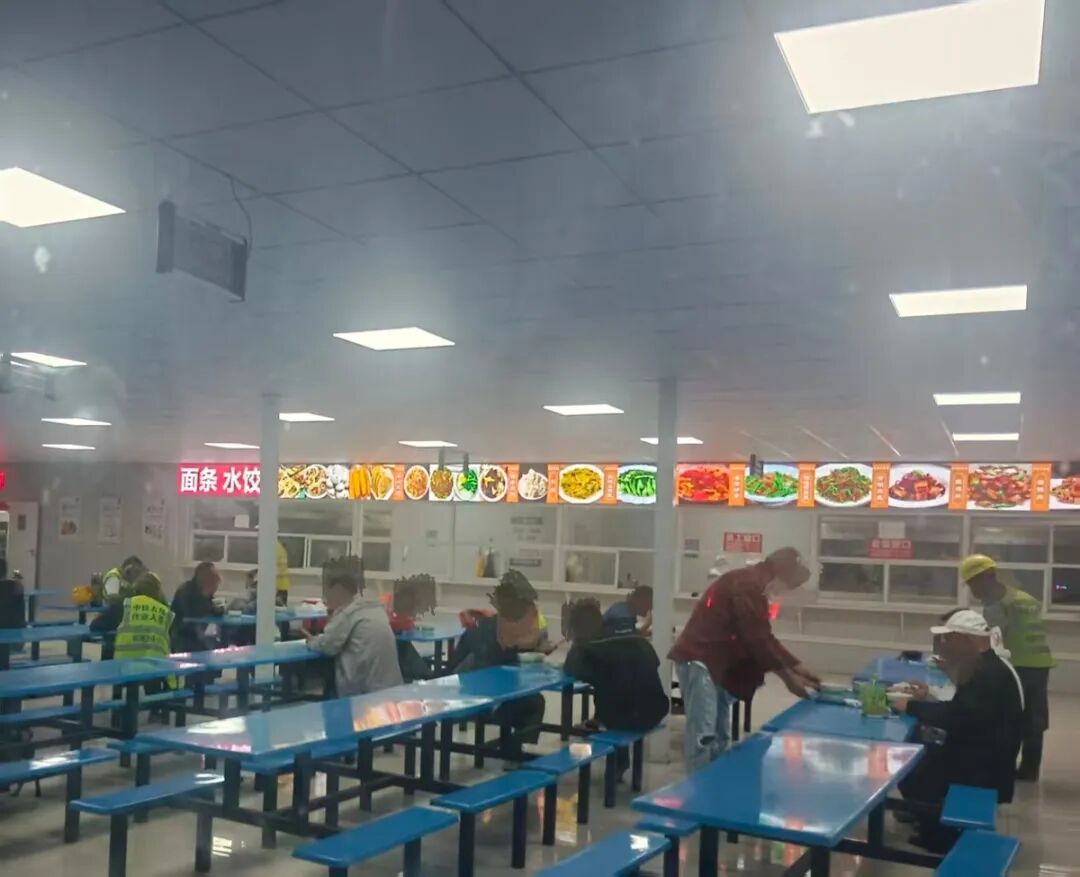
Photo 丨 The temporary canteen only opens a few windows in the evening
02 Main Building Equipment Arrives, Independent Office Buildings Already Occupied
Regarding the main buildings, during
Although time was tight and a drone was not used during this research visit, a video released in October by an official account of a Shanghai Lexus sales service company showed that the main workshop buildings have all been completed, and photovoltaic panels have been installed on the reserved photovoltaic mounts on the factory roof.
Looking through the gaps in the railings in front of the final assembly workshop, a large amount of equipment can be seen arriving, with workers engaged in installation. However, the site appeared somewhat disorganized overall, and workers began leaving after 5:30 PM without any indication of multiple shifts to expedite the timeline. This suggests that the overall construction progress is proceeding in an orderly manner but will still require some time.
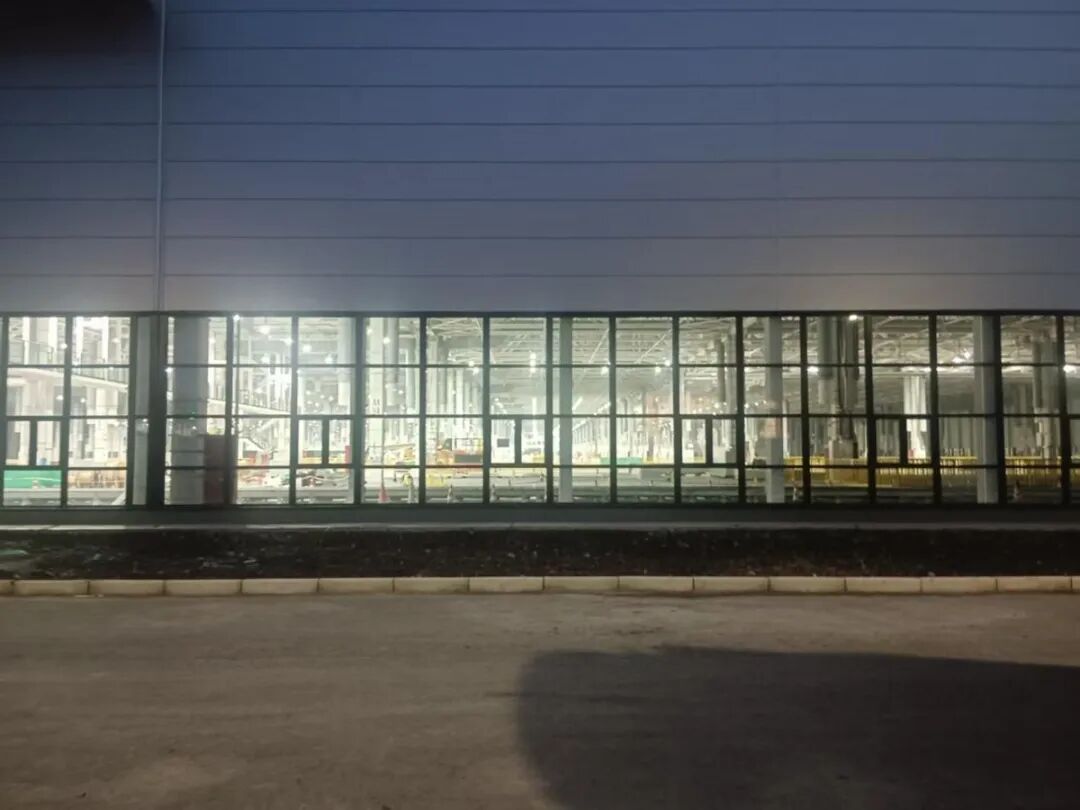
Photo 丨 Equipment has arrived, and workers are installing it
Although the main structure of the painting workshop has been completed, the side road has not yet been leveled, and there was a faint hum of machinery nearby.
The factory entrance has strict access control, requiring passage through turnstiles with security personnel on duty, making entry difficult. However, several independent office buildings in front of the final assembly workshop were not restricted.
It was discovered that Buildings 2 and 7 were already in use, with personnel working inside, dressed similarly to the Lexus supervisors in the factory. The office buildings also had turnstiles requiring identity verification for entry and exit, with security personnel guarding the Sensor Door (automatic doors). Due to the employees' cautious approach to information protection, their specific job roles were not ascertained.
Regarding employee benefits, some media outlets reported that Lexus employees receive commuting allowances and meal subsidies, with convenient company-provided transportation for outings. Employee dormitories have not yet been built, requiring rentals, but prices are relatively affordable at 1,200 yuan per month for a one-bedroom apartment and 1,450 yuan per month for a two-bedroom apartment.
Travel allowances and overtime pay are also substantial. The travel allowance is 160 yuan per day on weekdays and 240 yuan per day on weekends. Since the factory is not yet completed, most blue-collar employees are currently on assignment at other Toyota bases, receiving generous travel allowances and free hotel accommodations with breakfast provided by the company.
The overtime pay is based on current salaries, but blue-collar workers' overtime is strictly limited to 36 hours per month. From the actual survey, many employees were still working overtime in Building 2 after workers began leaving at 5:30 PM.
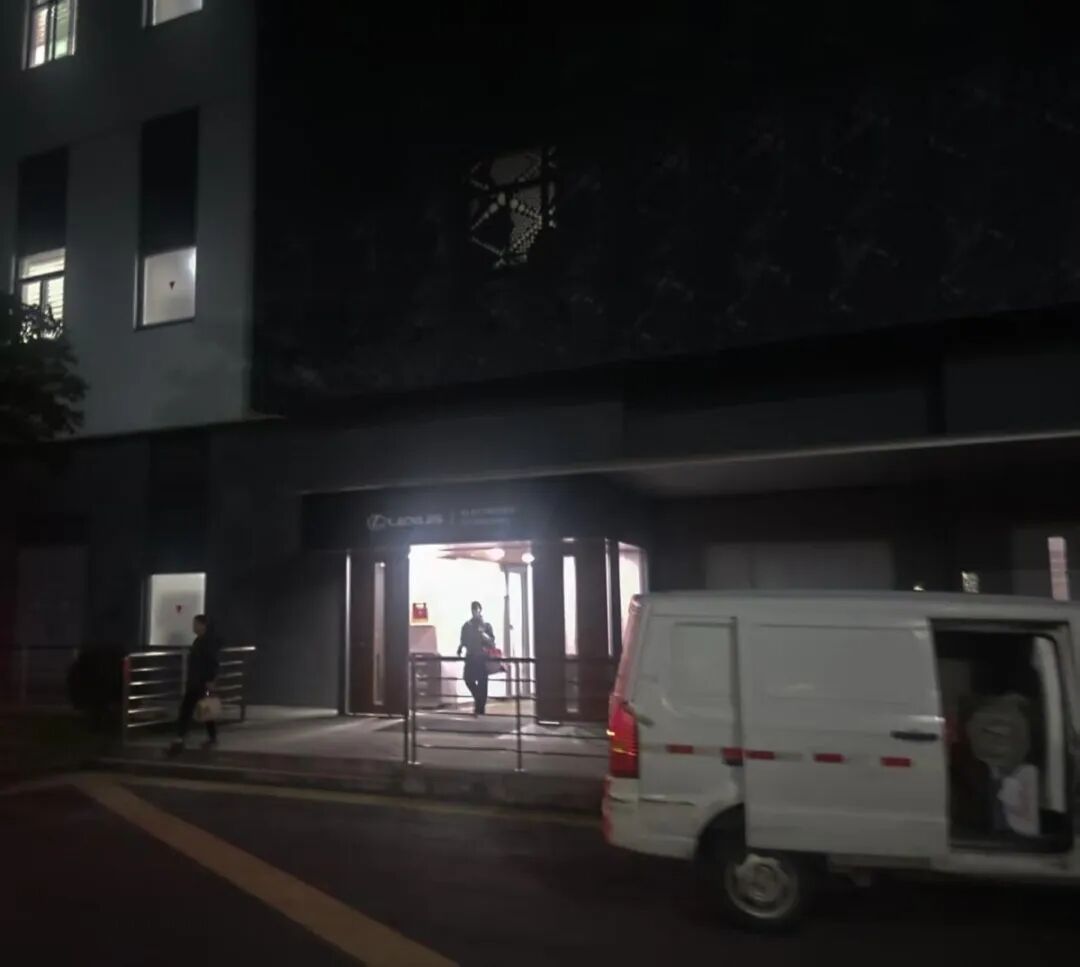
Photo 丨 Employees leaving work from Building 2
Notably, multiple Lexus-exclusive parking spaces have been designated in front of Building 2, with two spaces occupied by Lexus RZ 450e vehicles, and two identical models in the charging area.
Lexus has not provided specific information about which models will be produced.
Market speculation suggests that the first models to be produced at the factory could be the TZ series, a three-row all-electric SUV, or an electrified version of the ES, a brand sales staple—the ES-e all-electric sedan. The former is a large family SUV more suited to Chinese consumers, while the latter is the most popular imported car in the Chinese market.
03 Can Lexus's Electric Vehicles Make a Comeback with the Shanghai Factory?
Despite the factory's focus on producing electric vehicles, Lexus's transition to electrification has been lackluster and even bitter, as reflected in current sales.
In the domestic market, the UX did not leave a strong impression on users, and the subsequently launched RZ series has seen long-term single-digit sales in China. In May, Toyota halted the development of the “LF-ZC” mass-production model, citing “adjustments to the company's overall vehicle development projects in consideration of market demand changes.”
Although the TZ model and the all-electric ES are imminent, domestic pure electric competitors have already undergone one or even two rounds of iterations, and the market for large six-seater vehicles is gradually shrinking.
From January to July this year, the Lexus ES, RX, and NX were among the top-selling imported models in China, but these models are still primarily fuel-powered and hybrid. Whether the new factory can bridge Lexus's gap in the all-electric segment is of great significance.
In terms of production capacity planning, the Jinshan Factory has a total investment of approximately 14.6 billion yuan, covers an area of 1.13 million square meters, and plans for an annual production capacity of 100,000 units—an estimate that is somewhat conservative. Even comparing it to half of the Lingang Tesla Superfactory's annual production capacity of 450,000 to 500,000 units, the ramp-up capacity could approach 250,000 units.
Given Lexus's annual sales volume of approximately 850,000 to 900,000 units and the current sales proportion of its all-electric models, this production capacity is clearly not just for domestic demand. From the outset, the Shanghai Factory has been tasked with serving overseas markets.
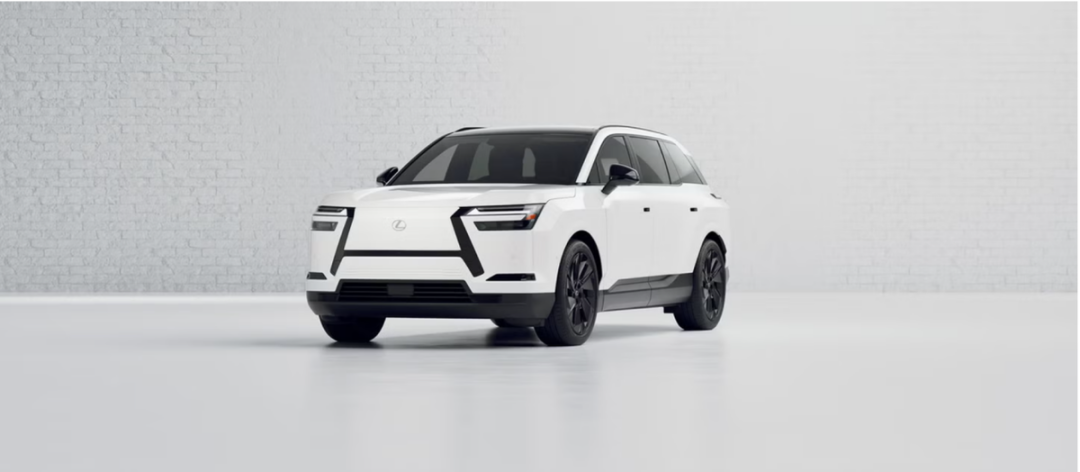
However, questions arise: Can Lexus sell so many electric vehicles?
In FY2025, Toyota and Lexus aim to sell approximately 5.04 million electrified vehicles, including 4.62 million hybrids and only 243,000 all-electric vehicles.
Toyota predicts that HEV sales will exceed 5 million units for the first time in FY2026, with overall electrified vehicle sales expected to reach approximately 6 million units and all-electric vehicle sales remaining below 1 million units. The all-electric sales target for the Lexus brand is even lower.
While all-electric products have yet to gain momentum, production capacity has already been established. How will Lexus absorb this capacity?
Currently, there are two potential solutions.
The first is to expand demand by leveraging China's advanced and dense supply chain and complete technical system to enhance the all-electric competitiveness of the Lexus brand. By 2025, Chinese auto parts companies are expected to reach a 14% global market share, a threefold increase over the past decade. This industrial momentum is something Lexus can tap into.
According to plans, the localization rate of parts for Toyota's new base will align with that of the Tesla Shanghai Superfactory, exceeding 95%, and will deeply integrate into the Yangtze River Delta parts supply system. Currently, this plan is being implemented.
An executive from a Toyota partner company admitted, “We haven't heard that this Chinese-made SUV will use Japanese equipment or technology at all.”
Deep integration into the Yangtze River Delta supply system means shorter product iteration cycles, faster cost optimization, and quicker responsiveness to the Chinese market. For Lexus, this is not just about using China as a production base but also a crucial stepping stone for transformation, potentially opening up its all-electric sales domestically and globally.
The second solution lies in the surplus production capacity. Currently, Lexus's sales are still dominated by fuel-powered and hybrid models, and expanding the market for new energy vehicles will likely take some time. So, what happens when production increases exceed sales demand? Will the Shanghai Factory produce other models?
Just as the multi-path platform, once exclusive to high-end models like Lexus, will eventually be adopted by the Corolla, concentrating on all-electric vehicle production could be a strategic choice during Toyota's transition period, before achieving significant all-electric vehicle sales breakthroughs.",
-
![]()
Lula Wins Election! His Policies Helped a Bricklayer’s Daughter Become an Engineer at BYD
-
![]()
"The New Generation of PayPal Mafia"? Young Chinese Are Seizing Silicon Valley
-
![]()
Can SAIC Audi, a Brand Yet to Excel in Gasoline Cars, Find Success in the New Energy Vehicle Market?
-
![]()
Why Has the Underestimated HDD Become the 'Data Terminal' for AI?
-
![]()
Survey | With Shanghai Factory Nearing Completion, Lexus Embarks on Electric Redemption
-
![]()
The Largest IPO Ever: Anthropic’s Prospectus Reveals a Valuation Nearing $2 Trillion, Blending Cutting-Edge Tech with Business Strategy
-
![]()
The Spectacle of the Flying Car Can't Rescue Tesla's Core Operations
-
![]()
Seagull vs. Starwish: A Clash of Titans in the Electric Compact Car Market