1.74 Million Users Pay for Tesla FSD, Half Opt for Monthly Subscriptions! How Far Is China’s Market from Embracing Paid Autonomous Driving?
 10/28 2026
 371
During Tesla’s Q3 2026 earnings call, key data on its Full Self-Driving (FSD) system was disclosed.
While much attention focused on the claim that “75% of new vehicles in North America are equipped with FSD,” two other metrics warrant closer scrutiny:
1. Tesla FSD now boasts 1.74 million active paying users globally, marking a 67% year-on-year increase, with 460,000 new users added since Q1.
2. Over 50% of these users are on subscription plans, surpassing one-time “buyout” users for the first time.
The 50% threshold indicates that, among the 1.74 million paying users, monthly/annual subscribers now outnumber those who purchased lifetime access.
At an estimated $99 per month, subscriptions alone could generate roughly $1 billion in annual revenue for Tesla FSD.
01 Tesla FSD Subscription Model Achieves Initial Success
Prior to 2024, Tesla’s software revenue relied heavily on one-time purchases. Now, its approach aligns more closely with Software-as-a-Service (SaaS) business models.
However, this shift should not be hastily interpreted as a triumph in reshaping user payment habits.
A critical detail behind the 50% subscription rate is easily overlooked: subscriptions now dominate largely because Tesla phased out the “buyout” option.
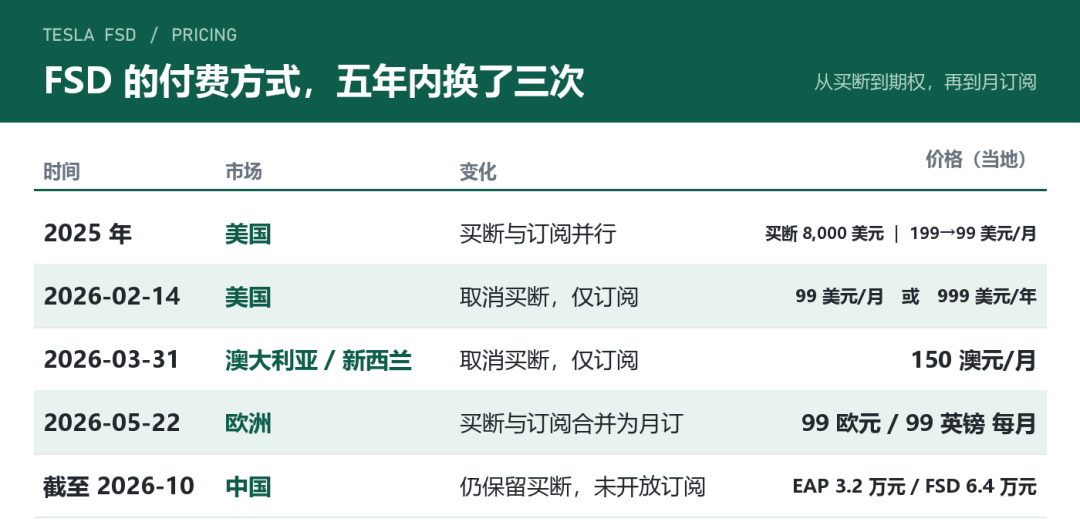
On February 14, Tesla officially discontinued the one-time $8,000 buyout option in the U.S., retaining only the $99/month or $999/year subscription model.
Subsequently, in March and May of the same year, Tesla FSD eliminated the buyout model in Australia, New Zealand, and Europe.
Thus, the subscription ratio exceeding 50% is partly attributable to users having no alternative.
As of mid-October, Tesla FSD has gained regulatory approval in nine EU countries—the Netherlands, Belgium, Czech Republic, Denmark, Croatia, Lithuania, Estonia, Slovenia, and Slovakia—with over 100,000 users and cumulative mileage exceeding 160 million kilometers.
Elon Musk estimates full EU approval within “a few months, at the latest by Q1 next year.”
China represents the slowest market for Tesla FSD’s rollout. In May 2025, Tesla announced FSD met regulatory requirements for the Chinese market, but deployment has remained limited to a gray-release phase.
Musk’s timeline has shifted from February-March 2026 to Q3, and with Q3 concluded, no new timeline has been provided.
Consequently, China has yet to introduce a subscription model, retaining one-time buyouts: Enhanced Autopilot (EAP) is priced at 32,000 yuan, while FSD costs 64,000 yuan.
Thus, the “75% adoption rate” figure holds little relevance for Chinese car owners.
Tesla’s CFO stated during the call that the company is actively pursuing broader regulatory approval for FSD in China.
As for when Chinese car owners will gain access to full features, management has not specified a timeline.
02 Only Huawei and NIO Are Testing Paid Domestic Autonomous Driving Software
How is the paid autonomous driving software market progressing in China? Currently, only Huawei and NIO have established clear pricing models.
Huawei’s pricing is rigid and transparent:
ADS Max costs 36,000 yuan for a one-time purchase, 4,999 yuan for an annual subscription, and 499 yuan for a monthly subscription; ADS Pro costs 12,000 yuan for a one-time buyout; ADS SE costs 5,000 yuan.
In July of this year, Huawei officially ended its limited-time discount, raising the price from 32,000 yuan back to 36,000 yuan.
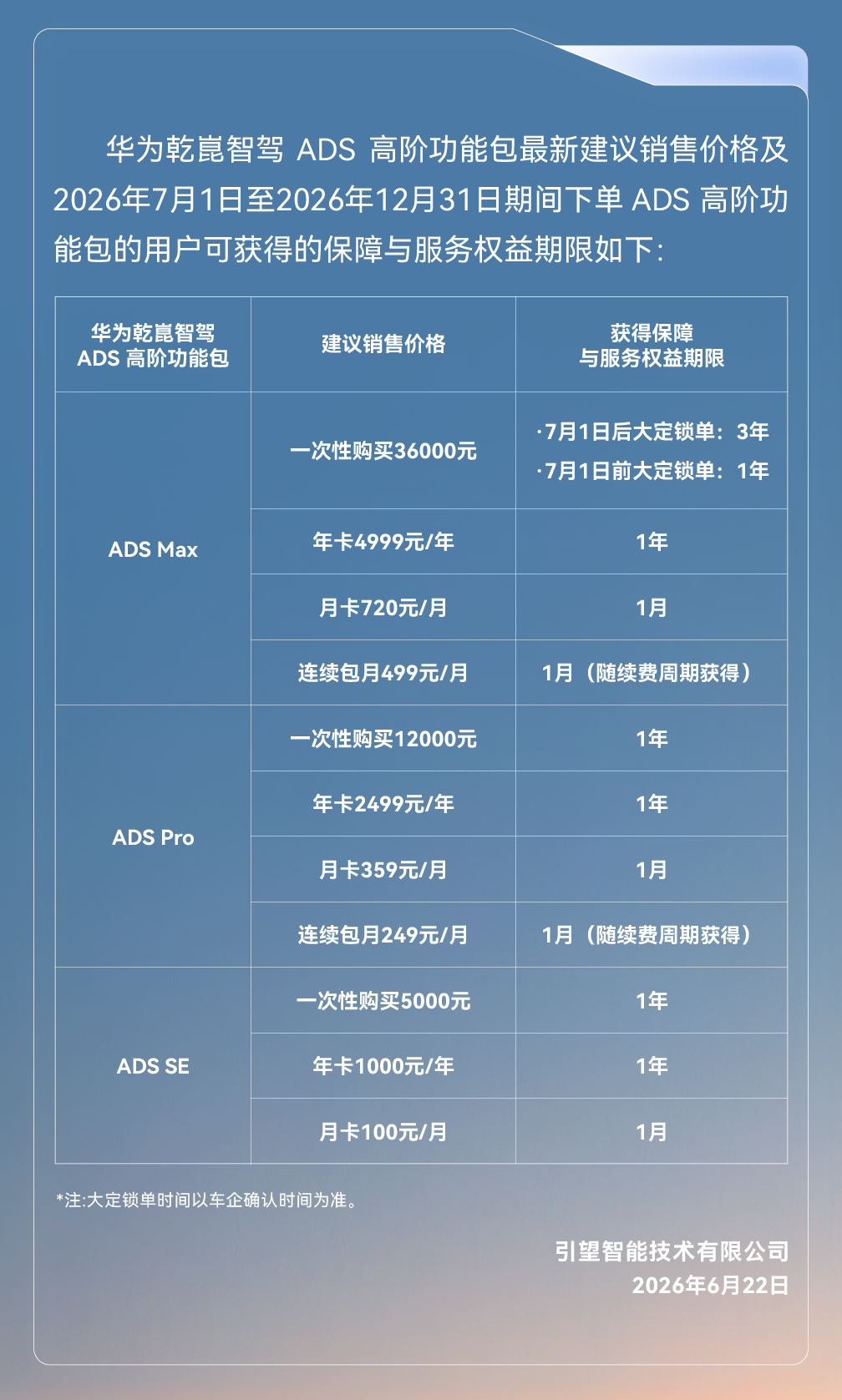
Huawei’s autonomous driving software has a fixed price and explicitly prohibits automakers from directly subsidizing software costs. However, automakers can include an “intelligent driving subsidy” in their vehicle purchase benefit packages.
Partner automakers such as Aito, Luxeed, Shangjie, and Avatr commonly offer a 20,000 yuan “intelligent driving subsidy” as a purchase incentive.
As a result, the actual cost users pay for intelligent driving software is around 16,000 yuan.
When the Aito M9 was launched, its official benefit package included a straightforward 20,000 yuan subsidy for Huawei’s advanced intelligent driving package; similarly, the first-sale benefits of the Shangjie Z7 included a 20,000 yuan subsidy for the ADS advanced feature package.
This approach allows Huawei to maintain its stance of “no software discounts” on the surface, while automakers provide “benefit gifts” in practice.
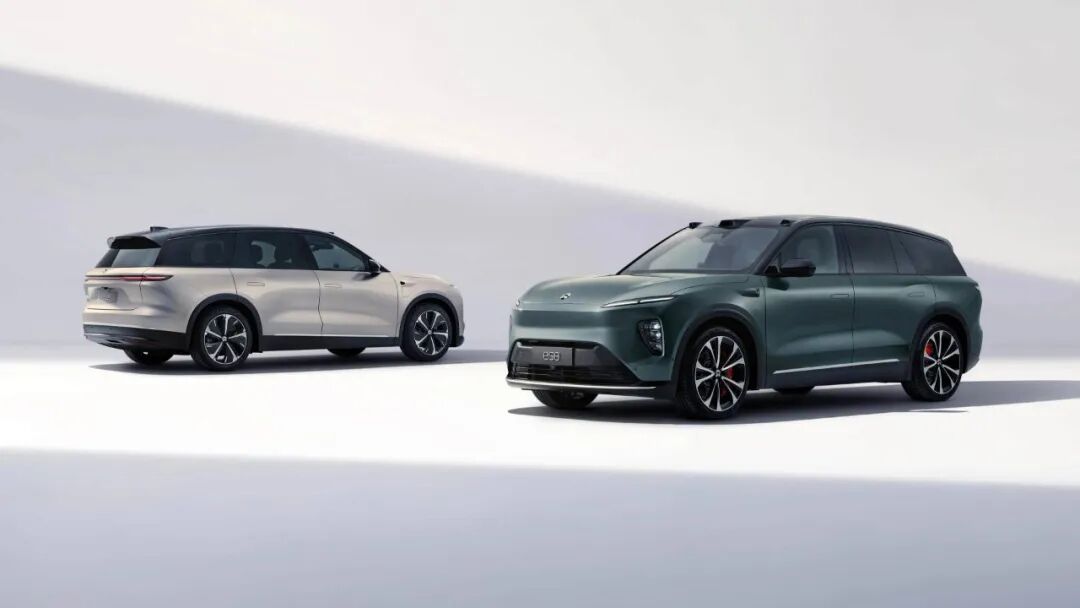
NIO adopts a different, “extreme” approach: no buyouts, only subscriptions.
First-time owners receive five years of free service, after which they must pay themselves; second-hand car users do not inherit these benefits. Among these, NOP+ costs 380 yuan/month, and NAD costs 680 yuan/month.
NIO’s Chairman, William Li, mentioned during the Q2 earnings call that the penetration rate of intelligent driving subscriptions (380 yuan/month) among second-hand car users has approached 20%. He also stated that as the user base grows, intelligent driving subscriptions will become a crucial revenue stream for NIO.
This represents the closest example of a sustainable subscription model in China, albeit with a relatively small user base.
Most other automakers bundle software costs into the vehicle price.
XPENG splits its intelligent driving into three tiers: Max/Ultra SE/Ultra, with Ultra SE adding 12,000 yuan and Ultra adding 20,000 yuan—these additions are for chips and computing hardware, while the software itself remains free.
Li Auto has explicitly stated that advanced driver-assistance systems should not charge usage fees; BYD has rolled out advanced intelligent driving with lidar to models priced at the 100,000 yuan level, attempting to dilute costs through scale; Xiaomi covers intelligent driving costs through the overall vehicle price and limited-time benefits.
Collectively, these practices result in a high penetration rate of intelligent driving in China but a low rate of independent payments.
03 Intense Competition in the Domestic Auto Market Makes Intelligent Driving a Schrödinger’s Payment
Why do domestic and overseas markets exhibit two distinct “ways of living”? On the surface, the difference lies in pricing strategies, but deeper structural factors are at play.
First, Tesla FSD is marketed as the “only solution,” whereas in China, it is merely “one configuration.”
In the North American market, Tesla holds a near-monopoly in intelligence and software OTA, with no comparable competitors for FSD. Thus, users are willing to pay separately for the software.
In contrast, in the Chinese market, nearly every vehicle priced above 200,000 yuan comes with urban NOA, making intelligent driving a standard feature rather than a rare commodity. Competition is even fiercer, with 150,000 yuan-level products now equipped with advanced intelligent driving capabilities.
Clearly, scarcity enables pricing, while standardization leads to intense competition.
The Chinese auto market in 2026 remains embroiled in a price war, with automakers eager to profit from software but fearful of losing customers due to price hikes. Ultimately, they resort to bundling software fees into limited-time benefits.
This creates a Schrödinger’s fee: automakers want to charge but dare not fully commit. The result is that software has shifted from a profit item to a bargaining chip for promotions.
Another barrier preventing users from paying for intelligent driving is that L2 systems fall under assisted driving, with drivers bearing responsibility in accidents. Since the user assumes liability, why should they pay?
Perhaps only when responsibility is clearly defined (L3 and above) can the subscription model truly thrive.
Momenta’s CEO, Cao Xudong, predicts that 2028 could mark a pivotal inflection point for L3/L4 adoption, potentially driving the popularization of subscription models.
Paid intelligent driving in China is likely to remain a long-term exploration. Looking ahead at the trend:
For Tesla, the real test lies in how many users renew their subscriptions in the second year.
Tesla has not disclosed subscription retention and cancellation rates, which happen to be the most vulnerable aspect of the subscription model.
For domestic automakers, the challenge is whether they can navigate a narrow path of “technological generational gap → independent pricing” amid price wars—so far, only Huawei has successfully navigated the first half of this path.
Thus, the true significance of the 1.74 million figure is not that Tesla has won again, but that it proves one thing:
When software is sufficiently advanced and has no alternatives, users are willing to keep paying. Conversely, this encapsulates the entire dilemma of paid intelligent driving in China.
-
Could the Three-Row, All-Electric Flagship SUV BMW iX7, Equipped with an 8K Giant Screen and Produced in North America, Become a Bestseller?
-
![]()
WorkBuddy Ignites the AI Office Ecosystem Battle
-
![]()
Second Working Conference on Drafting the Group Standard “Test Method for Optical Parameters of Optical Waveguide Sheets” Held in Suzhou!
-
![]()
Q3 Net Profit Rises by Just 6%! Has Lante Optics Hit the Zenith of Prism-Driven Profits?
-
Hurun Rich List Released: AI Starts Creating Wealth - 1 in Every 10 Billionaires Owes Their Fortune to AI
-
![]()
Top 10 Provinces by GDP in the First Three Quarters of 2026: Diverging Growth Models
-
![]()
Why Is Mobile Phone RAM Shrinking?
-
![]()
Who is Investing in Anthropic?