Build Factories Now! Thailand Cracks Down on Fully Imported EVs: Tax Rate to Rise from 10% to 35%
 11/03 2026
 486
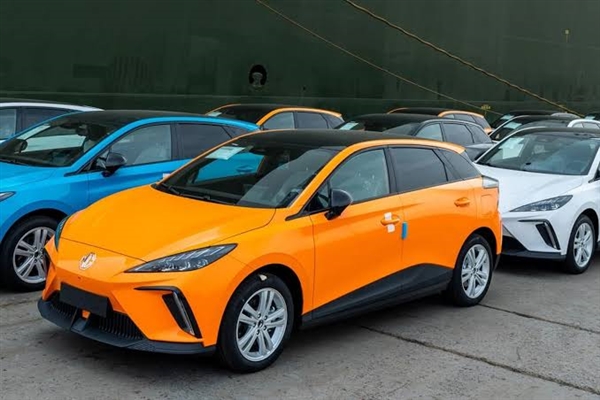
According to a Kuai Technology report on November 3, Thailand's Ministry of Finance announced today that the cabinet has approved raising the excise tax rate on fully imported electric vehicles from 10% to 35%—a jump of 25 percentage points—effective January 1, 2027.
Under the Ministry of Finance's plan, the tax applies to EVs imported as complete units that do not use parts produced locally in Thailand.
The new tax system is divided into three tiers based on the degree of localization. Models built in Thai factories with a high proportion of local parts enjoy the lowest tax rate; assembled models that have submitted production plans and partially rely on imported parts fall into the middle tier; and models that are purely imported as complete vehicles with no local production plans bear the highest tax rate of 35%.
The Ministry of Finance previously gave an example to illustrate how this tax adjustment affects final vehicle prices: an imported EV priced at 1 million baht (about 200,000 yuan) at a 10% tax rate requires 100,000 baht in tax; if the rate rises to 35%, the vehicle price will immediately increase by at least 250,000 baht (about 50,000 yuan)—an increase of more than a quarter.
This means that the price advantage of fully imported EVs in the Thai market will be significantly weakened.
The intention behind Thailand's tax adjustment this time is not hard to guess: protect automakers that have already invested in building factories locally, and force brands still watching from the sidelines to hurry up and come build factories.
Because under the ASEAN-China Free Trade Agreement, import tariffs on some EVs have already been reduced to zero, Thailand cannot directly touch tariffs, so it chose to use excise tax to adjust the tax burden gap between imported cars and locally produced cars, while also shifting the calculation standard for "local content" toward high-tech parts such as motors and batteries.
However, for Chinese automakers that have already built or are building factories in Thailand, this policy is actually good news. Locally produced EVs are not affected by the 35% import tax, and their cost advantage will be further amplified.
BYD's factory in Rayong has already started production, Changan Automobile's first overseas new energy manufacturing base has also settled in Thailand, and brands such as Chery and GAC Aion are also accelerating their localization layouts. Those brands that still rely on pure imports will face enormous price pressure.
-
Privacy Disputes, Experience Bottlenecks, and Commercialization Confusion: Has the AI Glasses Industry Still Not Escaped the Novelty Trap?
-
Apple's Q3 Was a Warm-Up: The iPhone 18 Pro Plays It Safe While the iPhone Duo Steals the Show
-
![]()
Daoming Optics Q3 Report: Net Profit Plunges 56.54% YoY
-
![]()
$115 Billion Bet on Light Sources: Why Marvell Had to Buy
-
Farewell to Half-Baked Products: AI Apps Finally "Fly Into Ordinary Homes"
-
![]()
Quarterly Report | China's Smart Projector Sales Fell 26% in Q3 2026, Full-Year Forecast Lowered to Below 4 Million Units
-
![]()
NVIDIA, Google, and Intel Make Their Moves in Succession as Physical AI Sparks an Infrastructure Battle
-
NXP to Adjust Prices for Select Chips as Automotive Business Returns to Growth