Self-Driving Tech Is Getting Cheaper and Cheaper—Are Suppliers Sacrificing Profits for Market Share?
 11/04 2026
 386
For just 86,800 yuan, you can already buy a model equipped with LiDAR and park-to-park navigation assistance.
Autonomous driving features are rapidly moving downmarket—but does winning more orders necessarily mean suppliers can make more money?
Data from the Gaogong Intelligent Vehicle Research Institute shows that in the first half of 2026, deliveries of passenger car models in the Chinese market with NOA installed as standard front-end equipment reached 2.9081 million units, a penetration rate of 34.10%.
Among them, deliveries of urban NOA models with standard front-end installation—excluding paid software optional packages—reached 1.418 million units, a penetration rate of 16.63%.
The market continues to expand, yet solution prices remain under sustained pressure.
For autonomous driving suppliers, order growth and profit growth are becoming two indicators that are no longer fully in sync.
01 Why Are Autonomous Driving Solutions Getting Cheaper and Cheaper?
The decline in autonomous driving solution prices is primarily driven by a shift in the focus of market competition.
In the past, urban NOA appeared more often on mid- to high-end models and was an important feature for automakers to differentiate their products.
As the technology gradually matures, more and more automakers have begun to extend assisted driving features into mainstream price ranges, and autonomous driving has gradually evolved from a selling point of a few models into a key battleground in product competition.
BYD launched its "Intelligent Driving for All" strategy in 2025, promoting the installation of the God's Eye assisted driving system across models at different price points.
It should be noted that God's Eye includes different technical configurations and capability levels, and does not mean that all models have urban NOA capability.
But this change is also sending a very clear signal: automakers are accelerating the popularization of assisted driving features, and large-scale adoption has also created conditions for further optimizing system costs.
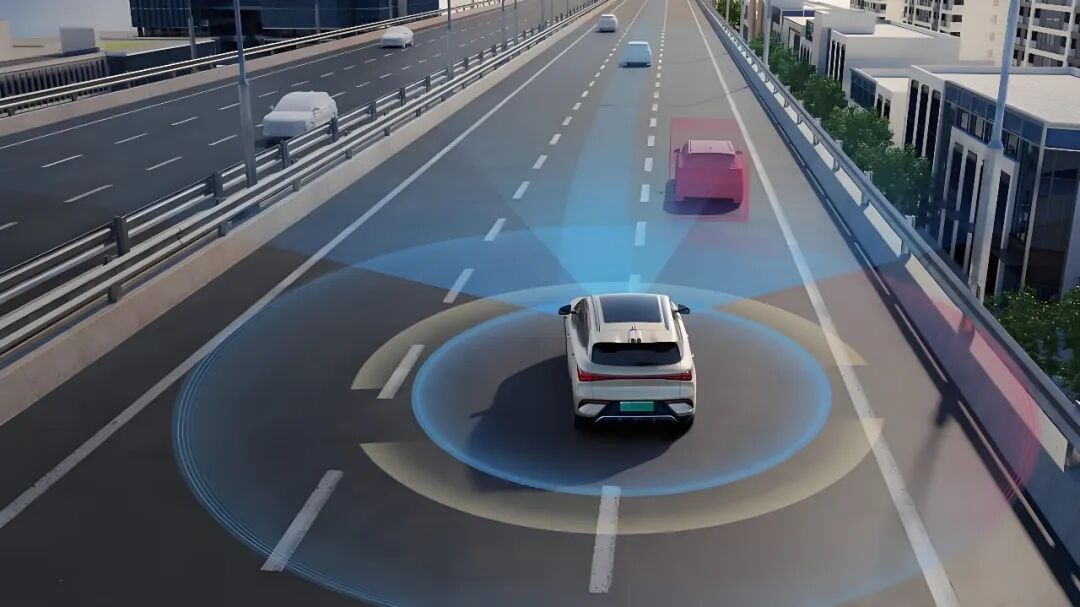
Image source: Internet
As more and more automakers include autonomous driving in the configuration competition for mainstream models, the procurement requirements suppliers face are also changing.
In the past, automakers focused more on whether a solution could provide a differentiated experience; now, in addition to functional performance, they also consider per-vehicle cost, model coverage, and mass-production delivery efficiency.
Suppliers therefore also face greater pressure on their bargaining space.
In September 2026, China Times reported that an industry insider revealed that some suppliers were winning automaker orders through white-box delivery with software licensing fees at the level of a few hundred yuan per vehicle.
The report also mentioned that in the past, industry licensing fees for high-level assisted driving software were generally 1,000 to 2,000 yuan per vehicle.
Although this set of data reflects price pressure in some projects, it cannot be understood as meaning that autonomous driving solutions across the entire industry have already dropped to the hundred-yuan level.
The scope of software involved in white-box delivery, development services, hardware configuration, and subsequent maintenance responsibilities may differ significantly, and it cannot be simply compared with the per-vehicle price of a complete mass-production solution.
However, the emergence of hundred-yuan-level quotations in some projects already reflects intensifying competition among suppliers.
Automakers want to obtain autonomous driving capabilities at lower procurement costs, while suppliers need to make trade-offs between winning orders and maintaining project returns.
02 If Hardware Costs Are Falling, Why Is It Still Difficult for Solution Prices to Cover All Costs?
The ability of autonomous driving solutions to enter lower-priced models is closely related to hardware cost optimization.
Automotive-grade chips continue to iterate, the integration level of domain controllers keeps improving, and the large-scale application of sensors such as cameras, millimeter-wave radar, and LiDAR has also created room for system cost optimization.
As chips and hardware platforms continue to upgrade, some functions can be realized through more integrated hardware platforms, giving the system more room in hardware selection and cost control.
But falling hardware costs do not mean that a set of autonomous driving solutions can be installed on different models without adjustment.
For suppliers, model adaptation remains ongoing engineering work.
Take the perception system as an example: the sensor installation positions, installation heights, orientations, and field-of-view ranges differ across models.
When the installation position or orientation of cameras and LiDAR changes, the sensor extrinsics need to be re-evaluated, calibrated and verified according to specific circumstances to ensure the spatial relationships among different sensors are accurate.
Body structure, the front windshield, and exterior trim may also affect the actual working performance of sensors.
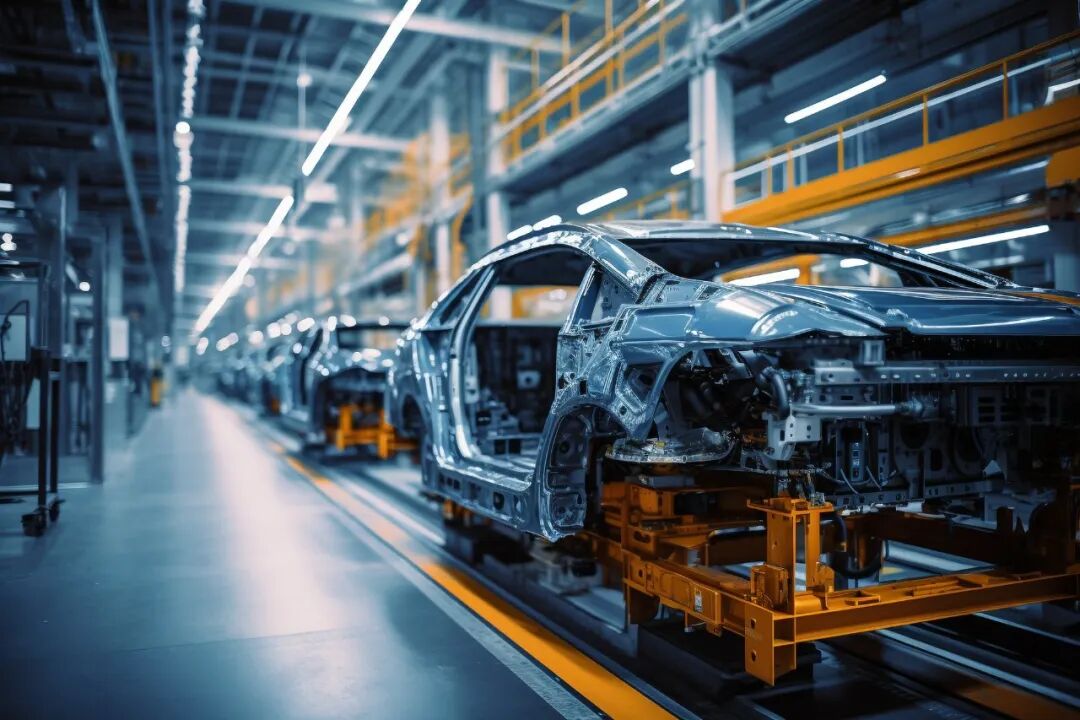
Image source: Internet
In the planning and control stage, adaptation work extends further.
Vehicle dimensions, wheelbase, steering response, braking characteristics, and chassis interfaces differ, and the same planned trajectory and control commands may produce different driving performance when applied to different models.
This is also why the same autonomous driving software still requires vehicle parameter calibration, control strategy adjustment, and real-vehicle validation on different models. If a supplier lacks a unified software platform, a mature model adaptation system, and automated testing tools, each additional model project may bring a large amount of repetitive development and validation work.
The more orders there are, the greater the engineering delivery pressure may also be.
Conversely, if perception, planning and control, and the toolchain can be built into a reusable platform and differences among models can be minimized as much as possible into parameter configuration and a small amount of customized development, the marginal development cost of adding new models has a chance to decline.
Therefore, whether a supplier can benefit from low-price competition is determined not only by how much cheaper chips and sensors have become, but also by whether the software platform can be reused, whether model adaptation can be standardized, and whether testing and validation efficiency can be improved.
03 Why Doesn't Order Growth Necessarily Bring Profit Growth?
Scale is indeed an important path for autonomous driving suppliers to reduce costs and improve profitability, but there is no inevitable relationship between scale growth and profit growth.
In the first half of 2026, Momenta achieved operating revenue of 1.602 billion yuan, a year-on-year increase of 75.9%; gross profit was 1.173 billion yuan, with a gross margin of 73.2%.
Among this, technology development service revenue was 995 million yuan, a year-on-year increase of 81.5%; licensing service revenue was 607 million yuan, a year-on-year increase of 67.5%.
From the revenue structure, both technology development services and licensing services maintained growth, indicating that its business does not rely solely on a single software licensing model. But a high gross margin does not equal ultimate profitability.
During the same period, Momenta's R&D expenses were 1.163 billion yuan, already close to its gross profit of 1.173 billion yuan for the same period; net cash outflow from operating activities was 381 million yuan.
Calculated under non-IFRS standards, the adjusted net loss for the period was 14.097 million yuan.
Here, another financial metric actually needs to be distinguished: Momenta's net loss for the first half of the year calculated under IFRS was 16.537 billion yuan, mainly affected by fair value change losses on preferred shares and other financial liabilities, of which the related change loss was approximately 16.311 billion yuan.
This is a non-cash accounting factor and cannot be directly understood as the company generating a cash loss of the same scale from its operating activities during the period.
After the company completed its listing, the relevant preferred shares had already been converted into ordinary shares.
Therefore, to judge Momenta's operating situation, one cannot look only at the net loss of 16.537 billion yuan for the period, nor only at the adjusted net loss of 14.097 million yuan.
What is more noteworthy is that the company's mass-production business has already formed a relatively high gross margin, but R&D and operating investment remain large, and there are still operational tests before it reaches sustained and stable profitability.
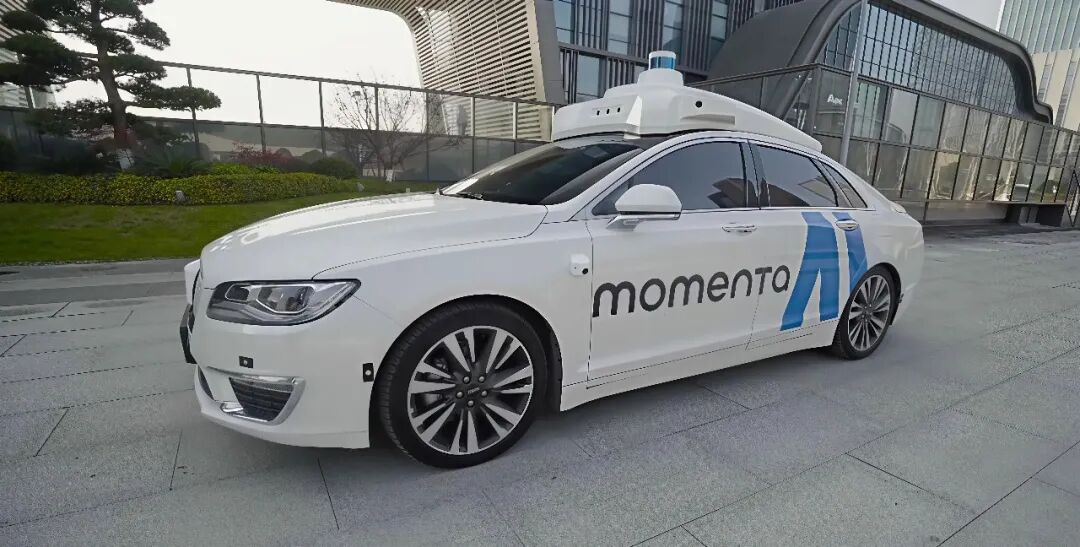
Image source: Internet
Horizon Robotics' situation also illustrates the investment pressure on autonomous driving companies.
In the first half of 2026, Horizon's continuing operations achieved operating revenue of 2.055 billion yuan, a year-on-year increase of 32.9%; gross profit was 1.356 billion yuan, with a gross margin of 66%.
Among this, licensing and service revenue reached 1.129 billion yuan, a year-on-year increase of 52.7%, accounting for 55% of total revenue; product and solution revenue was 926 million yuan.
But during the same period, Horizon's R&D expenses reached 2.755 billion yuan, the operating loss from continuing operations was 1.672 billion yuan, and the adjusted net loss was 1.671 billion yuan.
What needs to be distinguished is that Horizon's disclosed profit for the period during the same period was 3.784 billion yuan.
This result was affected by gains from fair value changes in financial liabilities and a one-time gain from deconsolidating D-Robotics, and cannot be directly understood as the main business having already achieved operating profitability.
Horizon's large scale of R&D investment reflects that autonomous driving chip and software platform companies still need to bear relatively high technology investment.
But this cannot simply be attributed to the price war, nor can it be used to judge that all of its businesses are being sold at a loss.
Looking at Momenta and Horizon together, it can be seen that the business models of autonomous driving suppliers are not the same: some rely mainly on technology development services and software licensing for revenue, while others operate both chip products and licensing services.
The cost structures, R&D investment, and revenue recognition methods of different businesses are also different.
But they face a common problem: as autonomous driving features become more widely available across more models, suppliers must continuously improve the reuse rate of R&D results and delivery efficiency; otherwise, the revenue growth brought by new orders may still find it difficult to cover continuously increasing investment.
04 What Kind of Suppliers Will Ultimately Be Eliminated by the Autonomous Driving Price War?
Price cuts for autonomous driving solutions are not necessarily a bad thing.
For automakers, lower solution costs help extend assisted driving features to more models; for consumers, features originally concentrated in mid- to high-end models also have the opportunity to enter more mainstream price ranges.
From the perspective of industry development, large-scale adoption can also bring more real-road data and engineering validation opportunities.
But price declines must be supported by cost and efficiency improvements.
If a supplier has a mature software platform and can reuse core algorithms, toolchains, and testing systems across multiple model projects, then even if the per-vehicle licensing price declines, it may still be possible to spread R&D and delivery costs over a larger installation scale.
If a supplier needs to invest a large amount of customized development, repeated calibration, and real-vehicle validation every time it integrates a model, then low-price orders may not necessarily bring economies of scale, but may instead bring more project burden.
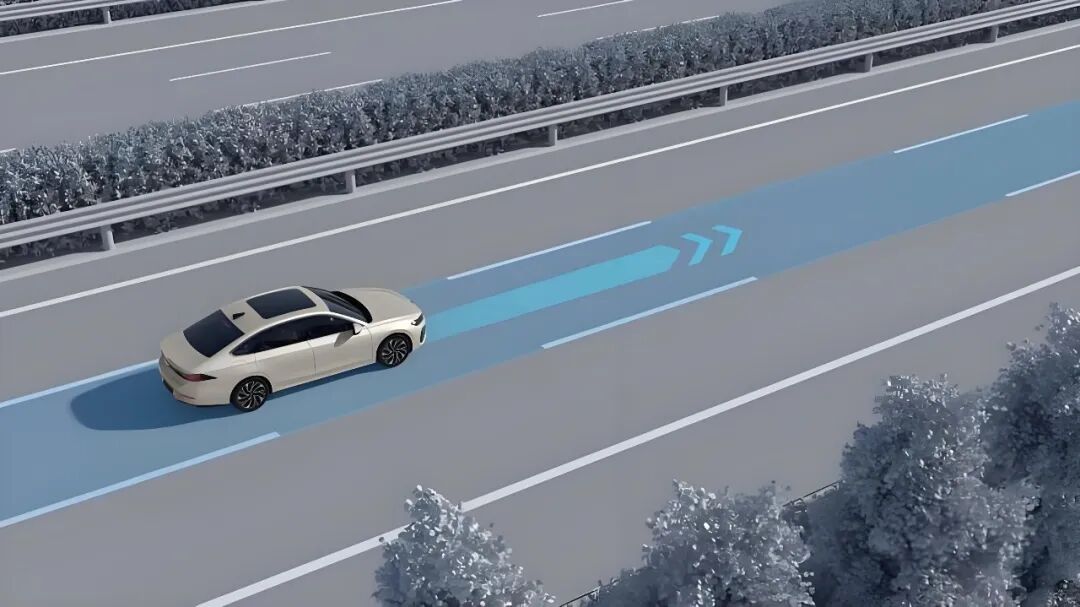
Image source: Internet
In fact, autonomous driving systems are not finished once delivery is complete.
After mass production, the system still requires continuous problem analysis, version iteration, data feedback, and feature maintenance.
If a project quotation is too low and does not leave enough room for subsequent services and long-term maintenance, suppliers may face problems such as limited R&D investment, tight delivery resources, and declining service quality.
Therefore, future competition among autonomous driving suppliers will not only depend on whose solution quotation is lower, nor will it merely compare who has won more model designations.
Whether technical capabilities can be accumulated into a reusable platform, whether the adaptation cost of new models can be controlled, and whether stable services can continue to be provided after mass production will all affect whether a company can ultimately obtain reasonable returns.
Autonomous driving solutions getting cheaper and cheaper is not a bad thing in itself.
But when the industry keeps pushing down procurement prices without simultaneously improving R&D reuse rates and engineering delivery efficiency, the larger the market scale, the more likely it is that suppliers will not necessarily make more money.
Price can win orders, but it may not necessarily win long-term competitiveness.
In the end, those who can remain in the market may not be the suppliers with the lowest quotations, but the companies that can truly balance technology investment, engineering efficiency, and commercial returns. #AutonomousDriving #AutonomousDrivingSolutions #AutonomousDrivingSuppliers
-
Capturing Over Half of the AI Server ODM Market: Foxconn Industrial Internet's Stellar Performance, But Can It Shed the Contract Manufacturer Label?
-
Embarrassing: Apple Paid an Extra 16.7 Billion Yuan in "Memory Tax" This Quarter!
-
![]()
Musk and Gates's Feud Escalates!
-
![]()
ZTE Rumored to Sell Phone Business at 40 Billion Yuan Valuation, with a Major Internet Company Set to Take Over? Official Response Arrives
-
![]()
Prompt Engineering in Practice: Giving Six AI Characters Distinct Speaking Styles
-
![]()
Xingyu Co., Ltd.'s Q3 Net Profit Falls Nearly 40%: Chinese Automotive Lighting Has Won on Styling, but the Profits Are Gone
-
![]()
More like twins: the growth paths of these two automakers are strikingly similar
-
![]()
Chinese Automakers Go Global: Entering the "Export Quota Competition" Phase