"Little Blue Light" Returns with Its Exclusive Color—Is the L3 Era Approaching?
 11/04 2026
 484
Introduction | Lead
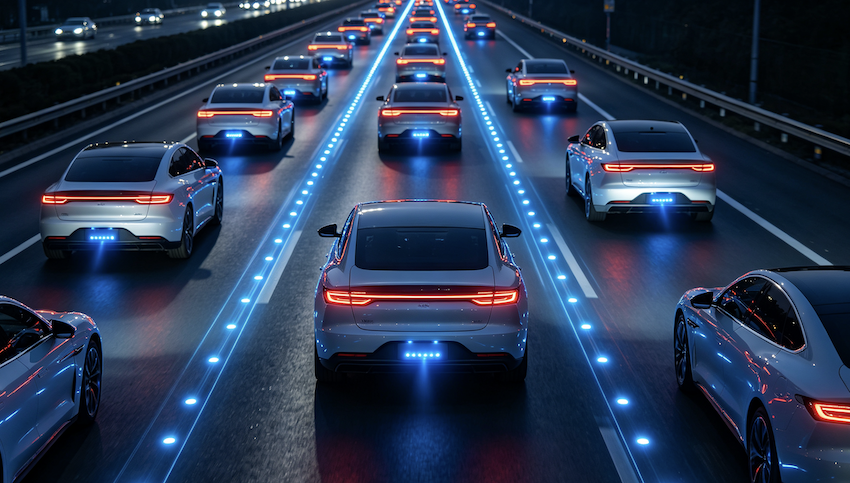
In just three months, the Little Blue Light has gone from being halted to being written into the national standard. What this event conveys is not merely a change in the identity of an indicator light, but rather a concentrated iteration of supporting regulations for high-level autonomous driving. When the Little Blue Light is defined as an exclusive identifier for L3 and above autonomous driving, the boundary between L2 and L3 begins to be clearly drawn, and the second half of smart driving thus enters an inflection point.
Produced by | Heyan Yueche Studio
Written by | Cai Yan
Edited by | He Zi
Full text: 2,025 characters
Reading time: 4 minutes
Through the "Little Blue Light," it is evident that L3 will be a track many automakers will race on in 2027.
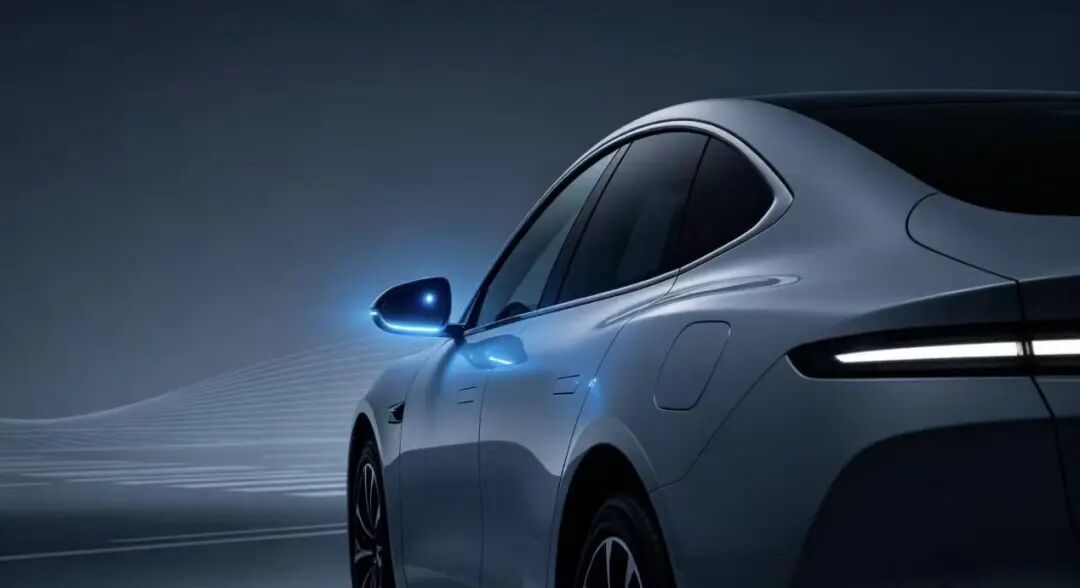
Recently, the Ministry of Industry and Information Technology (MIIT) issued an announcement publicly soliciting comments on the revised draft of the "Installation Regulations for External Lighting and Light-Signaling Devices of Motor Vehicles and Trailers" (GB 4785) (hereinafter referred to as the "Draft for Comments"). This time, the MIIT has set strict specifications for the installation standards of the autonomous driving system indicator lamp, namely the ADS indicator lamp (Little Blue Light).
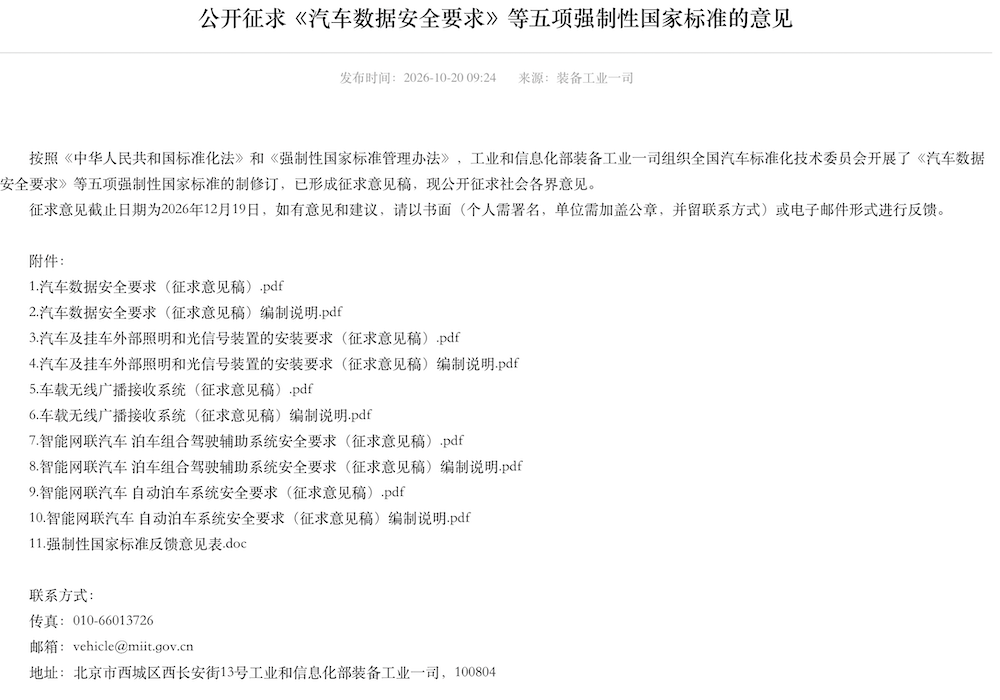
First, the Little Blue Light becomes an external device that strictly distinguishes the boundary of rights and responsibilities by automation level—this is the most important point. The Draft for Comments clearly states that vehicles equipped with L3 and above autonomous driving systems may optionally install front, rear, and side ADS indicator lamps in accordance with regulations, while vehicles without L3 and above capabilities are prohibited from installing them.
More critically, the Draft for Comments states that after L3 autonomous driving is activated, the lights must also be uniformly taken over by the autonomous driving system, and the driver is prohibited from turning them off through manual, voice, gesture control, or other operations. Put plainly, there must not be a disjointed scenario where "the car is still driving autonomously, but the light can be switched on and off at will."
Second, the Draft for Comments standardizes the color, installation position, and intended use scenarios of the Little Blue Light. It establishes the exclusive blue-green light color of the Little Blue Light, explicitly prohibits the use of vehicle lights to display text or patterns, and imposes constraints on vehicle light distribution, mixed reuse of lamps, and interlock logic. How many Little Blue Lights can be installed, where they can be installed, and how they should illuminate are all clearly specified.
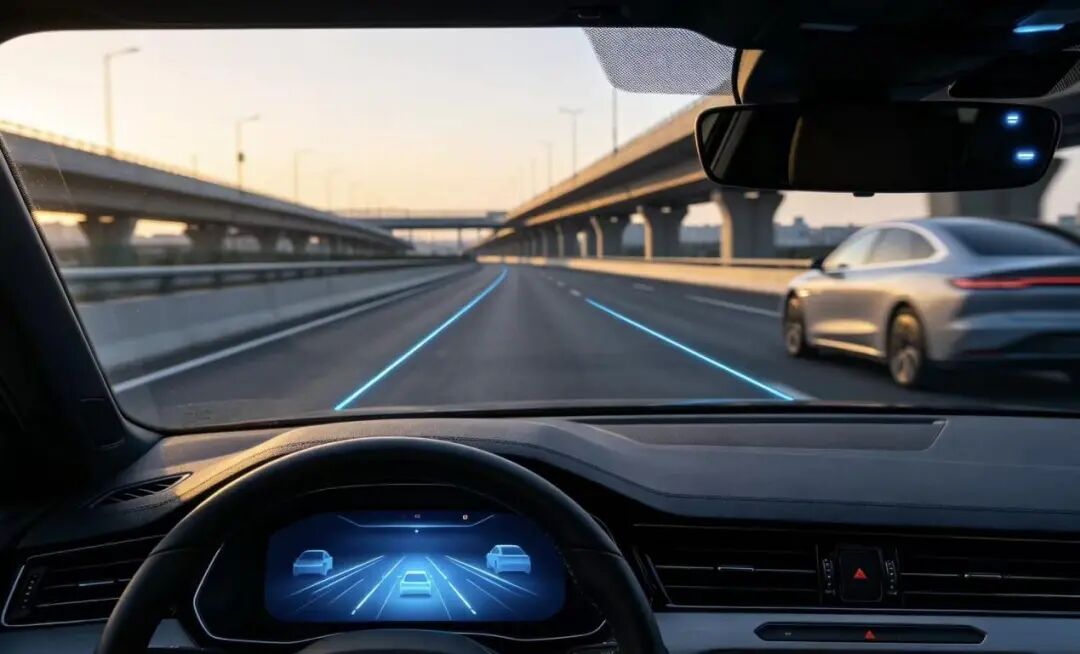
The Little Blue Light's transition from being temporarily "banned" to quickly "entering the standard" is not surprising. As early as August this year, Heyan Yueche mentioned in the article "The Little Blue Light Goes Out, the Light of New Smart Driving Will Be Lit" that the end of the Little Blue Light was only a phased industry correction. Looking back at the trajectory of the Little Blue Light incident, the logic is not complicated: during the rapid development stage of smart driving, problems need time to surface; as the smart driving exploration stage gradually shifts to "usable, easy to use, and safe to use," regulation and timely correction are needed, efficiently launching a standardized top-level design.
Simply put, the Little Blue Light entering the standard is essentially the first "statement of rights and responsibilities" in the second half of smart driving. The Little Blue Light officially shifts from a function display to a notice of rights and responsibilities, using blue-green to clearly explain "who is driving and who is responsible," drawing a clear line of rights and responsibilities from the source and avoiding cognitive misalignment for drivers, pedestrians, and vehicles caused by light signals.
Reflections on the Second Half of Smart Driving
Smart driving regulations are accelerating, and industry judgments are also converging toward the same point.
At the recent 2026 World Intelligent Connected Vehicles Conference, Zhao Fuquan, Lifetime Honorary Chairman of the World Federation of Automotive Engineers, together with Cao Xudong, Yu Kai, Jin Yuzhi, He Xiaopeng, Li Bin, and other leading enterprises in the industry, reached a consensus on the second half of smart driving, namely that "the admission ticket to the second half of smart driving is a commercial closed loop and safety."
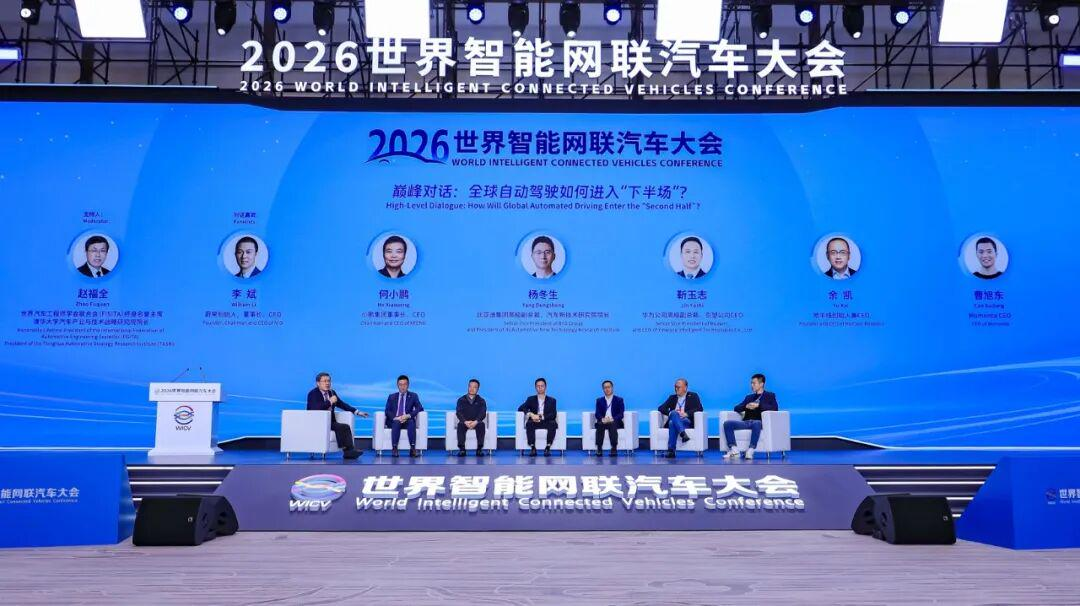
Of course, it must be emphasized that the so-called "consensus" on the second half of smart driving here is a judgment based on the future direction of smart driving. When it comes to actual technical paths, automakers' ideas are quite different.
Among them, the biggest disagreement lies in automakers' attitudes toward L3. We can roughly divide automakers' attitudes toward L3 into three categories. The first category comprises most automakers represented by NIO and Qijing, which will choose to advance in sync with L3-level regulations, or seize the L3 smart driving beachhead in advance to quickly build user perception, and believe that technology and compliance need to be viewed separately. In the words of NIO's leader Li Bin, "L2 to L5 are technically homologous; the difference lies in engineering capabilities such as redundancy, computing power, and sensors, and automakers must respect regulations—after all, real roads are not AI in a laboratory."
The second category is smart driving companies represented by Horizon and Momenta. Regarding the advancement of L3 or higher-level smart driving, they place more emphasis on penetration rate. Momenta's leader Cao Xudong judges that 2028 will be an important inflection point for L3 and L4.
The third category is mainly Mercedes-Benz and BMW, automakers that choose not to follow up with L3 smart driving. BMW has canceled the L3 option for the 7 Series, and the new Mercedes-Benz S-Class no longer offers L3, on the grounds that "the R&D and redundancy costs of L3 are close to L4, but the usage scenarios are limited and user demand is not high." Take Audi as an example: Audi has implemented L3 in localized scenarios, but the activation range is very small and the experience is poor. XPeng is one of the few independent brands that recommends skipping L3 and directly considering L4. The company's leader He Xiaopeng said, "L3 shifts responsibility, but the experience has not been optimized."
Obviously, in the face of the development path of the second half of smart driving, companies have already made judgments based on their own "cost accounts" and "strategic accounts." From the consumer's perspective, as the industry gradually diverges on smart driving in the future: on the one hand, consumers must have a clear logic for choosing smart driving; on the other hand, the market also needs regulations, insurance, and manufacturer trust to provide strong support.
At the current stage, L3 regulations are being intensively completed. In June, the United Nations Global Technical Regulation on Autonomous Driving Systems (ADS GTR), jointly led by China, the EU, the UK, the US, and other countries, was officially approved and released. In August, the MIIT's "Safety Requirements for Combined Assisted Driving Systems of Intelligent Connected Vehicles" is planned to be implemented on July 1, 2027.
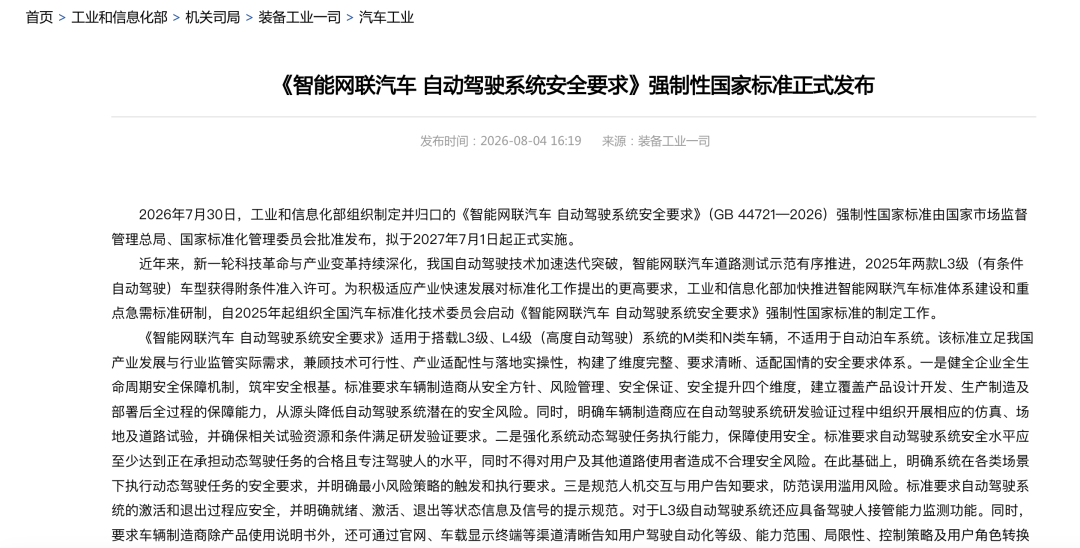
However, accident liability during the regulatory window period remains ambiguous, and consumers' perception of "smart driving signals" is still a vulnerable point in the advancement of the smart driving trend.
First, at the current stage, the Draft for Comments only regulates the ADS lamp for L3-level autonomous driving, but most assisted driving systems on the market today are L2 or below and lack intuitive identification signals. This long-tail responsibility needs to be completed jointly by regulations and automakers.
Second, for the L3-level Little Blue Light to truly function in the future, it requires not only regulatory constraints and automaker compliance, but also "light semantics education" and "smart driving ethics" education for all road participants. The simplest example: during the L2 Little Blue Light period, many "smart driving trainers" have already appeared on the roads. When smart driving vehicles are maliciously tested by manually driven vehicles, the boundary of accident liability also needs to be discussed.
Commentary
The automotive industry, driven by technology, is accelerating into the intelligent second half, but many problems remain to be solved. As Zhao Fuquan said at the World Intelligent Connected Vehicles Conference: "Autonomous driving has never been an optional question but a mandatory one, but it has never been a problem for a single company. Rather, it requires multi-path supplementation from regulation, insurance, consumer education, and long-tail responsibility—every link is indispensable."
(This article is original to Heyan Yueche and may not be reproduced without authorization.)
-
Capturing Over Half of the AI Server ODM Market: Foxconn Industrial Internet's Stellar Performance, But Can It Shed the Contract Manufacturer Label?
-
Embarrassing: Apple Paid an Extra 16.7 Billion Yuan in "Memory Tax" This Quarter!
-
![]()
Musk and Gates's Feud Escalates!
-
![]()
ZTE Rumored to Sell Phone Business at 40 Billion Yuan Valuation, with a Major Internet Company Set to Take Over? Official Response Arrives
-
![]()
Prompt Engineering in Practice: Giving Six AI Characters Distinct Speaking Styles
-
![]()
Xingyu Co., Ltd.'s Q3 Net Profit Falls Nearly 40%: Chinese Automotive Lighting Has Won on Styling, but the Profits Are Gone
-
![]()
More like twins: the growth paths of these two automakers are strikingly similar
-
![]()
Chinese Automakers Go Global: Entering the "Export Quota Competition" Phase