Why Does Mass Production Spell Doom? The Price Dilemma of Micro-Optical Engines from a Supply Chain Perspective
 10/09 2026
 432
432
Today, many consumers have already witnessed the cool visuals of AR glasses in short videos: putting on the device, virtual images hover before their eyes, with navigation and messages directly overlaid on their real-world view.
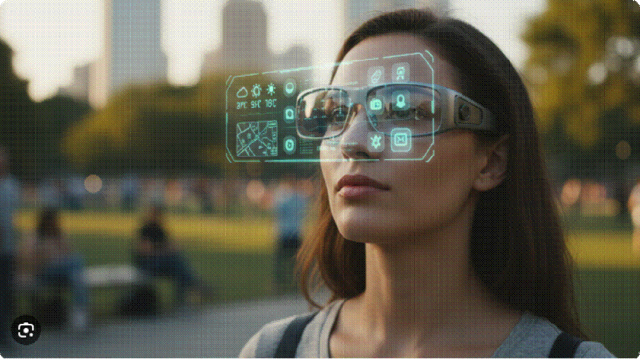
However, the selling prices of most mass-produced models still remain in the thousands or even tens of thousands of yuan. Industry insiders are well aware that the core bottleneck preventing AR devices from entering the mainstream market lies not in chips or software, but in a palm-sized component hidden within the temple of the glasses—the micro-optical engine.
The micro-optical engine is the core of image generation in AR glasses, akin to a miniaturized version of a traditional display, projecting images onto the retina. While capital continues to bet on the AR track, with software large models and spatial interaction functions constantly iterating, product commercialization is stalled at the hardware cost barrier.
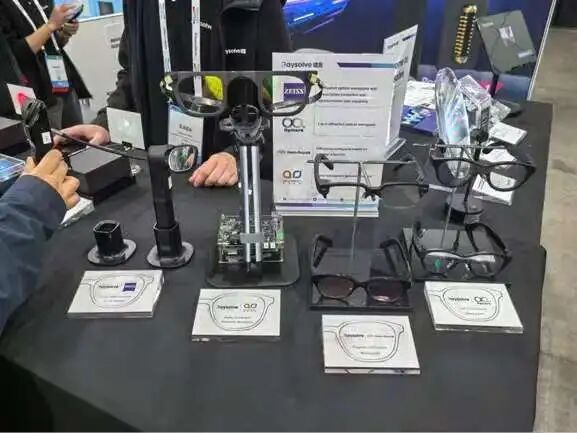
Beyond cost, the biggest contradiction in the current micro-optical engine field is that while laboratory prototypes deliver stunning results, once scaled to mass production in the millions, cost and yield issues erupt.
Why does this happen?
01 The 'Supporting Actor' in AR Glasses
At first glance at AR glasses, you can't see the micro-optical engine. Yet, every image output depends on it.
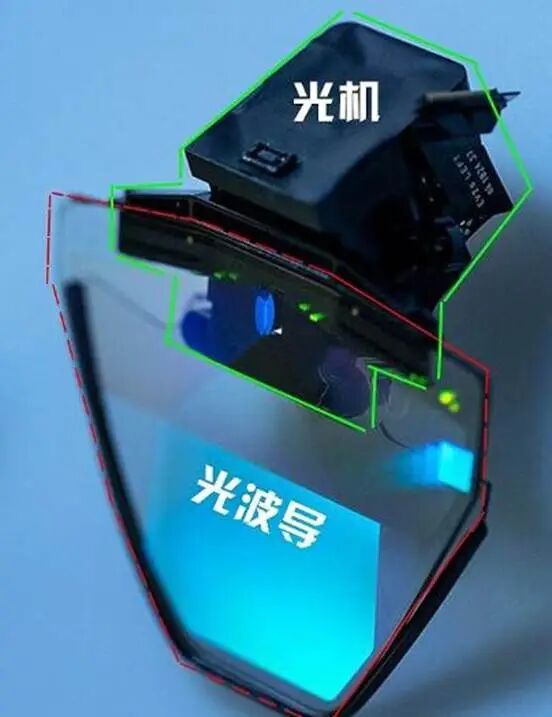
Simply put, a micro-optical engine is a highly compact projection system that crams image light sources, optical lenses, and driving components into a tiny space, projecting images into the human eye—much like the cornea, which reacts to and processes light entering the eye. Meanwhile, it must ensure that its weight and size do not burden the wearer.
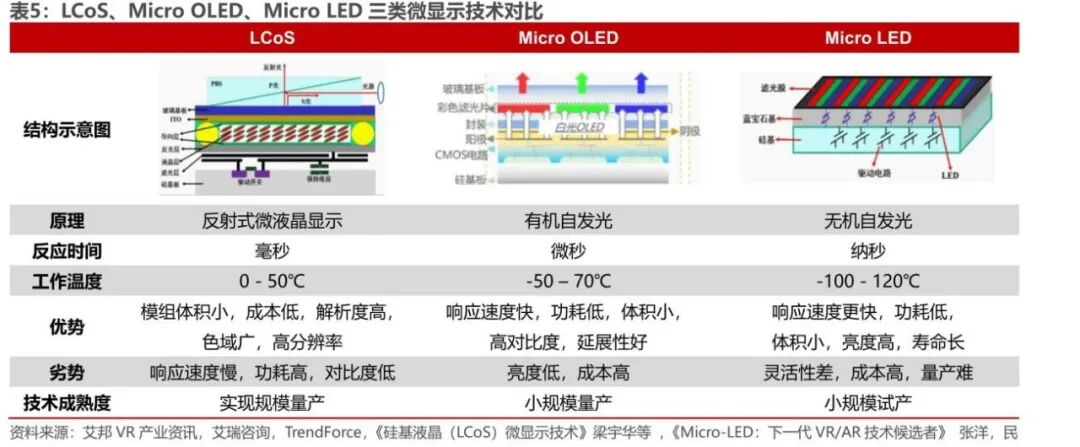
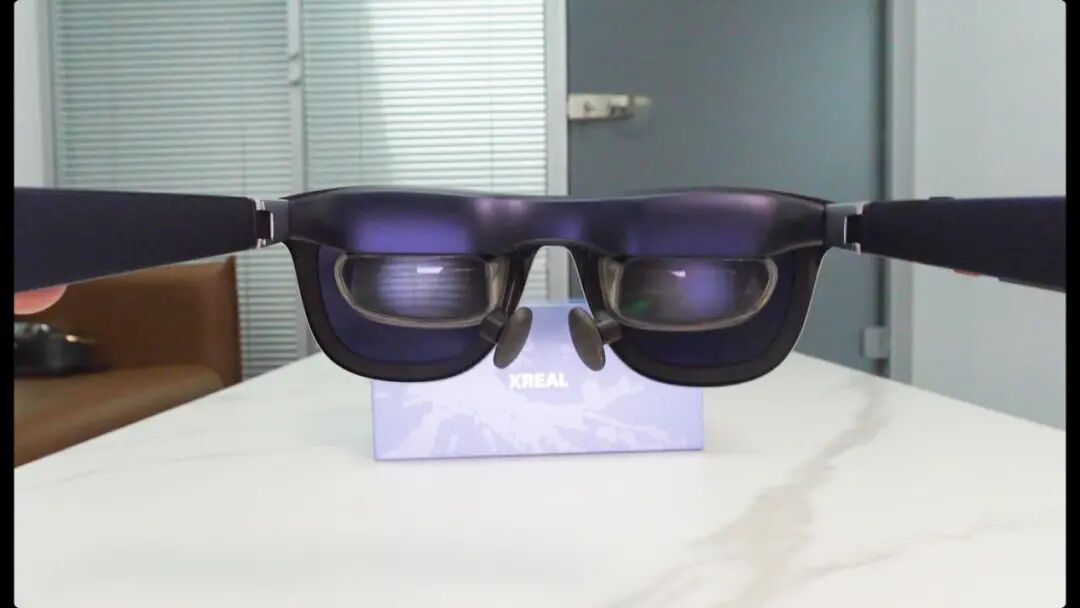
The mainstream market routes are divided into three categories: LCoS, Micro OLED, and DLP. Micro OLED and Micro LED are the two dominant display technologies in current consumer-grade AR, with Micro LED gaining more market traction due to its brightness advantage.
According to calculations from Great Wall Securities' industry weekly report, in the domestic online smart glasses market, the sales share of all-in-one AR glasses rose from 18% in 2024 to approximately 22%-27% in 2025. Many mainstream models are equipped with micro-optical engines assembled from over a dozen precision components, including display chips, collimating optical assemblies, and polarizing films, with assembly tolerances requiring micron-level precision—equivalent to a fraction of the diameter of a human hair.
This explains why laboratory prototypes are impressive but fail in mass production. During the prototype phase, manufacturers only need to produce a few dozen to a hundred units, allowing engineers to manually calibrate each lens group, making it easy to achieve the desired image quality. Once mass production begins, minor assembly deviations directly result in blurry images, ghosting, and uneven coloration, rendering the product defective.
In fact, most AR brands cannot directly purchase mature optical engines; they must either develop them in-house or custom-order them from a few optical solution providers. The mature supply chain division of labor seen in other consumer electronics categories has not yet been established in the micro-optical engine sector. AR device manufacturers can easily procure mature general-purpose chips, but micro-optical engines are customized components without standardized off-the-shelf products.
The even more daunting cost challenges lie deeper within the supply chain and manufacturing processes.

02 Why Are Lab Samples Cheap, but Mass Production Expensive?
Currently, the cost pressures on micro-optical engines stem from yield, scale, and component constraints.
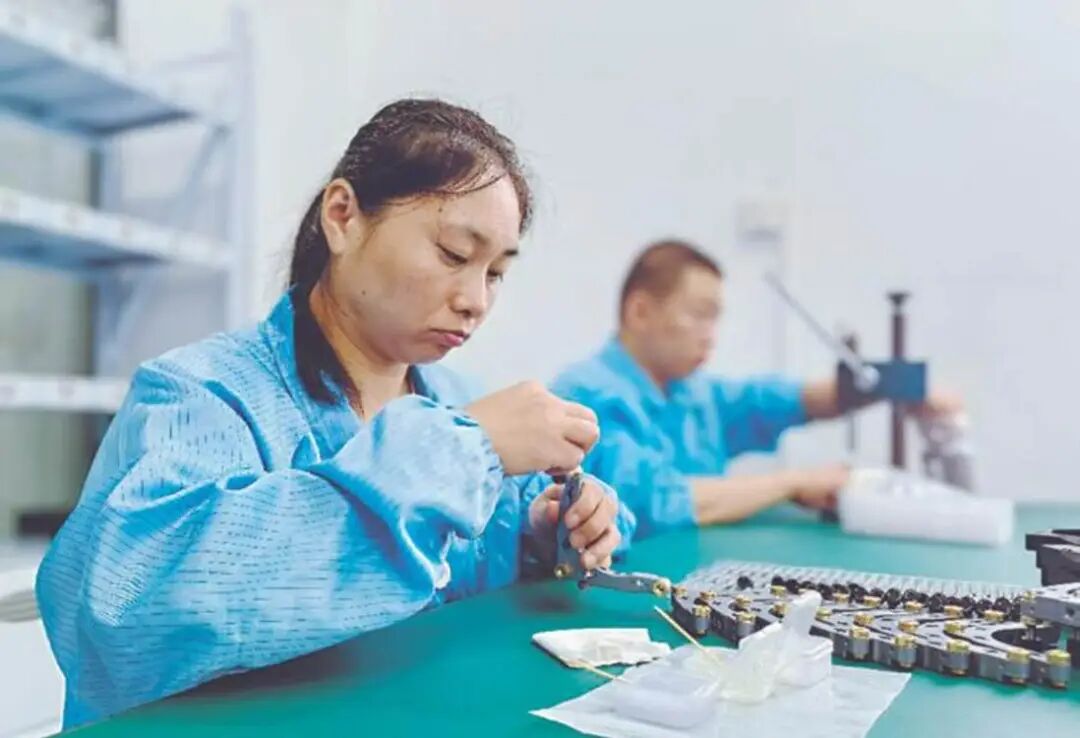
Production yield is a critical hurdle. Because optical assembly involves ultra-precision manufacturing, dust, temperature fluctuations, and minor errors in assembly tooling can all cause optical engines to fail. In the early stages of mass production, yields in optical coupling and lens processing are low, with some processes experiencing high scrap rates.
On the production line, a large number of products are scrapped during inspection, with the raw material and labor costs of these scraps being passed on to the qualified products, directly driving up the unit price.
Another awkward (Note: ' awkward ' is retained as it is a specific term that may not have a perfect English equivalent in this context, but for clarity, it could be translated as 'issue' or 'challenge') issue is the delayed realization of economies of scale.
According to IDC's 2025 China Smart Glasses Market Tracker report, domestic AR/VR device shipments totaled 742,000 units that year. Compared to the annual volume of over a billion smartphones, this market size is minuscule. Upstream component suppliers are unwilling to invest in dedicated production line expansions; without large-scale production lines, component unit prices remain high; the high prices of finished products deter ordinary consumers, making it difficult for market sales to explode, trapping the industry in a classic chicken-and-egg cycle.
At the component level, core optical films and micro-display chips are highly concentrated among a few overseas suppliers. According to relevant research, the micro-display module (light-emitting chip + driver circuit) is the most costly part of the optical engine, accounting for about half of the total BOM cost of the device. Similarly, high-end optical lenses and polarizing films are also highly dependent on imports.
Thus, high costs are hindering the commercialization of consumer-grade AR, and the industry chain is exploring viable breakthroughs.
03 Are There Realistic Paths to Overcoming Mass Production Costs?
Tackling the cost of micro-optical engines is an unavoidable challenge for the entire AR industry. If the industry chain can overcome the hurdles of yield and cost, it may help AR glasses achieve popularity akin to smartphones.
The prerequisite is easily resolving the mass production cost issue. Currently, players in the sector are compressing micro-optical engine costs from multiple directions: domestic substitution, structural simplification, and process iterations, with each approach having its trade-offs and no perfect solution.
Domestic substitution of optical components is the most direct short-term solution. Domestic optical manufacturers are gradually entering the production of components such as polarizing films and waveguide lenses, breaking the monopoly of overseas suppliers.
After core optical materials are substituted domestically, the cost of waveguides drops by more than 60% compared to imported solutions; the localization of ordinary auxiliary optical films can reduce costs by 15%-20%, as evidenced by public technical disclosures from domestic solution providers like Gudong Technology. However, the localization progress of high-end Micro LED chips remains slow, with core display chips still facing supply shortages.

Simplifying the optical structure and sacrificing some performance can also lead to cost reductions. Many AR products targeting the mass market abandon complex waveguide solutions in favor of relatively simple optical architectures like BirdBath. These solutions offer slightly lower image clarity but fewer components, reduced assembly difficulty, and higher yields, enabling significant reductions in the unit cost of optical engines.
Currently, lightweight AR glasses primarily focused on audio-visual entertainment mostly adopt this approach, prioritizing the fulfillment of mass audio-visual needs. After all, C-end users care less about the technology used and more about the viewing experience.
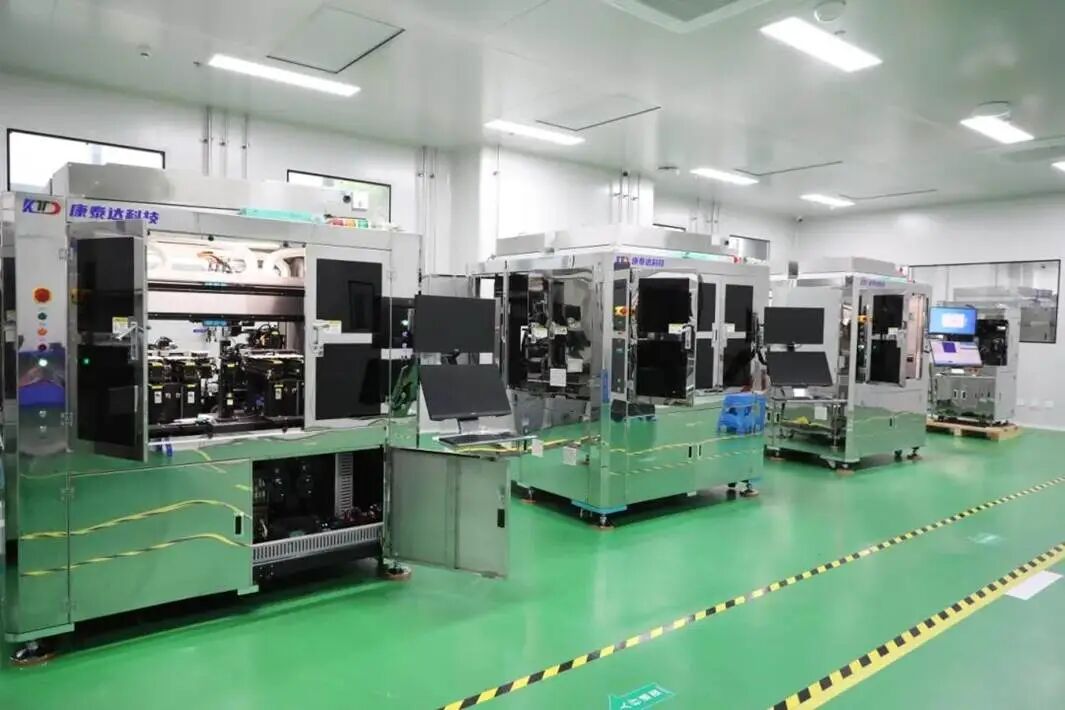
Additionally, in the AR/VR industry, MicroLED full-color light engines have long been regarded as the core direction of next-generation display technology. For example, Kangtaida premiered mass production equipment for MicroLED full-color optical engines. The core advantages of this equipment lie in cost reduction and efficiency improvement: modular combination reduces floor space by 22%, with benchmark switching achievable in 30 minutes; the full-color first-pass yield reaches 99% (excluding material-related issues), with a cycle time of less than 60 seconds and a 100% increase in UPH. Overall, this equipment can reduce the cost of MicroLED optical engine products by 28% and shorten delivery cycles by 50%.
Clearly, full industry chain collaboration is essential. Optical materials, chips, precision assembly, and inspection equipment—any lagging link can stall cost reductions. Even if optical engine costs decrease, weight, image quality, and battery life must still be balanced, as simple (Note: ' simple ' is translated as 'simply' to convey the idea of focusing solely on one aspect) compressing costs can easily lead to a degradation in the wearing experience.
On the other hand, capital's imagination for AR spatial computing largely focuses on future scenarios like AI interaction and virtual-real fusion. Many investors direct their attention toward software functions such as spatial computing and large model interactions, overlooking the practical constraints of hardware manufacturing.
The history of consumer electronics repeatedly proves that for a product to truly enter the lives of ordinary people, it must always overcome the price barrier. Software algorithms can rapidly iterate and upgrade via the cloud, but micro-optical engines must be refined through factories, production lines, and processes—there are no shortcuts.
Text by R-Star Person
-
![]()
Zunjie V800 Rolls Out Free Upgrades Following Three Brake Pedal Malfunctions
-
![]()
FAW Toyota to Maintain Operations; FAW, GAC, and Toyota Forge New Partnership
-
![]()
Automotive Consumption Policy: Transitioning from Short-Term Boosts to Long-Term Ecosystem Development
-
![]()
QianWen N1 Pro and Wigain Flow Enhance Eye Perception, AI Glasses Complete Personal Context Entry
-
![]()
The Integration of North and South Toyota: A New Model for Chinese and Foreign Automakers
-
![]()
Why Does Mass Production Spell Doom? The Price Dilemma of Micro-Optical Engines from a Supply Chain Perspective
-
![]()
A Leap in Dimensionality Reduction: Why Both Meta and EssilorLuxottica Are Venturing into Hearing Aid Glasses
-
Reevaluating the Value of a Hundred-Billion-Dollar Track Through the Lens of Utopai Studios, the World's Largest Independent AI Film and Television Company