A Leap in Dimensionality Reduction: Why Both Meta and EssilorLuxottica Are Venturing into Hearing Aid Glasses
 10/09 2026
 463
463
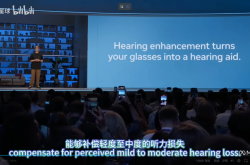
At the Meta Connect 2026 event last week, Zuckerberg unveiled that Meta AI glasses now boast a Hearing Enhancement feature. This new addition has secured official U.S. certification and is designed to compensate for mild to moderate hearing loss.
Regarding the cost, Planet has learned that users who have already purchased Ray-Ban Meta Audio or Gen 3 models can activate this feature with a one-time payment of $149.99. Alternatively, the feature is also available as part of Meta's paid subscription service packages (Meta One / Meta One Premium), allowing users to unlock and utilize it through subscription.
Almost simultaneously, the overseas brand Nuance Audio introduced its hearing aid glasses model, Nuance Audio Plus. Similar to Rayban Meta, these glasses incorporate built-in hearing aids within the temples and have also received certification from the U.S. Food and Drug Administration (FDA).
Interestingly, Nuance is a subsidiary of EssilorLuxottica. As is widely recognized, EssilorLuxottica has collaborated with Meta to create renowned AI glasses brands, including Meta Ray-Ban.

Image source: The Hearing Review
However, unlike the Meta Ray-Ban second generation, which is priced between $379 and $499, the Nuance Audio Plus glasses are priced at $829, doubling the cost of the Meta Ray-Ban second generation. This pricing positions it closer to professional medical devices.
It is estimated that approximately 1.6 billion people globally suffer from hearing loss, with around 1.25 billion experiencing mild to moderate impairment. Nevertheless, nearly 90% of this demographic has not sought any hearing intervention solutions. Nuance Audio Plus aims to bridge this gap by integrating hearing assistance functions into everyday eyewear.
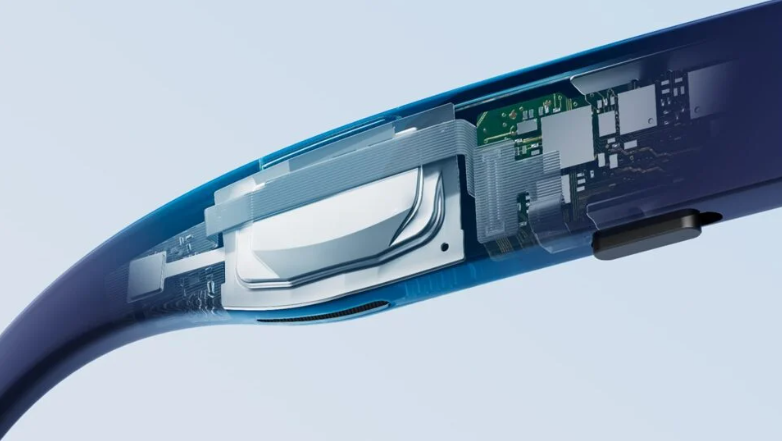
Hearing aid module, image source: Nuance
Compared to its predecessor, the Nuance Audio Plus offers several enhancements: improved sound amplification for greater practicality in specific scenarios; heightened speech clarity and an extended battery life of up to 10 hours; folding the smart glasses triggers sleep mode to conserve battery, and the product includes a wireless charging pad for convenient charging on the go. (An additional $149 can be paid for a more powerful wireless charging case.)
Since there is no necessity to incorporate a camera or overload the device with AI functions, the Nuance Audio Plus closely resembles ordinary glasses frames, making it far more discreet than other smart glasses.
The product is available in three frame styles: Square, Pathos, and Upturn, and comes in five colors: olive green, dark blue, amber, glossy black, and glossy wine red.
The glasses can accommodate any optical lenses, including Transitions photochromic lenses that adapt to light changes. However, opting for prescription lenses will incur an additional cost.

Image source: Nuance
The Nuance Audio Plus glasses require the use of Nuance's smartphone app, which offers customizable settings to enhance speech clarity.
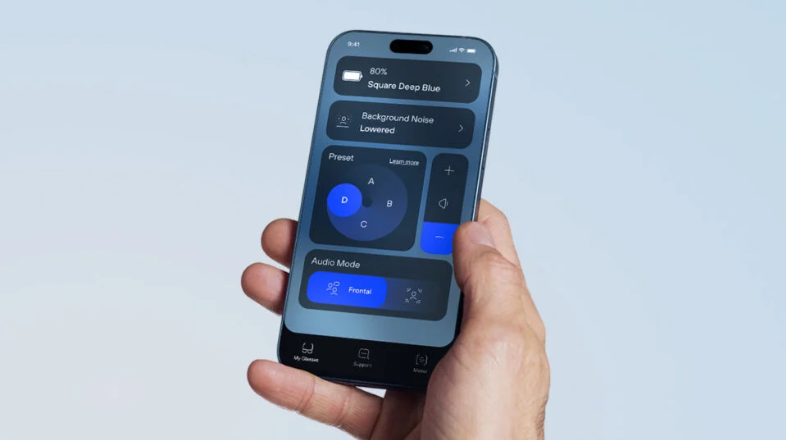
Image source: Nuance
The glasses primarily offer two modes: Front-Facing and Omnidirectional. The Front-Facing mode is tailored for face-to-face conversations, utilizing directional microphones with beamforming technology to enhance speech clarity by focusing on conversations directly in front of the user. The Omnidirectional mode, on the other hand, amplifies all surrounding sounds uniformly.
Similar to many dedicated hearing aids, these smart glasses can filter background noise at varying levels depending on the environment, with four noise reduction levels available.
The hands-free phone management feature is a new addition to the product line, enabling users to answer and manage voice calls directly through the frame when paired with a compatible iPhone.
The glasses also boast new frame control functions, including a dedicated power switch and volume buttons located on the temples. Users can swiftly switch audio modes by double-tapping the frame, eliminating the need to retrieve their phones. Additionally, the frame now incorporates Bluetooth functionality for the first time, allowing users to effortlessly answer calls. Users can still manage and configure these functions through the Nuance Audio App.

Image source: The Hearing Review
Although numerous wireless earbuds today (including popular models like the Samsung Galaxy Buds) have received FDA certification for use as hearing aids, embedding such accessibility features as a core selling point in smart glasses remains a novel concept.
Stefano Genco, Global Head of Nuance Audio, stated in a press release:
"The market's response to Nuance Audio glasses has been overwhelmingly positive, confirming that consumers are seeking a more natural and engaging way to access hearing support. In just the past year, we have expanded to 14 countries and over 18,000 stores, reaching a consumer group that is, on average, 5 years younger than traditional hearing aid users, with two-thirds of them having never been exposed to traditional hearing aids before. With the launch of our new generation product, Nuance Audio Plus, we have taken another significant stride towards making hearing support a natural part of daily life."
Clinical studies on the device have revealed that in extremely noisy environments, wearers' speech recognition rates improved by 29%, and the perceived effort of listening decreased by 32%.
Stefano Genco further elaborated in the press release, "With Nuance Audio glasses, we aspire to shape the future of early hearing care. Our vision is to make hearing care as effortless and natural as wearing a pair of ordinary glasses."
Currently, both EssilorLuxottica and Meta have launched medically certified hearing aid glasses under their respective brands. This move underscores their optimism about this market and their endeavor to address the rigid needs of the hearing-impaired population, as well as to solve the "non-essential" problem of AI glasses. Simultaneously, the further expansion of service scenarios for AI glasses also suggests that more smart consumer electronics will cross over and dimensionally reduce traditional medical devices in the future.
Text by R-Star Person
-
![]()
Automotive Consumption Policy: Transitioning from Short-Term Boosts to Long-Term Ecosystem Development
-
![]()
QianWen N1 Pro and Wigain Flow Enhance Eye Perception, AI Glasses Complete Personal Context Entry
-
![]()
The Integration of North and South Toyota: A New Model for Chinese and Foreign Automakers
-
![]()
Why Does Mass Production Spell Doom? The Price Dilemma of Micro-Optical Engines from a Supply Chain Perspective
-
![]()
A Leap in Dimensionality Reduction: Why Both Meta and EssilorLuxottica Are Venturing into Hearing Aid Glasses
-
Reevaluating the Value of a Hundred-Billion-Dollar Track Through the Lens of Utopai Studios, the World's Largest Independent AI Film and Television Company
-
![]()
From Expansion to Synergy: Chery Embraces Transformation
-
![]()
High-Profile Collaboration Unveiled! GAC, FAW, and Toyota Forge Major Partnership in Guangzhou