Panoramic Drone Unveiled: Insta360 Takes the Plunge
 12/07 2025
 750
750
Author: Chang Yuan
Editor: Key Focus
Since its successful debut on the STAR Market in June this year, Liu Jingkang, CEO of Insta360, has frequently drawn comparisons with DJI. Whether it's through lottery promotions, voucher incentives, or bold statements like "the greatest fortune and misfortune both stem from sharing the same market with DJI," these high-profile moves have a clear purpose: to position Insta360 as a formidable rival to DJI and generate buzz for its new offerings.
As a former leader in the panoramic camera market, Insta360 once commanded approximately 70% of the global market share. However, this niche segment, with an annual market size of only around 5 billion yuan, falls short of sustaining the company's lofty ambitions of a hundredfold PE ratio and a trillion-yuan market cap. This growth anxiety has driven Insta360 to venture into the trillion-yuan drone market.
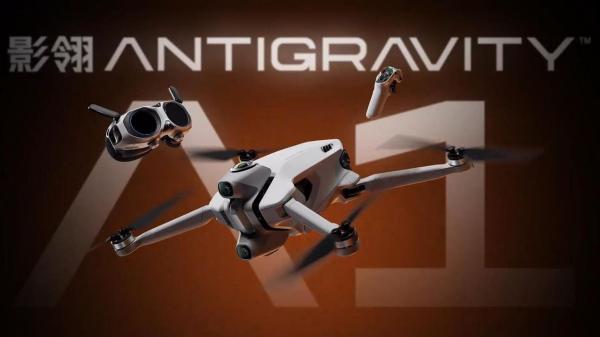
On July 23, Insta360 officially unveiled its consumer drone brand, "Yingling Antigravity," sparking a surge in its stock price that exceeded 13% at one point during intraday trading on the same day.
On the evening of December 4, the first product under the "Yingling" brand, the A1, was officially launched, offering three configurations: Standard Edition, Standard Battery Triple-Electric Edition, and Long-Range Triple-Electric Edition. During the sales period, national subsidies are available, bringing the discounted prices to 6,799 yuan, 7,999 yuan, and 8,499 yuan, respectively.
This should have been a momentous occasion for the company as it stepped into a new market. However, the capital market delivered a blunt verdict. On December 5, the first trading day after the launch event, Insta360's stock price opened with a gap down, with intraday losses expanding to 8% at one point, ultimately closing down by over 6%. Compared to its peak this year, the stock has plummeted by nearly 30%.
From the post-announcement surge to the post-launch slump, why did the market exhibit this "buy the rumor, sell the news" pattern?
New Market: Imperfect Product and Misaligned Pricing
The stock price decline is essentially a correction of expectations.
According to third-party data monitoring, as of 12:00 PM on December 5, within the first 16 hours after sales began, total sales of the Yingling A1 across domestic e-commerce platforms were only around 1,000 units. Breaking it down by channel, both JD.com and Taobao saw sales of only around 300 units each, while Douyin (the Chinese counterpart of TikTok) accounted for about 400 units, translating to revenue of less than 10 million yuan. This falls far short of the supply chain's previously circulated target of "300,000 units annually."
One major reason for the lower-than-expected sales is the product's limitations. As Insta360's first-generation product in the drone field, the Yingling A1 involves several compromises. Public real-world tests by leading tech bloggers have revealed several shortcomings as an aircraft, such as:
Flight Performance: With a body weight of only 249 grams, it complies with regulations in most regions that do not require a pilot's license. However, its weak wind resistance affects flight stability in high-altitude, coastal, or other windy environments, making it difficult to meet professional shooting needs.
Image Quality: While supporting 8K panoramic shooting, the unit-angle image quality of panoramic footage is relatively diluted, with weaker quality at the edges and average night performance. Although post-processing allows for cropping, the actual output still lags behind mainstream flagship drones. Industry analysts suggest that the A1's image quality is only equivalent to DJI's Neo/entry-level Mini models. For users willing to spend seven or eight thousand yuan on a drone, image quality is a core consideration, and the mere "panoramic" gimmick cannot hide its image quality shortcomings.
Operating Habits: The gesture-based remote controller and flight goggles operate differently from mainstream drones, requiring a longer adaptation period for users accustomed to joystick controls.
Drones are a complex engineering field involving not only imaging technology but also aerodynamics, wireless communication, battery management, and more. While Insta360 has deep expertise in imaging technology, it clearly needs more time to refine its flight platform.
Another major reason for the lower-than-expected sales is pricing. With a starting price of 6,799 yuan (after national subsidies), this threshold is obviously too high for average consumers. For professional creators, its performance cannot meet rigid demands for flight stability and wind resistance, resulting in limited market acceptance due to this "neither high nor low" positioning.
Compared to mainstream consumer drones, its price is also not competitive. In 2025, DJI has built a complete price range from entry-level to professional through highly segmented product lines and price reductions. Reviewing DJI's current main models:
In the entry-level market, DJI offers not only the Mini 2 SE (2,000-3,000 yuan) and Mini 3 (3,000-4,000 yuan) but also the Neo 2 (starting at 1,499 yuan) and Flip series (starting at 2,488 yuan). These products are affordable and easy to operate, significantly lowering the barrier for users to experience drones.
In the intermediate market, the Mini 4 Pro and Mini 5 Pro (starting at 4,788 yuan) dominate the lightweight aerial photography market with mature obstacle avoidance and image quality. For most users seeking a balance between portability and image quality, the Mini Pro series is the top choice.
In the professional market, the Mavic 3 Pro (10,000-15,000 yuan) and Mavic 4 Pro (over 15,000 yuan) series maintain a high-end ecosystem, meeting the needs of professional photographers and film crews.
Most awkwardly, the Yingling A1's price range (6,799-8,499 yuan) precisely overlaps with DJI's stronghold—the Air 2S (6,000-8,000 yuan) and Air 3S (7,000-9,000 yuan). The Air series is DJI's backbone, balancing image quality, performance, and price, with a vast user base and strong reputation.
Additionally, we learned from supply chain sources that DJI will launch a panoramic drone next year at a price lower than the Insta360 A1.
For consumers with an 8,000-yuan budget, the choice is between a mature aerial photography drone with image quality, transmission, and obstacle avoidance refined through multiple generations or a first-generation panoramic drone focusing on special perspectives. Most users choose the former. Without advantages in brand or technological accumulation, the Yingling A1 faces significant challenges.
Core Business: Risk of Losing Market Share in Panoramic Cameras
For a long time, panoramic cameras have been Insta360's core business and main source of profit. However, with DJI's entry, the industry landscape in this market has become unsettled.
In July this year, DJI released its first panoramic camera, the Osmo 360, officially entering the panoramic camera field. By the end of October, a report by third-party agency Jiuqian Consulting stated, "DJI captured 43% of the global panoramic camera market share in Q3 2025 (less than three months after launch). Its global revenue share in the action camera segment also steadily climbed to 66%, ranking first globally." However, a few days later, a report by Frost & Sullivan presented a different picture—Insta360 accounted for 75% of the panoramic camera market, while DJI held only 17.1%.
Regardless of the data's authenticity, DJI's entry into Insta360's core territory is an established fact. DJI has accumulated a vast user base and technological reserves in the action camera and drone fields, making its foray into the panoramic camera market seem like a natural extension of its technological path.
DJI's strategy is clear: leverage its full-industry-chain advantages to rapidly capture market share through more competitive products and pricing. In July, DJI released the Osmo 360, with performance parameters fully comparable to Insta360's X5 but priced 800 yuan lower. In September, DJI launched the Osmo Nano, priced 900 yuan lower than Insta360's GO Ultra after national subsidies. In October, just two days after Insta360 released the X4, DJI introduced the omnidirectional obstacle avoidance palm-sized drone Neo 2, directly entering the photographic drone segment that Insta360 planned to explore.
In response, Liu Jingkang said during the earnings call, "The price competition initiated by our competitor (DJI) after entering the panoramic camera market has created conditions for market expansion. Increasing the market size through competition is a common goal for the industry."
With its backyard—which contributes most of the company's revenue—on fire, Insta360 has no retreat. Relying solely on the panoramic camera market, with an annual size of only 5 billion yuan, can no longer sustain Insta360's future imagination. It must find a second growth engine, even if that engine is powered by a nearly unbeatable rival.
Latest Earnings Report: Multiple Concerns Behind the Data
Beyond the new product, the capital market's worries stem from changes in Insta360's financial health. According to its Q3 2025 report, the company is facing a situation of "increasing revenue but not profit."
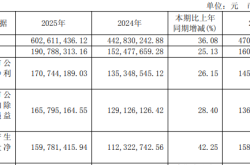
The earnings report shows that Insta360 generated 2.94 billion yuan in revenue in Q3 2025, a year-on-year surge of 92.64%. This growth is mainly attributed to "continuous market expansion, new product launches, and expanded online and offline sales." However, net profit attributable to shareholders decreased by 15.90% year-on-year to 272 million yuan. This phenomenon of significant revenue growth coupled with profit decline reveals the costs Insta360 is paying during its expansion.
The profit decline stems from a "high-stakes gamble." The earnings report shows that R&D expenses in Q3 reached 524 million yuan, a year-on-year spike of 164.81%. R&D investment as a percentage of revenue climbed to 17.81%. Insta360 explained that this was mainly due to "chip customization and strategic project investments." This means Insta360 is under significant cash flow pressure.
In the panoramic and action camera fields, the benefits of off-the-shelf chips have been exhausted. To compete through differentiation in image quality, AI algorithms, and stabilization, Insta360 was forced to embark on the capital-intensive path of self-developed or deeply customized chips.
Additionally, R&D for the drone project is a massive money sink. To quickly deliver a product capable of competing with DJI, substantial human and financial resources must be invested.
Insta360 stated in its earnings report that based on industry trend analysis and medium- to long-term planning, it plans to launch two drone brands: its "proprietary drone brand" and the "Yingling Antigravity" panoramic drone brand co-incubated with a third party.
According to sources close to the supply chain, considering that the A1's bill of materials (BOM) cost per unit may exceed 5,000 yuan, factoring in high R&D and marketing amortization, even pricing starting at 6,799 yuan likely means selling at or near cost—or even at a loss—to gain market share.
More urgently, there is an inventory warning in the balance sheet. As of September 30, 2025, Insta360's inventory book value reached 2.157 billion yuan, compared to only 1 billion yuan at the beginning of the year. In just nine months, inventory doubled. This 2.1 billion yuan inventory includes substantial stock prepared for Q4 promotions and the Yingling A1.
In the drone and consumer electronics industries, inventory has an extremely short shelf life. Rapid technological iteration and short product lifecycles mean that once products become unsold, inventory quickly depreciates. If Yingling A1 sales remain sluggish, the massive stockpile will face price decline risks, potentially further eroding profits in Q4. The earnings report shows that asset impairment losses reached 43.32 million yuan in the first three quarters, a year-on-year increase.
Conclusion
For Liu Jingkang and his team, the Yingling A1 is not just a product launch but a strategic breakthrough.
In the past few years, Insta360 achieved tremendous success in the panoramic camera field. However, with market maturation and competitor entry, its former comfort zone has become insecure, forcing it to step out and challenge a more difficult market.
The drone market, while vast, has extremely high barriers to entry. After years of deep cultivation, DJI has established comprehensive barriers spanning core technologies, supply chains, and brand recognition. According to third-party data, the drone market is already highly concentrated, with DJI's market share in China's consumer drone segment consistently around 73% and globally above 70%.
As a latecomer, Insta360 will find it difficult to shake users' existing perceptions and habits with panoramic differentiation alone. To survive in this market, it must deliver exceptional products while excelling in pricing, channels, services, and other areas.
The Yingling A1 serves as a wake-up call for Insta360. In the drone market, where tolerance for errors is extremely low, any shortcoming can be fatal. Consumers will not lower their standards because of any label; instead, they will scrutinize products with even more critical eyes.
For investors, Insta360 is making a high-risk investment with the funds raised through its IPO. Future key metrics will entirely depend on the Q4 performance of its new drone products and the speed of inventory liquidation. If optimized new products can restore reputation or subsequent iterations truly address pain points, Insta360 may still gain a foothold in the drone market. Conversely, if new products continue to struggle, it will face significant challenges.
In this silent war, Insta360 has demonstrated its ambition, but market competition ultimately relies on strength. In the error-intolerant drone market, Insta360's breakthrough attempt is akin to walking on a tightrope. Whether it can cross this chasm, only time will tell.
-
![]()
Why Hasn’t AI-Driven Payment Flourished Despite Tech Giants’ Push?
-
![]()
Intensify Efforts in the High-End Optoelectronic Semiconductor Sector! Aipu Dingchun and Jiangsu Meidong Forge a New Joint Venture
-
![]()
From Endoscopes to Optical Interconnects for AI Computing Power: A Veteran Optical Company's Strategic Shift
-
![]()
Behind the Scenes of Token Factories' Rise as a Capital Market Sensation
-
![]()
What Does MaaS Ultimately Bring to Chinese Cloud Providers? | In-Depth Industry Analysis
-
![]()
China’s Auto Resale Value Report Unveiled: AITO M9 Electric and Hybrid Variants Dominate Rankings
-
![]()
Dialogue with Huang Yangming: On the Eve of the Physical AI Boom, the Value of Data Infrastructure Begins to Materialize
-
![]()
The Experience is a Bit Unusual! Logitech G Cloud Review: Great Feel, but Not Ideal for Cloud Gaming