L3 hits the road, it's settled
 12/19 2025
 466
466

The pace is getting faster and faster
Author | Wang Lei
Editor | Qin Zhangyong
Before 2026, L3 has been unexpectedly approved for road operation.
The MIIT announced the approval of access applications for two smart connected vehicle products with L3-level conditional autonomous driving functions.
One model each from automakers in the north and south: the Changan SC7000AAARBEV all-electric sedan, applied for by Chongqing Changan, and the ARCFOX BJ7001A61NBEV all-electric sedan, applied for by BAIC.
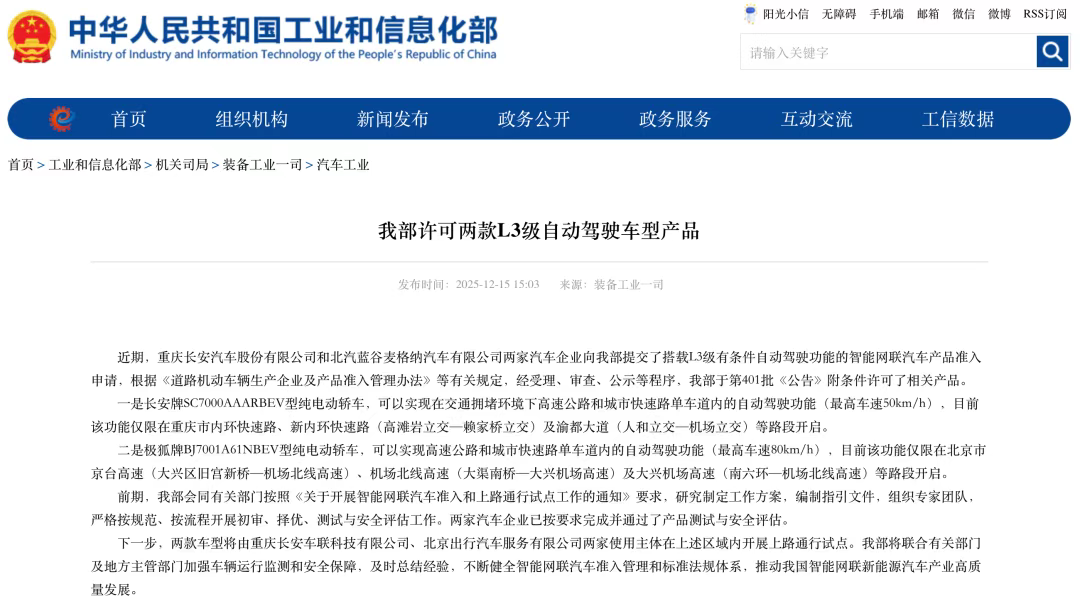
These two models are adapted for real-world road scenarios in urban congestion and highway conditions, and have been approved for pilot operations in designated areas of Beijing and Chongqing. Simply put, they can finally operate on public roads.
This also means that China's autonomous driving vehicle models have finally entered the 'licensed era,' moving from road testing to a new stage of official access and operation under specific conditions.
More significantly, the commercialization of L3 autonomous driving is now within reach, and it is no longer a distant concept.
01
Genuine L3 Hits the Road
It is important to clarify that this 'product access permit' is different from previous 'testing licenses' and holds greater significance.
Starting in 2023, the MIIT has been issuing road testing or demonstration licenses related to L3 to various automakers, primarily for conducting technical testing and functional verification under public road conditions.
However, these permits were mainly used for road testing and demonstration verification and did not equate to access permits under the MIIT's product announcement system. According to incomplete statistics, the number of automakers that had already obtained L3 testing licenses exceeded ten digits.
In contrast, a product access permit represents a higher level of institutional recognition and marks China's first explicit policy support at the national level for the production access of L3 autonomous driving vehicle models.
If the former focuses on research, development, and testing verification, the latter signifies that the vehicle model already possesses autonomous driving capabilities for operation under real-world road conditions, albeit with ongoing operational monitoring and safety assurance requirements.
More crucially, there is clearer legal and liability determination: if accidents occur during their operation, the automakers will be held responsible.
From the announced conditions, this access is not a 'universal relaxation' but rather a pilot program advancing under strictly defined conditions.
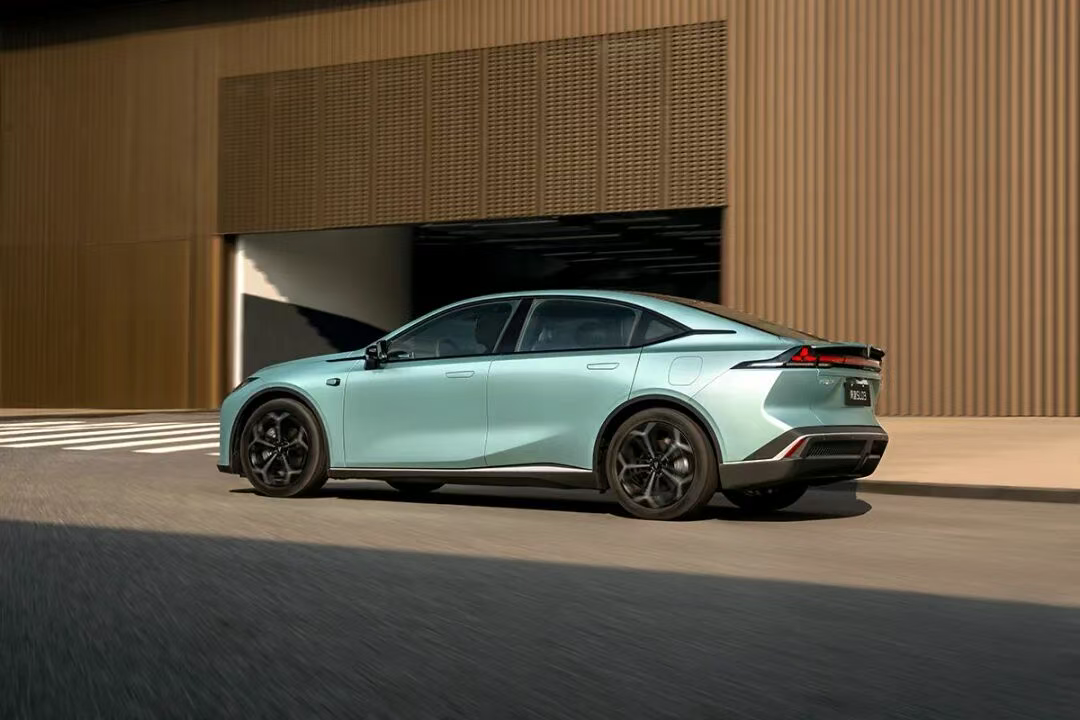
Specifically, the first of the two models approved by the MIIT is the Changan SC7000AAARBEV all-electric sedan, which corresponds to the Changan Avantr SL03; the second is the ARCFOX BJ7001A61NBEV all-electric sedan under BAIC, corresponding to the ARCFOX Alpha S6, a three-lidar version.
The road environments and ranges for the pilot programs of these two models also differ. The Avantr SL03 is designed for autonomous driving functions in a single lane on highways and urban expressways under traffic congestion conditions, with a maximum speed limited to 50 km/h.
Moreover, the L3 function is restricted to operation on the Chongqing Inner Ring Expressway, the New Inner Ring Expressway (Gaotanyan Interchange-Laijiaqiao Interchange), and Yudu Avenue (Renhe Interchange-Airport Interchange), among other sections.
The BAIC ARCFOX Alpha S6, on the other hand, is designated to operate on certain roads in Beijing, such as the Beijing-Taipei Expressway (Jiugongxin Bridge in Daxing District-Airport North Line Expressway), the Airport North Line Expressway (Daqu South Bridge-Daxing Airport Expressway), and the Daxing Airport Expressway (South Sixth Ring Road-Airport North Line Expressway), among other sections.
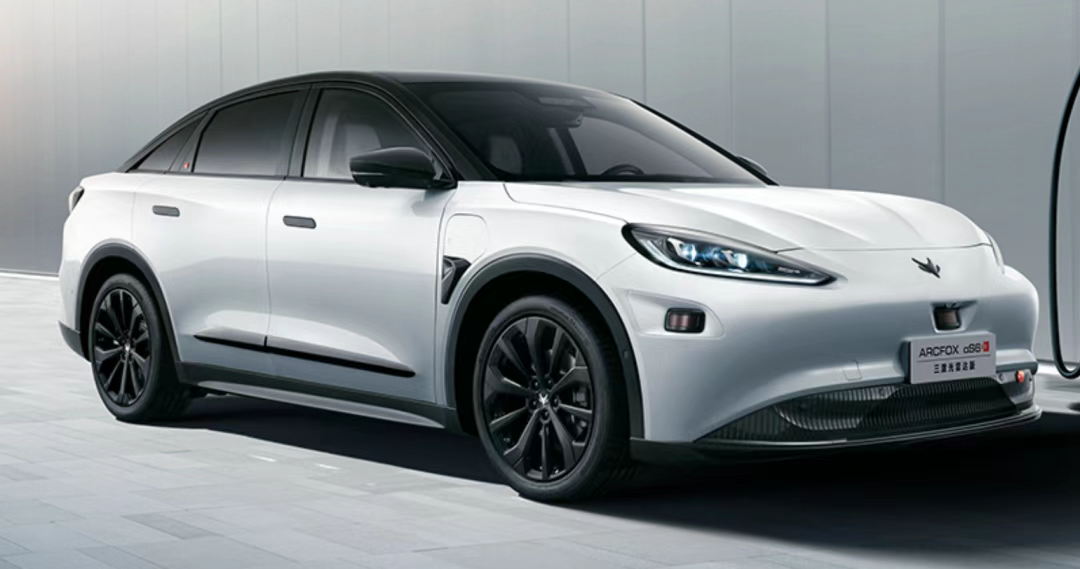
Based on the road sections, it is evident that the models are adapted for autonomous driving functions in a single lane on highways and urban expressways, but with a maximum speed limited to 80 km/h.
Although the restricted ranges and scenarios for the two models differ, they share some common features, such as being open in highway and urban expressway scenarios, which are characterized by no pedestrian crossings, few intersections with non-motorized vehicles, and long-term stable road structures and signage.
Additionally, both models are only allowed to activate autonomous driving functions in a single lane, meaning automatic lane changes are not permitted, and the maximum speeds are not high.
From this perspective, the approval of L3 this time seems insufficiently 'L3,' and even falls short of the point-to-point assisted driving claimed by many current models for highway NOA.
However, this 'conditional release' aligns with the definition of L3 autonomous driving in the national standard GB/T 40429-2021. According to this standard, L3 belongs to 'conditional autonomous driving,' where the system can assume all dynamic driving tasks when the design operating conditions are met, but the driver must still take over promptly when the system requests.
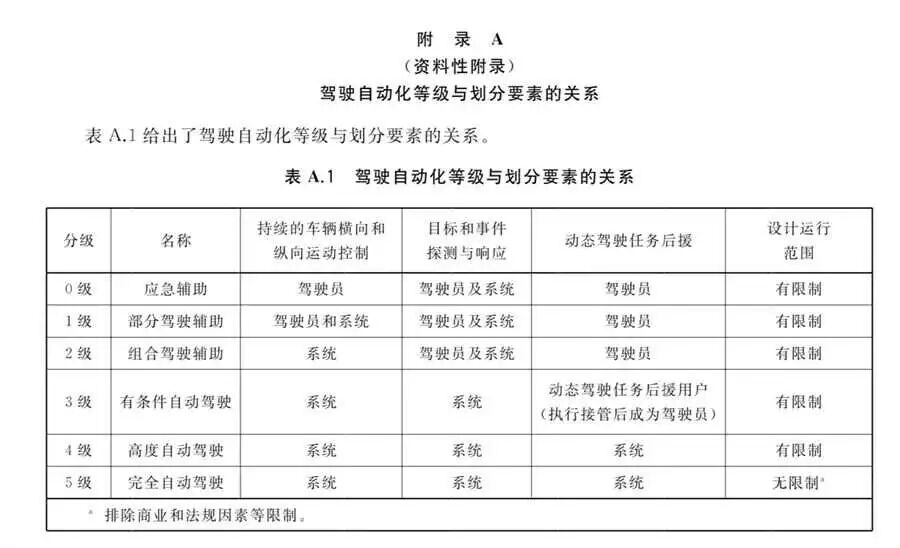
Unlike L2 systems that primarily serve as assistance, L3 has clearer determinations in terms of liability subject division and safety requirements. It is precisely for this reason that regulatory authorities have set more stringent scenario and speed thresholds at the access stage.
Next, the two models will be piloted in the aforementioned regions by Chongqing Changan Automotive Connectivity Technology Co., Ltd. and Beijing Mobility Automotive Services Co., Ltd., respectively.
This combination of 'automaker + user entity' also indicates that regulatory authorities hope to reduce the uncertainties of L3's initial deployment through professional fleet management.
02
2026: A Collective Rush Toward L3
While the access approval was somewhat 'unexpected,' reviewing the policy path related to autonomous driving over the past three years reveals a clearly gradual process.
In November 2022, the MIIT released a draft for consultation on conducting pilot programs for the access and road operation of smart connected vehicles, explicitly proposing for the first time to implement access management and conduct pilot programs for L3 and L4 autonomous driving vehicles.
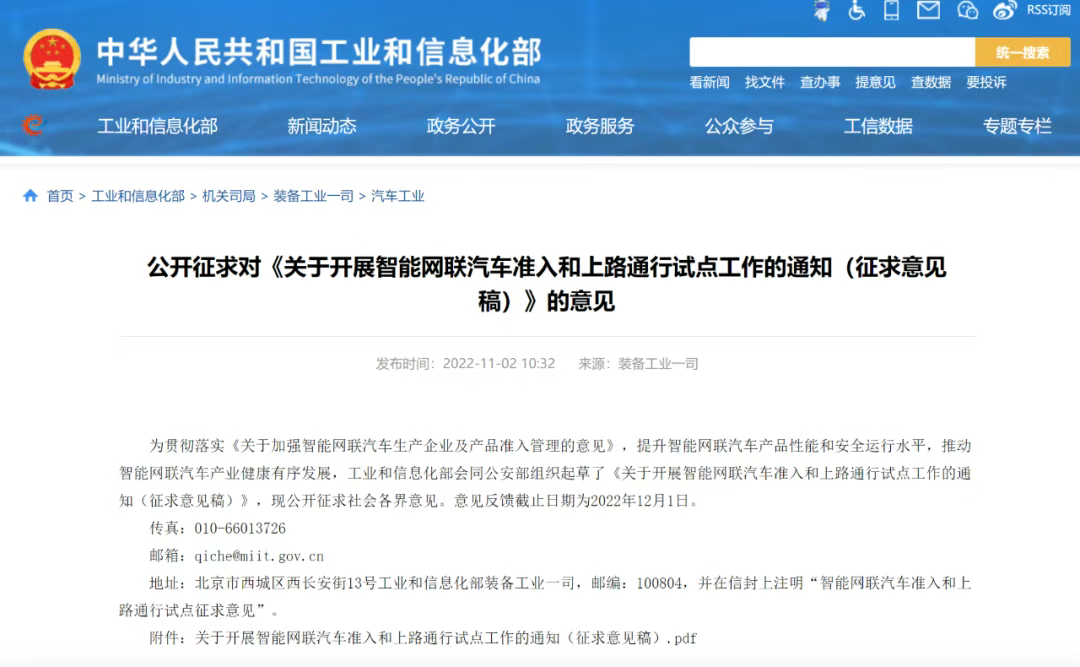
After a year of soliciting opinions and refining the system, in November 2023, the MIIT, jointly with multiple departments, officially issued a notice for the pilot program, clarifying that L3 and L4 autonomous driving vehicles could conduct pilot operations under defined conditions. It also specified that autonomous driving vehicles must be applied for in the form of a consortium consisting of an 'automobile manufacturing enterprise + user entity,' laying the foundation for subsequent operational models.
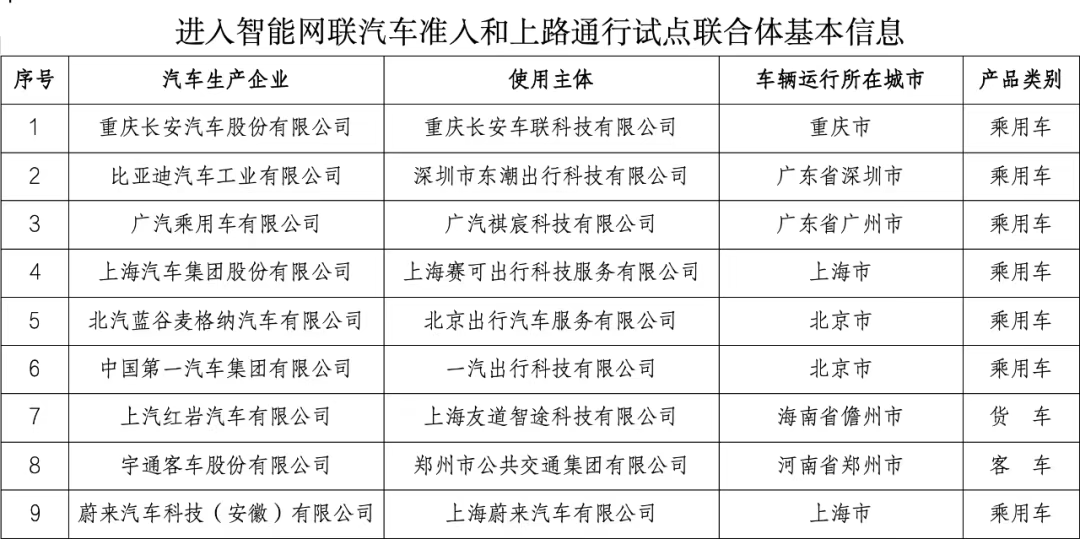
Fast forward to June 2024, the MIIT officially announced the list of pilot programs for the access and road operation of smart connected vehicles, with nine automakers selected: Changan, BYD, GAC, SAIC, BAIC BluePark, FAW, SAIC Hongyan, Yutong Bus, and NIO. At that time, 'selection' only granted qualification to enter the next stage of testing, rather than a true road operation permit.
On September 13th of this year, eight departments including the MIIT issued the 'Work Plan for Stable Growth in the Automotive Industry (2025-2026),' explicitly proposing to advance pilot programs for the access and road operation of smart connected vehicles and for the first time including 'conditional approval of production access for L3 vehicle models.' Now, Changan and BAIC have become the first two automakers to pass the selection process from the list and cross the threshold of 'product access.'
It is evident that while policies are gradually becoming clearer, the pace is also noticeably accelerating. It is worth noting that over the past year, the vast majority of automakers have clarified their timelines for L3 autonomous driving, designating 2026 as the first year of autonomous driving.
First, Changan Automobile released the 'Beidou Tianshu 2.0' plan in February, proposing to achieve full-scenario L3 autonomous driving by 2026 and upgrade to L4 by 2028. This time, Changan was also the first to obtain L3 access approval.
Shortly thereafter, GAC announced in March that it would mass-produce and launch its first L3 autonomous driving passenger vehicle for sale in the fourth quarter, and introduce more L3 products in the following year. During the Guangzhou Auto Show not long ago, it also obtained the country's first license for conducting highway L3 testing at speeds of up to 120 kilometers per hour.

Yu Chengdong recently made it clear that 2026 will officially mark the era of L3 and L3+ autonomous driving, with progression to L4 by 2027. Yu Chengdong's viewpoint already represents the attitude of many automakers collaborating with Huawei.
He Xiaopeng has also stated on more than one occasion that 2026 will be a pivotal year for autonomous driving. He mentioned that L3 autonomous driving capabilities will be mass-produced and implemented by the end of this year, and that three Robotaxi models will be launched in 2026, with trial operations commencing.
This L3 access approval serves as a signal. Although pilot operations are still required, it marks a beginning. With the issuance of more access permits in the future, there will be an increasing number of L3-level vehicles.
When the second and third batches of access permits arrive en masse, the tide of commercialization will not be far off.
-
![]()
Why Hasn’t AI-Driven Payment Flourished Despite Tech Giants’ Push?
-
![]()
Intensify Efforts in the High-End Optoelectronic Semiconductor Sector! Aipu Dingchun and Jiangsu Meidong Forge a New Joint Venture
-
![]()
From Endoscopes to Optical Interconnects for AI Computing Power: A Veteran Optical Company's Strategic Shift
-
![]()
Behind the Scenes of Token Factories' Rise as a Capital Market Sensation
-
![]()
What Does MaaS Ultimately Bring to Chinese Cloud Providers? | In-Depth Industry Analysis
-
![]()
China’s Auto Resale Value Report Unveiled: AITO M9 Electric and Hybrid Variants Dominate Rankings
-
![]()
Dialogue with Huang Yangming: On the Eve of the Physical AI Boom, the Value of Data Infrastructure Begins to Materialize
-
![]()
The Experience is a Bit Unusual! Logitech G Cloud Review: Great Feel, but Not Ideal for Cloud Gaming