Who is hyping up the Doubao Phone?
 12/22 2025
 665
665
After the Doubao Phone was released, the public crafted a narrative where it would outmaneuver Tencent and outfight Alibaba.
Some claim ByteDance aims to overturn the table, while others assert WeChat will be reduced to a mere traffic conduit by the Doubao Phone. The refusal of WeChat, Alibaba, banking apps, and others to be invoked by the Doubao Phone assistant is widely interpreted as major corporations banding together to resist innovation.
Is the Doubao Phone truly worthy of such fear from these corporations?
For industry insiders who have witnessed the evolution of agent phones from inception to their current iterations, the Doubao Phone is hardly a groundbreaking invention.
From a product perspective, the technological trend of agent phones has been brewing for over a year. Manufacturers like Honor, OPPO, and Vivo have long been exploring this path. The logic and main functionalities of the Doubao Phone follow existing industry explorations, lacking any true zero-to-one breakthroughs.
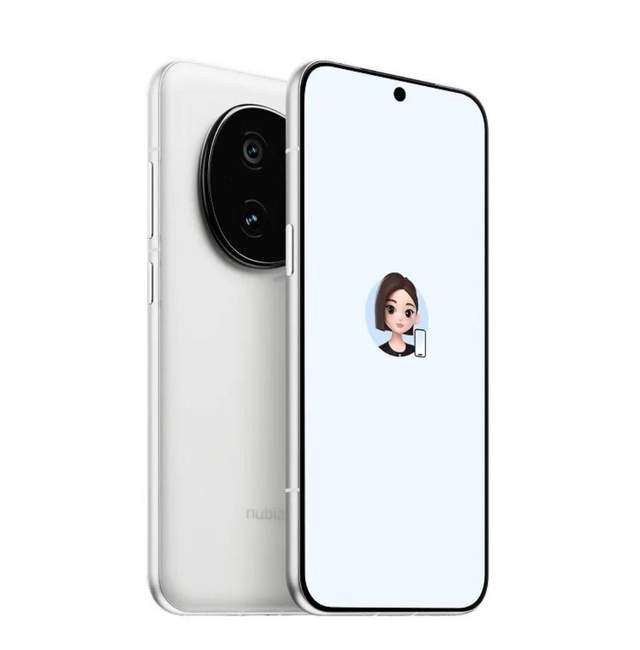
Strategically, Nubia, the shell company, doesn't rank among the top five domestic phone sellers. The Doubao Phone assistant, the soul, has functions that are not difficult to replicate (the real bottleneck is system-level authorization). The combined product of the two lacks the capability to shake up the existing mobile phone landscape. For a conglomerate like ByteDance, the Doubao Phone is at most a minor branch in its numerous technological explorations, not a strategic move.
Can ByteDance really challenge the deeply entrenched BAT internet giants with such a product? How many dishes would it take to get ByteDance drunk on such delusions?
So, the question arises: why has the Doubao Phone, which is neither a key technological breakthrough nor possesses such exaggerated industry influence, stirred up such a massive controversy in the public sphere? How was it forced into the spotlight and thrust into the center of the vortex? This might be worth pondering more than the phone itself.

The mainstream narrative of this public opinion controversy can be summarized as follows:
Onlookers: Doubao Phone, even if you stand against BAT, I'll be on your side.
Doubao Phone: Why would I stand against them?
Onlookers: Don't worry about that.
In the eyes of the vast majority of spectators, the Doubao Phone is an innovative hero challenging the old internet order and a 'silver bullet' fired by ByteDance at other tech giants.
The term 'silver bullet' is a classic in the tech industry, referring to a solution that guarantees success. Fred Brooks, a Turing Award winner, once proposed in his book 'No Silver Bullet' that software engineering lacks a silver bullet, with its complexity precluding any single technology from achieving a one-size-fits-all breakthrough.
The Doubao Phone is not a true silver bullet capable of shaking up the existing landscape.
Firstly, the Doubao Phone assistant represents a gradual evolution along existing technological paths rather than a zero-to-one disruption, thus it cannot shake the industry.
The path of using large models as the basis for agents to automatically and closed-loop achieve mobile phone interactions and complex tasks has been widely explored by manufacturers like Honor, OPPO, and Vivo since 2024. A 2024 paper co-authored by Huawei and Harbin Institute of Technology (Shenzhen) showed that mobile phone agents could already complete 340 multi-type tasks, including the highly complex tasks and cross-application collaborations widely circulated about the Doubao Phone.
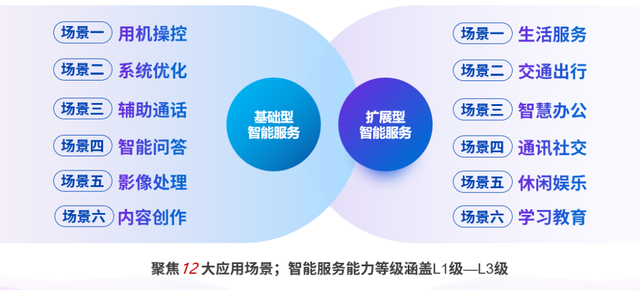
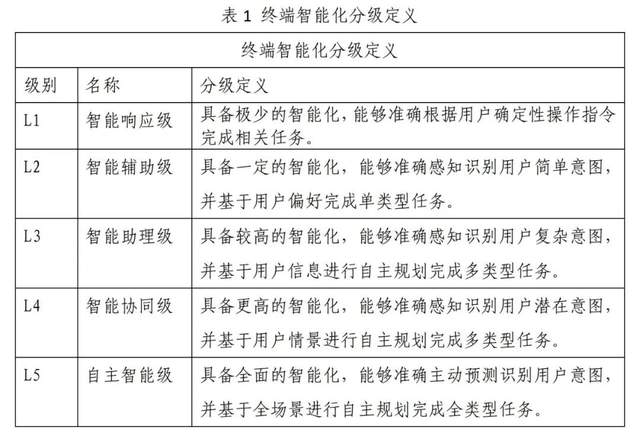
According to the standards in the 'Research Report on Terminal Intelligence Grading' released by the China Academy of Information and Communications Technology in December 2024, the capabilities of the Doubao Phone assistant remain at the 'intelligent assistant' level of L3 or below, capable of recognizing user intentions and completing tasks but not reaching the L4 or L5 levels of handling ambiguous intentions and autonomous planning. The L3-level autonomous driving capabilities for phones have already been achieved by manufacturers like Honor.
Furthermore, the Doubao Phone has not solved the core challenges that have long plagued agent phones, nor has it proposed new solutions to industry dilemmas.
The common pain points of agent phones are that they are only AI-ready in certain scenarios, with price comparison and cross-APP searches being exceptions carefully selected through repeated trial and error by phone manufacturers. In most daily operations, natural language interactions have obvious limitations and are less efficient than touch clicks and swipes, leading users to feel that 'doing it myself is faster than letting the agent do it.'
The differences of the Doubao Phone mainly stem from standing on the shoulders of industry experience and being bolder:
Firstly, it employs deeper system-level permission invocations rather than the visual screen recognition schemes commonly used by manufacturers like Honor and Vivo, giving the impression of greater capability when it's actually a difference in permission scope.
Secondly, the Doubao Phone was released later, with improved capabilities of large models, enabling its assistant to have better intention understanding and task decomposition abilities.
Thirdly, as a niche experimental product, it dares to touch high-sensitivity scenarios like banking apps, whereas mainstream manufacturers generally avoid such areas to steer clear of commercial red lines, not because they can't do it.
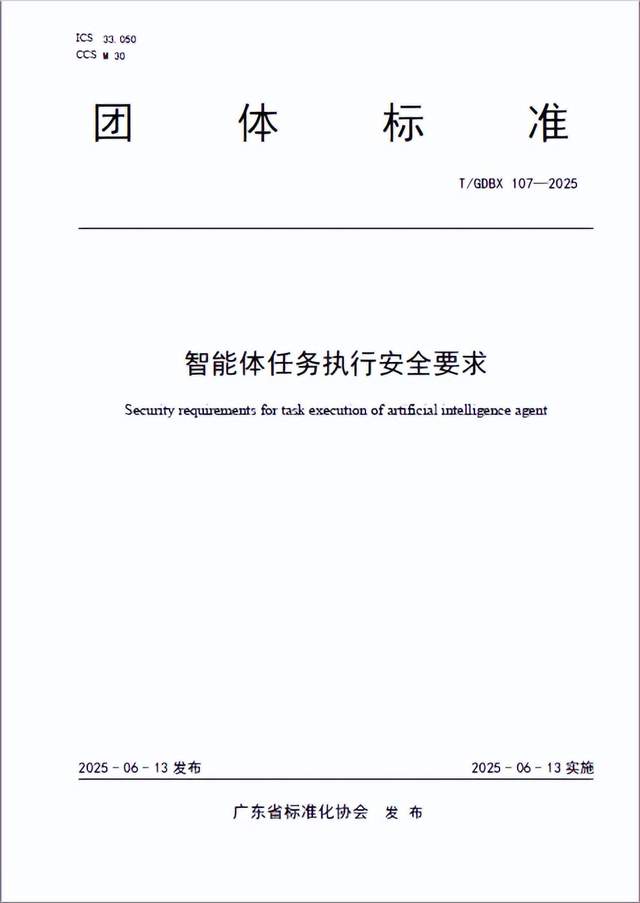
The 'Security Requirements for Agent Task Execution' group standard, jointly drafted by units such as Beijing University of Posts and Telecommunications, China United Network Communications, Tianyi Security, Lenovo, Huya Technology, and the Guangdong Provincial Association for Standardization, explicitly states that agents must not operate third-party apps using accessibility permissions or operating system technical advantages but must collaborate through standardized interface invocations. When identifying user intentions and executing tasks through third-party apps, agents should first obtain authorization from the third-party app and proceed only after obtaining user authorization. Moreover, third-party apps have the right to refuse unreasonable operations to protect user rights.
Amidst public concerns over data security and privacy protection, the Doubao Phone assistant has proactively canceled a series of sensitive function operations, precisely indicating that it has never been a silver bullet aimed at internet giants. After encountering resistance, it has proactively retracted its capabilities, aligning itself more closely with mainstream agent phones.

One of the main reasons the Doubao Phone is perceived as a rival to internet giants is that it is backed by ByteDance.
The public is familiar with ByteDance's past successes and naturally associates it with the possibility of repeating its dominance in the short video sector with AI phones.
However, if the Doubao Phone truly carried the ambition to disrupt the internet landscape and challenge the BAT giants, it would not have chosen its current approach.
As a strategic product for the group, it would have received full-chain resource allocation, engaging in fierce competition similar to the short video wars, food delivery wars, and AI chatbot application battles, with significant investments in hardware R&D, supply chain construction, and marketing. The Doubao Phone's response to public opinion controversies and application restrictions, choosing to quickly convergence (retract) relevant permissions rather than confronting head-on, indicates its reluctance to escalate conflicts over the phone assistant.

Moreover, ByteDance owns numerous core products like Douyin, Today's Headlines, and Feishu. If the Doubao Phone were truly a crucial part of its disruption strategy, these core products would have been the first to integrate with it, forming a synergistic effect. However, the fact that Douyin has also rejected certain function invocations from the Doubao Phone assistant shows that it has not been elevated to a core strategic level internally.
At least for now, the Doubao Phone has not demonstrated any concrete actions to hunt down major corporate applications. So, how did it come to be imagined as an innovative hero standing against the giants?

Who exactly wrote the 'Doubao Phone assistant hunting down major corporate applications' narrative?
One of the authors is the ordinary public 'who has long suffered from the major corporations.' In recent years, the drawbacks of platform economics have gradually emerged, such as using algorithms to extend working hours, leaving individuals powerless against powerful platforms. Many workers and consumers have accumulated dissatisfaction with the dominance of these giant platforms and have longed for a wolf slayer to confront them head-on. The emergence and boldness of the Doubao Phone exactly (coincidentally) met this sentiment and was thus inserted into the wolf slayer narrative, carrying the imagination of breaking the old order, even though the carrier itself lacks the capability to disrupt the landscape.
Another author is the pseudo-experts. Influential big Vs and KOLs have deepened the public's misunderstandings and filters about the Doubao Phone. Those slow, long-term innovations, such as the incremental adjustments of model versions and the iterative optimizations of chip generations, are slow and tedious, lacking sexy stories and appeal, and usually fail to catch their attention. Whenever a technological hotspot emerges, these influencers jump out to offer grandiose commentary, framing the hotspot with shocking rhetoric about national interests and giant corporate rivalries, leading people to believe that 'the wolf has truly arrived this time.' To identify such 'experts,' look at whether they usually show indifference to technological infrastructure and ignore incremental innovations, only appearing when there's traffic to be gained.
The amplification of the narrative by content platforms has triggered a network echo chamber effect, repeatedly emphasizing and reinforcing the myth of the Doubao Phone.

In the current era of fragmentation and limited attention resources, the public is more inclined to receive simple and direct information. This reading habit, combined with platforms' preference for high-interaction content, has formed a public opinion echo chamber. Discussions with stronger dramatic conflicts and more emotional appeal, such as 'ByteDance challenging BAT' and 'WeChat blocking the Doubao assistant,' are more likely to dominate, be amplified, and spread, while objective technological discussions are gradually drowned out.
Dealing with such irrational and polarized single voices has become a common public opinion challenge faced by tech companies in recent years.
However, as Fred Brooks pointed out in 'No Silver Bullet,' complex problems in the technological world lack one-size-fits-all solutions. True technological breakthroughs are incremental and pendulum-like, requiring not only long-term accumulation and incremental improvements but also potential overhauls.
For example, the Transformer architecture was proposed in 2017 but only exploded in the market through ChatGPT in 2023. Our prediction at the time that China would definitely have its own ChatGPT was not blind optimism but a logical deduction based on long-term tracking of China's practices in the pre-training large model field.
Desiring technological progress that overturns the table while rejecting the tedium and lengthiness of trial and error is the deepest misunderstanding of innovation.
Those who shout 'overturn the table' are often not the ones who patiently build it. Next time you encounter a so-called disruptive myth, take a look at the story's core to see if it's solid enough.

-
![]()
China’s Computing Reaches New Heights: From LingSheng to Shuguang 8000
-
![]()
Avita's Second Attempt at HKEX Listing: What Sets It Apart? | Auto Circle
-
![]()
Tencent Spearheads Manus Buyback: Unveiling the Strategy
-
![]()
Will Changan Mazda, Mired in Difficulties, Follow Skoda’s Path Out of China?
-
![]()
This Week in Home Appliances: Domestic Cool, Overseas Hot – Haier, Midea, Gree, Hisense Break Through; JD.com, TCL, Samsung, Vanward Drive Transformation
-
Seres Anticipates Over 2.2 Billion Yuan Loss in Q2, with Core Subsidiary AITO Automobile Projected to Lose 1.9-2.15 Billion Yuan
-
![]()
Breaking Through Barriers: Five Models for Chinese Automakers to Access Global Markets
-
![]()
Young Generation Trades Cars as Often as Smartphones! Average Age of New Energy Vehicles: Just 1.8 Years...