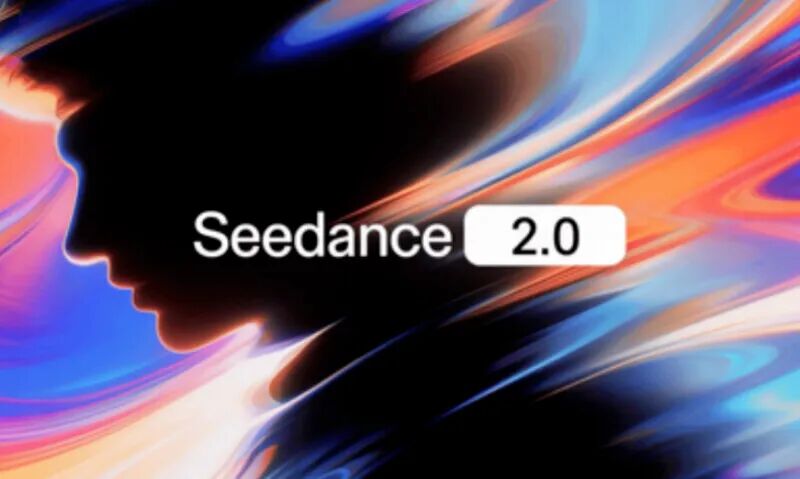
Seedance2.0, The DeepSeek Moment for AI Videos
 02/27 2026
 695
695
Writer | Xi Zhi
Editor | Wu Xianzhi
"Bodies everywhere, wailing and mourning—this year won't be a good one for anyone."
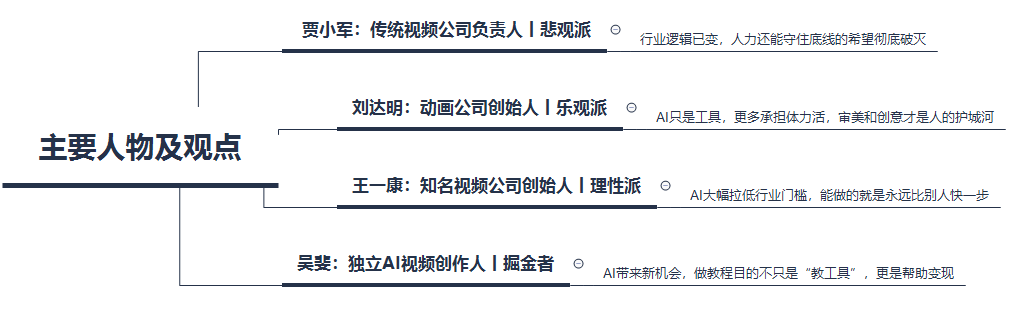
When discussing AI videos, Jia Xiaojun (pseudonym), the head of a video production company, appeared quite pessimistic. He represents many video industry practitioners—standing at the crossroads of industry transformation, much like previous upheavals brought by new productive forces, practitioners are experiencing a shift from shock and confusion to uncertainty.
In February 2024, OpenAI's Sora burst onto the scene, captivating the global tech community overnight with its ability to generate long videos far exceeding mainstream durations, along with its powerful understanding of the physical world and scene coherence. It was hailed as the "GPT moment" for AI videos.
Two years later, AI videos caused another sensation, this time from a domestic company. On February 7, ByteDance's AI video generation model, Seedance2.0, began limited testing on channels like Jimeng, Doubao, and Xiaoyunque. Upon launch, it quickly went viral, sparking a wave of creative enthusiasm across platforms.
A typical phenomenon was "playing basketball with LeBron James," where numerous users created and uploaded AI videos of themselves going one-on-one with James. Scenes like "a baby knocking down James" and "a girl dunking on James" flooded screens, further fueling the frenzy.
Feng Ji, CEO of Game Science and producer of *Black Myth: Wukong*, praised it as "undoubtedly the strongest video generation model on the planet, bar none." On February 12, Seedance2.0 was fully integrated into Doubao and Jimeng, supporting text, image, audio, and video quad-modal creation, officially ushering in the era of AI videos for all.
Due to its far smoother dynamics and more realistic details than previous large models, Seedance2.0 also raised concerns. Multiple media outlets and influencers began urging the public to guard against new types of fraud, prompting ByteDance to swiftly suspend the function for uploading real human images in AI videos.
On the other side of the frenzy, many video industry professionals experienced a mix of emotions. While amazed by the new technology, they also felt unprecedented doubts about the industry's future and their own careers.
Under the most intense wave of AI disruption, some fell into despair, others worried, some firmly embraced the change, and some were thrilled.
An unprecedented chill
Jia Xiaojun had long been anxious about AI videos. "I knew it would get tougher, but I didn't expect it to happen so soon," he told Photon Planet. Previously, he specialized in visually striking videos, where capturing attention was his forte. As AI videos became more widespread, he found this skill becoming "cheapened," with audiences' thresholds for excitement rising due to AI's influence.
If Special effects category (special effects) videos being replaced by AI was something Jia and his peers had mentally prepared for, Seedance2.0 became the straw that broke the camel's back. "I thought live-action could never be replaced, but now that hope is dashed. (AI videos) are too realistic—it's terrifying," Jia lamented. He believed the fundamental logic of the video industry had changed, with many practitioners and processes gradually fading away. His pessimism stemmed from facing reality.
Shortly before Seedance2.0's launch, a friend of Jia's spent over ten days shooting a feature-length online film. "It felt efficient at the time, but now it seems like a joke"—a sentiment shared by many. For short dramas and online films with moderate quality requirements, a professional might now complete them in a day using AI, with little difference in quality compared to traditional full-process productions.
As for what lies ahead, Jia didn't dare to think too deeply, hoping only to get through the year without burdening his family with his worries. In conversations with us, he frequently used the word "doomed."
Jia's perspective perfectly illustrates the saying, "A grain of sand in times is a mountain on an individual." Moreover, AI might not be a grain of sand but a flood. This isn't alarmist; in a technical analysis video by Storm Films on Seedance2.0, traditional filmmaking processes were declared "dead," with the industry entering a "countdown."
Wang Yikang's (pseudonym) video production company is well-known in the industry, counting top internet and gaming giants as long-term clients. Despite stable current business, Wang still expressed "panic" and "concern." First, client demands would rise while budgets fell. "Clients now know AI will be involved, so are they still willing to pay premium prices to highly paid practitioners?"
Another worry stemmed from industry intensification. "AI has drastically lowered the video production barrier, and eventually, industry prices will be undercut by peers," Wang said. He believed Seedance2.0 could enable many novices to enter the field—"no joke, even security guards could do it." Previously, their animation fees were billed per second, roughly 10,000 yuan per second. Now, AIGC was priced per minute—"2,000 yuan per minute is already generous."
Wang knew changes were needed but didn't know where to start. "AI is advancing too fast to optimize company structure accordingly." Having worked at an internet giant before starting his own business, Wang understood that in fast-moving industries, plans often lag behind reality.
Overall, AI has significantly lowered the barrier for ordinary people to create videos, rapidly eroding the skill and experience advantages of professionals built through years of learning and practice. The resulting psychological gap and immense uncertainty in industry models are the root causes of practitioners' anxiety.
A catalyst for survival of the fittest
"AI is essentially a tool—it won't change the industry's competitive logic. Those who excelled before will likely stay at the top; those who didn't will still struggle."
Liu Daming (pseudonym) displayed a more optimistic and proactive attitude toward AI videos, perhaps due to his niche. His animation company has long served major gaming firms, adhering to different standards for quality and "rules of the game."
Liu believed AI would first replace "functional" products—videos prioritizing information delivery over quality, such as promotional videos for e-commerce clothing or household items. However, his main business—highly customized, quality-driven animations—remained untouched by AI for now.
First, AI models are generic, but video products aren't. Generic model outputs would face resistance from some users, who might be the core audience. Take CG animations: gaming companies create them for players, who wouldn't accept AI-generated content due to quality differences and attitude issues. "Authenticity shows respect for players," Liu said.
Moreover, like the transition from painting to photography, new productive forces don't entirely eliminate old ones. Just as oil paintings and film cameras persist, "users' demand for style will always exist—something AI can never replace."
Human creativity also holds an intangible advantage: emotional value. Liu noted that industry "norms" often required external suppliers over in-house teams, as external partners were more specialized and offered better service. "Bluntly put, it's easier to exploit external suppliers than internal teams, including taking the blame when things go wrong."
Liu emphasized that aesthetics and creativity remain human strengths. While AI might streamline or even dissolve some traditional processes, humans ultimately determine video quality.
Wang Yikang shared a similar view. New clients still sought him out for his reputation in aesthetics and creativity. "Even if everyone uses AI, others might not do as well as me," he said.
Liu illustrated this with Douyin: anyone can shoot a vlog, but professional skills are still needed for promotional videos or music videos, due to differences in aesthetic accumulation and design. "Long-term, there's no need for excessive pessimism. After full AI adoption, there will still be two groups: amateurs having fun and professionals doing professional work—no different from before."

Thus, AI won't bridge the gap between professionals and amateurs—instead, it will widen it. Liu saw AI as an amplifier: by handling the "manual labor" of video production, it frees creators to focus on refinement.
Despite optimism, Liu acknowledged industry changes were inevitable, as clients embraced AI, leading to tighter schedules and lower budgets. This passive change demanded proactive adaptation. "Sticking to old methods might not even leave enough time for production."
Liu's post-holiday transformation plan was to "slow down" and ensure a smooth transition. Previously, his company handled full-process animations, from storyboarding to dynamic framing, art, and post-production effects. With AI, "subsequent stages might vanish," so Liu planned to start AI integration from post-production, ensuring quality control before expanding to earlier stages. He'd also experiment with AI in pre-production, like generating storyboard drafts, but only as a thinking aid—"ultimately, humans decide."
Wang Yikang remained optimistic, though he hadn't yet found a suitable transition path. His short-term goal was to stay "ahead of the curve"—learning proactively to always be half a step ahead.
Currently, Wang adopted a simple but practical client strategy: for each project, he asked directly if AI could be used. If not, he followed traditional processes; if yes or if budgets were low, he used AI wherever possible.
Indeed, some industry celebrities also showed enthusiasm for AI videos. Jia Zhangke announced plans to create shorts with Seedance2.0, while renowned American screenwriter Rhett Reese said, "Our era is ending, but young Nolans will have more opportunities."
Adventurers' new playground
"Chaos is a ladder," declared Littlefinger in *Game of Thrones*, a philosophy embraced by many. The video industry now sits in chaos, with old and new productive forces clashing violently. Amid the decline of many old ways, new opportunities arise.
New professions like generative AI animators and AI directors have emerged, including both officially recognized roles by the Ministry of Human Resources and market-driven positions. The fusion of creativity and technical literacy has become a core competitiveness (competitive edge).
Wang and Liu agreed that AI would cause industry pain, with fewer practitioners but a larger overall industry. Lower project costs would increase demand, reviving projects once deemed borderline, while new needs might surpass traditional ones in scale.
Contrary to popular belief, Wang thought Seedance2.0 would benefit those with great taste and ideas but lacking technical skills—"the 'all talk' crowd will rise."
Liu noted that training AI videos was challenging for ordinary people, but Wang compared it to "gacha" mechanics—success hinged on prompt selection, manageable for clever individuals given time.
Independent video creator Wu Fei (pseudonym) might be one such beneficiary. Without formal training, he dove into AI videos early last year. "Like Shenzhen in the '80s, you might not know what to do yet, but you need to stay," he said.
Wu initially ran a self-media video account, producing entirely AI-generated content. Early on, he might train AI hundreds of times for a single video, but efficiency improved rapidly. His novel style attracted fans and occasional commercial collaborations.
Wu believed his flexibility, willingness to learn, and "decent aesthetics and creativity from watching countless films" were key to his success.
After Seedance2.0's launch, Wu sensed opportunity and began creating AI video tutorials and live streams. His long AI experience led to higher-than-expected course sales. His next goal was to become a top influencer through IP + courses + service systems.
Like the longstanding rivalry between academics and self-taught practitioners, Wang and Liu explicitly rejected creators like Wu, dismissing them as "pure hype, selling information gaps."
Wu didn't mind these views, believing AI course quality varied. "Teaching tools" was just his first step; his ultimate goal was to help others monetize in this field, leveraging his proven success.
Overall, after Seedance2.0's release, video industry practitioners' attitudes are sharply divided. Technical executives are generally pessimistic and anxious, creative decision-makers are more proactive about transformation, and independent creators are ecstatic.
The general consensus is that AI's value lies more at the "industrial level" but cannot replace humanity, emotion, and original storytelling—humanity's core barriers. As more people use AI for video production, aesthetic fatigue from homogeneous content will highlight the scarcity of originality and personal style.
Just as electricity and the Internet have revolutionized traditional industries, AI may first subvert the video industry. When the tide comes, whether you are washed away or ride the wave depends on the attitude with which you embrace it.
-
![]()
Model Giant Jieyue Xingchen Steps into Smartphone Arena: A Strategic Alliance with Huaqin Technology
-
![]()
Big Model Firm Dives into Phone Market: StepFun and Wingtech Forge a ‘Dynamic Duo’
-
![]()
Zhongrun Optics Makes a Bold Move with 1 Billion Yuan Investment: Is a Turning Point on the Horizon for the Precision Optics Industry?
-
![]()
Deploy CLBO Crystals and YIG Single Crystals! Erythritol Leader Invests 30 Million in Youwei Optoelectronics
-
CXMT’s July 16 Subscription: Leading Domestic Memory Manufacturer—What’s the Earning Potential per Lot?
-
![]()
Rhythm Discrepancy and Premium Value Erosion: Foreign Luxury Brands Must Re-evaluate Their China Strategy
-
![]()
Half-Year, 1 Billion Yuan Financing, 7 Billion Yuan Valuation: A New Dark Horse Emerges in the Embodied AI Sector
-
![]()
Strong Rebound for Tech Stocks in Hong Kong Stock Market: Is It Time to Bottom-Fish?