Is Meta Ray-Ban Glasses with Binocular Display Set for Release This Year? Why is Meta More Torn Than We Are?
 02/27 2026
 753
753
Meta has once again stepped on the gas in the smart glasses race.
According to a recent report from the authoritative tech media outlet The Information, Meta is accelerating the development and iteration of its Meta Ray-Ban glasses, with the next-generation model expected to be officially released this year—far earlier than the previously projected 2027.
This news has sparked excitement among many AR enthusiasts: Could the fabled 'binocular display' version finally be on the horizon?
Not so fast; things may not be that straightforward.
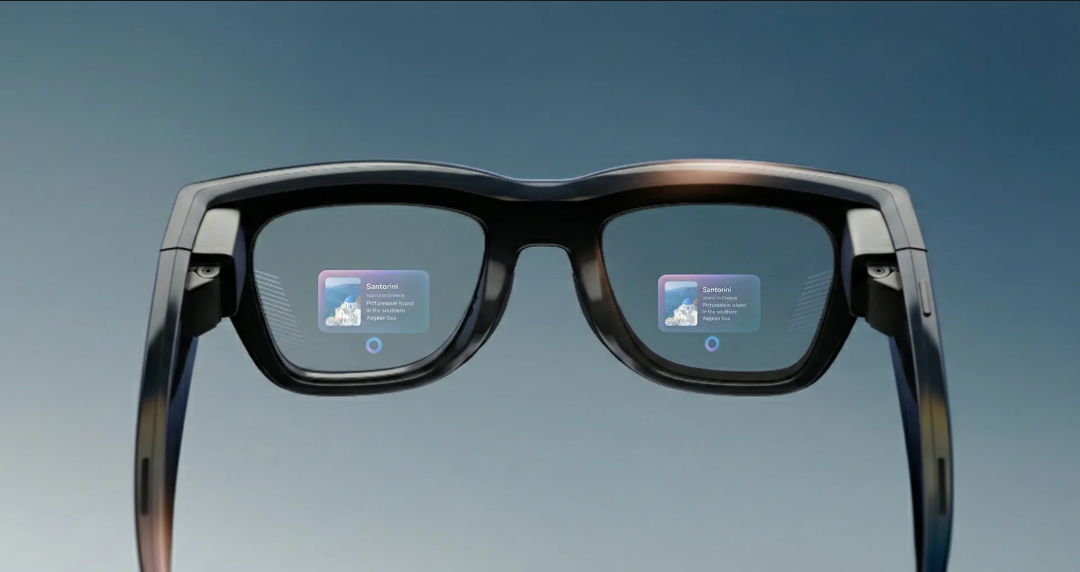
Concept image of Meta Ray-Ban glasses with dual displays. Source: UploadVR
Single-Eye Display: 'Just Exhausting to Look At'?
The current Meta Ray-Ban Display (internally codenamed Hypernova) made its debut in the U.S. market in late September 2025. Priced starting at $799, this device is essentially a 'one-eyed monster': only the right lens features a built-in microdisplay, while the left eye is left bare.
Foreign media outlet UploadVR bluntly put it in its review: 'This design just feels off. When the display stays on for more than a few seconds, users experience persistent mild eye strain.'
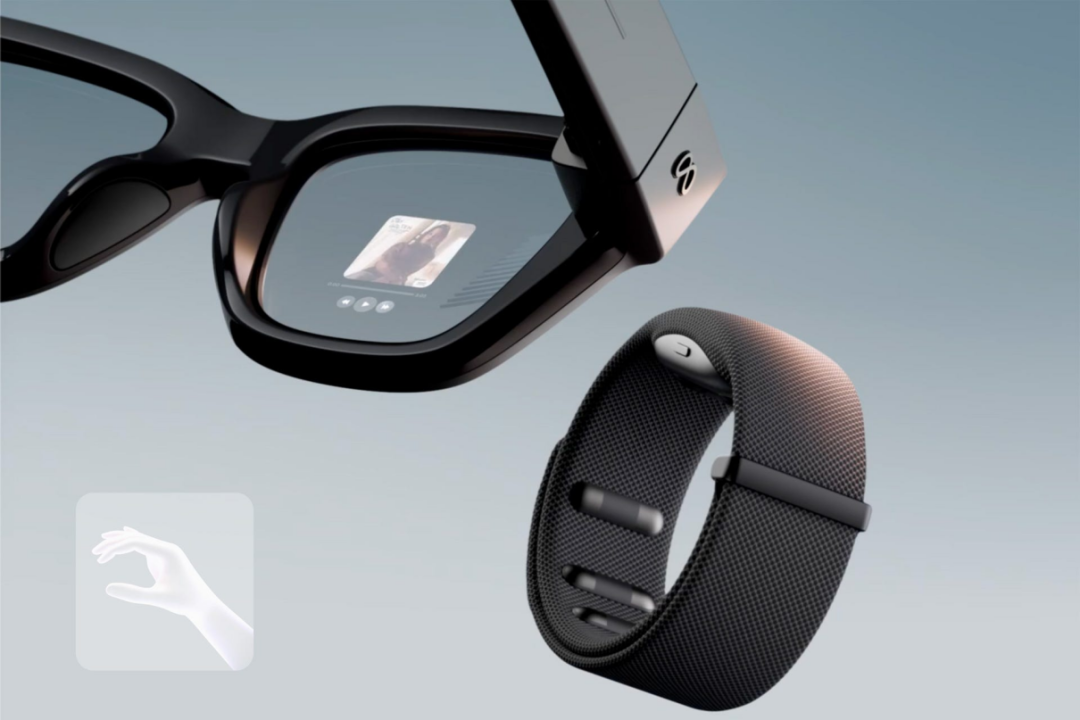
Meta Ray-Ban Display paired with a neural wristband
Why Not Binocular in the First Generation?
Meta CTO Andrew Bosworth explained prior to the product launch:
High Costs: Components for binocular displays are more than double the cost of single-eye ones.
Technical Complexity: Additional parallax correction is required.
Design Trade-offs: Weight and bulk would increase significantly. For smart glasses that emphasize 'everyday wearability' and 'social appeal,' becoming too heavy would drastically reduce users' willingness to wear them.
However, market feedback quickly altered Meta's calculations.
As economies of scale kicked in, the costs of in-lens waveguides and micro-optical engines have been plummeting. Meanwhile, Meta executives revealed that demand for the first-generation product far exceeded expectations, even forcing Meta to delay its international launch to prioritize supplying the U.S. market.
With surging demand and falling costs, Meta naturally began reconsidering: Should it expedite the binocular version?
Is 'Hypernova 2' Really Coming Early?
Previously, Bloomberg reporter Mark Gurman and renowned analyst Ming-Chi Kuo predicted that the successor, codenamed Hypernova 2, would debut in 2027 with dual-eye optical displays.
Now, however, a new report by The Information reporter Jyoti Mann shatters this expectation: Hypernova 2 may arrive this year.
While the report didn't disclose specific details, it mentioned an intriguing tidbit: Meta executives are concerned that 'launching too many devices in too short a time could confuse consumers.' This seems contradictory but carries significant implications.
According to multiple sources, Meta's current hardware roadmap shows:
Early 2027: Launch of an ultra-lightweight Horizon OS headset.
Late 2027: Launch of the first true AR glasses.

Releasing a binocular display-equipped heads-up display (HUD) glasses this year would not only fill the product gap but also clarify the 2027 product lineup, avoiding internal cannibalization from three major devices launching simultaneously.
Additionally, reporter Jyoti Mann's report mentioned that Meta has also revived its smartwatch project, planning to release it later this year.
This multi-faceted ambition is evident.
Trying to Outpace Apple?
Many speculate that Meta's move aims to preempt Apple in capturing user mindshare for 'smart glasses with screens.'
Multiple sources indicate that Apple's first smart glasses are expected in early 2027, likely screenless initially, relying solely on cameras and sensors for information prompts. If Meta can release a binocular display glasses this year, it could position itself as the 'true AR pioneer,' flexing its muscles in public discourse.

However, Meta's hardware roadmap has a reputation for 'constant pivots.' From launching to adjusting to canceling projects, the company is no stranger to change. Today it might pursue binocular displays; tomorrow it could shift to 'ultimate thinness.'
Key Clue: Meta CTO's Instagram Poll
The real indicator might lie in an interaction by Meta CTO Bosworth last month.
When a fan asked on Instagram: 'For the next generation, will you prioritize making it smaller and lighter, or adding another display?' Bosworth didn't answer directly but launched a telling poll:
Binocular First (> $ + weight)
Design First (smaller, < $)
The annotations in parentheses are highly suggestive: Binocular = more expensive + heavier, while design optimization = smaller + cheaper.
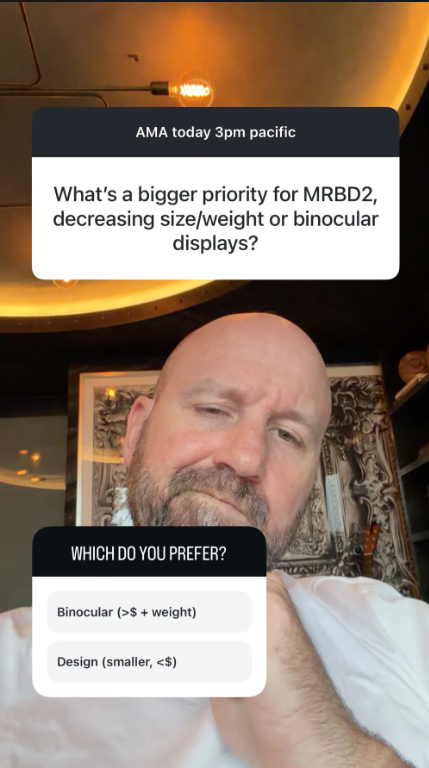
Poll launched by Meta CTO Andrew Bosworth on Instagram
The poll's wording is intriguing, suggesting intense internal deliberation at Meta. Therefore, the second-generation Meta Ray-Ban Display we see this year might also take another path: a lighter, more affordable iteration that still uses a single-eye display.
Will it be a radical technological upgrade or a conservative experience optimization? The answer will emerge later this year.
Summary
Meta's ambition in hardware is undeniable, but its execution has always been full of variables. From Oculus to Quest to now Ray-Ban, Meta constantly oscillates between 'early release' and 'delayed launch.'
So, regarding rumors of a 'binocular version release this year,' my advice is: stay excited but don't raise expectations too high. After all, in consumer AR, wearability and users' willingness to wear matter more than technical specs.
The smart glasses race has entered deep waters. Is Meta's acceleration a natural result of technological breakthroughs or a stress response to Apple's pressure? Let's wait and see.
Note: This article is compiled and integrated based on the original work by UploadVR author DAVID HEANEY, with polishing and rewriting by VRAR Planet.
-
![]()
Alibaba's AI Offensive: Over Half of Investment Allocated, Time to Reap Returns
-
![]()
Alibaba’s AI Push: Over Half of Investments Made, Time to Harvest Returns
-
![]()
Chinese Enterprises Going Global 3.0: From World Factory to AI Infrastructure Builder
-
![]()
Honor RobotPhone Review: Half Movie Camera, Half Robot
-
![]()
AI-Driven Cheating Surges in Universities! Online Exams Reduced to Mere Formalities, Degree Credibility on the Line
-
Insta360’s Decade in Panoramic Imaging: Making Cameras ‘Invisible’ and Returning Creation to the Masses
-
![]()
Foreign Media Claims Apple is Concentrating Resources on AI Development: Vision Pro and Siri Teams Lay Off 200 People
-
Big News! Huaneng and Huawei Hold Talks in Shenzhen with Ren Zhengfei in Attendance; Huawei Emerging as the 'Second Brain' of China's Energy System