Putin's Visit to China: Can Chinese Automakers Spark a New Era of Growth in Russia?
 05/20 2026
 639
639
From May 19 to 20, Russian President Putin undertook a state visit to China at the invitation of Chinese President Xi Jinping. Russian Presidential Aide Ushakov revealed that the Russian delegation comprised five deputy prime ministers and eight ministers from the Ministries of Foreign Affairs, Agriculture, Culture, Transport, Economic Development, Finance, Construction, and Education. Chinese Foreign Ministry spokesperson Guo Jiakun announced at a regular press conference on May 19 that China and Russia are comprehensive strategic partners in the new era. During Putin's visit, the two leaders are set to discuss bilateral relations, cooperation across various sectors, and pressing international and regional issues.
According to the official website of the Ministry of Foreign Affairs, Sino-Russian relations are currently flourishing like never before. In terms of economic and trade ties, active efforts have been made to align the Belt and Road Initiative with the Eurasian Economic Union, resulting in fruitful practical cooperation.
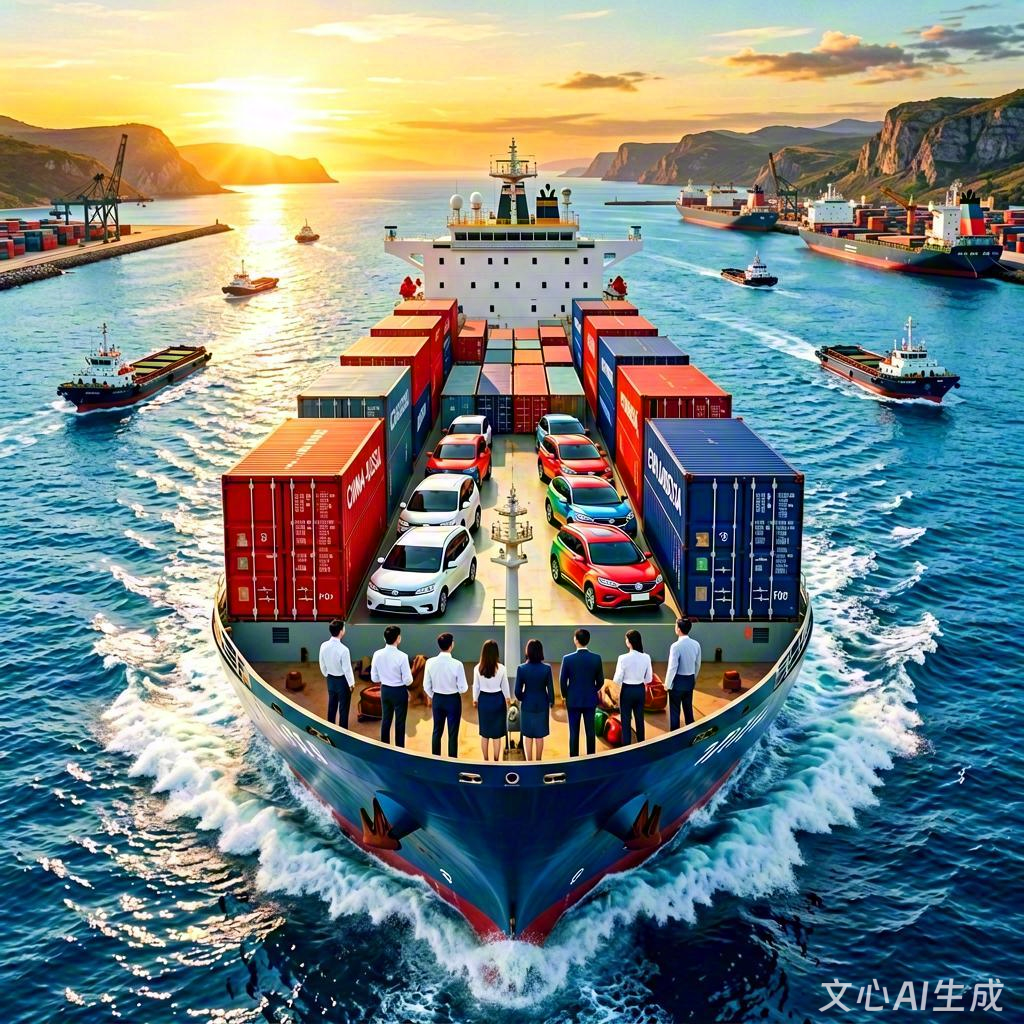
Notably, the performance of Chinese automakers in Russia has seen a downturn in the past two years. Specifically, in 2025, China's automobile exports to Russia fell sharply from 1.16 million units in 2024 to 632,000 units, nearly halving, and Russia slipped from being China's largest automobile export market to the third position. Many industry experts attribute this decline to several recent policy adjustments in Russia, including OTTC certification, the Taxi Localization Act, and the new Russian automobile scrappage tax regulations that came into effect on April 1, 2025, all of which pose fresh challenges for Chinese automakers operating in Russia.
From "Celebration" to Strategic Maneuvering
Although Russia has always been a nearby market for Chinese automakers, it rarely ranked among the top three destinations for China's automobile exports before 2022.
However, the Russia-Ukraine conflict in 2022 led to the withdrawal of mainstream automakers from Europe, the United States, Japan, and South Korea from the Russian market, creating a significant void in this market with annual sales exceeding one million units. Hundreds of dealers were forced to shut down or urgently switch to selling Chinese vehicles. Over the past three years, the market share of Chinese brands in Russia has soared from less than 10% to 60%. Data released by the Association of European Businesses' Automobile Manufacturers Committee on Russian sales by brand showed that in 2024, Chinese brands held a 60.71% market share in Russia.
Yet, a sudden wave of policy adjustments has caused Chinese automakers to experience a sudden "cooling-off" period in the Russian market. On October 1, 2024, the Russian government significantly raised the scrappage tax and subsequently announced that from 2025 to 2030, the benchmark coefficient of the scrappage tax would increase annually by 10%-20% in a phased manner. On January 1, 2025, Russia adjusted the tariff coefficients for imported complete vehicles to a phased rate ranging from 20% to 38%.
Dai Xi, a senior researcher at Qingqi Think Tank, noted in an analysis that the Russian automobile scrappage tax is not a new levy. After multiple adjustments from 2012 to 2026, it has transformed from an environmental tax into a core policy tool for protecting the domestic automobile manufacturing industry. The sharp tax rate hikes and rule changes after 2024 have directly eroded the price arbitrage space for Chinese automobile exports to Russia. "Previously, there were obvious gray circulation channels in the Russian imported vehicle market, with some dealers evading high taxes and fees by underreporting prices, creating a non-compliant circulation norm," Dai Xi said. With the implementation of Russia's new scrappage tax regulations, this situation has fundamentally changed. Meanwhile, starting from July 2025, Russia will further tighten OTTC vehicle type approval certification requirements, making it a core tool for regulating imports and compelling localization.
To compound the issue, the Taxi Vehicle Localization Requirements Act, which took effect on March 1, 2026, introduced a point-based localization policy that will reshape the Russian automobile market from within: exchanging market access for investment and using points to enforce localization. Dai Xi asserted that Chinese brands, if relying solely on complete vehicle exports or shallow assembly, will completely lose the B-end rigid demand markets in Russia, such as taxis, ride-hailing services, and official vehicles, directly impacting channel layouts and terminal reputation. "Sino-Russian automotive trade has officially entered a new phase of in-depth strategic maneuvering," Dai Xi stated.
Strengthening Localization
Of course, the introduction of a series of Russian policies is not solely driven by "xenophobia" but rather aims to encourage foreign brands to accelerate their localization efforts, thereby stimulating domestic economic and employment growth and aiding in the transformation and upgrading of the domestic automobile industry. Dai Xi believes that from now on, Chinese automakers in Russia will transition from price wars to value wars, encompassing multiple areas such as deep localization, product adaptability, and after-sales service. Significant differentiation has emerged among Chinese brands, and Russian domestic brands are experiencing a resurgence. The head of the Russian dealership group Panavto shared a similar perspective with the media: "The future belongs to those who can build factories in Russia and achieve localized production, truly winning the hearts of Russians and securing their market position."
Chinese automakers have already begun to actively promote localization. According to a Rhodium Group report, Great Wall Motors has increased its investment, planning to boost the annual production capacity of its Russian factory from 150,000 to 200,000 units and has commenced the construction of an engine factory to deepen local production. Geely primarily relies on its joint venture in Belarus to export to Russia. JAC has opted to use the Russian brand Moskvich for localized assembly. However, it cannot be overlooked that building factories in Russia requires substantial capital investment, especially in the early stages when market returns have not yet covered cost expenditures. Chinese automakers need to be prepared for a long-term, in-depth布局 (layout). Not long ago, according to Russian media Mash, Geely and Changan incurred combined losses exceeding 15.6 billion rubles (approximately 1.46 billion yuan) in Russia in 2025.
Building local factories is just the first step in strengthening localization. During the 2026 Beijing Auto Show, Zhou Tian, the Senior Business Director for China at Yandex Auto, a technology ecosystem company in the Russian and CIS markets, pointed out in a media interview: "Chinese automobiles face a minor issue in Russia—deep localization is not yet sufficient." In his view, there is still room to further enhance their appeal to Russian customers, and Chinese automakers have not truly crossed the threshold of deep localization. A third-party survey revealed that 47% of Russian consumers would consider Chinese brands for their next vehicle, 67% hope to learn more about Chinese automakers, and over 70% of respondents have already noticed information related to Chinese automobile brands.
It should be noted that to deepen their local presence in Russia, Chinese automakers also need to increase investment in after-sales networks, spare parts supply, technical adaptability, and other areas. For example, Sinotruk focuses on the European region of Russia and has established a significant number of service outlets in Siberia and the Far East, relying on a "central warehouse + authorized service stations" system to achieve warranty coverage throughout Russia. In April 2026, Great Wall Motors announced an additional investment of 42 billion rubles in parts (spare parts) localization, currently having over 45 Russian suppliers and adapting 500 spare parts. In response to Russia's extremely cold and salt-laden environments, Chery adopts galvanized bodywork, Great Wall Motors has established an extreme cold testing ground in Krasnoyarsk, and the Haval F7 achieves a 100% success rate in cold starts.
Bright Prospects
In Dai Xi's view, two major structural opportunities still exist in the Russian market and may become new growth points for Chinese automakers.
On the one hand, the Russian used car market is vast, with sales reaching 6.24 million units in 2025. The combined effects of Russia's new scrappage tax regulations and China's "180-day red line" policy have blocked the channel for new vehicles to be exported illegally under the guise of used cars, further amplifying the supply gap for locally compliant used cars. On the other hand, Russia grants a 20% tariff exemption for used pure electric vehicles and plug-in hybrids, with the policy extending until 2028. Additionally, a cash subsidy of up to 50,000 rubles is provided for individuals purchasing used new energy vehicles, further enhancing policy advantages.
"For Chinese automobile brands, the changes in the Russian market are not merely a crisis but also a stress test of their global operational capabilities," Dai Xi emphasized. This transformation compels Chinese automakers to shift from opportunistic exports to strategic in-depth cultivation, achieving an upgrade from product exports to brand, technology, and full industry chain exports.
This year marks a confluence of several historically significant milestones in Sino-Russian bilateral relations—the 25th anniversary of the signing of the Sino-Russian Treaty of Good-Neighborliness, Friendship, and Cooperation, the 25th anniversary of the establishment of the Shanghai Cooperation Organization, and the 30th anniversary of the establishment of the Sino-Russian comprehensive strategic partnership of cooperation. On May 16, the Russian Kremlin stated that during President Putin's official visit to China, the Chinese and Russian leaders will discuss hot-button issues in bilateral relations, explore ways to further deepen the Sino-Russian comprehensive partnership and strategic cooperation, and exchange views on important international and regional issues.
Whether Chinese automakers deeply rooted in Russia can seize this opportunity to usher in a new development landscape remains to be seen.
Image: From the Internet
Article: Auto Review
Layout: Auto Review
-
![]()
The Allure of 'Acquisition Spree': Li Shufu's Left Turn, Xu Jiayin's Right
-
![]()
Strategic Transformation Yields Results: Phoenix Optics Reports 10.9% YoY Rise in Core Net Profit for H1 2026
-
![]()
Three Key Growth Trajectories Synergize! Crystal-Optech Reports 3.478 Billion Yuan in Revenue for H1 2026
-
![]()
Semi-Annual Report Sparks XPENG Motors Buzz
-
![]()
1.6 Billion Big Order Secured! SeeYA Technology's Revenue Soars by 287.87% in the First Half of the Year
-
![]()
Baidu's Profits Plunge by 68%: Unraveling the Mystery Behind the Numbers
-
![]()
Baidu’s Profits Tumble by 68%! Where Has All the Money Gone?
-
![]()
Hynix’s Taobao Store Shuts Down Abruptly: What Should Customers Do About Warranty Services for Memory Modules?