Rumors Abound: Is Kuaishou’s Kling AI Spin-Off on the Horizon, Threatening Baidu’s $20 Billion Valuation?
 05/20 2026
 587
587
Kuaishou currently boasts a market capitalization of $27 billion, yet its Kling AI division alone has recently been valued at $20 billion. Kuaishou’s official statement reveals: The board is assessing a proposed restructuring of Kling AI’s assets and operations, which may include external financing—this essentially confirms ongoing discussions.
What does a $20 billion valuation signify? Kling AI’s valuation is nearly 70% of Kuaishou’s total market value. For context, Kling AI surpasses Lenovo, a computer manufacturer with decades of history; new energy vehicle makers that have struggled for a decade; and Horizon Robotics, a decade-old leader in autonomous driving chips and solutions.
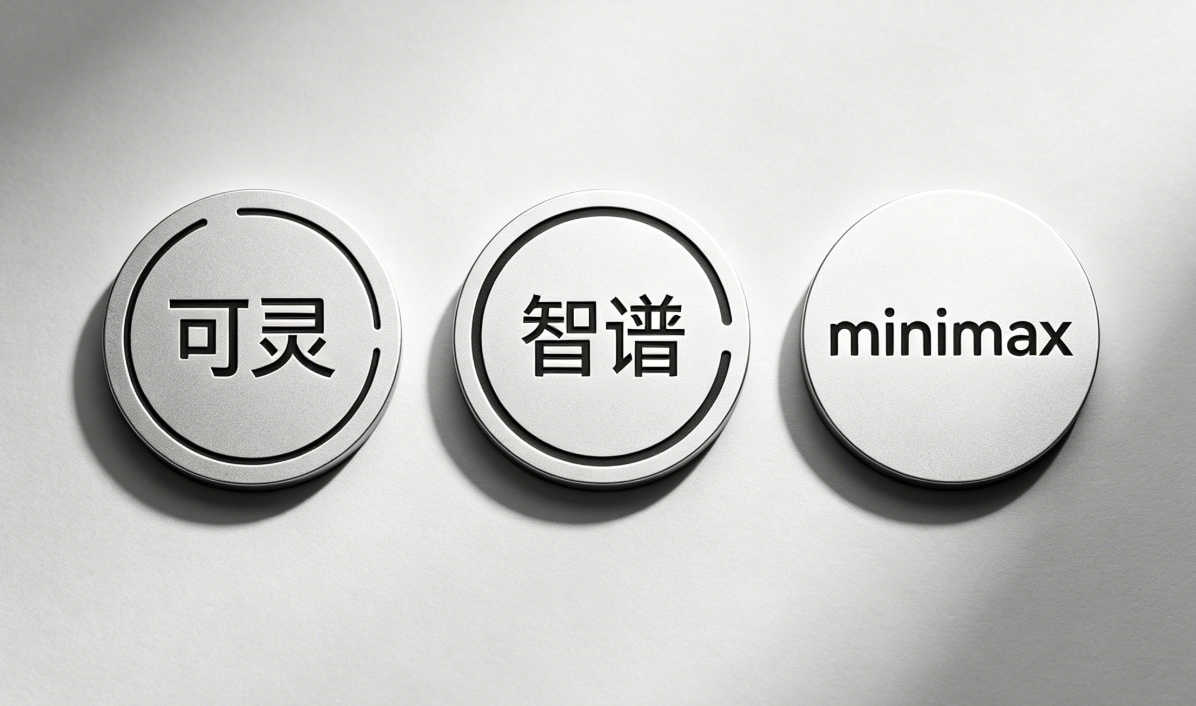
It even approaches half the market capitalization of Baidu ($47.5 billion) and JD.com ($43.9 billion). These tech veterans, with over two decades in operation, find themselves rivaled by an AI video model introduced less than two years ago. Even more noteworthy: Listed pure-play AI startups like Zhipu and MiniMax, with minimal revenue and no profits, command staggering valuations. Zhipu’s latest valuation soars to approximately $58.6 billion, surpassing Baidu to become China’s ninth-largest AI tech stock. Others include: Listed MiniMax at $29.7 billion, DeepSeek’s Series A valuation between $45-50 billion, and Kimi’s post-investment valuation at $20 billion.
(Image Source: Luo Chao Pro)
Employees at major tech firms, holding stock options, often voice frustration over the same question: Why are AI startups valued so highly? Is this an AI bubble, or have legacy internet giants lost their competitive edge? If the latter, why do AI leaders like Baidu and Alibaba still lack “proper” valuations?
The answer may lie in two distinct valuation frameworks: The secondary market acts as a “weighing machine,” while the primary market functions as a “betting platform.”
Kling AI’s $20 billion valuation originates from primary market financing, which emphasizes future potential, market position, growth prospects, and investor appetite for the next funding round—not current profits or revenue. If spun off and potentially listed (increasing exit opportunities and returns), valuations skyrocket. Before the spin-off, Morgan Stanley valued Kling AI at $6 billion; post-spin-off, rumors suggest a $20 billion target—a threefold increase for the same assets, revenue, and team, merely by restructuring financials.
Primary market rules are straightforward: A consensus among a few investors that an asset will grow into a dominant player justifies a price detached from current financials. With OpenAI and Anthropic already valued in the trillions, valuations in the hundreds of billions for DeepSeek, Kling AI, and Kimi seem “bargain-priced.” This isn’t about mathematical precision—it’s about market sentiment.
The secondary market operates differently. Daily stock prices reflect collective investor sentiment, prioritizing predictable earnings, cash flow stability, and visible long-term growth. Consensus emerges from buyer-seller dynamics. Exceptions include newly listed or recently delisted stocks with limited liquidity, which may retain some primary market logic temporarily.
Even after the “honeymoon period,” Zhipu and MiniMax enjoy preferential treatment. The market values pure-play AI companies at multiples far exceeding those of short-video platforms. If Kling AI lists, it likely won’t trade at a discount—instead, it could command a premium due to its AI focus. By January 2026, Kling AI’s annualized revenue exceeded $300 million, with ARR doubling. After Sora’s shutdown, few leading players remain in AI video generation, making Kling AI’s label as “AI infrastructure for content industries” highly valuable. If SeeDance were valued independently, its valuation would be even more astonishing.
Kuaishou’s $27 billion market cap, minus Kling AI’s $20 billion, leaves $7 billion. As the second-largest player in short-video streaming, is it truly so undervalued? Yes. The market treats it as a “mature short-video platform”—advertising, e-commerce, and live streaming follow familiar monetization scripts. With a stabilized competitive landscape, peak user growth, and limited expansion potential, a 10x PE ratio reflects the fate of mature internet firms. During their heyday, PE ratios above 40x were common; now, legacy giants face diminishing returns.
Kling AI and Kuaishou are not isolated cases.
Baidu, valued at $47.5 billion, has divisions like Kunlunxin, Baidu Intelligent Cloud, Apollo Go, XiaoDu, and Du Xiaoman. Individually, their valuations bear little resemblance to Baidu’s total market cap, prompting efforts to spin off businesses for separate listings.
Earlier this year, Kunlunxin formally applied to list on the Hong Kong Stock Exchange. Jefferies estimates its valuation at $16-23 billion (assuming 100% ownership), contingent on China’s AI chip market growth and import substitution. Haitong International, referencing Moore Threads’ valuation, suggests Kunlunxin could contribute $48.7 billion to Baidu’s market cap. J.P. Morgan values it at $40-49 billion independently—higher than Baidu’s current valuation.
Apollo Go hasn’t spun off yet, but valuations based on WeRide, Pony.ai, and Waymo’s primary market benchmarks, adjusted for fleet size and mileage, suggest significant upside.
If Baidu’s assets—Ernie Bot, Baidu Intelligent Cloud, etc.—were valued independently against pure-play AI firms like Zhipu, its market cap would far exceed current levels. Last year, Morgan Stanley projected a $79.6 billion valuation; with AI market growth, Baidu’s latest “total valuation” might keep Robin Li excited.
However, markets don’t simply add valuations. When AI businesses remain within a conglomerate, they inherit the parent company’s valuation inertia—growth ceilings of legacy operations, organizational inefficiencies, and transformational burdens dilute valuation multiples. Capital markets perceive interconnected businesses as innovation-slowing and mutually dragging, ultimately applying a “conglomerate discount.”
Thus, Baidu, Kuaishou, and Alibaba face a shared valuation dilemma: Their spun-off AI assets command premiums, but as a combined entity, they’re undervalued.
In ancient maritime trade, merchant ships carried spices, silk, tea, and other goods of varying value. For simplicity, traders applied a composite discount rate to the entire cargo. Today, this equates to “bulk-selling” individually valuable commodities, leading to inevitable undervaluation.
To avoid this, firms must spin off assets. Alibaba experimented with a “1-to-N” breakup: Taobao, Tmall, Cainiao, Digital Entertainment, Local Services, and Alibaba Cloud aimed for separate listings, but not all succeeded. Why? Not all spun-off units command higher valuations than the parent. Digital Entertainment, for example, faces market skepticism (as seen in Netflix and iQiyi’s stock performance). What if only AI-related businesses were spun off? That might be a different story. Alibaba Cloud is valuable, but its potential is obscured within the Alibaba Group.
If spinning off isn’t feasible, firms must reshape external perceptions to justify new valuation logic. Alibaba has spent 25 years positioning itself as an AI company, with Jack Ma and Eddie Wu championing the narrative—a strategy that briefly boosted its stock price.
By 2026, market sentiment hardens: “Pure-play AI” is favored, while “conglomerate AI” faces skepticism. For $1 billion in revenue, a short-video platform might trade at 3-5x PS, while an AI firm could fetch 20-50x PS. Markets bet on AI’s higher profit margins, greater industry concentration, and global expansion potential. Once an AI asset is deemed a potential leader, valuation frameworks shift—PE/PS ratios become irrelevant, replaced by assessments of model barriers, GPU resources, data loops, scenario depth, developer ecosystems, and long-term monopoly potential.
Baidu’s predicament epitomizes the “unfair treatment” legacy tech giants face in the AI era. Despite two decades of AI investment—predating OpenAI and accumulating full-stack capabilities worth billions individually—the secondary market labels it “the search engine from the mobile internet era.” Robin Li understands the game: Kunlunxin is accelerating its A+H dual-listing plans. Spin-offs for Apollo Go, Baidu Intelligent Cloud, and others may soon follow. In AI’s golden age, the earlier Baidu divests, the higher the pricing; delays risk deeper discounts.
Independence is the ultimate value unlock. By 2026, AI spin-offs at major tech firms could become a common sight. Stay tuned.
-
![]()
Doubao Work Unveiled! Domestic AI Leaders Fully Commit to the 'Work' Sector
-
![]()
Who’s Sounding the Alarm on ‘Rushed Vehicles’?
-
![]()
Over 5.3 Billion Yuan in Losses Over Three and a Half Years! Can Yonyou Reverse Its Fortunes Through Streamlining and AI Transformation?
-
![]()
Baidu AI Adopts Free Model: A Strategic Maneuver in Traffic and Monetization
-
![]()
Silicon-Based OLED Pioneer Unveils Financial Results: H1 Shipments Outpace Entire 2025 Volume
-
![]()
AI's First "Lost Summer"
-
![]()
Zeiss Makes Another €2.2 Million Bet: Will Eye Tracking Be the Next Big Thing in the Smart Glasses Industry?
-
![]()
RUNTO Ranking | Global Top TV ODM Factories' Shipment Figures for July 2026