Here Comes the Cyber Supervisor! CAO On-the-Job Test: Team Assembly in 4 Minutes, Chaos All Day
 05/20 2026
 626
626
AI Begins to Manage Itself!
Ever since humans embarked on the fervent quest for AI assistants, there has been no shortage of chaos and experimentation...
Two years ago, everyone was frantically mastering the art of crafting prompts, fearful of being left behind. Last year, the focus shifted to scouring for useful standalone Agents, in hopes of discovering a few free digital workers, leading to increasingly absurd strategies.
After all this experimentation, it became evident that relying on a single Agent had reached its limits. However, preparing more Agents and Skills inadvertently turned one into a foreman, waking up each day to assign tasks to over a dozen different AI tools.
This didn't liberate productivity—it was akin to adopting a demanding parent.
So, is there a possibility of finding a supervisor for countless Agents, enabling them to plan and complete work autonomously?
LobeHub believed so too.

(Image Source: X)
On May 18, the open-source AI project LobeHub unveiled its latest update on X—the Chief Agent Operator (CAO), a role that claims to assist users in autonomously recruiting hundreds of Agents to form a tireless, professional team.
Wow, times have changed—AI is now the supervisor?
Cyber Supervisor: A Harsh Reality
First, a quick introduction to LobeHub for those just catching up.
Originally a popular Agent integration and interaction project in the open-source community, it has garnered nearly 80,000 stars on GitHub, a platform teeming with elite developers. It's a top-tier player in the open-source world.
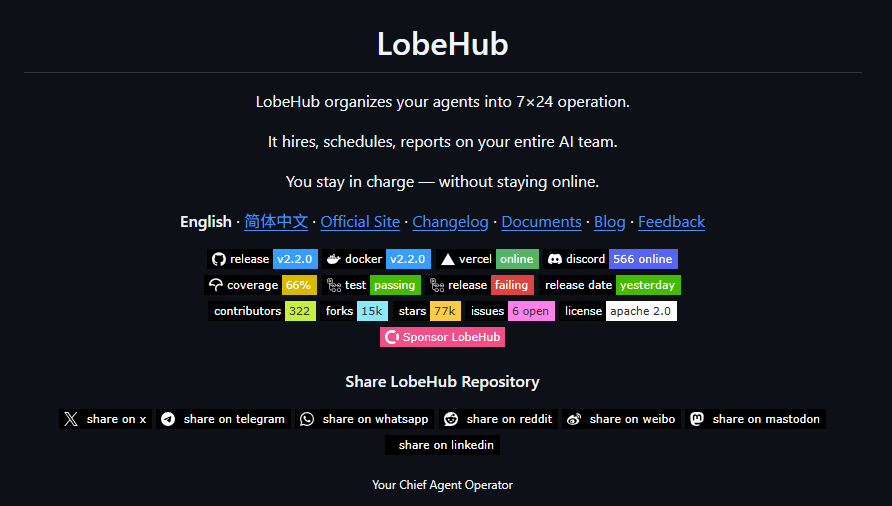
(Image Source: Github)
Its main feature is straightforward: integrating various large models and user-deployable Agents into a single interface.
Whether it's Codex, Claude Code, OpenClaw, or Hermes Agent, once deployed, they can all be accessed through this unified portal, even allowing for unified management of Skills and external service ports.
Three wishes granted at once.

(Image Source: LobeHub)
But the developers clearly found a sleek integrated UI too unchallenging, so they introduced the ultimate scheduling system called CAO.
According to official claims, you no longer need to memorize prompts or search for Agents.
Now, you can be the boss, lounging back and commanding digital workers.
For instance, you assign CAO a task: "Scrape all online reviews of a certain new energy vehicle and compile them into a table." Upon receiving the command, CAO instantly mobilizes hundreds of thousands of skill templates from its library, fills the team with Agent underlings, and arranges them to process tasks in parallel in the cloud.
All you need to do is lock your phone, sleep soundly, and check the daily briefing CAO respectfully presents the next morning.
Sounds amazing, right? I tried it immediately upon hearing the news.

(Image Source: Leikeji)
As you can see, the request was relatively simple.
After receiving it, LobeHub quickly invoked the Agent Management tool and asked me to specify a series of parameters.
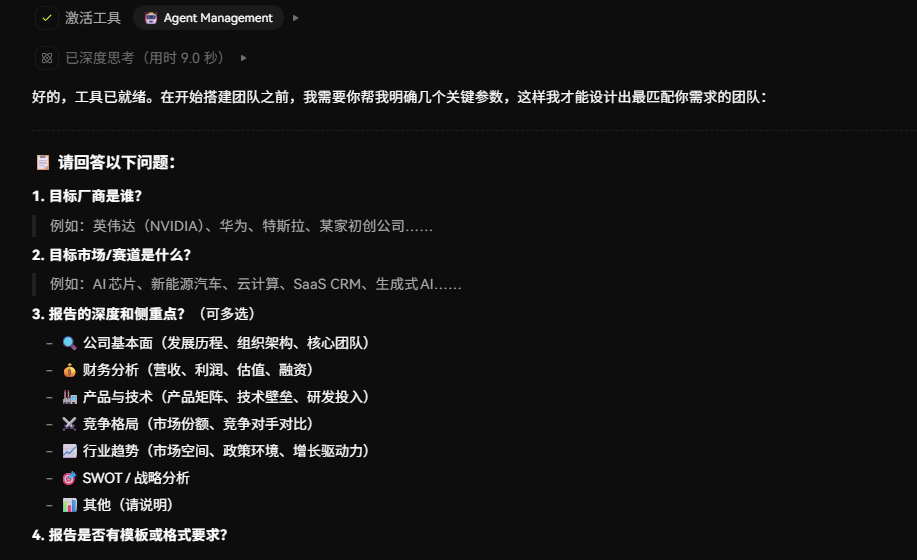
(Image Source: Leikeji)
Once I clarified my needs, a professional team was assembled in no time.

(Image Source: Leikeji)
The entire setup took less than four minutes, with a clear division of labor and roles—each Agent had a name and responsibility, not a generic "all-rounder."
Next, it was time to let it generate and see the results.
Haha, just kidding—it failed. Repeatedly. Constant attempts, constant failures, requiring thousands of confirmation approvals.

(Image Source: Leikeji)
Finally, something new happened... why is it out of quota?

(Image Source: Leikeji)
To put it bluntly, this experience dampened my expectations. Whether it's funny or infuriating is debatable, but my expression definitely turned sour.
Though I wanted to find a success story, no user on overseas social media has succeeded yet.
Instead, many complain about the steep learning curve, baffling computational consumption (essentially donating money to model providers), and cascading failures in long task chains.
Handing full control to CAO is like giving a sports car without brakes to a newly licensed driver. If the first Agent misunderstands and sends wrong instructions to the second, you'll likely end up with a completely irrelevant result.

(Image Source: Leikeji)
Using this for work might leave you with more cleanup time the next day than if you'd done it manually.
Letting AI Run Wild? Not Yet.
Watching everyone complain about LobeHub's CAO, I felt a strong sense of déjà vu.
This fully automated AI-managing-AI approach isn't unique to LobeHub. Long-time Leikeji readers might recall testing a similar app called MasterAgent last July.
Our goal was simple: create a digital worker to auto-generate reports and PPTs, freeing us to grab more coffee.
The result?... Despite hiccups, it handily outperformed LobeHub's CAO.
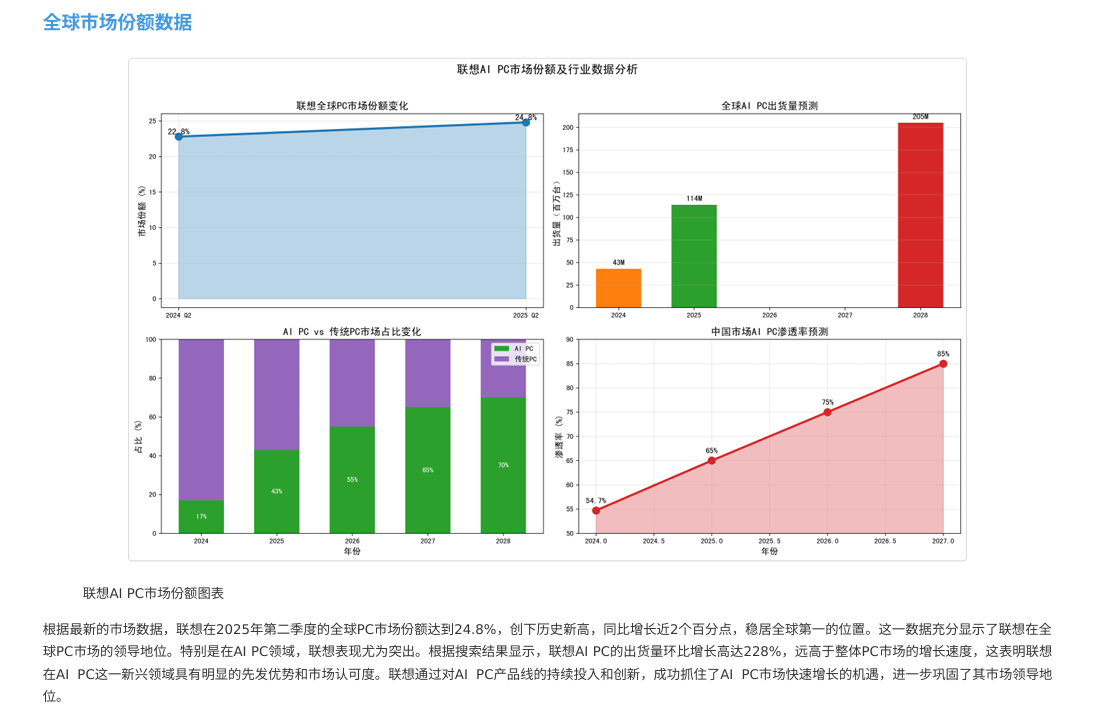
(Image Source: Leikeji)
Of course, MasterAgent had issues too—incorrect data collection times, Agents shirking responsibilities, or producing sloppily formatted, short reports.
But with timely intervention, the final product was satisfactory.
Note the keyword: intervention. Based on my experience, fully hands-off AI management is still science fiction.
Yet, whether it's last year's pioneering MasterAgent or today's trending LobeHub CAO, both aim to minimize human involvement, as if users can just issue a bedtime command and wake up to perfect results.
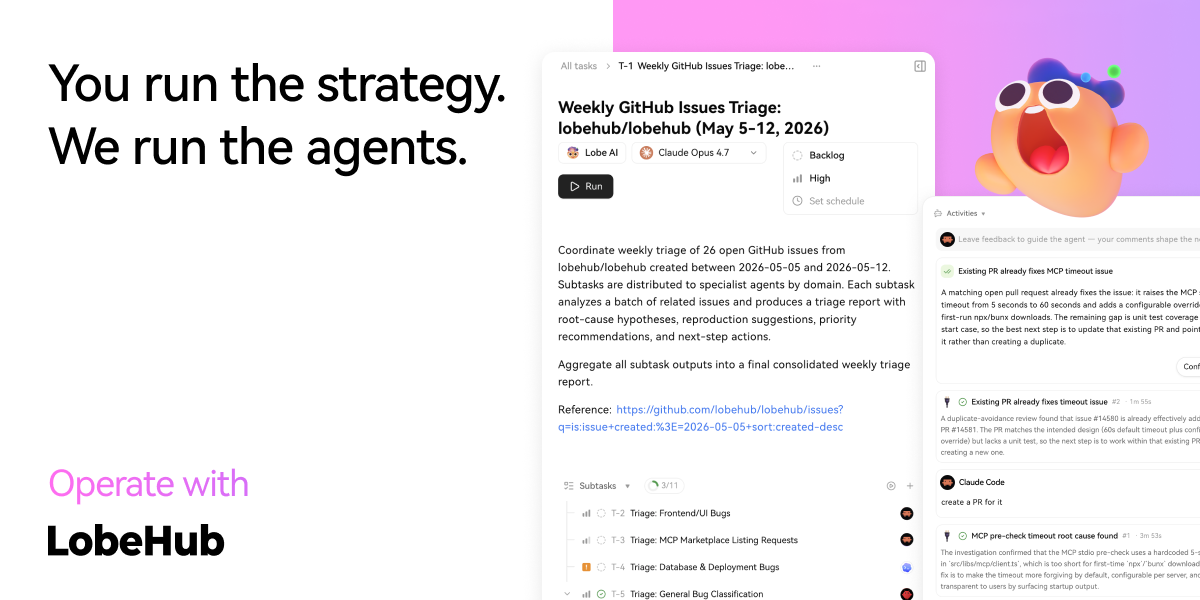
(Image Source: LobeHub)
Come on, work isn't that easy.
Unlike conversational Agents that respond to queries, CAO-like apps are hard to guarantee success. Hitting "start" is like launching a rocket—you can only watch it soar and pray it doesn't explode mid-air.
My attempt crashed due to a "fuel shortage."
The painful part? Since CAO assigned the tasks, bottom-level Agents wrote the code, and another Agent called external data, tracing errors in this near-black-box process is nearly impossible. The only solution is to restart the entire task.
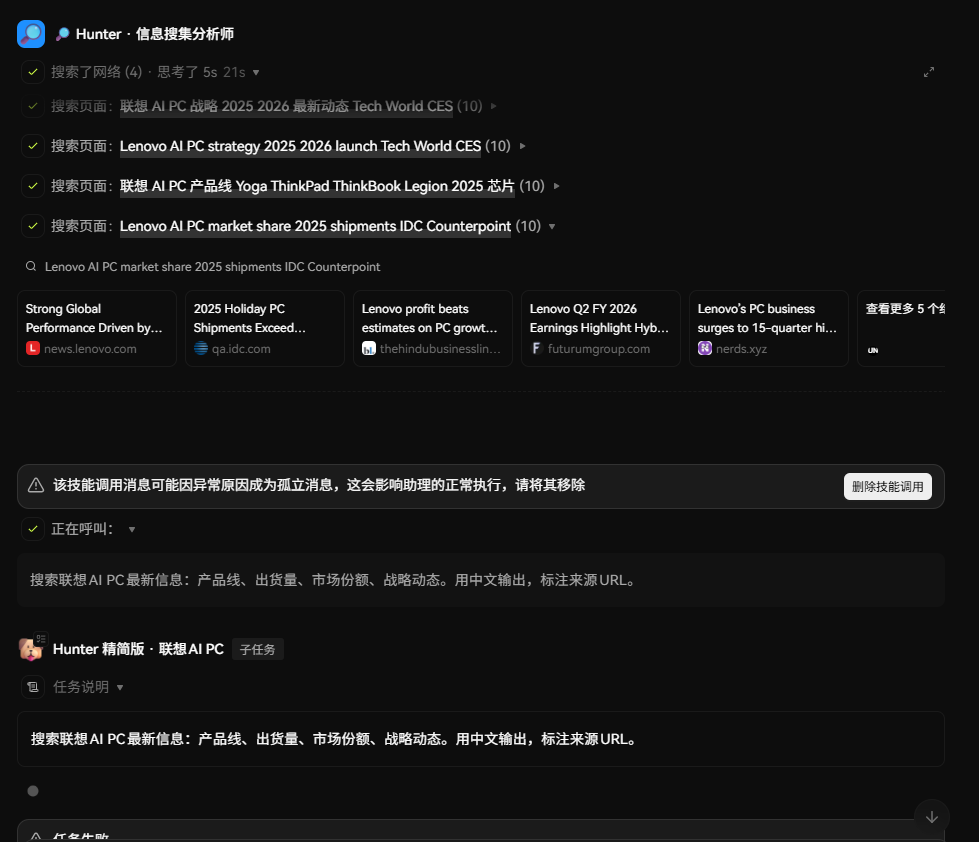
(Image Source: Leikeji)
I even encountered bugs where skill invocations weren't visible, making troubleshooting impossible.
Moreover, over-reliance on such apps risks severe homogenization.
If all companies use open-source CAOs and similar Agents to churn out content operations, code, or market research reports, the internet might fill with identical templates and soulless drivel.
Yikes, I dare not imagine that future.
Final Thoughts
That said, complaining won't stop progress.
Just as automatic washing machines replaced washboards, full automation will dominate eventually, despite setbacks and frustration. The tech industry is betting heavily on this future.
Humans have never stopped pursuing efficiency and ease.
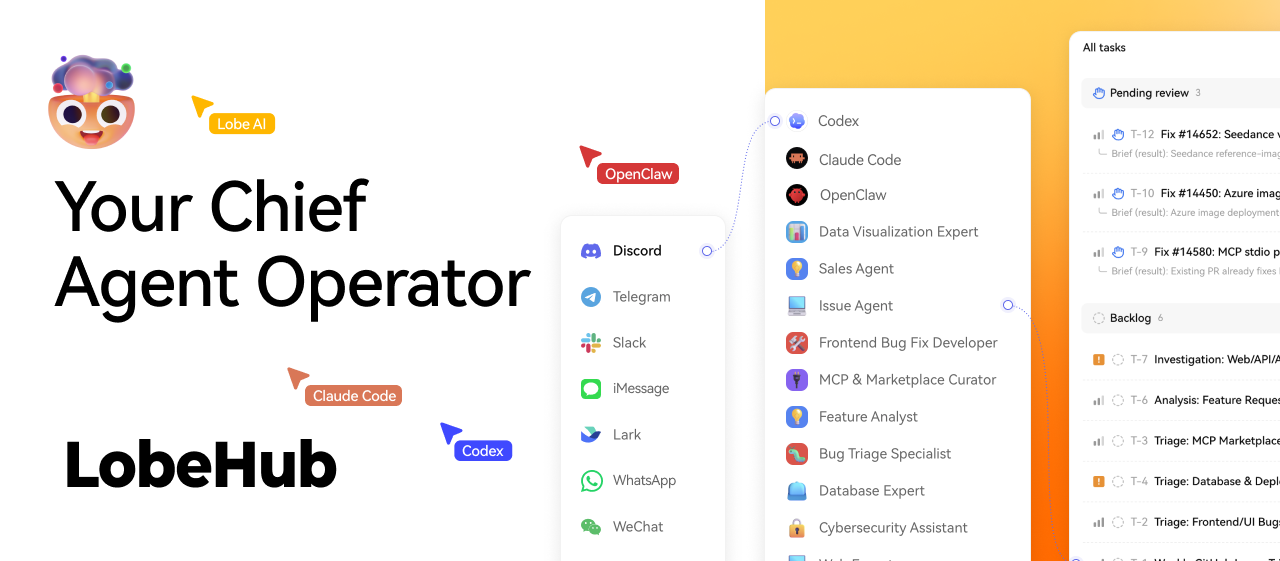
As for those worried CAO will steal their jobs... CAO isn't a real role, nor a new concept. The tech circle's neologism game is just too strong.
(Image Source: LobeHub)
Unlike CGO (Chief Growth Officer) or CTO (Chief Technology Officer), CAO isn't a legitimate job title. The former is just CMO rebranded, while the latter is a well-established role in the tech industry.
So, how should we approach CAO and similar buzzwords?
Don't let corporate neologisms overwhelm you. Whether it's C-whatever-O, it's just a complex, error-prone tool in beta. Geeks can experiment, but most should stick to basic chatboxes.
When it stops burning money and going haywire, we'll hop on board.
LobeHub, CAO, Agent, AI, Large Models
Source: Leikeji
Images from: 123RF Licensed Library
-
![]()
Doubao Work Unveiled! Domestic AI Leaders Fully Commit to the 'Work' Sector
-
![]()
Who’s Sounding the Alarm on ‘Rushed Vehicles’?
-
![]()
Over 5.3 Billion Yuan in Losses Over Three and a Half Years! Can Yonyou Reverse Its Fortunes Through Streamlining and AI Transformation?
-
![]()
Baidu AI Adopts Free Model: A Strategic Maneuver in Traffic and Monetization
-
![]()
Silicon-Based OLED Pioneer Unveils Financial Results: H1 Shipments Outpace Entire 2025 Volume
-
![]()
AI's First "Lost Summer"
-
![]()
Zeiss Makes Another €2.2 Million Bet: Will Eye Tracking Be the Next Big Thing in the Smart Glasses Industry?
-
![]()
RUNTO Ranking | Global Top TV ODM Factories' Shipment Figures for July 2026