Seven Ways to Start a One-Person Company in the AI Entrepreneurship Era
 04/28 2026
 513
513

Author | Cheng Yu
Disclaimer | The cover image is sourced from the internet. This original article by Jingzhe Research Institute requires permission for reprinting.
At the beginning of 2026, 'one-person companies' (One Person Company, or OPC for short) quietly emerged. With just an idea, a skill, and the help of AI agents, entrepreneurs can now run a company solo, becoming true 'super individuals.'
This new entrepreneurial model has rapidly gained popularity, completely disrupting the traditional perception of 'starting a company.' Entrepreneurship no longer requires heavy investment in office space, team building, or securing funding before profitability. Instead, leveraging the explosion of large model technologies, the scaling (mass) deployment of AI agents, and the continuous iteration of no-code and low-code tools, entrepreneurs can build digital employee teams to achieve light-asset entrepreneurship with minimal manpower.
Today, AI-empowered OPCs are becoming an unignorable trend, offering millions of ordinary people a lower-cost, more accessible, and controllable path to realizing their entrepreneurial dreams.
1. Solo Short Drama Content Factory: Reconstructing the Short Drama Creation Ecosystem
Since the beginning of the year, concepts like AI-generated short dramas and AI actors have surged in popularity, reigniting the short drama industry. While gaining widespread attention online, the implementation of AIGC technology has also made solo short drama content factories a new trend in the industry.
From the creative process, the first step in short drama production—scriptwriting—is the first core area where AI can replace professional teams. Traditionally, high-quality short drama scripts required professional writers to refine repeatedly, balancing platform trends, paywall drama hooks, 'golden three-second' teasers for drainage (traffic-driving) dramas, and the conversion rhythm of information flow ads—all posing significant creative barriers.
Today, with the combination of general-purpose text large models and vertical short drama AI tools, market-leading hit scripts can be rapidly produced. For example, large models like Doubao and DeepSeek can handle plot framework structuring and dialogue optimization, while vertical tools like Xiaoyunque AI Short Drama Agent and Youxi AI specialize in precise scene adaptation for short dramas.
Take Xiaoyunque AI as an example. Its officially launched short drama Agent function, powered by the Seedance 2.0 model, allows users to upload a 100,000-character script and generate a complete video in one click, automating the entire process from script analysis to character design and storyboard generation. Youxi AI offers a complete workflow from 'script → storyboard → video → final cut,' eliminating the need to switch between multiple software.
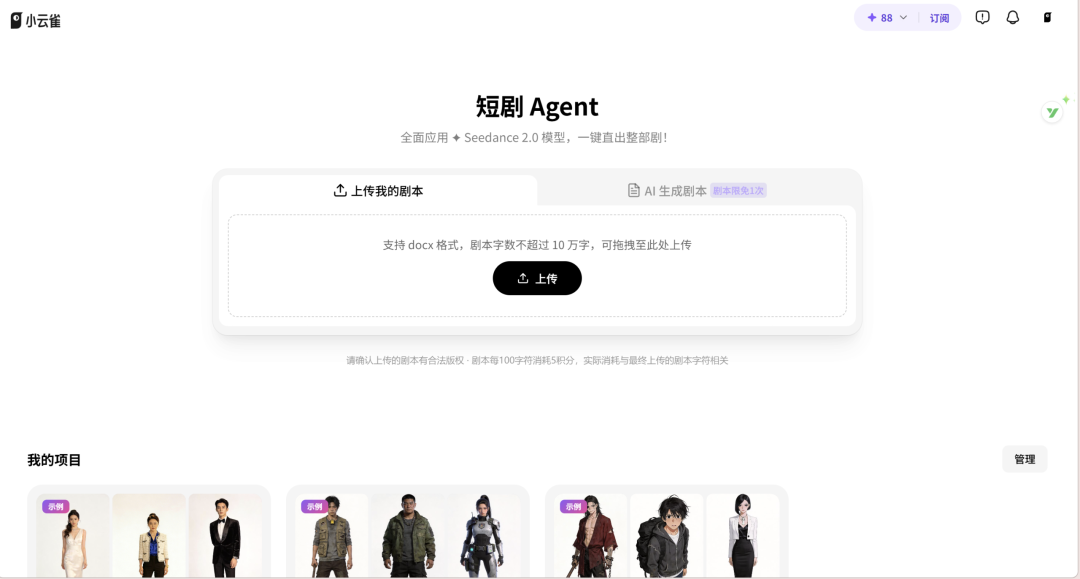
*Screenshot from the Xiaoyunque platform
The integration of tools has shifted the creation process—once highly reliant on 'internet sense' and personal experience—toward standardized, scalable AI-generated methods. AI short dramas can be generated, edited, and revised on the fly, and even remastered or 're-shot' for specific scenes based on audience feedback after completion—a flexibility unattainable with traditional filming methods.
This lightweight creation model has already been put into practice by many industry practitioners. According to public reports, Jiang Hai, chairman of the Ruian Film and Television Artists Association, independently completed the AI live-action micro-short drama *Lang in Yuehe*. The 88-minute work was entirely produced by Jiang alone over three months, with total costs of approximately 10,000 yuan.
During production, Jiang primarily used the 'Ji Meng' tool to generate at least eight different-angle stills for each character, dynamically updating costumes and hairstyles according to the plot. Over 12,000 image materials were produced, with many discarded drafts requiring manual retouching—all without any production team. Subsequently, he used the 'first-last frame control method' to generate 5–10-second silent video clips, precisely controlling character movements. Finally, AI voice synthesis was used for dialogue, paired with automatically generated sound effects and background music for post-production editing. The entire process was handled by Jiang alone, who served as writer, director, art director, cinematographer, and editor.
Currently, the traffic dividends in the short drama sector continue to grow, and the continuous iteration of AI video large models and vertical creation tools has continuously improve (constantly improved) the creative efficiency and content quality of solo short drama content factories. This lightweight, low-cost, and high-efficiency model is no longer a niche experiment but has become a mainstream production trend in the short drama industry. It has not only reconstructed the content creation supply chain, turning 'anyone can make short dramas' from a fantasy into reality but also opened a light-asset entry point for ordinary entrepreneurs into the short drama track (sector). It represents one of the most promising light entrepreneurship opportunities today. In the future, as AI technology further optimizes, solo content factories may unlock even greater commercial value.
2. Virtual Idol 'Solo Agency': One Person Can Now 'Form a Group'
In the public's inherent (traditional) perception, virtual idols have always been the exclusive domain of large MCN agencies and professional talent firms, requiring teams of dozens and startup capital in the millions, from character modeling to commercialization. Now, however, the entire process—from character modeling to music production, content creation, and live streaming monetization—can be completed by a single person, drastically reducing costs and lowering industry barriers.
From a practical standpoint, virtual idol character design can be achieved using AI painting tools like Midjourney and Stable Diffusion. By inputting keywords such as persona style and appearance traits, a virtual character's initial design can be quickly generated. For vocals, AI singing models like DiffSinger and Sovits 4.0 can train a virtual idol's unique voice with just a small amount of reference audio. For composition and accompaniment, tools like Soundful and ByteDance's AI Music Workshop can generate original backing tracks with style and rhythm inputs—British programmer Vedal's virtual streamer Neuro-sama, which uses AI-generated singing and real-time interaction, has amassed over a million followers on Twitch and YouTube.
Domestically, the Hanqing Studio created virtual singer Yuri Youli through a 'human-AI co-creation' approach, led by a single individual. According to *Nanfeng Window*, studio founder Zhao Hanqing set only three directional tags in Midjourney—'pan-East Asian, non-standard appearance, blue'—and completed image screening through thousands of 'draws,' ultimately determining Yuri's appearance in a serendipitous generation. While seemingly accidental, this method allowed a solo creator to complete character design work that would traditionally require multiple collaborators.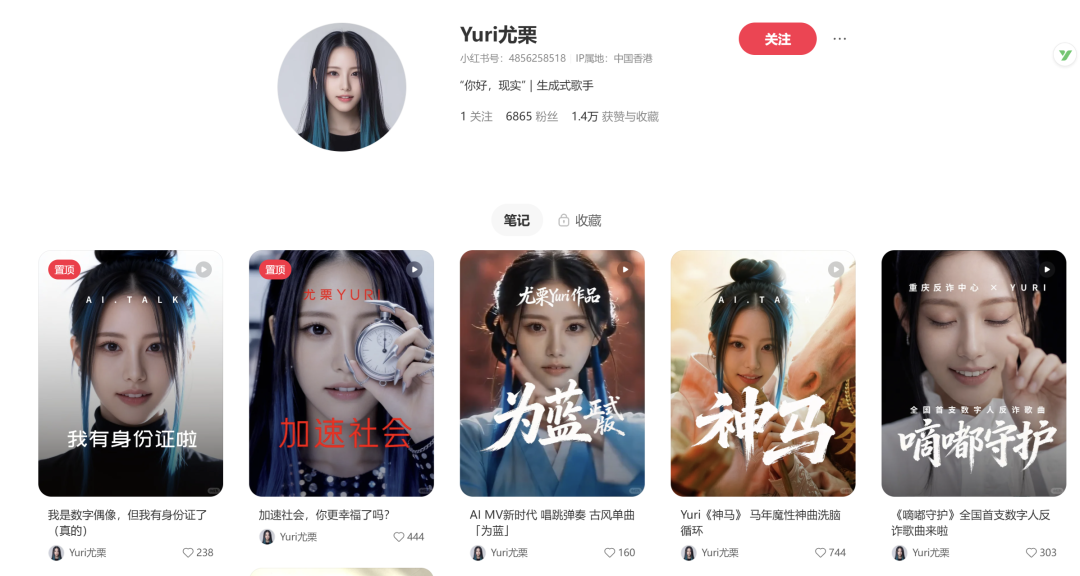
*Yuri Youli's social media account homepage
From a niche sector once monopolized by capital and professional teams to a light entrepreneurship project achievable by individuals, the transformation of the virtual idol industry fundamentally stems from AIGC technology breaking down content creation barriers. As AI tools continue to iterate, the solo operator model will further proliferate, becoming a more sustainable entrepreneurial path in the Pan entertainment (pan-entertainment) and virtual economy sectors.
3. AI Music and Audio Customization: Everyone Can Be a Composer
In 2025, 'Hakimi North-South Green Bean'—a type of secondary-creation music content blending subculture, meme elements, and internet slang—went viral across the internet, with many tracks created using AI tools. Beyond viral AI music, AI-generated music has also begun moving toward market-oriented development.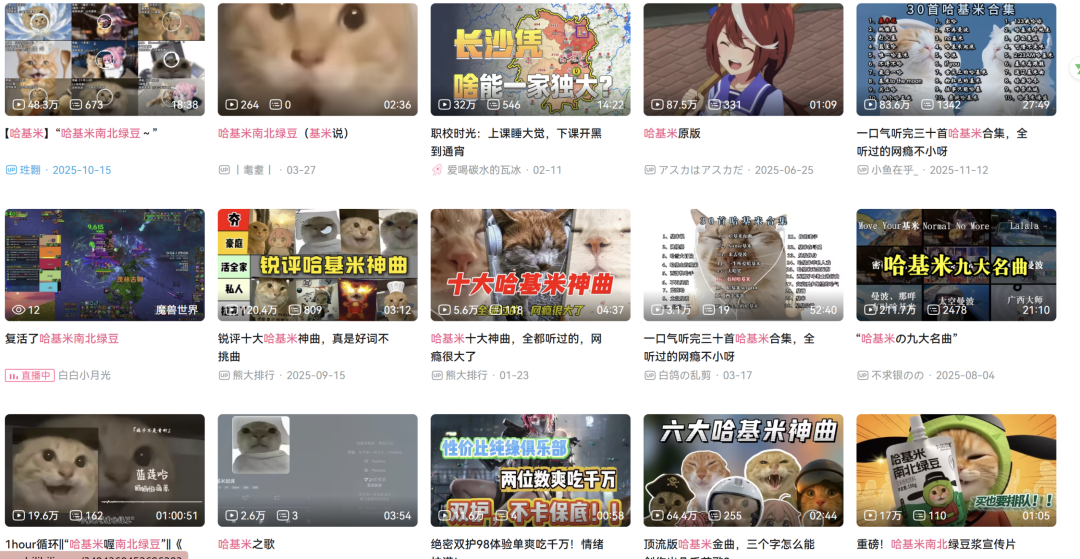
According to iiMedia Research, China's 'voice economy' exceeded 611 billion yuan in 2025 and is projected to reach 741.58 billion yuan by 2029. Behind these figures lies an explosion in full-scenario audio demand, from short video soundtracks to corporate promotional voiceovers, audiobook production, and podcast post-production. However, the high cost and expertise required for professional music creation have long barred ordinary creators: custom BGMs are expensive, while audiobooks and audio post-production demand professional skills, making entry difficult for individuals and small businesses.
Today, the proliferation of AIGC tools like Suno, Udio, and Sora has democratized audio creation. Even without music or voiceover training, creators can complete the full process—from timbre generation to style customization and audio optimization—using basic equipment and AI tools, independently handling commercial audio projects.
According to the *Peninsula Metropolis Daily*, in the Fengquan Center of OPC Innovation Zone, Licang District, Qingdao, Zhang Chao, founder of 'Opening Music,' used AI tools to shorten music demo production from a week to just five or six minutes, significantly reducing client communication costs. The company's annual revenue is expected to exceed 1.5 million yuan.
In Guangzhou, Shuogu Technology developed its proprietary 'Wusheng' voice synthesis algorithm and 'Yuanyu Text,' reducing traditional voiceover costs to less than one-thousandth. With just three seconds of valid samples, it achieves over 99.5% timbre cloning accuracy while replicating human emotional nuances like joy, sadness, and crying. This means AI voice can fully adapt to scenarios like pan-entertainment voiceovers, digital human interaction, and multilingual marketing for corporate globalization.
*'Wusheng' official website
A transformation disrupting traditional industries has occurred: AI is reconstructing the production logic of the entire sound industry. It has torn down the high walls of professional audio creation, allowing ordinary people to reap the benefits of sound creation while disrupting the original industry profit structure with unparalleled efficiency and cost advantages.
4. Light Application Development: Idea + AI = Next Viral Hit
Recall the last era of nationwide entrepreneurship, when app development was a common starting point for startups. In the OPC era, the barriers to app development have also crumbled. Today, AI can directly assist in coding, massive (vast) open-source projects are freely available for reference, and ready-made templates can be reused. By identifying niche needs, ordinary people can quickly launch viable AI products without deep technical expertise.
For example, 'Kitten Ring Light,' a former App Store chart-topper, was developed by Chen Yunfei, who had never coded before attempting AI entrepreneurship. His motivation came from observing that many female users on social media resorted to downloading various solid-color images to switch light temperatures for selfie ring lights. He envisioned an app to simplify this process. Using AI programming tools, Chen developed the initial version of this ring light app in about an hour, without team collaboration or traditional development experience.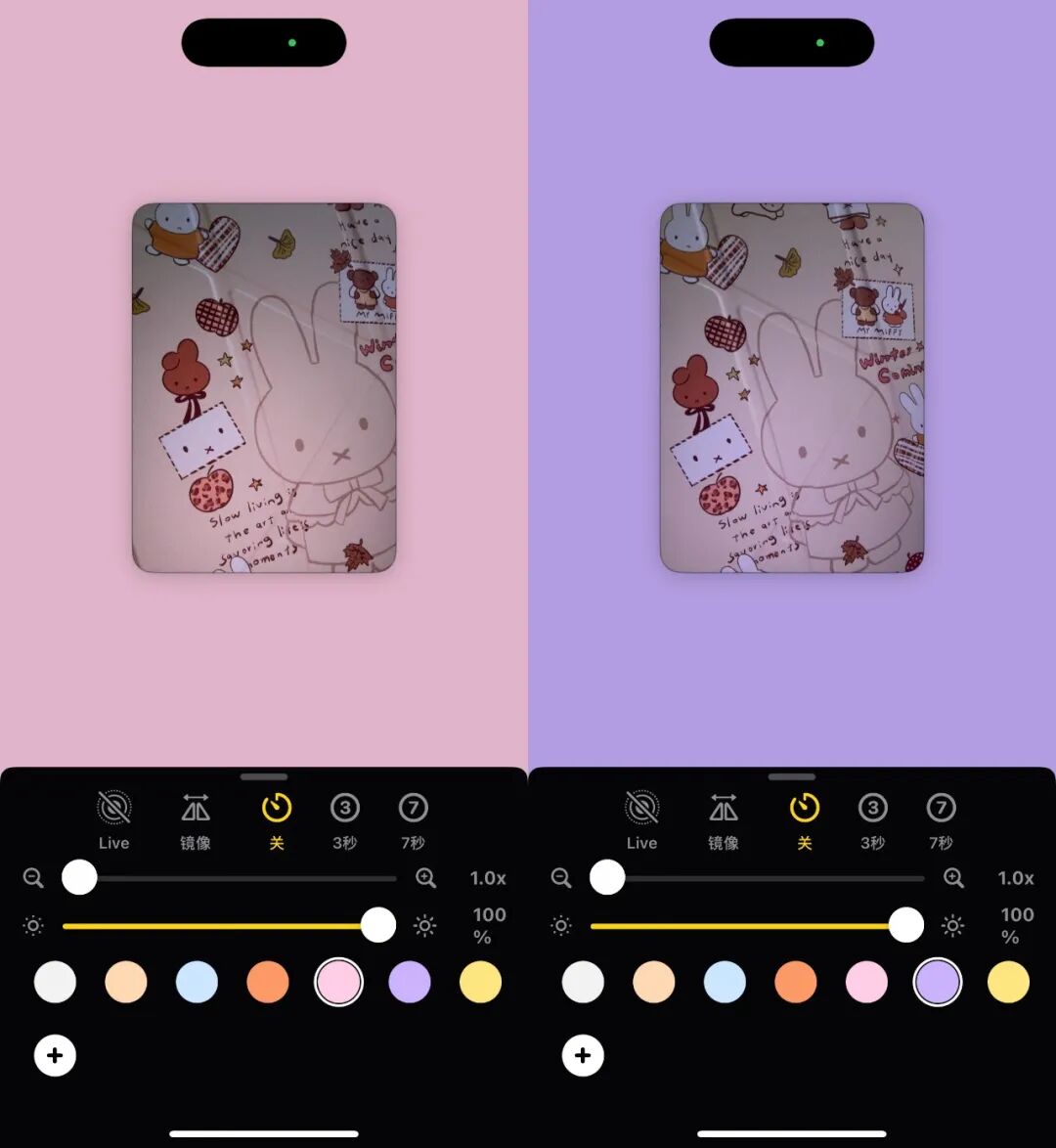
*'Kitten Ring Light' app interface
In fact, AI-native apps created by non-technical entrepreneurs like 'Kitten Ring Light' are now commonplace. This is thanks to AI programming tools drastically lowering software development barriers, enabling individuals to swiftly transform insights into products and continuously optimize them based on user feedback.
In the future, professionals could use AI to develop resume-building tools that instantly match job requirements; students could create error-logging mini-programs for efficient review; e-commerce sellers could leverage AI-generated content plugins for bulk marketing material production...
These future possibilities share a common thread: creators do not get stuck in 'learn-first-then-act' thinking. Instead, they identify a genuine, niche user pain point and then assemble AI tools, open-source components, and cloud services like LEGO bricks to rapidly build functional products. This means those who can faster (faster) detect and satisfy a small but high-frequency need will gain an early advantage in the AI democratization dividend. When coding and system-building are no longer barriers, product success hinges on acute demand perception and deep scenario understanding.
5. Cultural/Creative & Handicraft Design: AI as an All-Round 'Assistant'
How many steps does it take for a cultural and creative designer's idea to become a physical product?
In the past, the answer involved a full team with clear divisions of labor for drawing, prototyping, supply chain management, and promotion. Now, with AI's comprehensive empowerment, individual creators can single-handedly manage the entire process—from inspiration to product launch—with drastically shortened timelines and reduced trial-and-error costs, often completing projects in just days.
In Suzhou, Shen Xingtong, founder of the 'Paper Planet' art studio, once spent four years designing, creating, and publishing the pop-up book *Discovering Chongqing* entirely alone. For her latest project on New York's Chinatown, involving hundreds of residents' mixed Chinese-English interviews, AI served as her most capable research assistant, efficiently organizing, translating, and summarizing information. The entire project took just nine months from inception to completion.
Shen's entrepreneurial practice demonstrates AI's immense value in preliminary research and brand-building. Another traditionally daunting link (stage) for creators—product prototyping and process validation—has also found a solution.
As mentioned in Jingzhe Research Institute's *These Whimsical AI Hardware Innovations Are Reconstructing Daily Life*, the fusion of AI and 3D printing has transformed high-threshold modeling techniques that once took weeks into low-cost creative tools where 'a single sentence generates a physical object.' This has not only spawned a new 'personalized mass production' consumer sector but also made instant creation—from DIY to trendy cultural and creative products—a daily lifestyle for more young people.

The remodeling of the cultural and creative handicraft sector by AI essentially lowers the barriers to entry for entrepreneurship in the industry and redefines the relationship between individuals and the industry. It is worth noting that AI has never replaced the handmade warmth and core creativity of cultural and creative products; instead, it has freed up creators' energy from repetitive tasks such as research, drawing, and prototyping, allowing them to truly dedicate their time to aesthetics and innovation. The cultural and creative handicraft sector has officially entered the era of the "super individual," and with the help of AI, the commercial value of individual creativity has also witnessed unprecedented release.
6. Casual Game Development: Create What You Want to Play Yourself
When it comes to game development, the public's stereotype (fixed impression, replaced with actual English equivalent below) is often the asset-heavy model of traditional large-scale games: positions such as planning, art, programming, testing, operations and maintenance, and marketing are indispensable, requiring teams of dozens or even hundreds of people to collaborate, with development cycles measured in years and upfront investments often reaching millions or even tens of millions.
Shawn Layden, former CEO of Sony Interactive Entertainment, once stated in 2020 that the production cost of a mainstream AAA game at the time was approximately $80 million to $150 million, with development cycles as long as five years. Even for medium-sized commercial games, the situation did not become much easier—teams of dozens of people, budgets in the millions, and development cycles exceeding one year remained the norm. For individual developers, the barriers to traditional game development have always been prohibitively high.
However, when Kingfisher, a post-90s screenwriter with no programming knowledge, became obsessed with the character Haruto Kisaragi in "Prisoner's Palm" and decided to use AI to "handcraft" a doujin otome game for herself and fellow fans, the once-insurmountable barriers began to "crumble."

According to reports from Jinghe, Kingfisher first consulted Gemini on how to get started. Initially, she used Coze to build a simple webpage, but to create an interactive office scene (where items like desk lamps and notebooks could be clicked), she switched to Cursor and used natural language to direct AI to write the code entirely. She was responsible for all the copywriting and story design, sharing the game design responsibilities equally with AI, while delegating 100% of the coding to AI. In just two months, the game was successfully launched.
In fact, Kingfisher's practice is a microcosm of the transformation in the game industry. The current gaming consumer market is rapidly diversifying. Compared to the long cycles and high immersion demands of heavy mobile games, users' fragmented entertainment needs continue to explode, directly driving the comprehensive surge in lightweight casual games and interactive narrative games, with the market size climbing steadily.
The "2026 Douyin Casual Game Industry White Paper" shows that the domestic mini-program game market size reached 53.54 billion yuan in 2025 and is expected to surpass 100 billion yuan by 2027. The research report "AI Reshaping Games: Supply Innovation and Demand Transformation, Initiating a New Cycle in the Game Industry" released by China Post Securities also predicts that the global game AI market size will reach $51.26 billion by 2033, with a compound annual growth rate as high as 36.1%. The market growth and AI penetration are mutually causal, sufficiently proving the strong growth potential of the AI + casual game sector.
Meanwhile, traditional large-scale games are also actively embracing AI technology. For example, titles like "Justice Online" and "Where Winds Meet" have incorporated intelligent AI-generated content and other gameplay elements, further expanding the boundaries of AI applications in the gaming field.

*Intelligent Generation Interface from "Where Winds Meet"
Compared to the asset-heavy and high-barrier nature of the traditional game industry, AI-empowered lightweight casual game development does not fundamentally subvert the core logic of the game industry but lowers the barriers to entry for development, allowing more niche creative ideas to be realized and providing users with more diverse and lightweight entertainment options. In the future, with the continuous iteration of AI tools, single-person developed casual games may become a new force driving growth in the entertainment market.
7. Cross-Border E-Commerce Live Streaming: Trading Manpower for Computing Power
From numerous specific cases of AI-empowered one-person companies, it can be seen that the core logic is to use AI capabilities to supplement the company's human resource gaps. The asset-heavy e-commerce industry, which is highly dependent on manual labor, can also achieve lightweight operations through integration with AI.
By replacing vast amounts of repetitive manual work with AI technology, e-commerce companies can handle product selection planning, content creation, intelligent customer service, precise traffic attraction, and data review in a one-stop manner, completely breaking the limitations of traditional e-commerce's reliance on large teams, heavy capital investment, and low efficiency, transforming e-commerce operations from "labor-intensive" to "computing power-intensive." This lightweight, high-efficiency, and low-cost entrepreneurial model has also become an excellent choice for individuals entering the e-commerce industry.
Wu Bin, a post-90s Tsinghua graduate, shared his practical experience in deeply transforming e-commerce businesses with AI at the 2025 New E-Commerce Summit. The company he founded, Geerui Technology, integrates AI throughout the entire e-commerce marketing process: intelligently generating product promotion copy, one-click replacement of models and scene images, automatic editing of high-quality short videos, and even using digital human anchors for 24/7 live streaming. It is reported that Wu Bin deployed six online stores fully operated by AI, achieving cumulative GMV in the hundreds of millions of yuan, with over 10 million in the first month alone. After implementing an "AI-first" model, the company halved its staff while tripling its revenue.
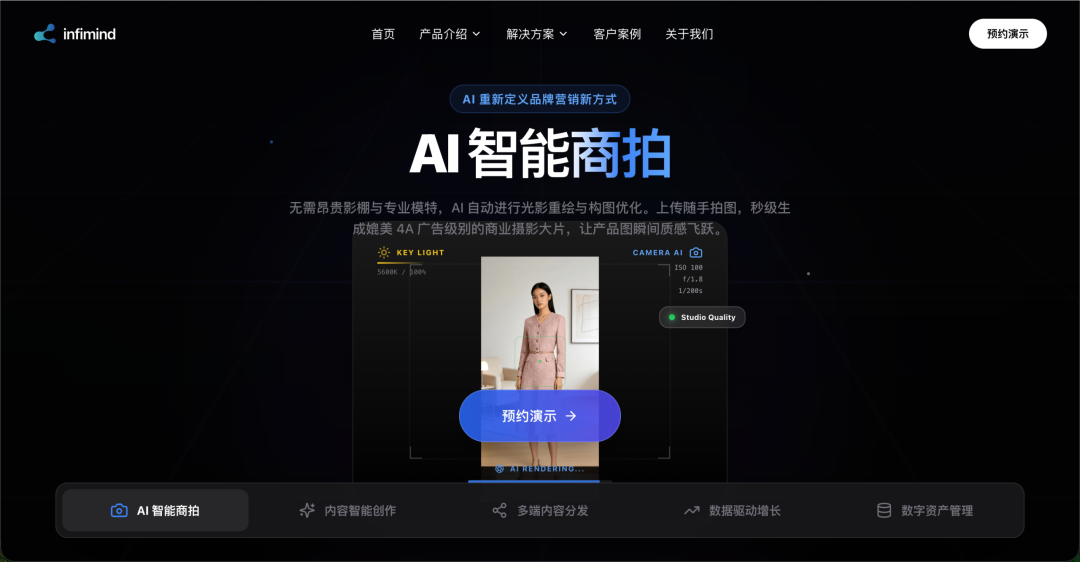
*Geerui Technology Official Website
Not only have tech-driven entrepreneurs achieved results, but frontline small and medium-sized merchants rooted in industrial belts are also leveraging AI to achieve counter-trend breakthroughs. According to CCTV News, facing pressure from foreign trade orders, Yiwu merchant Fu Jiangyan and her husband, who run a sock store with annual sales of up to 20 million pairs, can now simply record basic lip-sync footage and pair it with custom copy generated by DeepSeek to automatically create product introduction videos in 36 languages, including Spanish and Arabic, easily opening up global cross-border sales channels.
Whether it's AI managing six stores or AI selling Yiwu small commodities globally, these real-world cases all point to the same conclusion: AI is no longer a distant technological tool but a core engine directly driving transactions. E-commerce entrepreneurship may no longer require assembling a large professional team. Ordinary people can sell products worldwide by learning to harness and direct AI, identifying high-quality products, and relying on the dividends of computing power.
AI-empowered e-commerce, characterized by light assets, low barriers to entry, and the ability to start with just one person, is opening up entirely new entrepreneurial opportunities for ordinary people. Everyone has the chance to leverage AI to enter the market at low cost and start a business with high efficiency.
Conclusion
Standing at the beginning of 2026, the wave of one-person companies is just getting started.
The comprehensive implementation of AI technology and the continuous iteration of various intelligent tools have truly ushered in the era of super individuals, characterized by light assets and heavy creativity. The imaginative space for one-person companies continues to expand.
In the future, with the continuous evolution of AI agents, the efficiency of digital resource allocation will further improve, and the barriers to entrepreneurship will continue to lower. Perhaps by then, there will no longer be a distinction between workers and bosses, only between those who "use AI" and those who "do not use AI."
*This article is a joint production by Jingzhe Research Institute and 21 Finance · Nanfang Finance Number.
-
![]()
The Allure of 'Acquisition Spree': Li Shufu's Left Turn, Xu Jiayin's Right
-
![]()
Strategic Transformation Yields Results: Phoenix Optics Reports 10.9% YoY Rise in Core Net Profit for H1 2026
-
![]()
Three Key Growth Trajectories Synergize! Crystal-Optech Reports 3.478 Billion Yuan in Revenue for H1 2026
-
![]()
Semi-Annual Report Sparks XPENG Motors Buzz
-
![]()
1.6 Billion Big Order Secured! SeeYA Technology's Revenue Soars by 287.87% in the First Half of the Year
-
![]()
Baidu's Profits Plunge by 68%: Unraveling the Mystery Behind the Numbers
-
![]()
Baidu’s Profits Tumble by 68%! Where Has All the Money Gone?
-
![]()
Hynix’s Taobao Store Shuts Down Abruptly: What Should Customers Do About Warranty Services for Memory Modules?