The Fan Economy: A Lucrative Field, Yet AI Artists Struggle to Gain Fans
 04/30 2026
 657
657
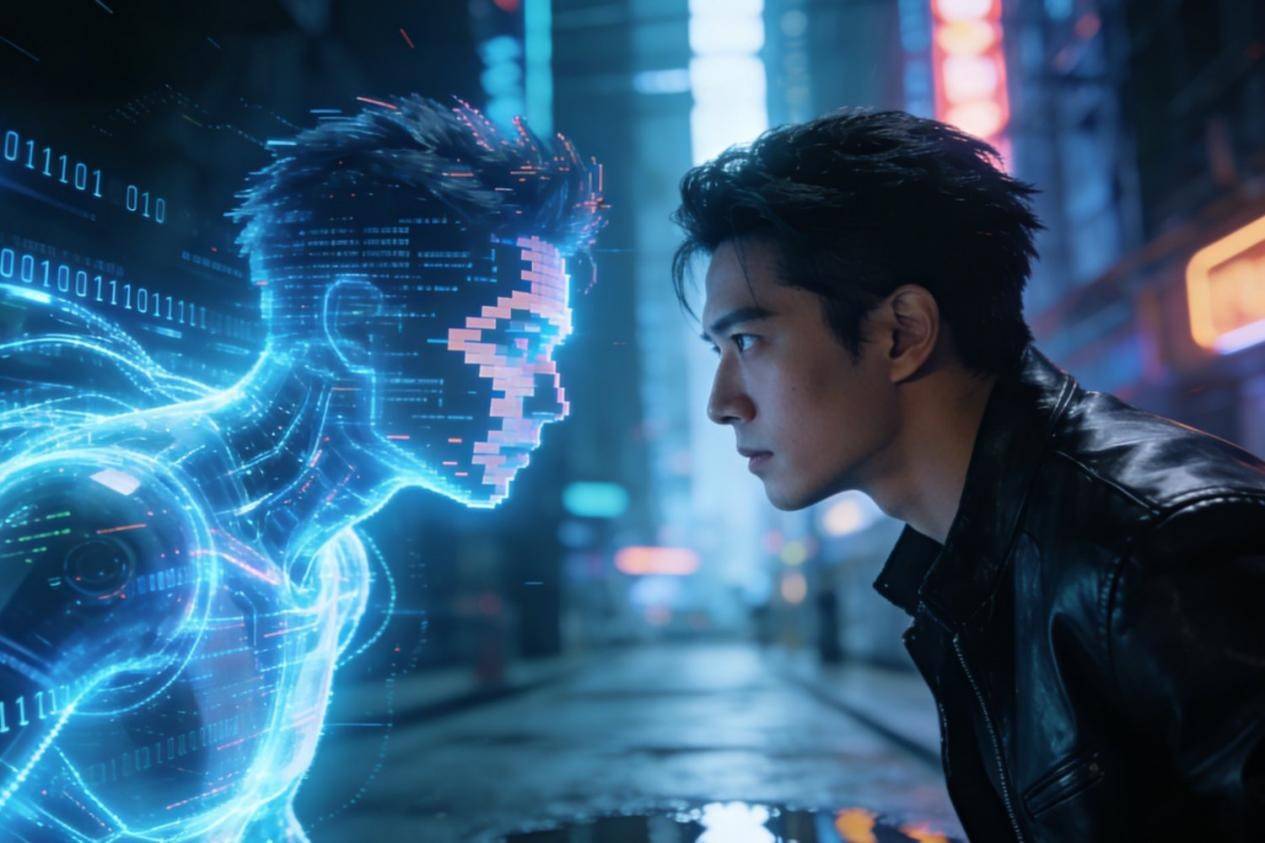
A few days ago, the news that iQIYI was launching an AI artist resource library sent shockwaves through the film and television industry. This move sparked denial from artists, resistance from audiences, and uproar within the sector. A wave of criticism surged toward iQIYI, compelling Gong Yu, the CEO, to issue three Weibo posts in an attempt to explain the situation, but to no avail. A new narrative was just beginning to unfold, but it may now fizzle out before it truly blossoms.
The repercussions of this incident have yet to fully subside, and NetEase has also encountered a backlash over AI. On April 23, during the annual anniversary celebration of its game Identity V, a significant number of players expressed their boycott against NetEase games, agreeing to refrain from spending on that day. The reason? Many players had noticed obvious AI traces in the anniversary video and paid skin images, such as a character depicted with only four fingers.
Rewinding to last month, a similar incident occurred. Film and television company Yaok Media officially announced the signing of two AI digital artists, Qin Lingyue and Lin Xiyan. Not only did they create social media accounts for these AI artists, but they also arranged for them to star in AIGC-driven series.
These three events essentially highlight a single issue: the transformation and anxiety brought about by AI's "intrusion" into the traditional film and television entertainment industry. While the current fierce audience reactions clearly indicate opposition to AI content, this seems unable to deter film and television companies and platforms from their intense desire to cut costs. However, in their pursuit of profits through cost reduction and efficiency gains, they may have overlooked a crucial point: AI artists are not "expanding" the fan economy but may instead be "eroding" it.
This could make it difficult for companies and platforms to continue profiting from fans within the traditional film and television industry chain.
Fans Are Unwilling to Pay for AI Artists
After the cautionary tale of Yaok Media, why did iQIYI still choose to defy public opinion and actively test the waters with AI artists?
This decision is naturally driven by financial considerations. A long-form drama starring a top-tier actor can easily involve investments of hundreds of millions of yuan and production cycles spanning half a year or even a full year. In contrast, AI-led production could potentially halve costs or reduce them even further, leaving significant profit margins for platforms and potentially helping long-form video escape the industry's high-cost dilemma.
Taking short dramas as a reference, the head of Yaok's AIGC Lab revealed in an interview that the production cost of the AI short drama Mysteries of the Qinling Bronzes was just 10%-20% of that of live-action productions, with a production cycle of only two months. For a live-action short drama of the same scale, budgets typically hover around 2 million yuan, with production cycles exceeding three months. With reduced costs and improved efficiency, production volumes are expected to surge, ushering in a new era of "content explosion."
However, given the current public opposition to AI content, especially AI artists entering traditional film and television production, a pressing question arises: Will audiences pay for non-human-performed AI long-form dramas?

The majority answer is no, with many even categorically rejecting all AI-driven series. According to a Sina Weibo survey, over 90% of viewers refuse to watch series entirely generated by AI. The reason is simple: AI performances, no matter how polished, lack genuine emotions. Stiff movements and expressions fail to convey a character's complex psychology or evoke emotional resonance between actors and audiences. Without resonance, even the best stories fail to move viewers.
Fans may also be unwilling to pay for AI representations of their favorite artists. "If he licenses his image to iQIYI, he's no longer an actor in my eyes—the drama isn't even performed by him," stated a fan who became a supporter of the male lead through a particular drama. Another fan echoed, "I only like spending money on real people because I invest emotions. But if I know it's AI-performed, my subconscious tells me it's fake, so I see no need to invest emotions or spend money."
Whether for AI artists, AI game characters, or AI applications and services, it's evident that users' willingness to pay is low. This isn't solely because current AI-generated content lacks sophistication but more critically due to the public's persistent resistance or restraint toward AI.
This attitude stems from anxiety over AI's encroachment into various industries, replacing or eliminating numerous jobs, and from fear of blurring the lines between the real and the fake. In the film and television industry, as AI's involvement grows—from production participation to full AI artist performances—the human-driven work along the industry chain diminishes, ultimately yielding results that lack human creativity and authenticity.
Imagining further, if the world is no longer built on reality but woven from layers of "fakeness," will we one day struggle to distinguish truth from falsehood?
Of course, this is mere speculation, but such reasonable doubts will lead users to tighten their wallets and refuse to pay for AI content. Consequently, while iQIYI may reduce production costs, it may fail to persuade audiences to willingly purchase memberships.
AI Artists: Undermining the Core of the Fan Economy?
As the internet entered the era of traffic, the film and television entertainment industry spawned new business models, particularly the fan economy. From the "Four Returnees" to Cai Xukun and now countless idol stars, China's vast market seems to have an insatiable appetite for traffic stars, driving the fan economy to create unprecedented prosperity in film and television entertainment and unleash immense commercial value.
However, regardless of how "uneven" the stars produced may be, they at least provide emotional anchors and collective resonance for fans. This emotional connection arises from a character, a persona, or a certain charm, presenting outwardly as vivid, attractive stars.
But when AI artists replace humans in performances or variety shows, this "sense of liveliness" diminishes. Not only do roles fail to enhance a star's charm, but more critically, stars lack a complete growth trajectory, leaving fans with little sense of their development and change, greatly reducing participation and genuine emotional investment.
Moreover, the idea of feeding one's image to AI and collecting money from home is unacceptable not just to audiences but to most fans as well.
Thus, if AI artists disrupt the emotional bond between stars and fans, "harvesting" fans along the longer commercial chain becomes difficult. Referencing Hollywood studios, the most profitable areas lie beyond film production and broadcasting—in copyright, licensing, merchandise, and the hidden interests behind fan economy behaviors like data ranking and fundraising support.
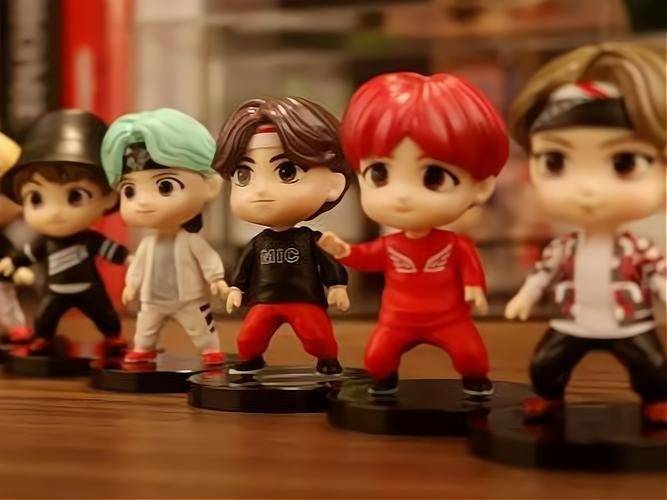
Long-form video platforms like iQIYI have long strived to extract greater value from hit IPs, stimulating fans to spend on stars or their works.
Judging by iQIYI's product offerings, it has long diversified, leveraging its main products to create vertically segmented offerings. For instance, it capitalized on the star power generated by dramas to launch iQIYI Paopao and, amid the popularity of novels and web series IPs, developed same-name mobile games while expanding into merchandise. Last year, iQIYI disclosed its IP consumer goods performance for the first time: in the first half of the year, its self-operated film and television trading card business surpassed 100 million yuan in GMV, with card sales for Huai Shui Zhu Ting and Lin Jiang Xian reaching record highs.
The most significant innovation of long-form video platforms lies in successfully exploring a star-making path through talent shows, propelling them further upstream in the fan economy. However, the frenzy of the traffic game ultimately undermined the platforms' ambitious star-making aspirations.
It's understandable for platforms to bet on the fan economy, but trying to reduce costs through AI artists while still seeking greater monetization from fans may not be feasible. The existence of AI artists inherently dilutes the meaning of stardom.
Is Technological Cost Reduction a False Proposition?
As public anti-AI sentiment vents toward iQIYI, many realize that AI's entry into the traditional film and television industry may be unstoppable. Industry winters and prolonged cost dilemmas make platforms unwilling to abandon AI content experiments, especially since AI's value in reducing production costs is already recognized.
However, is producing AI content through artist licensing and AI series creation truly a lucrative venture?
We must not overlook the additional costs of AI content production compared to traditional filmmaking. For instance, computing power and new labor costs—from generating facial images to lip-syncing, expression driving, and video rendering—increase with more AI training, making computing power the largest cost source for AI content production, and one that fluctuates.
Taking AI short dramas as a reference, reports indicate that after AI technology's deep integration into short drama production, the industry's cost structure has shifted significantly, with token consumption accounting for 50% of costs at some AI short drama production companies. Meanwhile, AI computing power prices continue to rise, with per-minute computing costs soaring from 300 yuan at the year's start to 800-1,000 yuan. For an 80-episode short drama, computing expenses alone exceed 100,000 yuan.
Regardless of whether dramas feature human actors, content quality remains paramount, and maintaining high standards means greater computing power consumption.
Of course, the combined costs of computing power and labor still fall far short of traditional film and television production investments. However, another issue arises: when AI long/short dramas achieve efficiency upgrades driven by technology, the content industry may enter a new "big bang" era. If content supply grows exponentially, will the cost of promoting AI long/short dramas to stand out also surge?
"We invested 500,000 yuan last month, but the success rate was only 0.8%, not even recovering a fraction of the costs," revealed the head of an AI drama studio in Hangzhou. By late 2025, their team's success rate hovered around 5%, with one hit covering the costs of ten flops. But since the year's start, fierce competition among peers, homogenized promotional materials, and audience fatigue have caused success rates to plummet.
This poses difficulties not just for creators but also for platforms. For long-form video platforms, the presence and quantity of hits underpin their paid business model, yet with content supply surging, the odds of creating hits diminish.
"AI is never free—high-quality content burns even more money," stated an industry insider.
iQIYI's recklessness and aggression in establishing an AI artist resource library may stem from a misjudgment of public acceptance, but the more plausible reason is the decline of long-form video, compelling it to seek new paths. The commercial narrative of AI artists may seem appealing but could prove superficial.
-
![]()
The Allure of 'Acquisition Spree': Li Shufu's Left Turn, Xu Jiayin's Right
-
![]()
Strategic Transformation Yields Results: Phoenix Optics Reports 10.9% YoY Rise in Core Net Profit for H1 2026
-
![]()
Three Key Growth Trajectories Synergize! Crystal-Optech Reports 3.478 Billion Yuan in Revenue for H1 2026
-
![]()
Semi-Annual Report Sparks XPENG Motors Buzz
-
![]()
1.6 Billion Big Order Secured! SeeYA Technology's Revenue Soars by 287.87% in the First Half of the Year
-
![]()
Baidu's Profits Plunge by 68%: Unraveling the Mystery Behind the Numbers
-
![]()
Baidu’s Profits Tumble by 68%! Where Has All the Money Gone?
-
![]()
Hynix’s Taobao Store Shuts Down Abruptly: What Should Customers Do About Warranty Services for Memory Modules?