China's Optical Fiber Boom
 04/30 2026
 614
614
If you don't buy today, you'll pay more tomorrow.
By Hua Shang Tao Lue, Da Nan
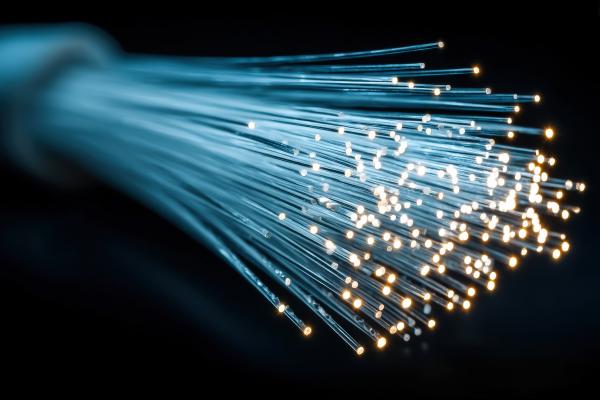
In 2024, the world faced a chip shortage; in 2025, it was transformers; in 2026, optical fiber has become the new scarce commodity.
Since the beginning of this year, the price of optical fiber has been rising almost daily.
The price of G.657.A1 bare fiber in the U.S. has surged by 69% since January; the same type in Europe has skyrocketed by 130% in two months; while domestic G.657.A2 fiber, which cost 32 yuan per core-kilometer last year, has now soared to 240 yuan, nearly an eightfold increase.
Tech giants saw this trend coming early. Microsoft previously announced plans to deploy 15,000 kilometers of hollow-core fiber within two years, while Meta invested a staggering $6 billion just to secure sufficient supply ahead of competitors.
This is only the beginning. According to CRU projections, global demand for optical fiber will surge to 880 million core-kilometers by 2027, a 35.4% increase from 2025. The supply-demand imbalance shows no signs of easing in the short term.
Chinese manufacturers, as the absolute main force in global optical fiber production with over 60% market share, are operating at full capacity to meet this surge in both volume and price.
【01 Booming Orders】
“The optical fiber we produce daily could circle the Earth four times.”
This is the daily output of the “Lighthouse Factory” under Suzhou Hengtong Optic-Electric, the world's largest single optical fiber production base. Yet even with such massive production, it barely makes a dent in the soaring global demand.
According to company officials, current orders are already booked through the first quarter of 2027, with overseas sales growing by over 55%.
Seven hundred kilometers away in Wuhan, FiberHome is also experiencing a boom. The company recently won a bid for Ningxia's hollow-core cable procurement project at the end of last year and has now secured a 500 million yuan ($70 million) intelligent computing contract from China Mobile.
Despite running production lines 24/7 at full capacity, order fulfillment has been pushed back by three months.
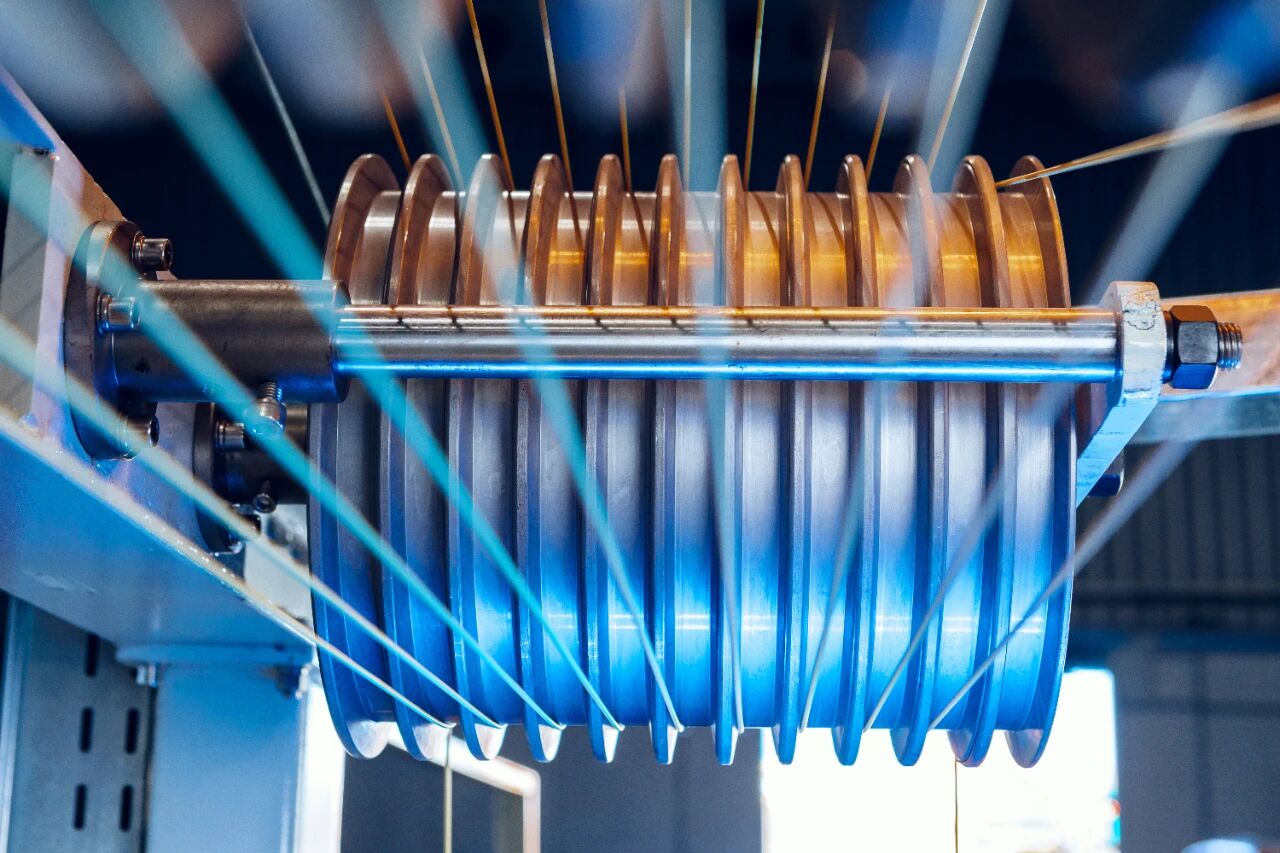
Industry norms are being rewritten as a result.
“We used to ship first and get paid later,” said one manufacturer. “Now customers pay upfront and wait for delivery to ensure supply. Sales are guaranteed!”
At the peak, quotes were only valid for the day because prices would rise again the next day.
Market demand for optical fiber seems bottomless, with production capacity being locked in before products are even manufactured. Export data shows that in February alone this year, China's optical fiber exports reached 790 million yuan, a 126.8% year-on-year surge.
Another telling statistic: according to Qichacha, 7,607 new optical fiber-related companies were registered nationwide from the start of this year through April 20.
Established manufacturers are accelerating expansion while new entrants are rushing in. Clearly, Chinese companies are seizing this opportunity with full force, making capacity expansion the industry's top priority.
Why has optical fiber suddenly become so sought after?
The main reason is the global boom in AI computing center construction. These supercomputers for artificial intelligence need to process massive amounts of data instantaneously, demanding extremely high transmission speeds and efficiency where every millisecond counts.
This is where optical communication technology shines: fast transmission, low power consumption, and suitability for long-distance communication. Consequently, key components and technologies like optical chips, optical modules, and CPO have become hot targets for tech giants.
As the “blood vessels” connecting all computing nodes, optical fiber is crucial. Demand is enormous—an AI data center equipped with tens of thousands of high-performance computing cards requires 5 to 10 times more optical fiber than traditional data centers, totaling tens of thousands of core-kilometers.
Thus, the supply shortage intensifies. In 2025, global data center demand for optical fiber and cable surged by 75.9% year-on-year to 69.6 million core-kilometers. This year, the figure is expected to exceed 100 million core-kilometers, maintaining strong growth momentum.
Beyond AI, global 5G network construction adds fuel to the fire, requiring massive amounts of optical fiber for high-speed transmission. Meanwhile, military drones are also driving up demand. Multiple factors are combining to push global optical fiber demand into a outbreak period (boom phase).
While demand soars, capacity expansion lags behind.
The core raw material for optical fiber is the optical fiber preform, from which fiber is drawn. However, expanding preform production typically takes 18-24 months—far too slow for today's red-hot market.
With demand exploding on one side and supply responding sluggishly on the other, a global scramble was inevitable.
Under these circumstances, global buyers are all looking in the same direction—toward “China's Dream Team,” which controls 60% of global optical fiber capacity.
【02 China's Dream Team】
Among the world's top ten optical fiber companies, China holds four spots: YOFC, Hengtong Optic-Electric, Zhongtian Technology, and FiberHome. They are often dubbed the “Four Greats of Optical Fiber.”
The largest and most established among them is YOFC.
It is the only company worldwide that has mastered and commercialized all three mainstream preform preparation technologies: PCVD, VAD, and OVD.
According to CRU data, since 2016, YOFC has ranked first globally for nine consecutive years in preform, fiber, and cable market share.
Founded in 1988 as a joint venture between the former Ministry of Posts and Telecommunications, the Wuhan municipal government, and Philips of the Netherlands, YOFC is one of China's earliest optical fiber and cable manufacturers.
Named “Changfei” (Long Fly), the ambition was to become a “Philips by the Yangtze River,” initially following a “market-for-technology” strategy.
In 1992, YOFC successfully produced China's first commercial optical fiber, but only with Philips' technical support. At the time, foreign companies tightly controlled core technologies—even screws had to be imported.
Chafing under these restrictions, YOFC decided to pursue independent R&D. In 1997, it domestically developed G.655 single-mode fiber technology, becoming only the third company globally (after Corning and Lucent) to master this technology—which even Philips had not yet achieved.
When an international giant proposed collaboration on condition that YOFC halt its single-mode fiber R&D, then-chairman Zhou Changyong rejected the offer. Instead, he led his team to overcome the technical hurdle within eight months.
This experience of breaking through under extreme pressure made YOFC realize that technology cannot be acquired through markets. In 2000, the company established an R&D department and has since consistently invested over 5% of annual revenue into R&D without upper limits.
The results of this sustained investment are evident in its operating performance. Since starting production in 1992, YOFC has remained profitable for 33 consecutive years. Even during the industry downturn in the first half of 2019, when average cable prices fell by about 40% year-on-year and peers incurred losses, YOFC still maintained a net profit of 437 million yuan.
According to financial reports, YOFC achieved 14.252 billion yuan in revenue in 2025, up 16.85% year-on-year, with net profit reaching 814 million yuan, a 20.4% increase.
On April 2, 2026, YOFC's stock price surged, making it Hubei's first company with a market capitalization exceeding 200 billion yuan.
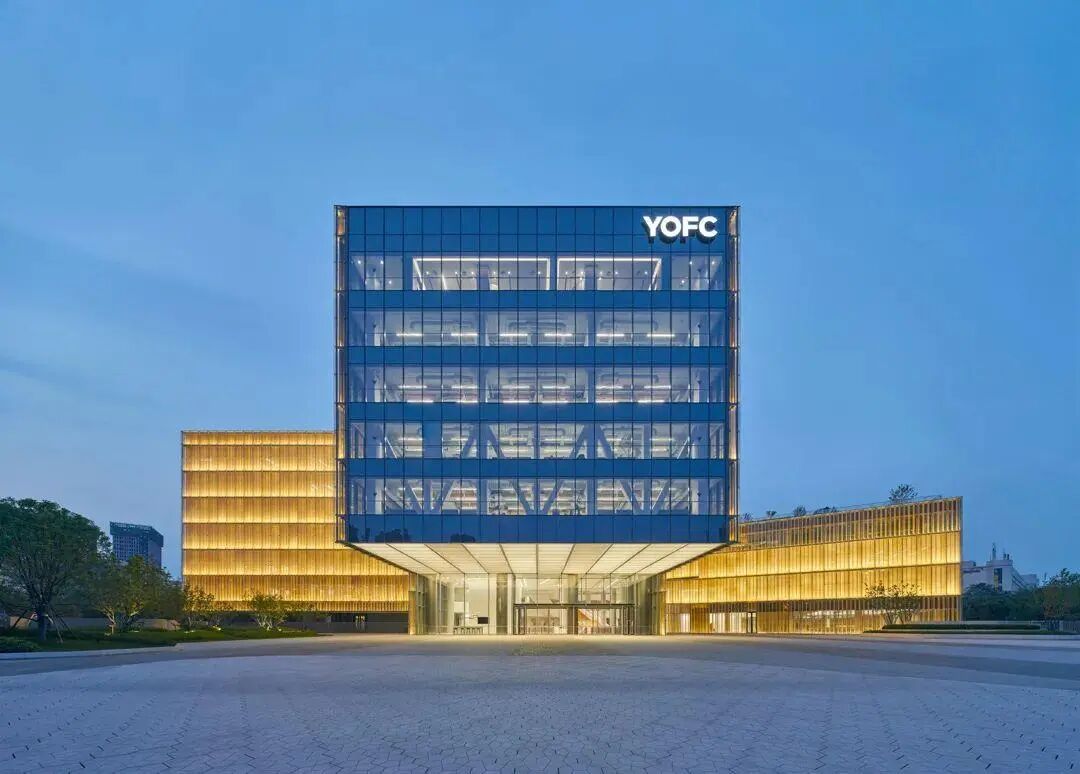
▲ YOFC Industrial Building, Source: Convergence in the Yangtze River Delta
Another standout performer is Hengtong Optic-Electric.
As a private enterprise, Hengtong ranks among the top three globally in both optical fiber communications and high-voltage submarine cables.
But in 1991, Hengtong was just an agricultural machinery factory burdened with 1.2 million yuan in debt and on the verge of collapse. After Cui Genliang, a demobilized soldier, took over, he decided to pivot to the telecommunications industry.
In 1992, Cui established a joint venture with Wuhan Post & Telecommunications Science Institute and produced the first qualified optical cable in eastern China.
With its cable business thriving by 2006, Cui decided to invest 600 million yuan in independent R&D for optical fiber preforms. Though this amount was ten times the company's current profits that year, Cui firmly believed in the future of optical fibers and pressed ahead. His mantra has always been:
“If you don't innovate today, you'll fall behind tomorrow and become obsolete the day after.”
In 2010, Hengtong successfully developed China's first domestically produced optical preform, eliminating dependence on imports.
After 2019, Hengtong acquired a 51% stake in Huawei Marine, Germany's j-fiber, and controlled Indonesia's Voksel, completing its marine communications value chain and strengthening its global presence.
By October 28, 2025, Hengtong had secured over 20 billion yuan in energy interconnection orders for submarine and terrestrial cables, along with 7 billion yuan in marine communications contracts.
In the same year that Hengtong produced eastern China's first optical cable, Cui's fellow Jiangsu native Xue Jiping was leading a struggling brick factory in Rugao, Jiangsu, toward transformation into the cable industry. That brick factory became Zhongtian Technology.
In its early days, Zhongtian built its reputation on specialty optical cables, with the slogan “For specialty optical cables, choose Zhongtian” resonating in the industry.
While competitors flocked to specialty cables, Zhongtian ventured into submarine cables, developing deep-sea ROV (remotely operated vehicle) armored cable technology that filled a domestic gap. When rivals followed into submarine cables, Zhongtian pivoted again to new energy, entering photovoltaics, wind power, and energy storage.
The company excels at cultivating second and third growth curves, resulting in a more diversified business structure compared to its “Four Greats” peers.
By October 24, 2025, Zhongtian had about 31.8 billion yuan in energy interconnection orders, including 13.1 billion yuan for marine projects, 16.2 billion yuan for power grid construction, and 2.5 billion yuan for new energy. Its market capitalization also surpassed 110 billion yuan in April 2026, reaching an all-time high.
Among the “Four Greats,” FiberHome, founded in 1999, is the youngest but boasts the strongest backing as a listed company under China Information Communication Technologies Group (CICT), a central state-owned enterprise.
Unlike the other three companies, FiberHome not only produces optical fibers, preforms, and cables but also masters full-chain optical communication system technologies. It is the only company globally integrating “optical communication systems, optical fiber and cable, and optoelectronic devices”—three strategic technologies.
This vertical integration capability, from “sand to systems,” is unique among the top four. It means FiberHome doesn't just manufacture optical fibers but can also provide complete communication network solutions.
Moreover, as part of the “national team,” FiberHome directly undertakes major scientific research projects in national infrastructure programs like “East Data West Computing” and “West-East Electricity Transmission.” It serves as a designated supplier for ultra-high-voltage transmission communications, defense communications, and other fields critical to national strategic security.
Led by the “Four Greats,” China now has over 200,000 optical fiber-related companies contributing more than 60% of global production capacity.
Today, a stroll through Wuhan's Optics Valley or Suzhou Industrial Park reveals clusters of optical communication companies forming massive industrial ecosystems—China's formidable “Optical Communication Dream Team.”

▲ Wuhan Optics Valley Future Tech City
【03 The Final Summit】
While Chinese companies have conquered the peak of optical fiber production capacity, one final mountain remains: the high-end market.
At this summit stand many century-old enterprises from the U.S., Japan, and Europe.
Corning, founded in 1851 and operating continuously for 175 years, produced the famous Gorilla Glass selected by Steve Jobs as iPhone's primary glass panel.
Corning is also a global leader in the optical fiber industry.
Fifty-six years ago, when the world knew nothing about optical fibers, three Corning scientists developed the first low-loss optical fiber meeting practical requirements, inaugurating the era of fiber-optic communications.
Since then, Corning has consistently invested 6-7% of annual sales into R&D.
This long-term commitment to original technology has established its formidable technical advantage in the high-end optical fiber market, making it the preferred partner for Microsoft, NVIDIA, Google, and other tech giants. In early 2026, Meta's $6 billion optical fiber order went to Corning.
By focusing on high-end markets, Corning achieves superior profit margins.
In 2025, Corning's optical communications segment reported $6.274 billion in revenue and $1.048 billion in net profit, yielding a 16.7% net margin—significantly higher than China's leading optical fiber companies.
Amid the global optical fiber shortage, Corning's market value soared past $140 billion in April 2026, ranking first among optical fiber companies worldwide. Fortune magazine lauded it as “America's national treasure-level tech R&D giant.”
Besides Corning, Japanese companies also wield significant strength in the optical fiber industry. Once, about 60% of China's optical fiber preforms were imported, with 80% coming from Japan.
Established in 1897 (Sumitomo Electric), 1884 (Furukawa Electric), and 1885 (Fujikura), these Japanese companies possess unique advantages in high-end optical fiber processes and core technologies.
Additionally, Italy's Prysmian, founded in 1872, dominates the submarine cable sector, setting an industry record with its 2,150-meter deep-sea cable installation project.
These U.S., Japanese, and European companies are all century-old enterprises that have weathered long industry cycles and accumulated vast patent portfolios. Corning alone holds about 11,400 active patents.
Through processes, patents, and standards, these pioneers have constructed invisible barriers.
As latecomers, Chinese companies must either pay exorbitant licensing fees or invest time in developing alternative technologies, with each breakthrough coming at great cost.
However, Chinese companies have already begun scaling this final peak.
At the 2026 Mobile World Congress, YOFC unveiled the world's lowest-loss 0.04dB/km hollow-core fiber, reducing latency by 31% and increasing transmission speed by 47% compared to traditional fibers—achieving global best-in-class performance.
Manufacturing preforms for such hollow-core fibers requires micrometer-scale air channels, making the process extremely complex. For global tech giants, hollow-core fibers offer unparalleled transmission speeds and low loss, making them ideal for AI data centers.
In this brand-new track, Chinese companies have undoubtedly reached the forefront.
In addition, Chinese companies are also making continuous progress in fields such as G.654.E, multi-core optical fibers, and high-quality multi-mode optical fibers.
To some extent, Chinese companies have only one rival: time.
If we go back more than 50 years, China's optical fiber industry was still in its difficult early stages.
At that time, every single optical fiber in China relied on overseas technology. This thin 'strand of hair' had firmly choked China.
In 1973, Zhao Zisen, then an engineer at Factory 528 of the Ministry of Posts and Telecommunications, was the first to propose that China should develop optical fiber communication projects. Most experts, from the Ministry of Posts and Telecommunications to the Wuhan Institute, thought this was a fantasy because transmitting signals through glass fibers was a complete technical blank, with risks too great for anyone to bear.
However, after learning that the United States had already initiated research on optical fiber communications, Zhao Zisen predicted that this would be a revolution, and China absolutely could not miss this technological wave.
"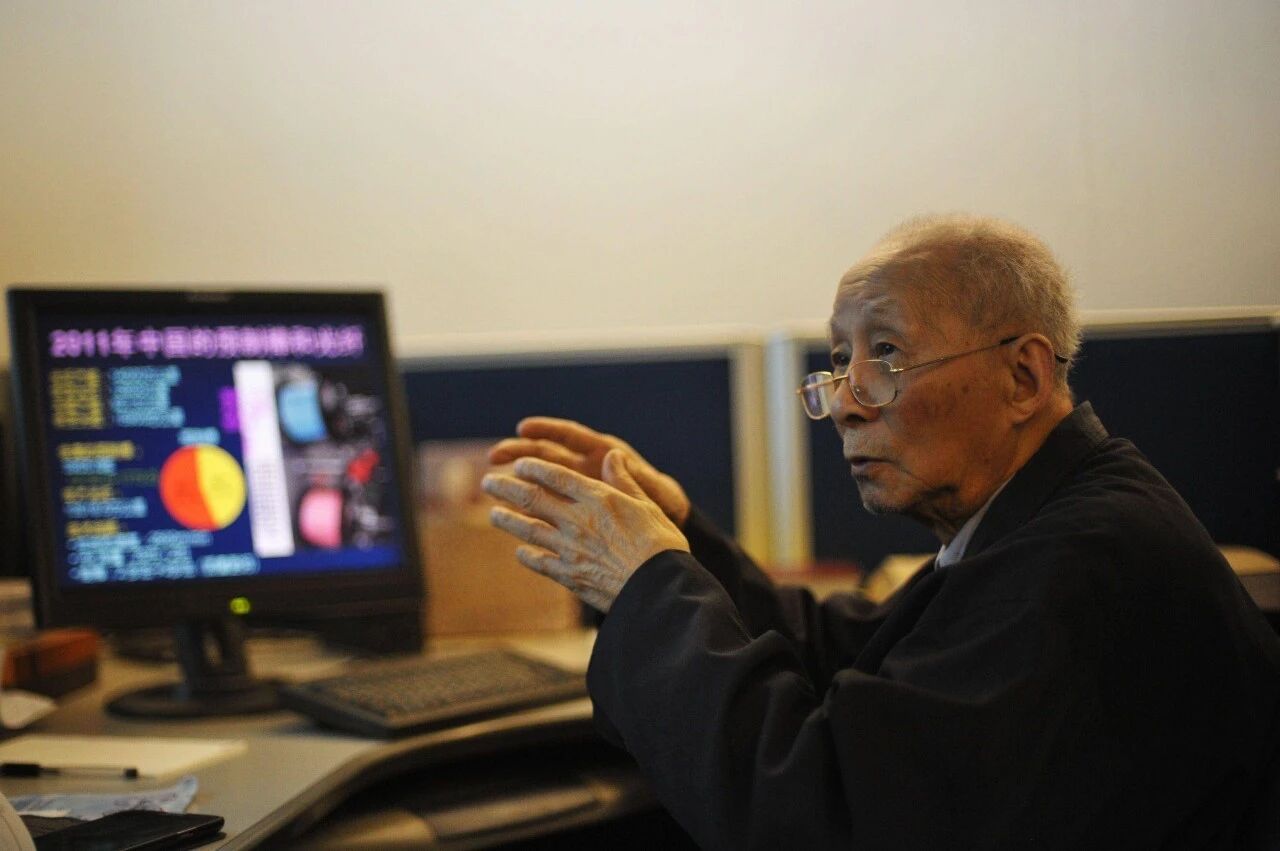
▲Academician Zhao Zisen, 'the Father of Optical Fiber in China.' Image source: Wuhan Release
Without a professional laboratory, Zhao Zisen's team purified quartz glass using self-made equipment in the cleaning room next to the unit's restroom.
When encountering high-risk operations, he always stood at the forefront, shielding his younger colleagues. Once, there was an accidental leakage of silicon tetrachloride, and Zhao Zisen fell unconscious on the spot, with his eyes swollen shut. Due to a lack of understanding of chemicals, the doctors were at a loss. Upon waking up, he calmly and skillfully guided the doctors on how to treat him.
After just two hours of rest, he ignored others' advice and rushed back into the laboratory to continue his research.
Through countless such acts of perseverance, in March 1976, China's first practical quartz optical fiber was finally born.
Starting from here, step by step, China's optical fiber communication technology gradually moved from experimentation to engineering applications, and today, it is exported to countries around the globe.
Fifty years have passed, with products changing, technologies evolving, and the scale of companies growing. The only constant is the spirit of perseverance among generations of Chinese optical fiber professionals, climbing one mountain after another.
One day, the Chinese will reach the pinnacle of the global optical fiber industry, transitioning from production leaders to global benchmarks.
【References】
[1] 'Securing the Top Spot in the Global Optical Fiber Industry: Yangtze Optical Fibre and Cable (YOFC) Takes on 5G with "Optical Connectivity for All"' Shanghai Securities News
[2] 'Beyond Optical Fibers, Above the Strings: Zhao Zisen' Museum of Chinese Scientists
——END——
Welcome to follow [Huashang Taolue] to learn about influential figures and read legendary strategies.
All rights reserved. Unauthorized reproduction is prohibited.
Some images are sourced from the internet.
If infringement is involved, please contact us for deletion.
-
![]()
Can Domestic Autos Still Hold Their Own Against Joint Venture Brands?
-
![]()
Domestic Cars Priced Above 300,000 Yuan Are Gaining Ground in Chengdu
-
![]()
BBA Takes a Leap of Faith: No Sales, No Tomorrow
-
![]()
Chengdu Unfaded: BYD and Geely Vie for Championship While the Weak Exit
-
![]()
3X Salary Poaching, 40 Executives Depart: Autonomous Driving Talent is Batch-Producing Embodied AI Leaders
-
![]()
Apple’s Foldable iPhone and Huawei’s Straightened Pura X: Two Paths, One Vision
-
![]()
Dong Yuhui Departs with Traffic, Yet East Buy Crafts a Profit-Generating Engine
-
![]()
Did Alibaba Say AI Investments Would Pay Off in Three Years, Then Turn Around and Ask Shareholders for HK$80 Billion to 'Tide Over'?