Robot Sales Skyrocket, But Restricted to Adults: Is Romance the Answer in the Modern Age?
 06/18 2026
 565
565
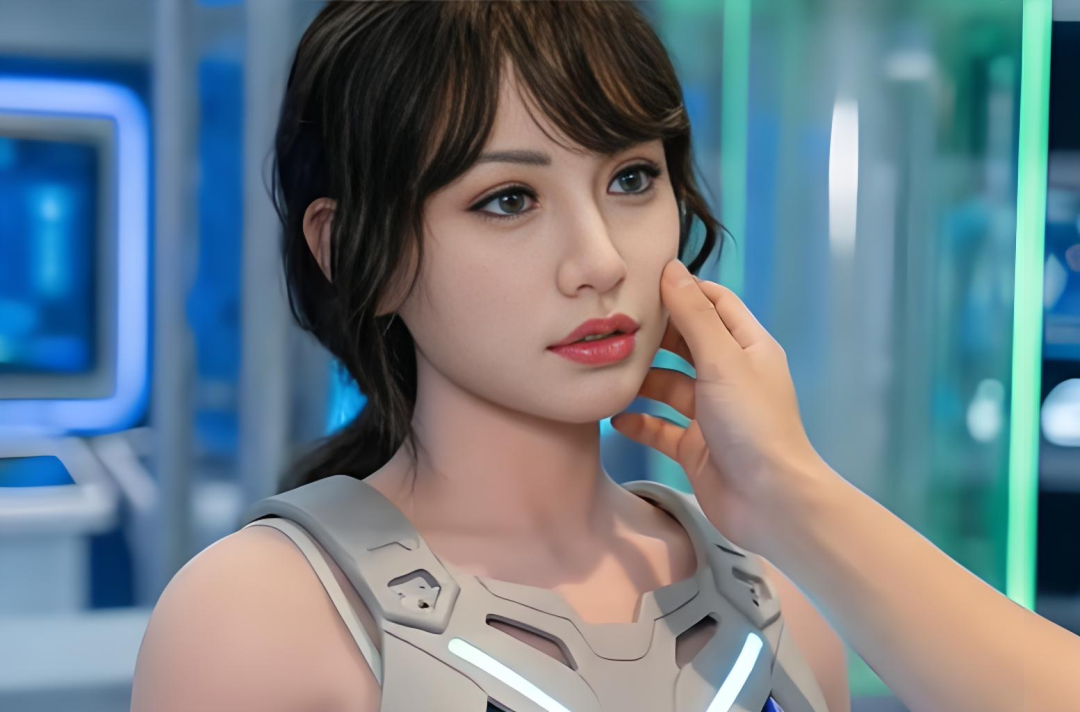
Reserve Your Cyber Companion Now!
'Give me the stock code, I’m all in on this!' 'Breaking into the otome game market, no price too high!' 'Teacher, can I please have this?'
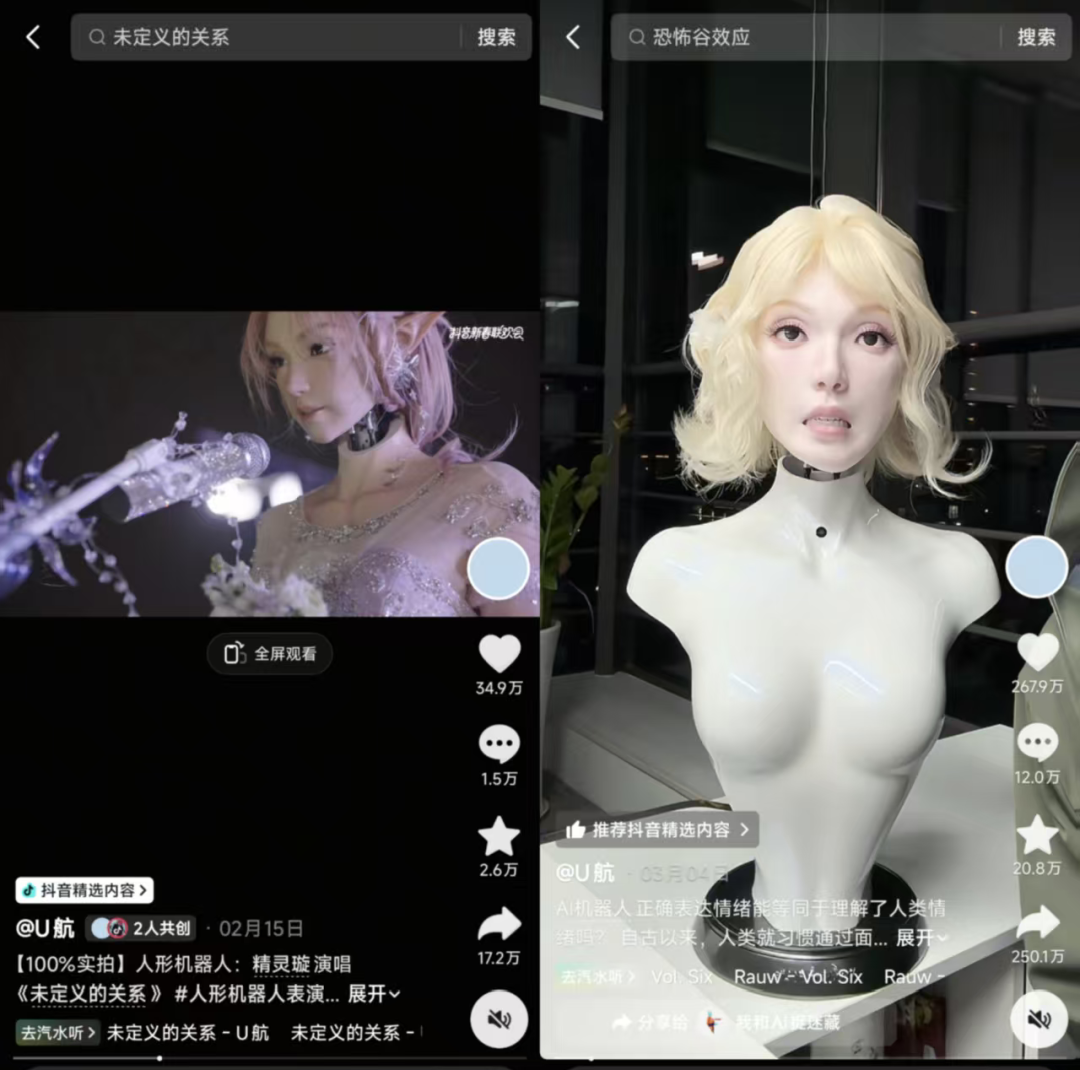
These comments frequently populate the popular posts on blogger 'U Hang's' Douyin account.
Starting in May 2025, as an AI robotics Ph.D., he began showcasing his company's newly developed bionic faces on his account. These faces have evolved from cold and static to vibrant and dynamic, featuring various character settings, and have garnered over 2 million enthusiastic followers eagerly awaiting updates.
In early June, UBTECH unveiled its first full-sized hyper-bionic humanoid robot, the U1 series, with pre-sales on JD.com. Within just 8 days, 3,000 units were reserved, amassing 9 million yuan in deposits.
The primary allure? Handsome and robust male robots, youthful and charming female robots, labeled 'for adult use only,' with support for appearance customization and IP collaborations, have resonated deeply with consumers' desires for 'robot companions.'

As robots become increasingly lifelike, is human-robot romance on the horizon?
01 A More Advanced 'Humanoid Doll'?
The booming pre-sale of the U1 series is largely fueled by marketing and imagination, signaling to the public that humanoid robots could transition from B2B industrial applications to the C2C consumer market.
Previously, the narrative around humanoid robots centered on 'factory work': handling, quality inspection, and sorting. UBTECH's Walker series has already taken on repetitive tasks in factories like BYD, Dongfeng Liuzhou Motor, and Foxconn.
In 2025, the company's total revenue soared to 2.001 billion yuan, a 53.3% year-on-year increase, with full-sized embodied intelligent humanoid robots contributing 821 million yuan, a staggering 2203.7% year-on-year increase, accounting for roughly 41% of revenue, with 1,079 units sold annually. A pre-sale product targeting the C2C market has already surpassed its annual B2B sales in short-term reservations, reflecting consumer anticipation for humanoid robots.
In the official demo video, apart from blinking, eye, and head movements, the robot hasn't demonstrated richer facial expressions or body language. Many netizens note its somewhat stiff responses, unnatural emotional transitions, and limited intelligence, highlighting a significant gap from real humans and the lingering 'uncanny valley' effect.
'Currently, most bionic robots on the market have skin textures close to real humans, but typically only on the face and upper body, or they are immobile.' Previously, Songyan Dynamics' bionic AI female robot 'Xiaoyue,' with over 24 facial degrees of freedom, could achieve dozens of anthropomorphic micro-expressions and movements, eventually being auctioned off on JD.com for 110,000 yuan.
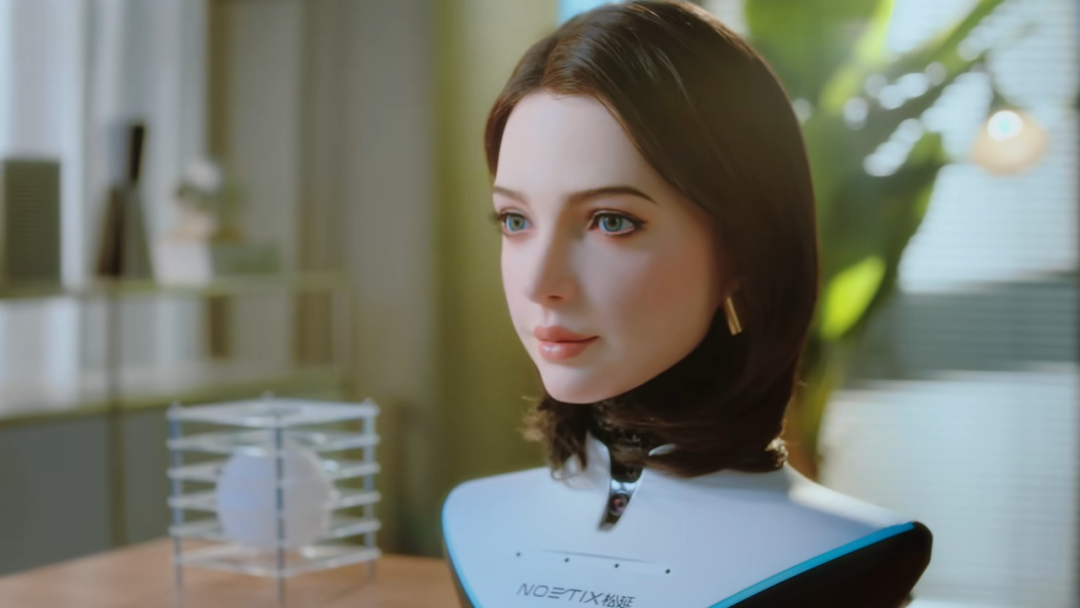
Rather than consumers purchasing a definitive product, it's more about 'envisioning' a future tech-driven life. The 88 high-degree-of-freedom motion joints sound technologically advanced, but 'degrees of freedom' simply indicate the number of joints. More degrees of freedom enhance flexibility, but flexibility doesn't equate to intelligence.
In contrast, Unitree's G1 base model has 23 degrees of freedom, and XPENG's Iron has 62, but these are primarily for industrial manufacturing. The U1's 88 degrees of freedom are numerically superior, but whether these joints can coordinate to perform meaningful actions and foster a true sense of 'companionship' during interactions remains uncertain.
Currently, the product's actual conversion rate is unclear, with a refundable deposit of 3,000 yuan and a pre-sale deadline of July 15th. From 'reservation' to 'delivery,' numerous variables exist.
Beyond mobility, the U1's skin material, makeup craftsmanship, and other supply chain aspects haven't undergone large-scale mass production testing. For UBTECH, which delivered only 1,079 humanoid robots in 2025, 4,500 orders pose a significant production capacity challenge.
Additionally, the product's single-charge battery life is only 2 to 4 hours, and it lacks 3C certification. A robot with less than half a day's battery life and unable to pass national mandatory product certification is far from ready to serve as a long-term companion.
In essence, the current U1 series resembles more of a 'high-end doll,' boasting an exquisite appearance and imaginative promotional rhetoric, but falling short in core areas like intelligent interaction, physical mobility, and battery life to meet the standards of a 'companion' as advertised.
02 The Realities and Challenges of the AI Companion Industry: The Humanoid Robot Sector is Heating Up.
Data from the Ministry of Industry and Information Technology reveals over 140 domestic humanoid robot manufacturers. In 2025, Chinese manufacturers dominated the top six global humanoid robot shipments. According to an Omdia report, Zhiyuan shipped over 5,100 units, Unitree around 4,200, and UBTECH about 1,000, showing a significant gap with the top two.
Against this backdrop, U1's C2C venture seems like a strategic move for UBTECH to explore new growth avenues.
Current humanoid robots are still in the early stages of natural language interaction, emotional recognition and expression, and autonomous action planning. Hu Yuhang, CEO of Shouxing Technology, admits that 'the uncanny valley effect exists objectively,' with the company's goal being 'to make bionics more natural through AI learning.' However, a vast technological chasm lies between 'more natural' and 'truly natural.'
Zhuo Yide plans to launch the Moya series this fourth quarter, priced between 1.2 million and 1.5 million yuan, with an initial limited run of 50 units. The high cost determines that such products are unlikely to enter ordinary households on a large scale in the short term.

UBTECH founder Zhou Jian predicts that the future price of humanoid robots entering household scenarios will be around 20,000 to 30,000 US dollars (approximately 140,000 to 200,000 yuan). Even at this price point, it remains a significant expense for most consumers.
However, the capital market's response offers a different perspective. The day after disclosing over 2,000 orders, UBTECH's stock price rose by over 6%.
Morgan Stanley raised its 2026 Chinese humanoid robot sales forecast from 14,000 units to 28,000 units. Deutsche Bank increased its 2026 global shipment forecast from 17,500 units to nearly 50,000 units. The resonance between the industrial and capital sectors is positioning 2026 as a critical inflection point for humanoid robots transitioning from prototypes to mass production.
UBTECH isn't the only company exploring this direction. Shouxing Technology's bionic robot head can respond to users with actions like 'turning its head and smiling' through visual observation without voice commands. The company has secured a Series A1 financing round worth hundreds of millions of yuan, with investors including Ant Group and Shunwei Capital.
Moreover, manufacturers such as Zhiyuan, Zhuo Yide, EX Robots, Liaode Technology, and Yizai Technology are all developing their own humanoid robots, transforming bionic robots from tech exhibits into lifestyle 'proposals.' The 'emotional companionship' scenario is becoming a new competitive frontier among manufacturers.
While technology can advance rapidly, societal psychological readiness takes time, and the controversies surrounding AI cannot be overlooked.
The U1 claims to support multi-dimensional appearance customization, which may raise concerns about portrait rights and copyrights. Robots designed as emotional companions may lead users to develop unhealthy emotional dependencies, weakening their ability to engage in real interpersonal interactions.
According to NetEconomic, since April 2026, several so-called AI companion apps like 'EchoMe,' 'Dream Island,' and 'Meow Phone' have commonly exhibited issues such as pornographic content, inducing consumption, and lack of minor protection, with system presets featuring numerous sexy and revealing characters, sexually suggestive conversations, and even the emergence of a gray industry chain for customizing 'provocative personas.'
With the rising proportion of urban solo dwellers and an aging population, the trend of humanoid robots entering household scenarios is inevitable. However, the simultaneous establishment of ethical norms, enhancement of privacy protection and regulatory frameworks, and the need for more institutional regulations to safeguard the AI companion sector are also imperative.
Thirty years ago, Cai Ming portrayed a robot wife in the Spring Festival Gala sketch 'Robot Banter.' Thirty years later, a bionic robot modeled after her appeared on the same stage, playing her. People's emotions are complex, blending nostalgia with a sense of eerie unease.
When Cai Ming said, 'No matter how advanced technology becomes, it cannot replace family affection,' she perhaps articulated the core anxiety of this era: the more advanced technology becomes, the more people crave social warmth, genuine connections, and humor that can truly make them laugh from the heart.
UBTECH's venture into the human-robot romance sector may not be a black-and-white issue. Technology provides possibilities, society determines acceptance, and the market completes the selection. The over 4,000 pre-sale orders for the U1 are merely a comma in this lengthy narrative.
- END -
-
![]()
Registered Capital Slashed to 372 Million Yuan! Yutong Optical Finalizes Industrial and Commercial Change Registration
-
![]()
Zhuque-3 Successfully Lands, and 'Time Traveler' Secures Another ¥100 Million in Funding: China's Commercial Space Industry Experiences a 'Dynamic August'
-
![]()
Autohome Faces a Shrinking Window of Opportunity
-
![]()
Even a Titan Like Musk Has Faced Setbacks in Fulfilling Promises
-
![]()
AI Office: The End of the Racing Era, Context Becomes the Key to Success
-
![]()
Domestic Vehicle Chassis Revolution ②: The Steering Wheel Remains, But Mechanical Connections in the Steering System Are Decreasing
-
![]()
Exploring MiniMax Design: Can Video Editing Be as Simple as Speaking?
-
![]()
Why Can SenseTime Achieve Profitability While CloudWalk Still Faces Challenges, Despite Both Adopting Large Models?