‘CEORION of Cangqiong’ Takes the Dive: Large Models Tackle ‘Manual Labor’ in Marine Environments
 06/18 2026
 533
533
RMB 1 Billion in Funding Flows into Marine-Embodied Large Model
The risks associated with underwater operations go far beyond mere physical labor.
Divers face threats from high pressure, high salinity, strong corrosion, and complex ocean currents, all while being constrained by physical limitations. To mitigate the risk of personnel casualties and overcome depth restrictions, the industry has developed underwater robots, such as ROVs (Remotely Operated Vehicles).
However, most of these tools still rely on manual remote control or pre-programmed operations and are connected to mother ships via umbilical cables. While the divers' tools have been replaced with remote-control handles, the 'eyes' and 'brains' of operations remain on the surface.
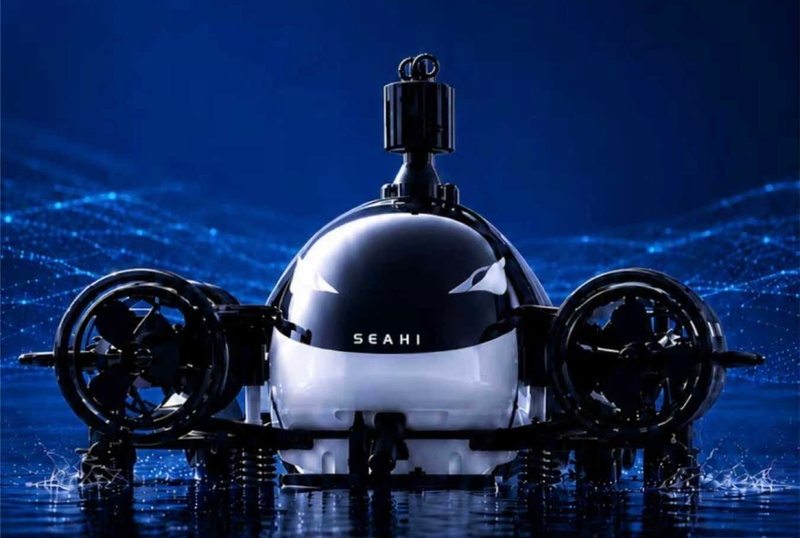
This changed in April 2026 when Shihang Intelligence, a marine-embodied intelligence company, launched the world's first marine-embodied large model, ‘CEORION of Cangqiong’. For the first time, underwater robots gained integrated capabilities for ‘perception, understanding, and autonomous execution’. Trained on millions of hours of commercial operational data and built on a unified end-to-end architecture, the model covers 12 major underwater operation scenarios without frequent switching, achieving over 90% task success rates and reducing collision incidents by 80% in simulation tests. Behind these impressive figures lies a simple yet powerful idea: as AI extends its reach from land to the deep sea, ‘arduous and hazardous tasks’ that humans cannot, should not, or cannot afford to perform may be on the brink of an efficiency revolution.
01 ‘CEORION of Cangqiong’ Rewrites the Rules of Underwater Operations
Before the advent of marine robots, underwater operations relied heavily on divers.
Tasks such as ship cleaning, seabed maintenance, and underwater welding either exposed divers to dangerous environments characterized by waves, currents, high pressure, high salinity, and strong corrosion or were limited by water depth. For instance, air diving operations typically remain within 60 meters due to the risk of nitrogen narcosis from excessive partial pressures. Even under ideal conditions, a diver's daily work limit is four to five hours, with costs starting at RMB 2,000.
Low efficiency, high risks, and depth limitations—these long-standing industrial pain points not only represent significant challenges for underwater operations but also form the starting point for the commercial value of marine robots.
Later, while ROVs partially replaced human labor, most still depended on manual remote control or pre-programmed operations. In turbid, low-light, and strong-current real seabed environments, ROVs, tethered to mother ships via umbilical cables, faced restricted mobility and high operational difficulty, still operating ‘blindfolded’ in complex conditions.
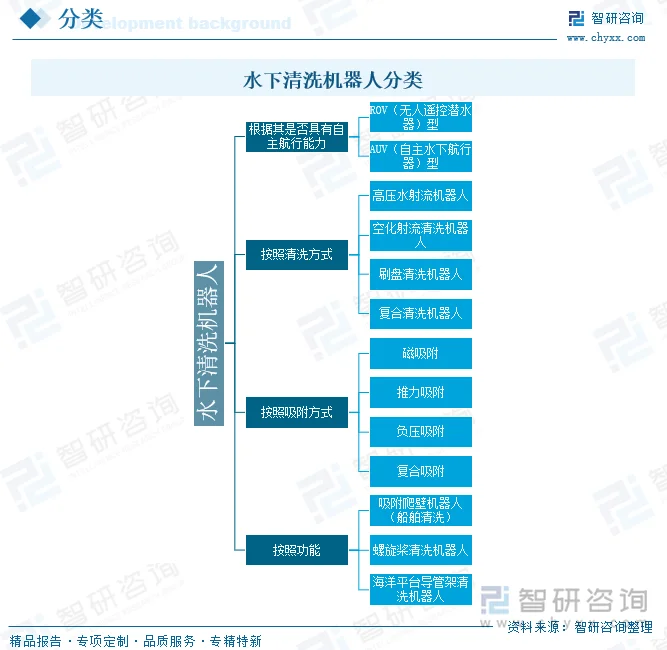
From divers to traditional ROVs, the dilemmas of underwater operations remained fundamentally unresolved.
Shihang Intelligence addressed these pain points with a solution distinct from traditional ROVs.
On April 25, Shihang Intelligence released ‘CEORION of Cangqiong’, the world's first marine-embodied large model. Trained on millions of hours of commercial operational data and built on a unified end-to-end architecture, the model integrates environmental perception, task understanding, and action generation into a single framework.
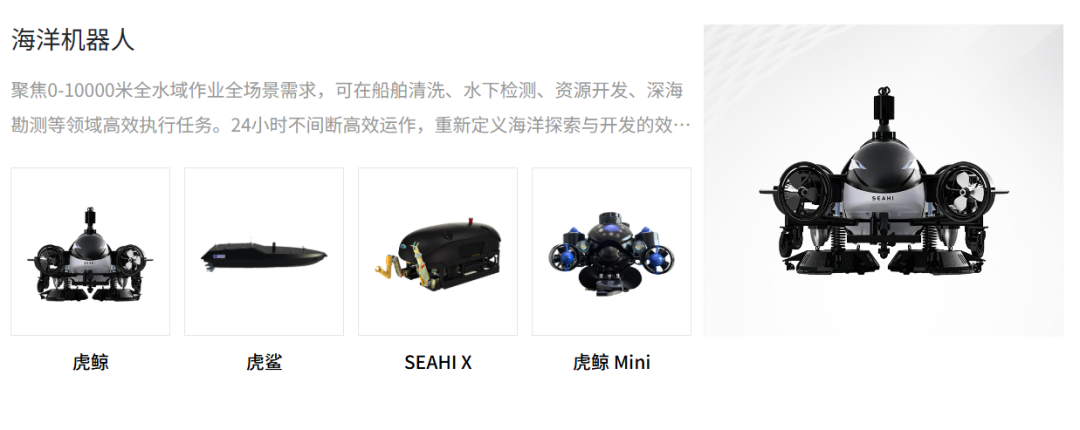
Beyond software, Shihang Intelligence fully self-developed six core hardware systems: propulsion, control, sensing, navigation, sealing, and deployment/recovery. For example, its self-developed ‘Pangu’ magnetic coupling thruster extended lifespan from hundreds of hours (industry norm) to 10,000 hours, with costs just one-fifth to one-sixth of imported alternatives.
This combination of ‘fully self-developed hardware + autonomous large model decision-making’ rapidly opened commercialization avenues for Shihang Intelligence, attracting intensive capital investment.
By May 2026, Shihang Intelligence's fully self-developed ‘Orca’ robots, capable of full-ocean-depth (0–10,000 meters) and full-degree-of-freedom operations, had cleaned over a thousand large vessels across nearly 20 Chinese ports, with orders exceeding RMB 1 billion in the first half of 2026. In April 2026, Shihang Intelligence became the first Chinese company selected for Singapore's Maritime and Port Authority's National Underwater Hull Inspection and Cleaning Program (CFP).
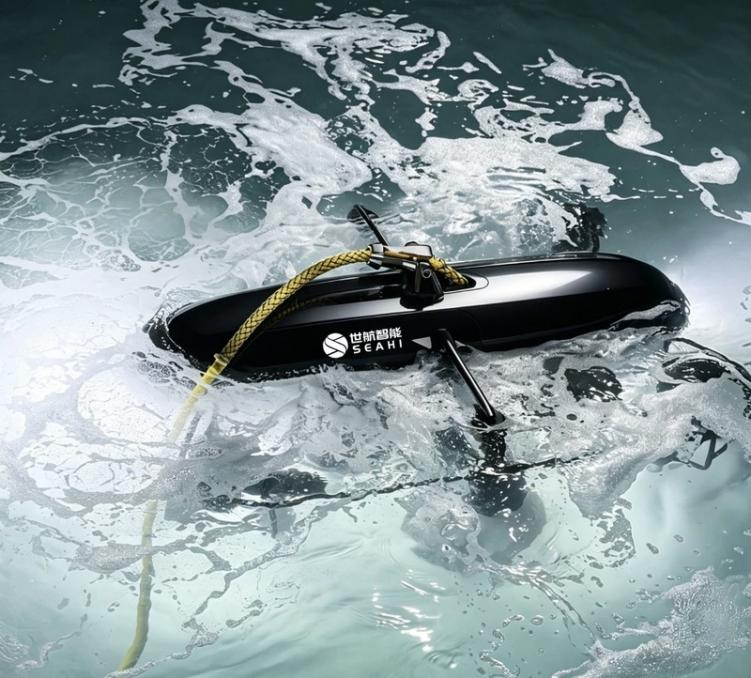
Product success quickly translated into quantifiable commercial returns.
On June 15, Shihang Intelligence announced the completion of Series A funding exceeding RMB 1 billion, setting a global record for single-round financing in marine robotics.
New investors included Moore Threads and Kunlunxin's industrial investor, Shanghe Momentum Fund; Vertex Growth (Temasek-backed); CITIC Group's agricultural industry fund; Yuzun Capital; and listed company Broad-Ocean Motor. Existing shareholders—GSR Ventures, Vertex Ventures China, Capital Media, Changshi Capital, Shengjing Capital, and Anyu Capital—all substantially increased their stakes. According to Shihang Intelligence, proceeds will primarily fund core technology R&D, global market expansion, and industrial ecosystem construction.
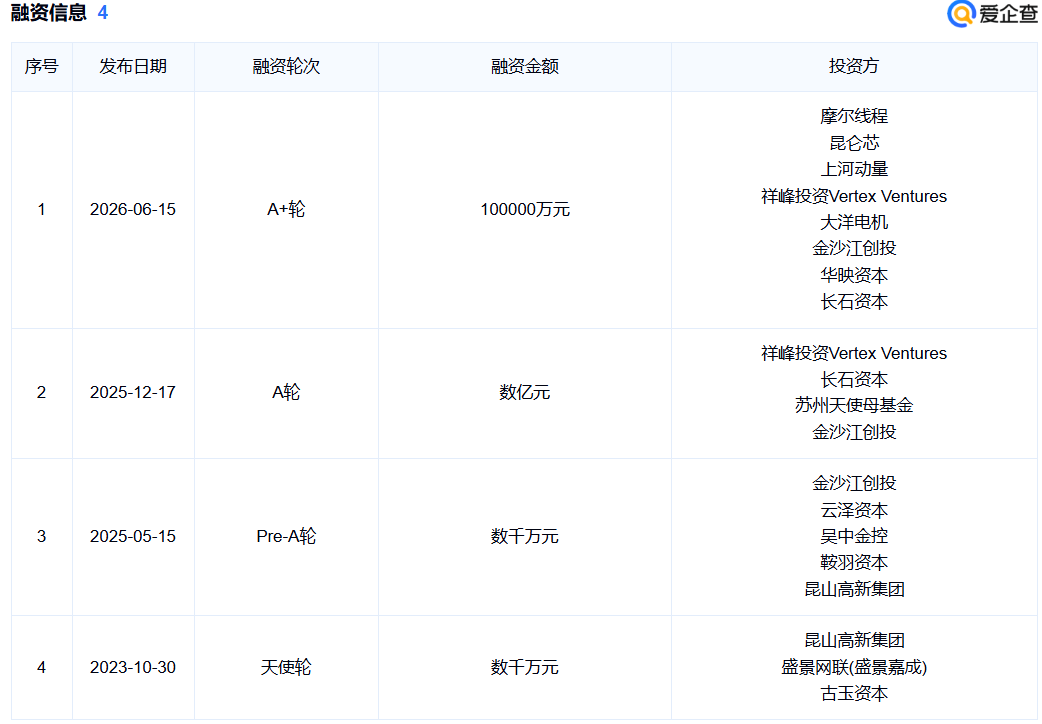
While investment circles debate the commercialization prospects of humanoid robots, the substantial capital investment in a technically challenging and harsh-environment sector reflects a validated judgment: the commercial breakthrough for embodied intelligence may lie not in ‘human-like’ robots but in specialized machines capable of ‘tasks beyond human reach’.
When a sector addresses genuine, urgent industrial pain points while securing scalable commercial orders, capital's choices become self-explanatory.
02 Undercurrents Beneath the RMB 1 Billion Hype
Every coin has two sides. Behind the RMB 1 billion financing—a ‘fortune’ by any standard—lie deep-seated challenges for Shihang Intelligence and the entire marine robotics industry that cannot be ignored.
First, the industry's profitability dilemma—‘acclaim without earnings’—remains the first hurdle for underwater robotics.
Take Sublue, China's market leader in underwater robots, dubbed the ‘DJI of the underwater world’.
From 2022 to 2024, Sublue reported net losses of RMB 134 million, RMB 93 million, and RMB 66 million, respectively. While 2025 revenue grew 41.7% year-on-year to RMB 355 million, net losses still reached RMB 10.15 million. By the end of 2025, accumulated undistributed profits stood at -RMB 630 million. Sublue's prospectus acknowledged that given the industry's growth phase, macroeconomic fluctuations, downstream demand changes, and intensifying competition, ‘sustained losses may persist for some time’.
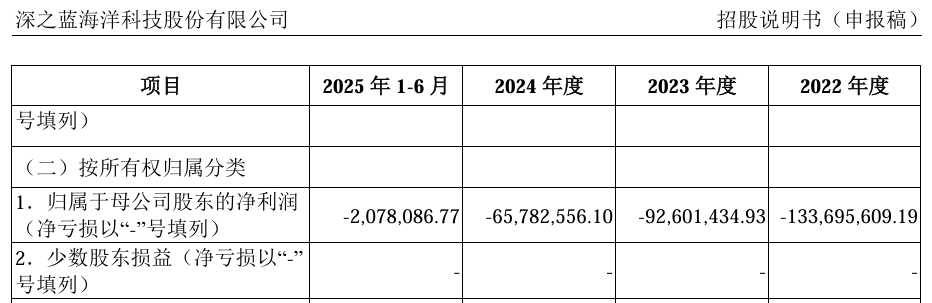
Additionally, Sublue's accounts receivable surged from RMB 44.89 million in 2022 to RMB 119 million by mid-2025, with operating cash flow remaining negative for four consecutive years. If industry leaders struggle, the sector's overall profitability pressures are evident.
While Shihang Intelligence has not disclosed full financials, its actual profitability remains a critical variable for investors. The journey from ‘burning cash’ to ‘generating profits’ may be longer than anticipated.
The ‘scissors gap’ between market size and financing scale is another warning sign.
According to CCID Consulting, China's underwater robotics market reached approximately RMB 20–22 billion in 2026, with a compound annual growth rate of 18–22%.
Despite rapid growth, some niche segments remain small. QYResearch data shows the 2025 global market for underwater vessel cleaning robots at approximately USD 201 million (RMB 1.45 billion).
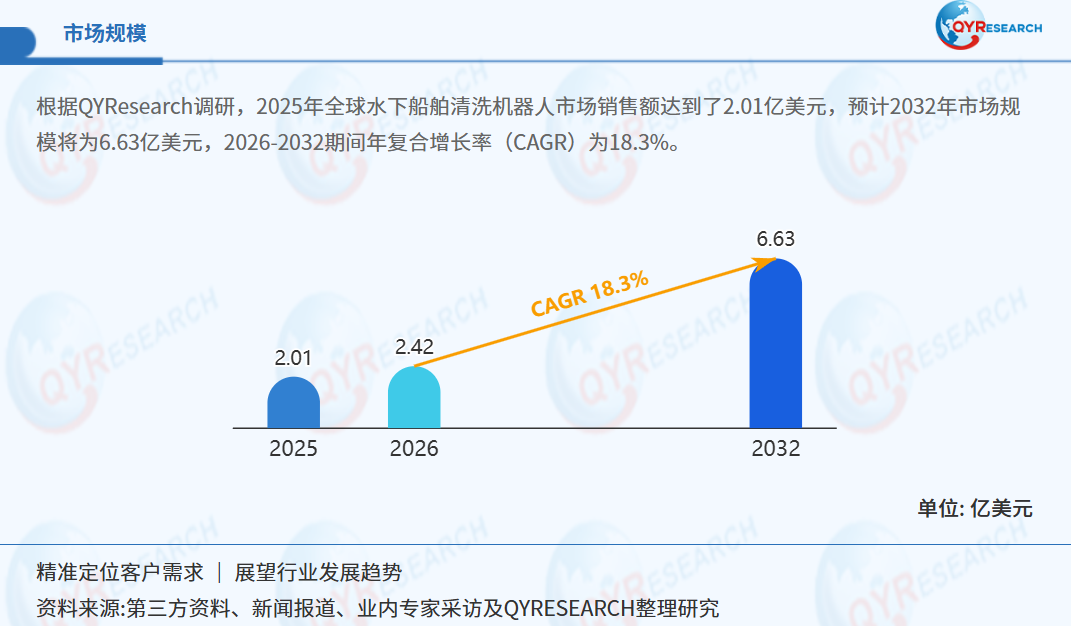
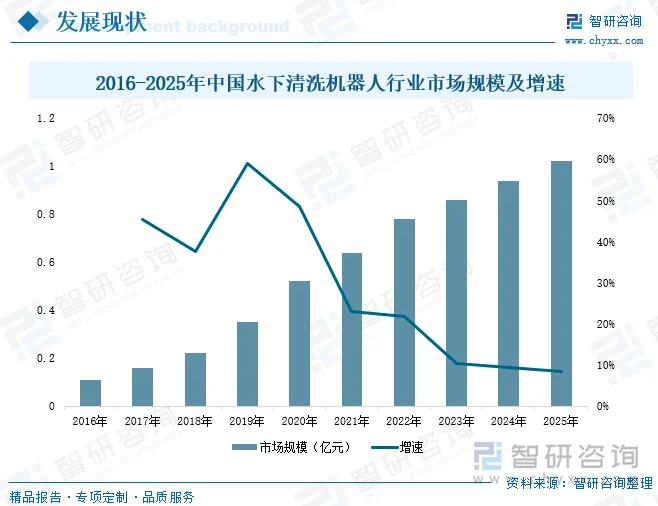
China's underwater cleaning robot market, however, stood at just RMB 102 million. Shihang Intelligence's single-round financing exceeded RMB 1 billion—nearly 70% of the global annual market for underwater vessel cleaning robots. While Shihang's business extends to offshore wind maintenance, seabed exploration, and marine ranches, RMB 1 billion in Series A funding remains ‘overallocated’ for a RMB 20 billion market. Whether high valuations can be justified by sustained growth requires time to verify.
Supply chain ‘chokepoints’ represent a looming Sword of Damocles for China's underwater robotics industry.
Gelonghui reports showed that in 2020, localization rates for high-end underwater robots in China stood below 20% by value, with core hardware at just 15%. By 2025, this rose to ~45%, but shortages persisted in high-precision sensors and pressure-resistant materials, with localization rates below 30%. Critical components like high-precision acoustic sensors, deep-sea inertial navigation systems, and pressure-resistant materials remain heavily import-dependent.
For instance, Sublue's prospectus admitted: ‘In some high-end components, international markets are dominated by a few developed-country suppliers. Global political-economic shifts and geopolitical changes may disrupt stable imports’.
While Shihang Intelligence claims full self-development of six core systems, its autonomy in ‘chokepoint’ areas like high-precision sensors remains unclear.
Thus, while RMB 1 billion in financing provides Shihang Intelligence with crucial capital and time, it does not automatically resolve the industry's deep-seated challenges. Profit model validation, market expansion, and supply chain autonomy will determine whether Shihang transitions from ‘capital darling’ to ‘industry winner’.
03 Three ‘Mountains’ Remain After the Hype Fades
As the RMB 1 billion financing news becomes industry chatter and the ‘world's largest single-round funding’ halo reduces to a balance sheet line item, Shihang Intelligence must shift from answering ‘why you’ to ‘what next’.
At least three directions warrant observation:
Technologically, Shihang must evolve from ‘functional’ to ‘high-performing’, continuously expanding the capabilities of ‘CEORION of Cangqiong’ and its hardware systems.
The April 2026 launch of ‘CEORION of Cangqiong’ proved the technical feasibility of marine-embodied large models. However, transitioning from simulations to real ocean environments—from ‘capable of working’ to ‘stable, fast, and cost-effective’—requires massive real-world operational data for model iteration. The next step is leveraging RMB 1 billion to close the data loop: more deployed robots generate more operational data, which feeds model improvements, enabling support for more complex scenarios.
Simultaneously, sustained hardware investment remains critical. While full-ocean-depth and full-freedom capabilities are achieved, enhancing reliability and reducing deployment costs in extreme environments remain long-term challenges. From ‘industry-unique’ to ‘industry-best’, technological iteration never ends.
Market-wise, Shihang's globalization has just begun, with Singapore as a starting point.
In April 2026, Shihang became the sole Chinese company in Singapore's Maritime and Port Authority's CFP, marking China's first entry into the core global maritime ecosystem.
Singapore Port, straddling the Malacca Strait and connecting over 600 global ports, holds undeniable strategic value. However, global marine robotics is dominated by veterans like Oceaneering and Kongsberg Maritime, with decades of global client relationships and mature service networks.
While RMB 1 billion is substantial domestically, its global competitiveness remains unproven. Whether it can carve a niche amid industry giants is uncertain.
Ecosystem-wise, Shihang's challenge is not just ‘excelling alone’ but ‘elevating an industry’.
Despite self-developing six core systems, Shihang cannot single-handedly control the entire supply chain. The dedicated allocation of funding for ‘industrial ecosystem construction’ suggests Shihang aims to play a ‘chain leader’ role. This path is arduous, but success would not only resolve its supply chain security but also unlock autonomy for China's entire underwater robotics sector.
For Shihang Intelligence, the 1 billion yuan financing is a precious ticket to entry, but the real competition has only just begun.
Looking ahead, the ocean covers 71% of the Earth's surface, yet human understanding of the deep sea still lags behind that of the Martian surface. This blue realm offers Shihang Intelligence not only a vast expanse for imagination but also a sufficiently long journey of challenges.
* The image is sourced from the internet. Please contact us for removal if there is any infringement.
-
![]()
Registered Capital Slashed to 372 Million Yuan! Yutong Optical Finalizes Industrial and Commercial Change Registration
-
![]()
Zhuque-3 Successfully Lands, and 'Time Traveler' Secures Another ¥100 Million in Funding: China's Commercial Space Industry Experiences a 'Dynamic August'
-
![]()
Autohome Faces a Shrinking Window of Opportunity
-
![]()
Even a Titan Like Musk Has Faced Setbacks in Fulfilling Promises
-
![]()
AI Office: The End of the Racing Era, Context Becomes the Key to Success
-
![]()
Domestic Vehicle Chassis Revolution ②: The Steering Wheel Remains, But Mechanical Connections in the Steering System Are Decreasing
-
![]()
Exploring MiniMax Design: Can Video Editing Be as Simple as Speaking?
-
![]()
Why Can SenseTime Achieve Profitability While CloudWalk Still Faces Challenges, Despite Both Adopting Large Models?