At HDC 2026, Will Huawei Bridge the Gap Between Tablets and Computers, Pioneering Multi-Screen Integration?
 06/18 2026
 592
592
Tablets and computers are on the verge of a deeper integration.
At the recently concluded HDC 2026 sub-forum, Zhu Dongdong, President of Huawei's Consumer BG Tablet & PC Product Line, shared a compelling perspective on the 'blurring lines between tablets and computers'.
Zhu noted that historically, the main distinctions between tablets and computers revolved around chip power efficiency and operating systems. However, with advancements in chip capabilities, system experiences, and application ecosystems, users may soon prioritize functionality over device type—be it a tablet or a notebook.
In simpler terms, the Hongmeng ecosystem is poised to embrace 'multi-screen integration'.
Traditionally, tablets and computers have been clearly differentiated: mainstream tablets, typically ARM-based, focus on touch interactions, running 'mobile apps' for light-duty tasks like video streaming, online learning, and gaming. Conversely, computers, usually x86-based, rely on keyboard and mouse inputs, executing 'desktop software' for large-scale and professional tasks that tablets struggle with.
From Leikeji's standpoint, these functional and usage-based differences arise not from brand marketing but from 'interaction' and 'software'. The interaction advantage is evident: keyboard and mouse inputs offer greater efficiency and precision compared to the less precise touch operations of tablets. The software ecosystem is more nuanced: 'computers' can leverage stronger cooling systems to fully unleash chip performance, enabling them to run more complex 'desktop software'.
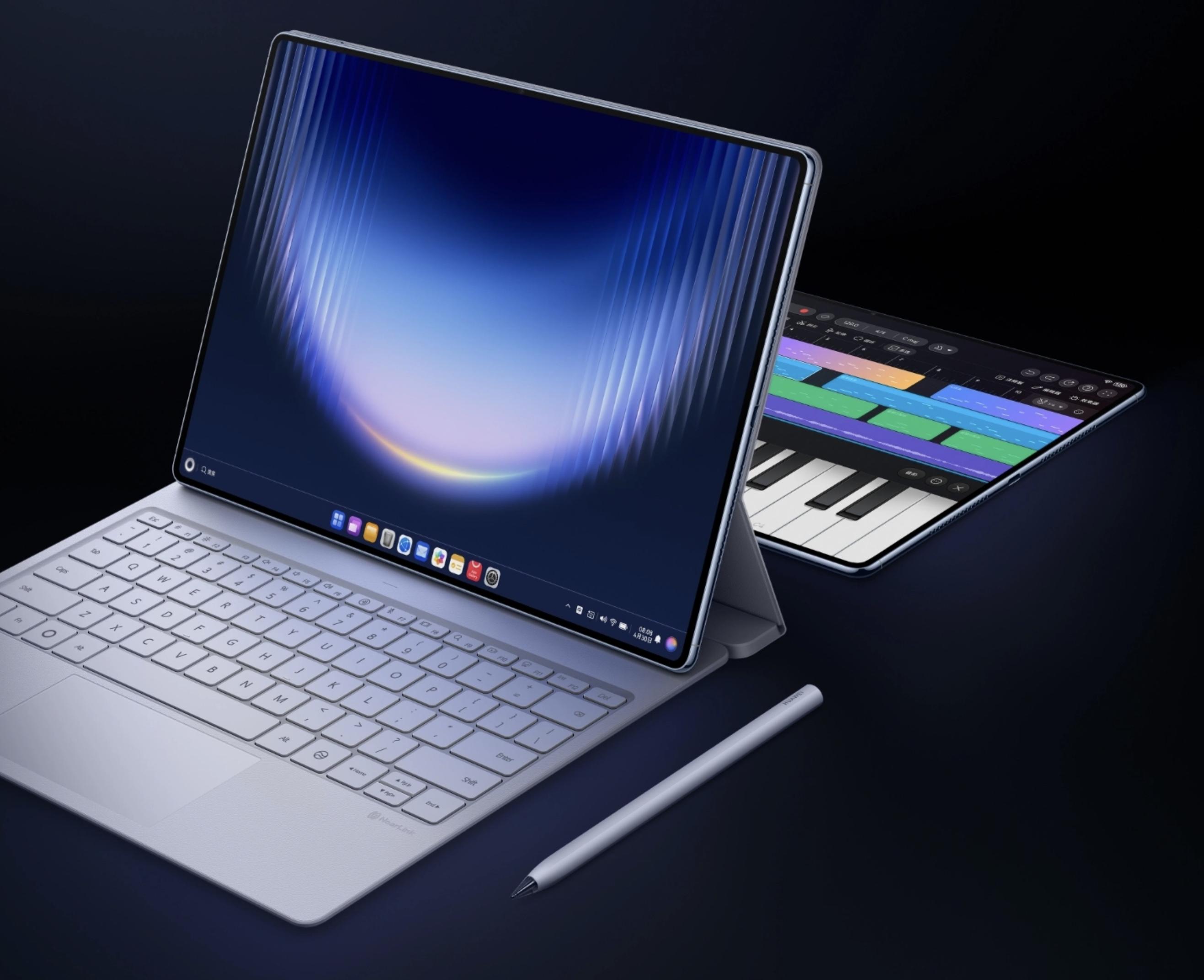
Image source: Huawei
Despite tablet manufacturers' repeated emphasis on 'productivity'—such as Microsoft's unsuccessful attempt with the Surface 'x86 tablet' to challenge the notion that 'tablets can't run computer software'—users recognize that, constrained by smaller screens and subpar Windows touch interactions, they still rely on computers for serious work.
However, from another angle, if computers excel in 'interaction' and 'software', does this imply that once tablets overcome these two hurdles, true integration between tablets and computers can be achieved?
Indeed, since the 2021 release of the M1-powered iPad Pro, the industry has been accelerating the convergence of tablets and computers. Compared to smartphones, tablets offer larger batteries and thermal capacities, providing a more robust 'hardware foundation' for performance. In terms of interaction, various brands have introduced external keyboards with touchpads for their ARM-based tablets, aiming to bring 'precise operation' capabilities to tablets.
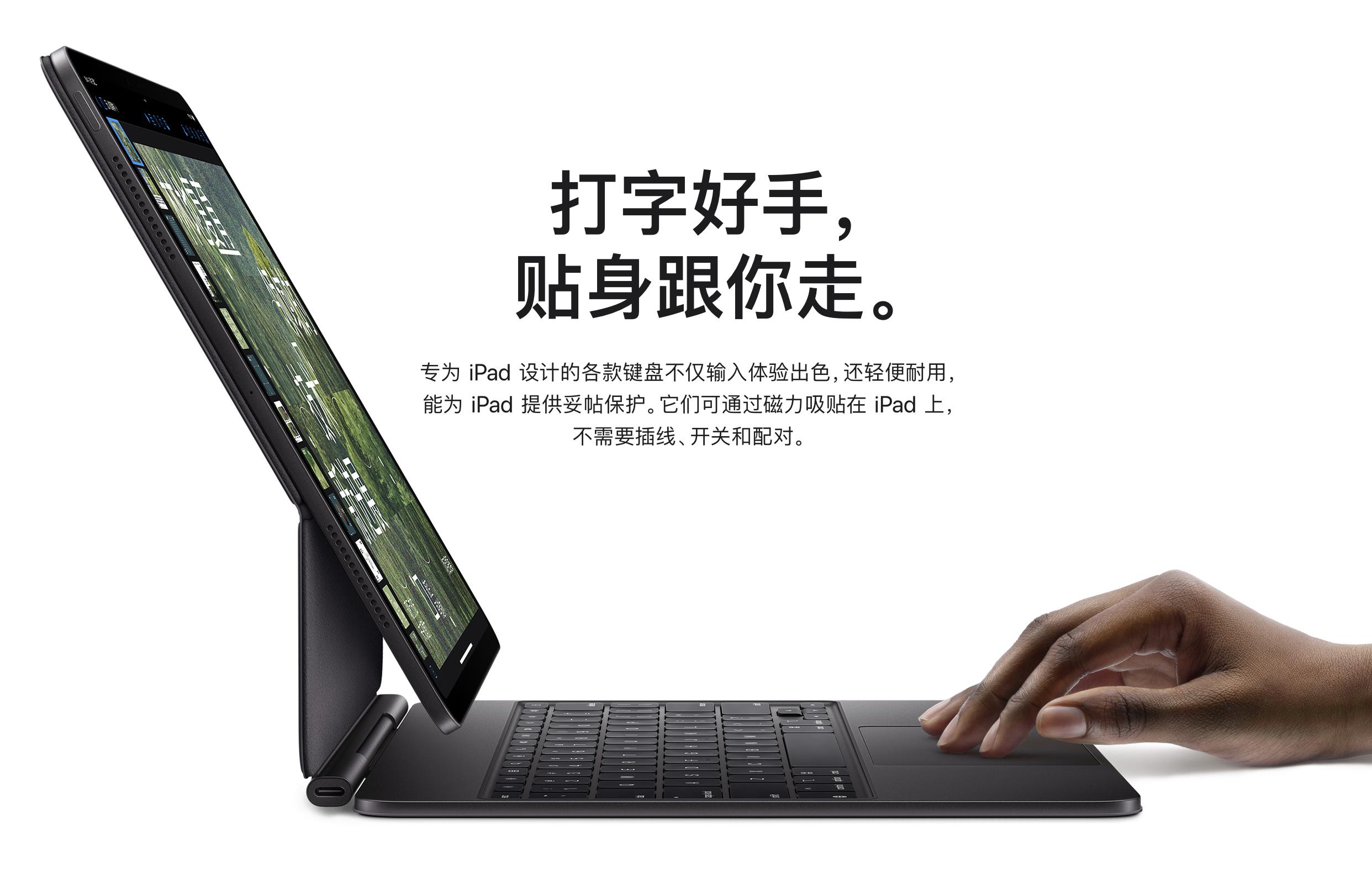
Image source: Apple
Beyond hardware convergence, the interaction experience of tablets is increasingly mirroring that of desktops. Multi-window, split-screen, free-form windows, external keyboard and mouse support, file management, taskbars, and external displays—these PC-like features are gradually being introduced to tablets.
But that's not all. The rise of cloud computing power in recent years has also bridged the hardware gap between tablets and computers. The proliferation of hybrid model architectures and cloud computing has reduced the reliance on a single device's performance. Devices now serve more as entry points for interacting with AI, with true computing power, data, and services residing in the cloud or flowing between other terminals.
It can be argued that the thriving ARM ecosystem and cloud-based AI have removed the biggest obstacles for Huawei to 'eliminate the boundaries between tablets and computers'.
Of course, Huawei is not alone in this endeavor.
Apple has long positioned the iPad Pro as a productivity device: M-series chips, Magic Keyboard, Apple Pencil, Stage Manager, and the introduction of professional apps like Final Cut Pro and Logic Pro all aim to transform the iPad from a 'post-purchase entertainment device' into a genuine productivity tool.
However, as of WWDC26, the iPad and Mac remain distinct systems: although they share the same chip lineage and increasingly similar UI designs, with many iPad apps running directly on macOS, there are still fundamental differences in their software ecosystems and scales. In essence, 'you can solve problems in a tablet-like way on a tablet or in a computer-like way on a computer.' Yet, tablets and computers remain entirely separate products.
Microsoft has taken a different path. From its inception, Surface aimed to demonstrate that a Windows device could be both a notebook and a tablet. On the positive side, Surface successfully brought the full Windows ecosystem to the tablet form factor. However, Windows only addressed the 'software' issue, not the 'interaction' issue. From Windows 8 to Windows 11, Surface remains fundamentally designed for keyboard, mouse, and desktop environments, with touch experiences and mobile app ecosystems falling short.
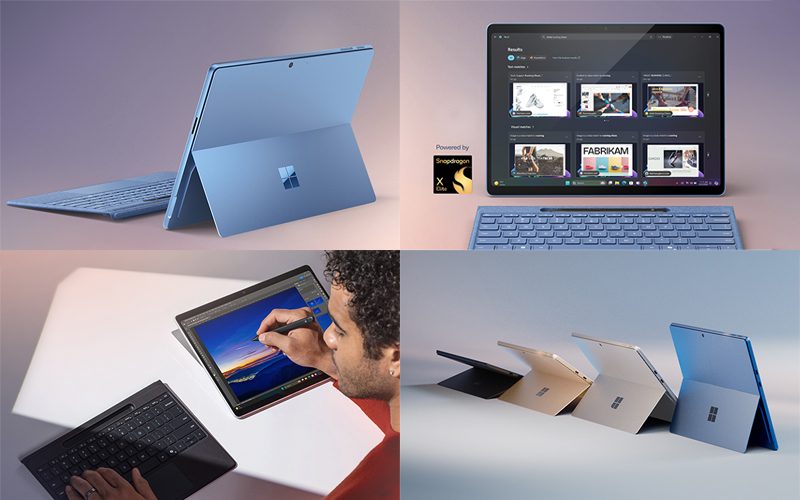
Image source: Microsoft
Google and the Android camp, on the other hand, seem to be making up for lost time. Affected by early Android fragmentation, the app ecosystem for Android tablets long remained stuck in the 'large-screen smartphone' phase, lacking precise interaction capabilities similar to computers or a true large-screen ecosystem.
It wasn't until recent years that domestic Android tablet brands began to bypass Android's generic components, directly collaborating with third-party software developers like WPS to bring genuine desktop-class experiences to Android tablets. Only then did the Android tablet ecosystem start to improve. However, given the fragmented Android camp with numerous manufacturers and inconsistent system experiences, forming a stable office ecosystem will take time.
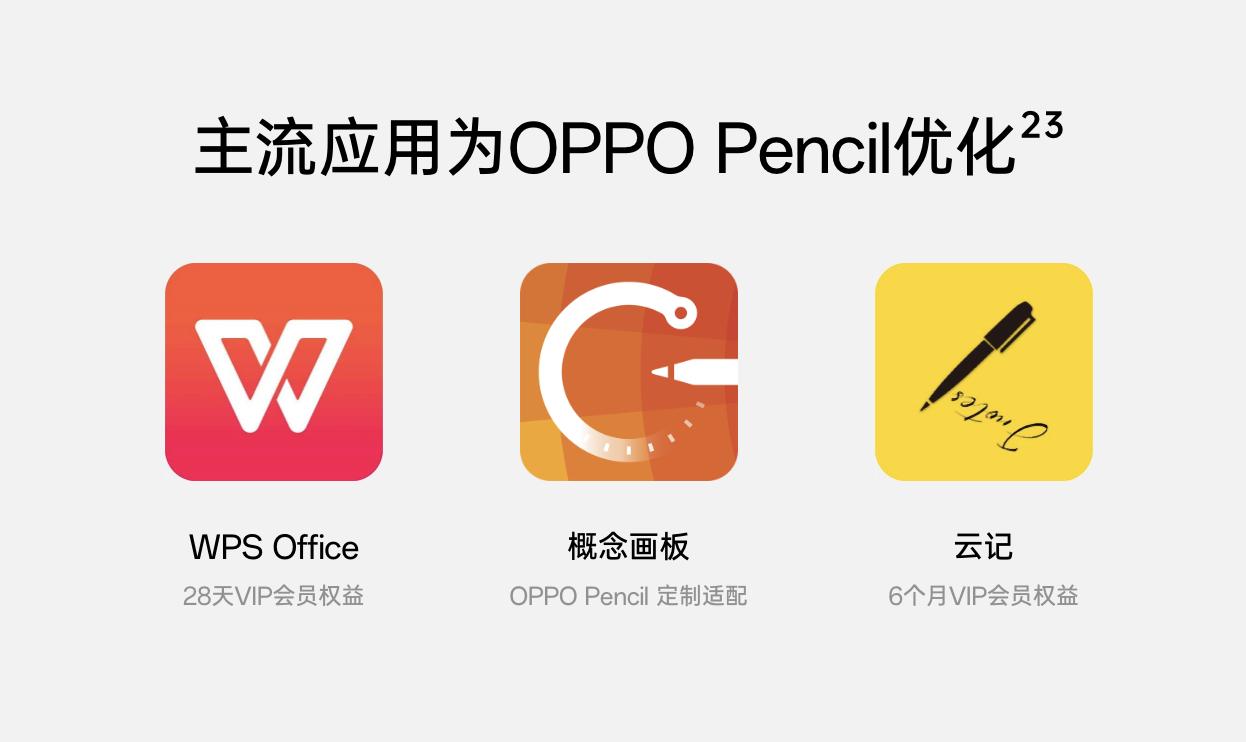
Image source: OPPO
In comparison, Huawei's approach at HDC 2026 more closely resembles Apple's. Unlike other hardware ecosystems, Huawei's core strength lies in HarmonyOS 7.0, which integrates computers and tablets into a unified system capability. However, unlike Apple's approach of 'enabling tablets to run computer software,' Huawei aims to redefine how users choose office devices in the AI era.
Traditionally, device selection followed a performance-first logic: light tasks on tablets, heavy tasks on computers. However, with the gradual popularization of AI and cloud computing, hardware and computing power have begun to decouple, with many tasks no longer fully reliant on local performance. Now, smartphones, tablets, and computers can all serve as windows to access AI and cloud services. What truly determines user choice is the interaction method.
For example, in an office setting, computers remain suitable for prolonged, stationary work; during meetings, classes, or travel, the portability and battery life of tablets offer advantages; even in more fragmented scenarios, smartphones can serve as quick entry points for invoking AI, processing information, and completing light tasks.
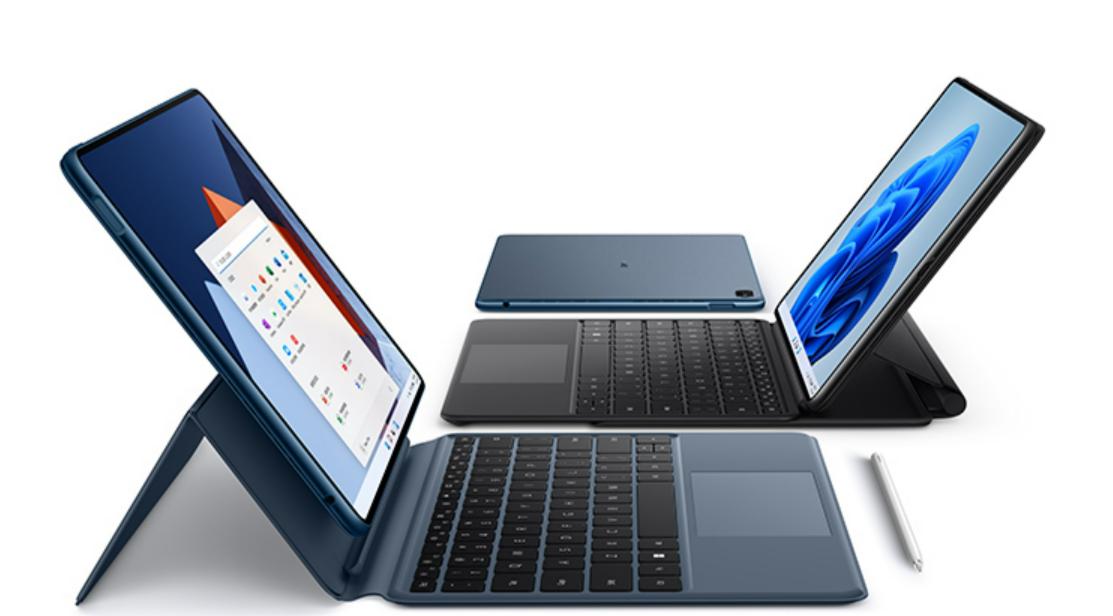
Image source: Huawei
The value of different devices is no longer simply ranked by performance but redefined based on scenarios and interaction methods. This also explains why HarmonyOS 7 emphasizes strengthening AI Agent and system-level integration.
At HDC 2026, Huawei introduced HMAF 2.0, the Hongmeng Intelligent Agent Framework, and upgraded Xiao Yi from a traditional voice assistant to a system-level intelligent agent. This capability is crucial for the integration of tablets and computers: by abstracting AI from hardware, interaction methods (voice, touch, keyboard, and mouse) will become the primary differentiators among smartphones, tablets, and computers.
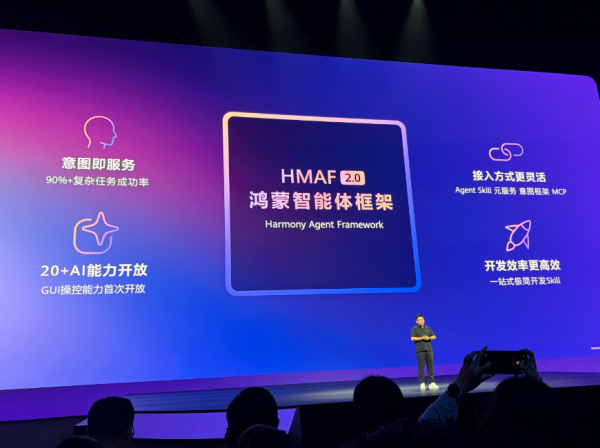
Image source: Leikeji
As a result, the interconnection capabilities between tablets and computers will no longer be limited to simple file transfers but will instead form a shared 'Skill Pool' that can be scheduled across devices. Users can complete different tasks in different ways based on their actual needs.
In Zhu Dongdong's words, 'whether users choose a tablet or a computer in the future will depend on the usage scenario. Users will bring the device they believe can meet their needs, as future devices will objectively all be computing-powered devices.'
From Leikeji's perspective, the major manufacturers' push for tablet-computer integration in 2026 also serves another purpose: to seize the opportunity to redefine industry habits in the AI Agent era and vie for the authority to shape the next generation of primary productivity devices.
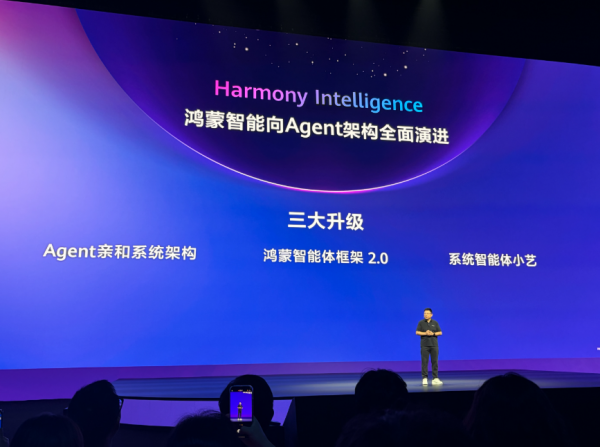
Image source: Leikeji
Historically, laptops have been almost universally considered the default primary productivity devices. No matter how convenient smartphones and tablets were, users would eventually return to PCs for complex office work, content creation, file management, and professional software.
However, on social platforms like Xiaohongshu, many college students claim they 'don't know how to use computers and rely solely on smartphones and voice input for document writing and spreadsheet tasks.' Some of Xiao Lei's photographer friends have also started using iPad Pros instead of computers for photo editing, communicating with clients through more intuitive presentations...
This 'reshuffling' of productivity tools presents a significant opportunity for Huawei and the HarmonyOS ecosystem: if users' first instinct is still to open a 'laptop' for work, the relatively late-starting HarmonyOS ecosystem will struggle to challenge established industry leaders. However, if HarmonyOS's global AI can handle heavy workloads, device form factors will become irrelevant, and HarmonyOS hardware will truly usher in its 'golden age'.
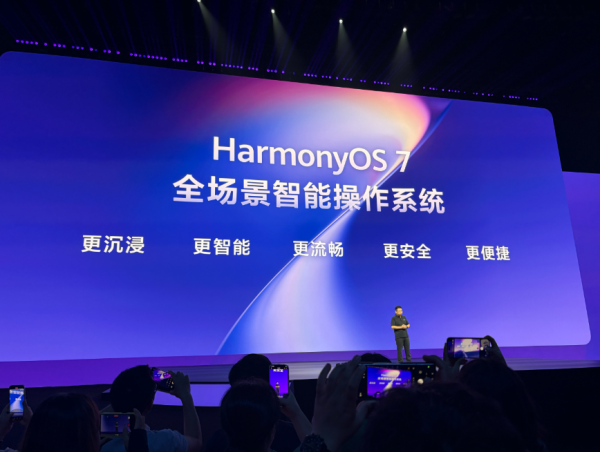
Image source: Leikeji
At HDC, Huawei suggested that 'the next generation of office devices may not have a fixed answer.' This bold strategy has charted a unique development path for Huawei, distinct from Windows and Mac. While 'traditional' devices like desktops and laptops will continue to exist in the HarmonyOS 7 era, tablets and smartphones will no longer play secondary roles.
After all, if tasks can be completed by simply 'speaking' to a smartphone, tablet, or even a smartwatch, who would want to pull out a computer?
-
![]()
Alibaba's AI Offensive: Over Half of Investment Allocated, Time to Reap Returns
-
![]()
Alibaba’s AI Push: Over Half of Investments Made, Time to Harvest Returns
-
![]()
Chinese Enterprises Going Global 3.0: From World Factory to AI Infrastructure Builder
-
![]()
Honor RobotPhone Review: Half Movie Camera, Half Robot
-
![]()
AI-Driven Cheating Surges in Universities! Online Exams Reduced to Mere Formalities, Degree Credibility on the Line
-
Insta360’s Decade in Panoramic Imaging: Making Cameras ‘Invisible’ and Returning Creation to the Masses
-
![]()
Foreign Media Claims Apple is Concentrating Resources on AI Development: Vision Pro and Siri Teams Lay Off 200 People
-
Big News! Huaneng and Huawei Hold Talks in Shenzhen with Ren Zhengfei in Attendance; Huawei Emerging as the 'Second Brain' of China's Energy System