DeepSeek Interview Shatters the 'White Moonlight' Illusion of Former Huawei 'Genius Teen'
 07/09 2026
 362
362
Produced by Leida Finance | Text by Ding Yu | Edited by Meng Shuai
"From the interviewer's performance, it's completely different from the DeepSeek I imagined."
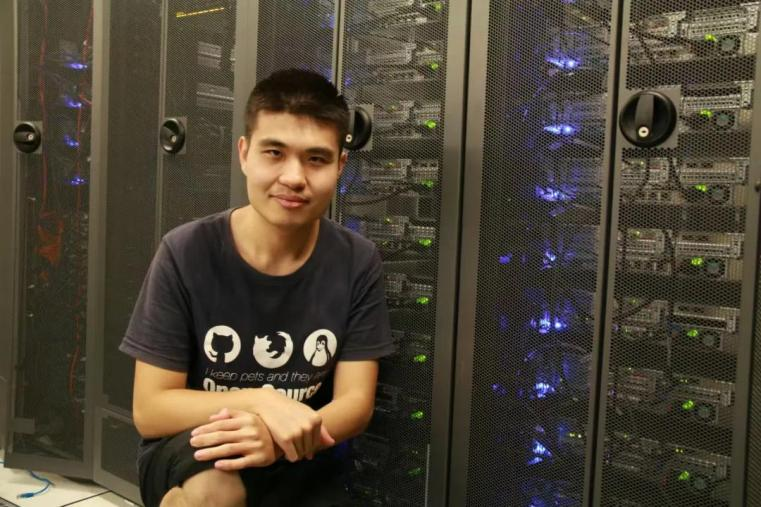
Li Bojie, who carries many accolades such as being a former Huawei 'Genius Teen,' recently took to social media to publicly criticize DeepSeek, a domestic large model giant he had once praised.
Li Bojie complained that DeepSeek's interview process was extremely protracted, with interviewers arriving late and displaying a frivolous attitude during the second round, even questioning his 'code-copying.'
Feeling 'seriously offended,' Li Bojie immediately terminated the interview and chose to make the entire process public, welcoming shares.
Just before this unpleasant interview was exposed, DeepSeek had completed the largest single round of financing in China's AI industry to date last month, raising approximately 51 billion yuan and reaching a valuation of 400 billion yuan.
Following the financing, DeepSeek swiftly launched its largest-ever talent recruitment drive, announcing plans to 'at least double the size of all departments.'
Notably, in the '2026 New Fortune 500 Richest List' revealed in June, DeepSeek founder Liang Wenfeng made the list with a net worth of 183.81 billion yuan, ranking 13th.
An Interview That Ended Unhappily
On the evening of July 6th, Li Bojie, a former Huawei 'Genius Teen,' publicly criticized DeepSeek's interview process on the Zhihu platform.
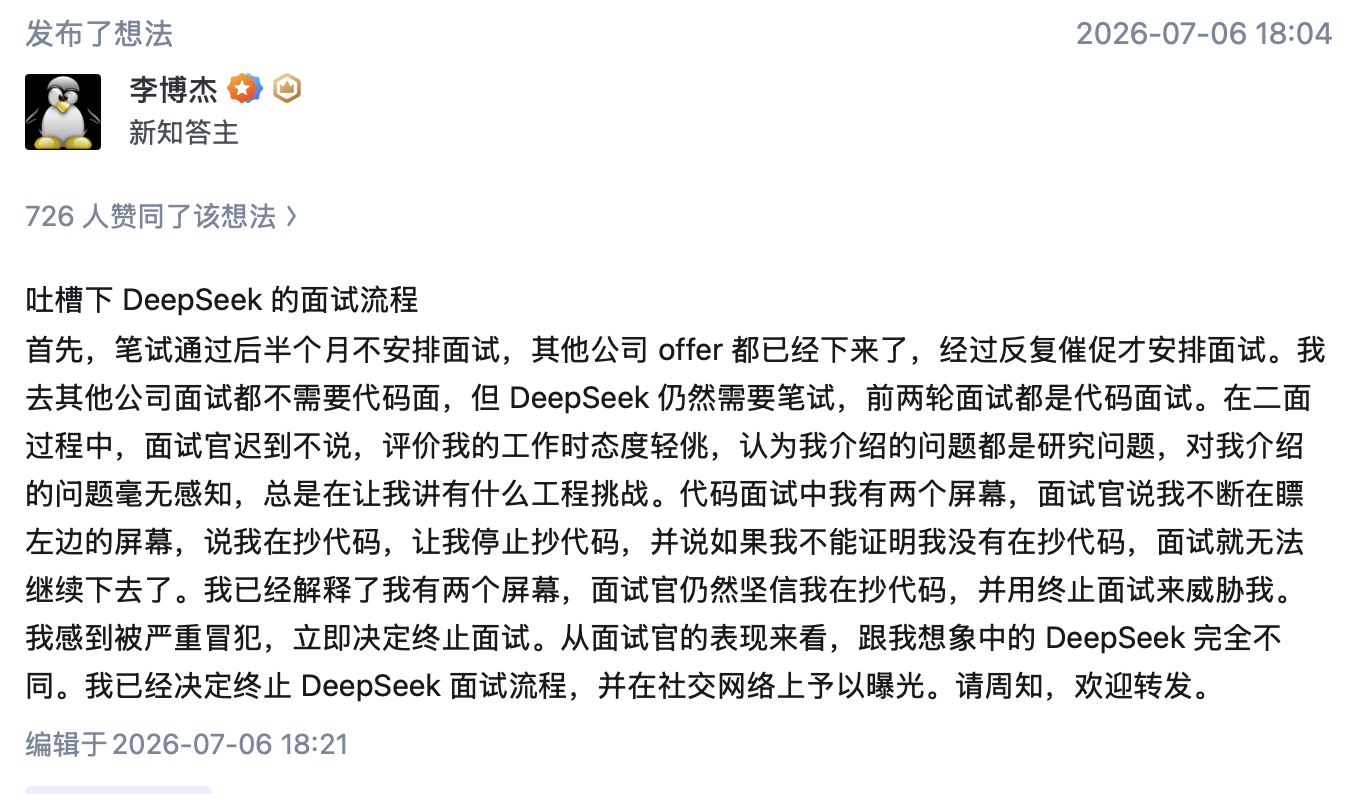
According to Li Bojie's account, the unpleasant interview began with a long wait: 'No interview was scheduled for half a month after passing the written test, while offers from other companies had already arrived. The interview was only arranged after repeated urge (urging).'
Li Bojie also criticized DeepSeek's 'old-fashioned' interview methods: 'Other companies don't require coding interviews, but DeepSeek still insists on written tests, with the first two rounds being coding interviews.'
Tensions escalated further during the second round. Li Bojie revealed that the interviewer not only arrived late but also evaluated his work attitude as frivolous.
Li Bojie claimed that the interviewer believed the issues he introduced were research problems and repeatedly questioned him about 'engineering challenges,' making him feel the interviewer had 'no perception' of the issues he presented.
What made Li Bojie feel 'seriously offended' was the interviewer's question (questioning) of his integrity.
'During the coding interview, I had two screens, and the interviewer said I kept glancing at the left screen, accusing me of copying code and demanding I stop. He said the interview couldn't continue if I couldn't prove I wasn't copying code,' Li Bojie recalled.
Li Bojie claimed he had already explained he had two screens, but the interviewer remained convinced he was copying code and threatened to terminate the interview.
Li Bojie immediately decided to end the interview process and exposed it on social media, stating bluntly—"From the interviewer's performance, it's completely different from the DeepSeek I imagined."
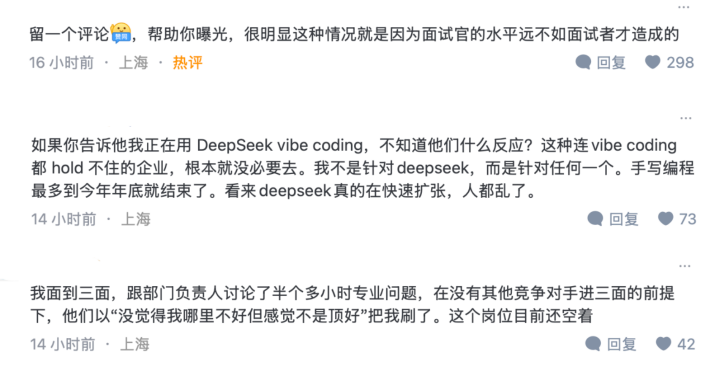
Some netizens in the comment section sided with Li Bojie, with some believing the interviewer's level was far inferior to Li's.
Others argued that handwritten programming would soon be obsolete in the AI era: 'Seems like DeepSeek is expanding rapidly, and people are getting confused.'
Another individual who claimed to have reached the third round of DeepSeek's interviews shared his experience, revealing that the interviewer had chatted with him for over half an hour but ultimately rejected him despite no other competitors: 'This position is still vacant.'
However, some defended DeepSeek, questioning whether Li Bojie was simply promoting his own startup.
Other netizens admitted that using two screens during an interview could indeed raise suspicions of cheating, noting that Huawei's online interviews prohibit candidates from using two screens.

A Former Huawei 'Genius Teen' Now Venturing into the AI Sector
Li Bojie, at the center of this incident, is no ordinary job seeker. Public records show Li was born in 1992 and enrolled in the Youth Class at the University of Science and Technology of China (USTC) as early as 2010.
Initially, Li chose mathematics as his major and was a student in the Hua Luogeng Class. However, he soon discovered the vast difference between advanced mathematics and high school competition math, prompting him to switch to computer science, a field he found more interesting.
In 2014, Li joined a joint program between USTC and Microsoft Research Asia (MSRA) as a jointly trained Ph.D. student.
In 2017, Li stood out among hundreds of Ph.D. students from multiple countries and regions, winning the Microsoft Research Asia Fellowship. Two years later, Li successfully earned his Ph.D. in Computer Science.
Additionally, Li's research findings were published in top international academic conferences such as SIGCOMM, SOSP, NSDI, ATC, and PLDI, and he received the ACM China Outstanding Doctoral Dissertation Award.
After graduation, Li joined Huawei in 2019 as one of the first batch of 'Genius Teens,' with a job grade of P20 (Technical Expert Level A). He served as an Assistant Scientist and Deputy Chief Expert at Huawei's 2012 Labs Central Software Institute, Computer Network and Protocol Lab, and Distributed and Parallel Software Lab.
In a later interview, Li revealed his thought process behind joining Huawei: At the time, Huawei's research in high-performance networking was relatively scarce, and his Ph.D. advisor happened to be at Huawei, allowing him to participate in some critical core projects and grow rapidly.
Li stated, 'My involvement not only helped Huawei solve practical problems but also promoted my career development. I was also selected for Huawei's 'Genius Teen' program.'
In July 2023, after resigning four times, Li gave up his lucrative job at Huawei to start his own business, venturing into the AI Agent sector.
Li first co-founded Logenic AI with several friends, focusing on building multimodal personalized assistants, digital twins, and other businesses. Later, Li served as Chief Scientist at Pine AI.
Tianyancha data shows that Pine AI was established in the United States in early 2024, under the company 19pine Private Limited.

Pine is positioned as an AI voice assistant capable of autonomously completing various practical tasks via phone, email, or software, including but not limited to arranging travel and appointments, canceling subscription services, conducting personal communications, submitting complaints, obtaining refunds, and negotiating lower fees.
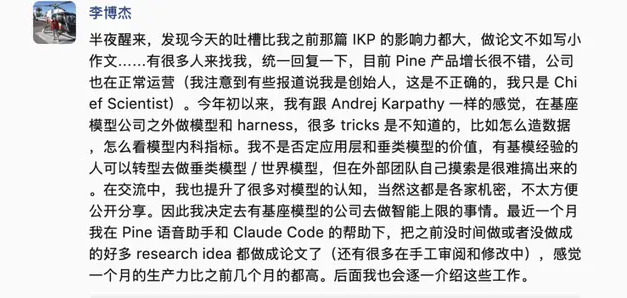
On the morning of July 7th, Li Bojie updated his social media again, expressing surprise at the widespread dissemination of his complaint post while also mentioning that Pine's product growth was excellent and the company was operating normally.
At the same time, Li emphasized that he was not the founder of Pine but merely the Chief Scientist.
Later that day, Pine AI CTO & Co-founder Vincent Sun also clarified to DecodeNewSight that Li Bojie had been involved in Pine AI's daily operations as a consultant since June 2024 and officially joined as Chief Scientist in February 2025.
'Li Bojie's interview with DeepSeek took place after he left Pine AI. He maintains a very good relationship with Pine AI, and his departure was purely due to differences in research direction.'
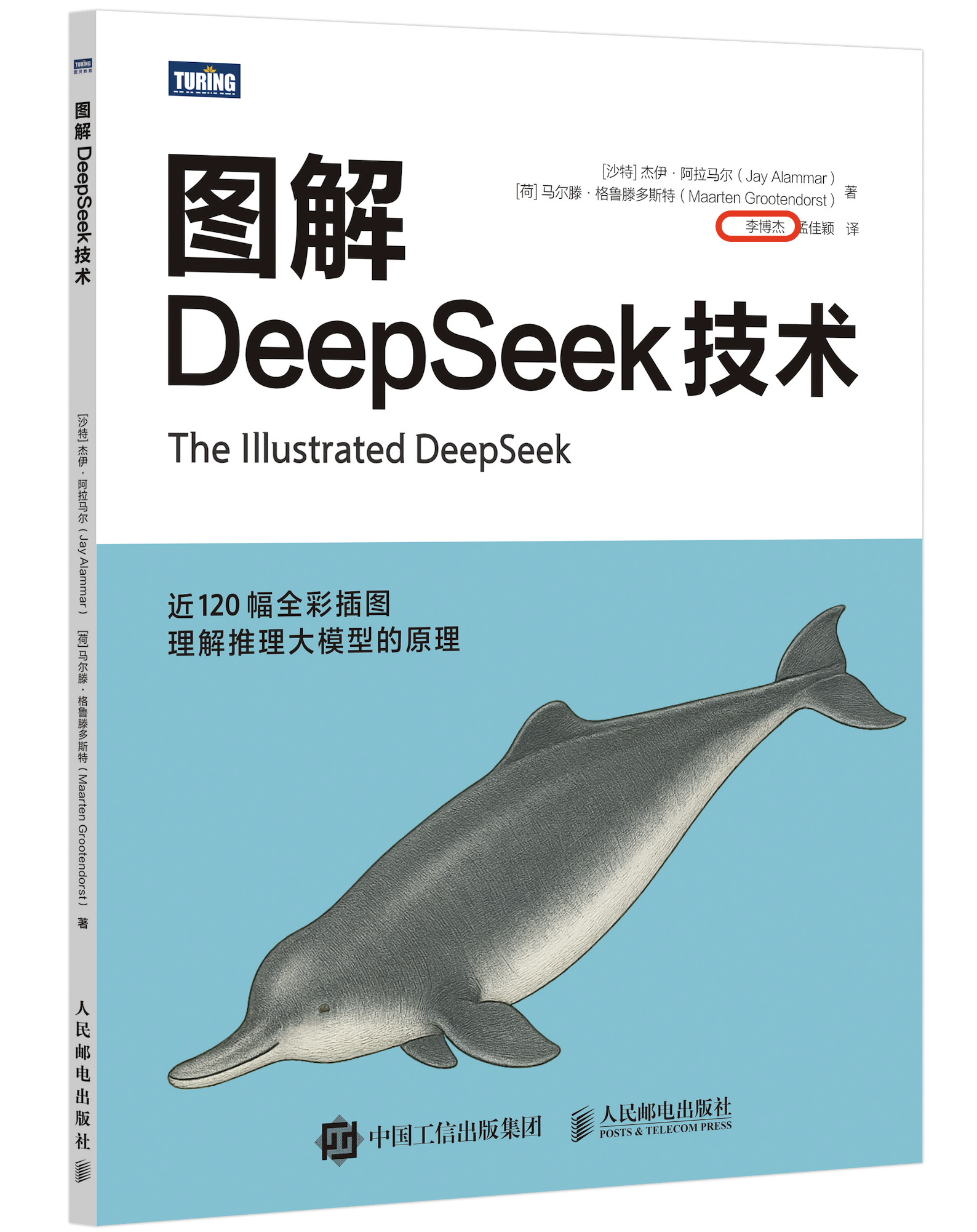
Notably, before this interview, Li Bojie had some prior interactions with DeepSeek. He was rumored to be one of the translators of the book 'Illustrated DeepSeek Technology.'
In April this year, Li also publicly reviewed DeepSeek's latest flagship large model, DeepSeek V4.
In his view, the most impressive aspect of DeepSeek V4 was its ability to synergize multiple innovations at the largest scale, demonstrating DeepSeek's profound technical accumulation in underlying training.
DeepSeek Launches Large-Scale Recruitment After Securing Massive Financing
The unpleasant interview described by Li Bojie coincided with DeepSeek's most critical expansion phase in history.
This June, multiple media outlets reported that Hangzhou DeepSeek Artificial Intelligence Fundamental Technology Research Co., Ltd., the company behind DeepSeek, successfully secured approximately 51 billion yuan in Series A financing. After this round, DeepSeek's valuation soared to 400 billion yuan.
According to the Kechuang Board Daily, among the many investors, DeepSeek founder Liang Wenfeng personally contributed about 20 billion yuan, making him the largest single contributor in this financing round.
Meanwhile, Tencent invested approximately 10 billion yuan; the CATL (CATL) ecosystem invested about 5 billion yuan, including CATL and Puquan Capital; NetEase, JD.com, Monolith Capital, and IDG Capital each invested about 3 billion yuan; Zhengxingu Investment and Shixiang Technology each invested about 1.5 billion yuan.
Additionally, the 'national team' of AI investment—the National Artificial Intelligence Industry Investment Fund—also participated in this round, potentially investing about 1 billion yuan.
According to media reports, only the National Artificial Intelligence Industry Investment Fund directly invested in DeepSeek in this round, without any lock-up period restrictions, and enjoy (enjoyed) company voting rights.
Other institutions invested in the limited partnership enterprise managed by Liang Wenfeng, not directly in DeepSeek itself, and their shares would be locked for five years, during which they could not sell their holdings.
Notably, during a four-hour video roadshow in May this year, Liang Wenfeng proposed a special requirement to potential investors: One of the prerequisites for investing in DeepSeek was a commitment not to poach DeepSeek's employees or encourage them to start their own ventures.
Shortly after the financing, on June 25th, DeepSeek announced its largest-ever recruitment drive since its inception, declaring plans to 'at least double the size of all departments.'
This recruitment covers seven major categories, including algorithms, system R&D, operations and maintenance, products, data strategy, deep learning researchers, and functional departments, with a total of 33 positions open.
Among them, DeepSeek opened a special position—'AI Cross-Disciplinary Technical Talent'—open to candidates 'with exceptional abilities who wish to participate in creating and building AGI,' with no professional background restrictions.
Leida Finance noted that the recruitment positions also included the Agent Harness team, which had been hiring previously. Media reports claimed that Li Bojie had interviewed for a Harness R&D position.
This team focuses on developing code agent products. Chen Delli, a senior researcher at DeepSeek, explained, 'Simply put, we're aiming to rival Claude Code and develop DeepSeek Code Harness.'
Cui Tianyi, the head of DeepSeek's Harness team, also posted on social media that as a newly established department, the Harness team has ambitious goals and heavy tasks, with a significant current staffing shortage. 'I'm interviewing every day and posting recruitment ads on various platforms.'
However, just over 10 days after this high-profile recruitment announcement, DeepSeek's recruitment model was criticized by Li Bojie, the former Huawei 'Genius Teen.'
Leida Finance will continue to monitor DeepSeek's subsequent developments.
-
![]()
Emerging Leaders Surge Ahead, While Others Grapple with Challenges|Mid-Year Review ①
-
![]()
BYD Executive Sheds Light on Electric Vehicle Wading Prowess: Theoretical Edge Over Fuel Cars, Yet Battery Seal Integrity Is Key
-
![]()
Zhipu Stages a 'Deep V' Turnaround on Lock-up Expiry Day: Can the 'Pioneer Large Model Unicorn' Maintain Its Edge?
-
![]()
Switch Transition from Copper to Optical: From 500 Wafers to a $10 Billion Market
-
![]()
Fuel Vehicle Pricing System Undergoes Severe Stress Test: Unraveling the Root Causes
-
![]()
Xiaomi Steps into Car Manufacturing, Embracing 'Extended Range' Strategy
-
![]()
Next-Gen 13-inch Surface Pro Review: Huge Improvements in Performance and Energy Efficiency, Integrated Graphics Rival Latest X86
-
![]()
SpaceX: Space Computing Power - Musk's New Vision or Real Future?