Alibaba’s Earnings Soar with Triple Strengths: Full-Stack AI Hits Harvest Stage, Capital Efficiency Keeps Improving
 08/24 2026
 561
561
In recent years, global cloud service providers have repeatedly faced market inquiries about how to achieve a better balance between scale expansion and profit maintenance during the phase of AI infrastructure investment.
Amazon AWS, Microsoft Azure, and Google Cloud have all been continuously grappling with this challenge.
However, Alibaba Cloud delivered a highly valuable response this quarter.
According to Alibaba’s fiscal Q1 2027 report, revenue from AI cloud and computing services surged by 45% year-on-year, while adjusted EBITA for this segment skyrocketed by 133% year-on-year, with profit margins climbing to 12%.
The simultaneous acceleration of revenue and profit growth has shattered the long-held belief that “AI growth depends on massive capital investments in computing power, with depreciation subsequently weighing down profit margins.”
Later, during the earnings call, management’s comments had a significant market impact: “AI-related capital expenditures will pay off within three years, and with further enhancements in AI product profit margins, the payback period could be reduced to two and a half years or even two years in the future.”
This statement offers a crucial insight, unveiling three layers of certainty (or “buffs”) that Alibaba’s AI strategy conveys to the capital markets.
First Layer Buff: Demand-Side Certainty – AI Emerges as the Core Driver of Cloud Growth
Tech giants’ AI narratives often kick off with technology but stumble at the “last mile” of commercialization: getting customers to pay.
However, Alibaba’s earnings report this quarter signals to the market that AI’s pull on the cloud business has advanced beyond the validation stage.
According to the report, Alibaba’s AI-related product revenue reached RMB 12.376 billion last quarter, marking the twelfth consecutive quarter of triple-digit year-on-year growth. Annualized revenue has surpassed RMB 49.5 billion, with its share of Alibaba Cloud’s external commercial revenue rising from around 30% to 35%. This scale now rivals that of an independent major business segment, boasting robust growth momentum.
Building on this, further confidence stems from the sustained trend of AI computing power demand outpacing supply over the next three to five years.
Technological progress in large model iteration, multimodal content explosion, and intelligent agent adoption is all driving up token consumption. According to Omdia’s China AI Cloud Market Share 2025 report, Alibaba Cloud ranks first in China’s AI cloud market with a 38.1% share.
This means that as long as AI application penetration keeps rising, cloud infrastructure demand will remain solidly supported. Strong demand-side certainty gives Alibaba the confidence to sustain capital expenditures. Alibaba Cloud’s external revenue growth hit a 22-quarter high, firmly reflecting genuine market demand.
Demand-side certainty ensures sustainable growth. Moreover, Alibaba’s earnings report also hints at efficiency improvements, convincing the market that capital expenditures can translate into sustainable profits.
Second Layer Buff: Full-Stack AI Commercial Closed Loop – Efficiency Gains Unlock Profit Potential
The earnings report reveals that Alibaba Cloud’s adjusted EBITA margin for the AI cloud and computing segment rose to 12% last quarter, up 133% year-on-year. This indicates not only revenue growth but also improving profitability, reflecting enhanced cost control and operational efficiency.
The reason lies in Alibaba’s integration of a full-stack AI commercial closed loop: “Chip – Cloud Infrastructure – Self-Developed Models – MaaS – Intelligent Agents – End-User Applications.” This synergy cuts overall operational costs and boosts resource utilization efficiency.
This quarter, every link in this chain is unlocking new financial value.
At the computing power layer, T-Head’s self-developed Zhenwu M890 chip has served over 650 external clients across 20 industries via Alibaba Cloud, achieving large-scale commercialization. Self-developed chips now directly contribute revenue, enabling Alibaba to optimize hardware cost structures under the same capital expenditure.
At the cloud infrastructure layer, Alibaba Cloud has shortened large-scale AI data center delivery cycles to 100 days, doubling capacity efficiency. This speeds up computing power supply to better meet market demand, showcasing improved infrastructure operational efficiency.
At the model layer, the new flagship base model Qwen3.8-Max boasts 2.4 trillion total parameters and completed iteration within three months. More crucially, joint optimization with chips and cloud infrastructure allows Alibaba to maintain cost control amid rapid iteration.
At the application layer, Qianwen App has 250 million users experiencing AI-driven shopping via its intelligent agent feature, while Qianwen Office targets enterprise productivity scenarios. These applications serve as both AI revenue sources and amplifiers of token and cloud resource consumption.
From upstream infrastructure to downstream applications, the full-stack AI closed loop reshapes the ROI formula for global tech giants.
On the revenue side, AI-related products command significantly higher gross margins than traditional cloud products, with new capacity corresponding to high-quality business, naturally boosting the numerator.
On the cost side, T-Head’s self-developed chips combined with full-stack joint optimization continuously reduce unit token delivery costs.
In other words, the same capital expenditure generates higher marginal profits at Alibaba. With a boosted numerator and optimized denominator, the payback period naturally outperforms pure integration models.
This earnings report lays out a clear ROI blueprint for the market. As AI competition enters the deep end, full-stack player Alibaba doesn’t need to sacrifice margins for volume – it can achieve both revenue and profit growth.
With dual guarantees of demand and efficiency, the market’s focus naturally shifts to: How quantifiable is the payback period?
Third Layer Buff: Three-Year Payback – Growth Trajectory Keeps Steepening
In the second half of 2026, the investment logic of the AI industry is undergoing significant shifts.
Previously, the market focused more on computing power reserves, but in the latter half of the year, a clear correction has emerged in AI hardware stocks as investors increasingly prioritize downstream commercialization – i.e., the conversion efficiency of capital expenditures into revenue, profits, and free cash flow.
The earnings report shows Alibaba’s quarterly capital expenditures reached RMB 67.678 billion, up 75% year-on-year, primarily for AI infrastructure. Under this investment intensity, the market expects clearer return paths.
Management’s response hit the market’s sweet spot: Capital expenditures will pay off within three years, and with further AI product margin improvements, the payback period could be shortened to two and a half years or even two years in the future.
This guidance transforms AI investments from strategic visions into quantifiable asset return models, with clear upfront investments, transparent payback periods, and predictable cash flow recovery. During the AI infrastructure investment phase, calculable returns themselves serve as a solid moat and source of confidence.
The first two buffs provide the demand and efficiency foundations for this promise: Strong demand ensures utilization of new capacity, while full-stack efficiency guarantees capacity profitability.
As scale expansion and profit improvement form a virtuous cycle, growth enters a self-reinforcing trajectory.
Previously, the market viewed cloud services as “stable” but slow growers. However, this earnings report demonstrates simultaneous revenue and profit acceleration. According to Morgan Stanley’s analysis, this growth trajectory will continue to steepen.
From “revenue surge” to “efficiency optimization” to “predictable returns,” the triple buffs present the market with the first new model for the steady and sustained development of an AI infrastructure platform.
Alibaba is securing dual alpha growth and value creation in the next phase through its full-stack AI closed loop and clear commercialization roadmap.
-
![]()
Alibaba's AI Offensive: Over Half of Investment Allocated, Time to Reap Returns
-
![]()
Alibaba’s AI Push: Over Half of Investments Made, Time to Harvest Returns
-
![]()
Chinese Enterprises Going Global 3.0: From World Factory to AI Infrastructure Builder
-
![]()
Honor RobotPhone Review: Half Movie Camera, Half Robot
-
![]()
AI-Driven Cheating Surges in Universities! Online Exams Reduced to Mere Formalities, Degree Credibility on the Line
-
Insta360’s Decade in Panoramic Imaging: Making Cameras ‘Invisible’ and Returning Creation to the Masses
-
![]()
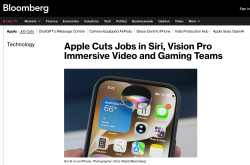
Foreign Media Claims Apple is Concentrating Resources on AI Development: Vision Pro and Siri Teams Lay Off 200 People
-
Big News! Huaneng and Huawei Hold Talks in Shenzhen with Ren Zhengfei in Attendance; Huawei Emerging as the 'Second Brain' of China's Energy System