Raking in 120 Million Yuan Daily and Offering Generous Dividends: Is Midea a Hidden Gem?
 04/10 2026
 585
585
Source | Benyuan Finance
Author | Li Youshan
Home appliances serve as a vivid window into China's manufacturing prowess. Over the past four tumultuous decades, Chinese home appliance companies have weathered economic cycles, evolving from simple product OEMs to fully integrated supply chain powerhouses.
According to preliminary estimates by AVC (All View Cloud), China's installed base of home appliances has soared past 4 billion units, averaging over 8 units per household. This clearly signals that the industry has entered a mature, highly competitive "red ocean" phase.
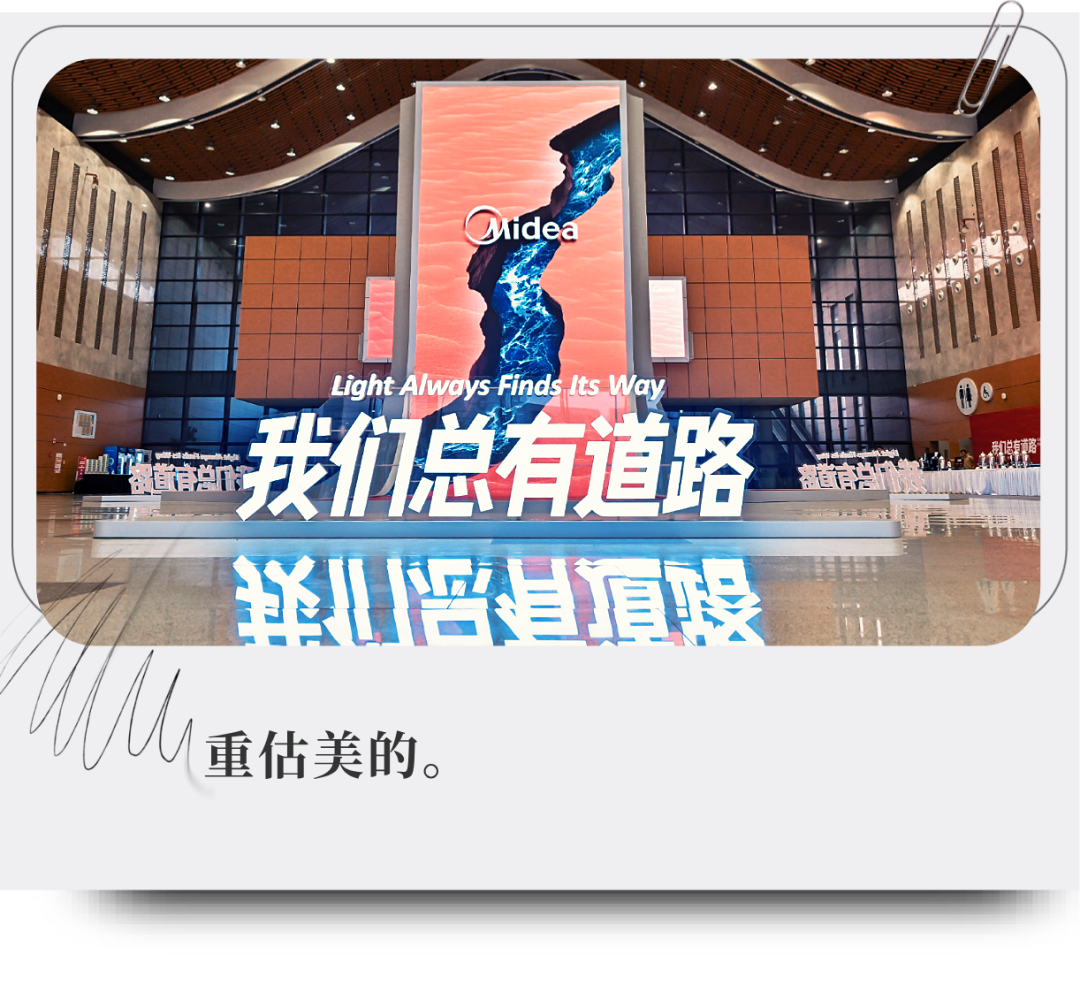
Among these, Midea, the highest-valued white goods giant, stands out as a prime example for observing China's home appliance sector. In its 2025 financial report, Midea proudly titled itself "We Always Find a Way." The group achieved an annual revenue of 458.5 billion yuan, marking a 12.1% year-on-year increase. Net profit attributable to shareholders reached 43.95 billion yuan, up another 14% year-on-year, translating to daily profits exceeding 120 million yuan. These stellar results triggered three consecutive days of gains in Midea's A-share stock.
What truly excited the market was Midea's chairman, Fang Hongbo, continuing his generous dividend policy by proposing a dividend of 43 yuan per 10 shares, totaling approximately 32.4 billion yuan. Combined with share repurchases, Midea's total dividends and repurchases for the year surpassed 44 billion yuan, effectively distributing 100% of its net profit—a remarkable display of generosity.
Beyond impressive performance growth and generous dividends, the growth strategy of this veteran enterprise is equally noteworthy.
There are limited growth stories left in the core home appliance business. Midea's ToB (business-to-business) operations are gradually replacing ToC (business-to-consumer) as the new strategic focus. Based on this strategy, Midea has abstained from participating in the global home appliance event AWE for four consecutive years, opting instead for independent participation by sub-brands like air conditioners and components.
The ToB segment, encompassing new energy and industrial technology, smart building technology, and robotics and automation, achieved revenue of 122.8 billion yuan, up 17.5% year-on-year. This significantly outpaced the home appliance sector and became a new growth engine. AI has also penetrated Midea's entire supply chain, including production scheduling, energy consumption, inventory, and processes, creating value reflected in its financial reports.
Midea aspires to transform from a "traditional home appliance manufacturer" into a "globally leading technology group." However, with a price-to-earnings ratio around 12, the market still primarily perceives Midea as a home appliance company.
With double-digit performance growth, high dividend payouts, and large-scale share repurchases, is Midea undervalued? What underlying concerns exist?
Fang Hongbo Leads the B-End Breakthrough
In 2025, Fang Hongbo, a leader rarely seen in the spotlight, began appearing frequently in the public eye.
Externally, Fang participated in CCTV's "Dialogue" program, the China Entrepreneur Forum (Yabuli Forum), and granted interviews to share Midea's technological transformation story, confidently conveying its strategic shift. Internally, he actively promoted organizational reform, issuing the "Requirements for Simplifying Work Methods" to reduce management inefficiencies and address bureaucratic issues in large companies.
These "unusual" actions by the chairman are closely tied to the challenging winds in China's domestic home appliance retail market.
AVC data shows that in 2025, China's total home appliance retail sales (excluding 3C products) reached 893.1 billion yuan, down 4.3% year-on-year. In the second half of the year, affected by diminishing policy stimulus effects, industry retail sales fell to 421.4 billion yuan, a sharp 16% decline year-on-year.
Despite the market downturn, Midea performed admirably. In 2025, it achieved total operating revenue of 458.5 billion yuan, up 12.1% year-on-year. Net profit attributable to shareholders reached 43.95 billion yuan, up 14% year-on-year. Its dividend payout was notably generous among blue-chip stocks.
Overseas markets shone brightly in Midea's financial report, securing the top market share in 32 sub-categories across Amazon North America, Europe, Japan, and other regions. Revenue reached 195.948 billion yuan, up 15.92% year-on-year, significantly outpacing domestic market growth and increasing its revenue share to 42.93%.
If globalization represents Midea's second growth pole, then the comprehensive breakthrough in its ToB business serves as the cornerstone of its transformation from a home appliance company to a technology group.
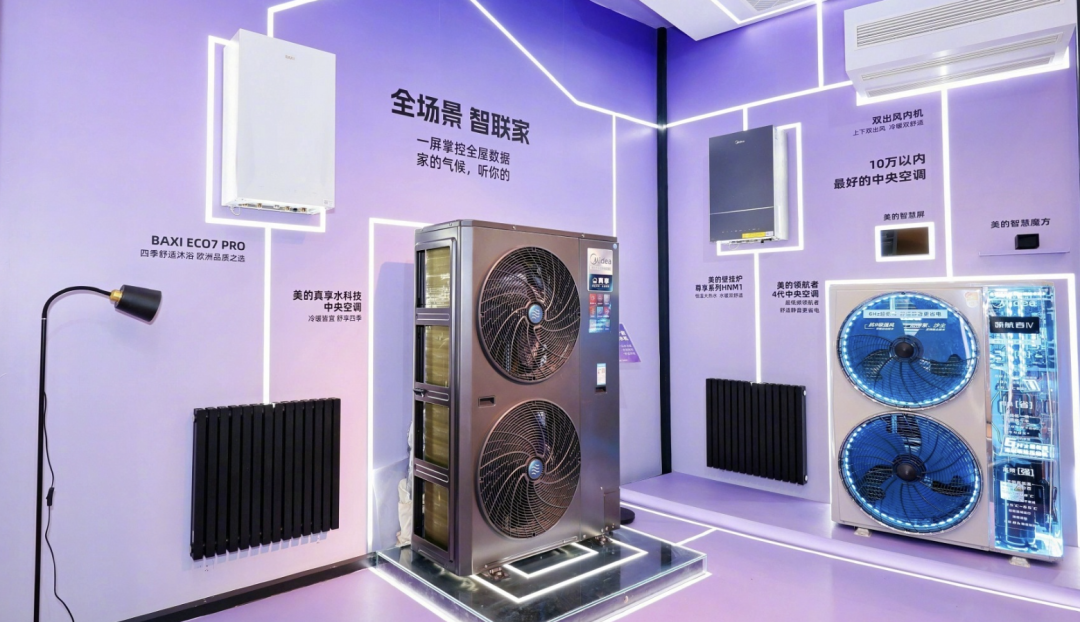
From a revenue structure perspective, ToC home appliance operations remain Midea's anchor. In 2025, the home appliance segment achieved revenue of 299.927 billion yuan, up 11.28% year-on-year, accounting for 65.7% of total revenue.
Residential air conditioners led the white goods sector, with online market share reaching 28.7% and offline share at 27.5%, both ranking first in the industry. Notably, the home appliance portfolio saw significant differentiation, with smart living appliances, cleaning appliances, and personal care health products bucking the trend and showing strong premiumization trends.
The ToB business grew faster than the ToC segment, up 17.5% year-on-year, with revenue surpassing 122.8 billion yuan. It expanded across multiple fronts, including buildings, robotics, industry, healthcare, and energy, with a continuously optimizing structure.
During an internal meeting in 2015, Fang Hongbo hinted at a diversification strategy: "Midea's boundaries will blur. In the future, Midea will strive to transform from a traditional home appliance company into a smart hardware company with an internet mindset." He later emphasized, "To navigate industry cycles, you must upgrade industrially and find a second growth engine."
In the robotics sector, Midea acquired German industrial robot company KUKA in 2017 for approximately 30 billion yuan in cumulative transactions, marking a significant step in its transformation. After a challenging period post-acquisition, KUKA turned around after 2021, and the anticipated synergies began to materialize. By 2025, according to MIR Databank, KUKA shipped over 32,000 industrial robots in China, up more than 30% year-on-year, firmly ranking among the top three in the industry.
The fastest-growing segment was building technology, with annual revenue of 35.79 billion yuan, up 25.7% year-on-year. Industrial technology operations remained robust, with full-year revenue of 27.232 billion yuan, up 10.24% year-on-year.
In terms of AI narrative, Midea is equally proactive, with the chairman personally setting the tone and strategy. Recently, Fang disclosed Midea's AI investment structure: a team of over 400 AI professionals and planned R&D investment exceeding 60 billion yuan in cutting-edge fields over the next three years.
The Dual Sides of Growth
Years of industry infighting and price wars have left the home appliance sector battered, with growth prospects already capped. Midea is not alone in urgently seeking a second growth curve.
Neighboring Haier has pursued a brand globalization strategy, daring to invest $30 million in building a factory in the U.S. over 20 years ago and now rooted in ecological transformation. Gree has also explored diversification into smartphones and new energy.
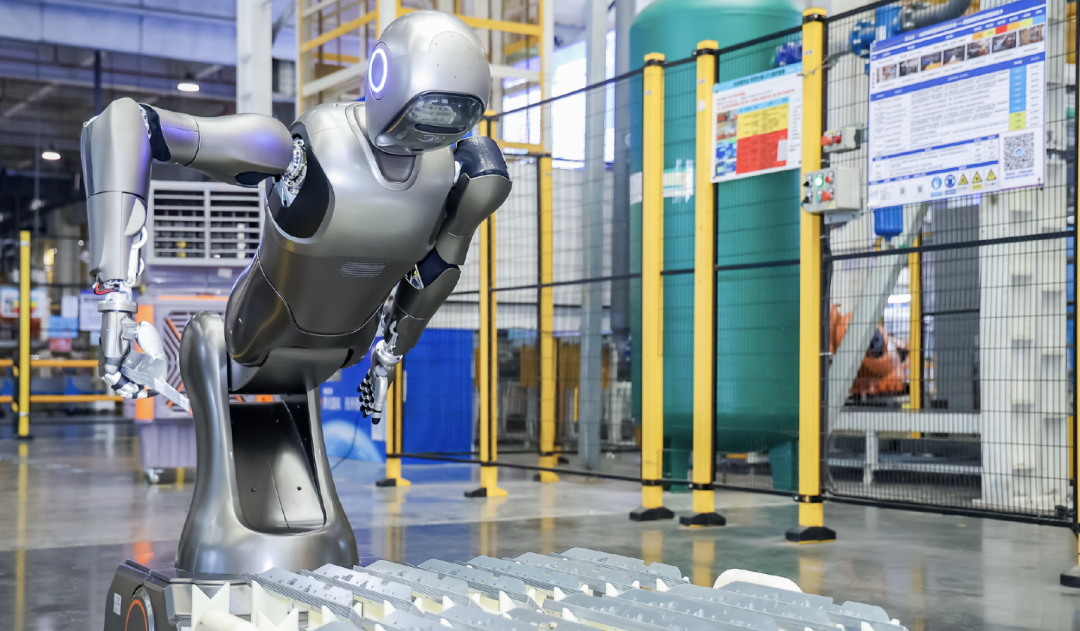
Midea's bet on the B-end has proven correct and fortunate, more critically elevating its profit quality. In Q4 2025, its gross margin reached 28.4%, and net cash generated from operating activities for the year hit 53.3 billion yuan—the confidence behind Fang Hongbo and Midea Group's high dividend payouts.
Even so, Midea must still navigate industry-wide challenges and confront several major hurdles.
The first is shrinking industry demand.
As government subsidies expired and the domestic real estate sector remained sluggish, major brands faced significant sales pressure in the second half of the year, showing a high-low trend. The ceiling pressure on traditional home appliance businesses persists.
Take Haier Smart Home as an example: despite annual revenue growth, its net profit growth slowed to 4.39%, with Q4 net profit declining by about 40%. Hisense Home Appliances saw both revenue and net profit decline, with Q4 revenue down over 30% year-on-year compared to Q1.
Midea's Q4 growth also slowed significantly, with net profit attributable to shareholders down 11.3% year-on-year. Selling expenses approached 10 billion yuan as promotional efforts intensified, driving up the selling expense ratio.
Profit declines stem from multiple factors. Internally, the acquisitions of Arbonia HVAC, Toshiba Elevator's China business, and Carestream Health's international operations incurred losses and integration costs during initial consolidation. Externally, weak European industrial automation markets led KUKA to book restructuring costs of about 500 million yuan.
Profit declines were also tied to fluctuations in raw material prices like copper and aluminum.
As a leading home appliance company, Midea is highly sensitive to copper and aluminum costs, especially for air conditioners. Data shows that copper prices rose 34.34% in 2025, averaging 98,000 yuan/ton in Q4. Aluminum prices rose 22%, averaging 24,000 yuan/ton in Q4. Copper and aluminum account for about 40% of Midea's raw material costs in residential air conditioners, with Q4 being the peak period for cost pass-through, followed by sustained impacts in the next 1-2 quarters.
With copper, aluminum, and other commodities remaining at high prices, several home appliance brands raised prices this year, triggering a new round of price wars. Midea adopted a tiered pricing strategy, but if price hikes cannot cover cost increases, they will squeeze gross margins.
On the supply side, Midea faces encirclement pressure in the mature home appliance market.
Last year, Xiaomi saw rapid growth in air conditioners and other areas, with online market share once surpassing Gree, creating crisis awareness in the smart home sector. In the premium market, Haier's Sanwing and Casarte brands compete fiercely, while Gree and Hisense also harbor ambitious plans in the mass market. Facing intensifying competition, Fang Hongbo publicly stated at an early shareholders' meeting that Midea had prepared three reports analyzing Xiaomi: "Tactically, we take Xiaomi seriously, but strategically, we're not afraid of its entry."
The ToB business also presents both opportunities and challenges, with difficulties balancing new business incubation investments and profitability.
Building technology is highly correlated with commercial real estate and infrastructure, both still in adjustment phases. The much-anticipated industrial robotics business remains dependent on imported core components like reducers and high-end chips, with high growth relying on low-base recovery. Energy storage and photovoltaic businesses still face technical barriers in core electrochemical technologies. These three businesses operate in technology-intensive sectors with high R&D and capital requirements, introducing uncertainties.
Internally, Midea must also address organizational turbulence and iteration issues arising from business evolution.
Last year, Midea Group underwent multiple organizational restructurings. As Fang Hongbo put it, "Transformation means transforming people." "If team structure, mindset, knowledge, and capabilities don't change, it's all talk." In 2025, Midea further proposed "simplifying business models and eliminating redundancies," emphasizing, "When we are simple, the world is simple; when we are complex, the world becomes a maze. We must dare to streamline and seek simple solutions," continuously optimizing team structure.
In January 2026, China Newsweek interviewed Fang Hongbo, who explicitly stated, "We've compressed management levels from seven to four, letting those closest to the action make decisions."
Organizational turbulence naturally harbors uncertainties, representing potential threats enterprises must confront during brutal transformation periods.
AI and Overseas Markets Build Momentum
Reviewing corporate financial reports over the past two years, AI and overseas markets have been heavily emphasized, and Midea is no exception.
In its 2025 annual report, Midea mentioned AI over 80 times. For example, over 13,000 intelligent agents operate stably across Midea's business processes, with AI deployed in over 150 product categories, and AI-driven cost reductions scaling up from 180 million yuan to 700 million yuan...
The efficiency gains from AI, if truly cross-industry applicable, could become Midea's new ace.
Midea's overseas market development is equally remarkable, with revenue contribution reaching 42.93%, a historic high. Notably, overseas own-brand e-commerce operations grew rapidly, up over 35% year-on-year in 2025. E-commerce revenue in countries like the UK, France, Italy, South Korea, Brazil, and Argentina surged by over 50%.
However, with global trade dynamics reshaping, high overseas growth must also navigate geopolitical and localization operational risks.
After dissecting Midea's business and performance, we return to the initial question: Is Midea undervalued?
After over a decade of accumulation, its pace seems slow when viewed through the lens of traditional home appliances, and its PE ratio appears significantly undervalued when considering short-term, non-revenue-generating technological foundations. Transitioning between old and new logics takes time, but Midea can afford to wait.
To conclude with a line from Midea's annual report: "We still have a long road ahead. But look—we've already come so far."
*All rights reserved. No reproduction without authorization.
end
-
![]()
Registered Capital Slashed to 372 Million Yuan! Yutong Optical Finalizes Industrial and Commercial Change Registration
-
![]()
Zhuque-3 Successfully Lands, and 'Time Traveler' Secures Another ¥100 Million in Funding: China's Commercial Space Industry Experiences a 'Dynamic August'
-
![]()
Autohome Faces a Shrinking Window of Opportunity
-
![]()
Even a Titan Like Musk Has Faced Setbacks in Fulfilling Promises
-
![]()
AI Office: The End of the Racing Era, Context Becomes the Key to Success
-
![]()
Domestic Vehicle Chassis Revolution ②: The Steering Wheel Remains, But Mechanical Connections in the Steering System Are Decreasing
-
![]()
Exploring MiniMax Design: Can Video Editing Be as Simple as Speaking?
-
![]()
Why Can SenseTime Achieve Profitability While CloudWalk Still Faces Challenges, Despite Both Adopting Large Models?