OPPO Sacrifices Market Share for Higher ASP, Retreats to Advance and Reshapes Business Landscape
 04/10 2026
 838
838

Produced by | Zhige Insights
OPPO's total global smartphone shipments in 2025 reached approximately 100 million units, capturing about 8.1% of the market share and ranking fifth globally, a year-on-year decline of nearly 3%.
Meanwhile, Counterpoint's data revealed a surprising phenomenon: OPPO's global average selling price (ASP) had surpassed Samsung's, placing it second only to Apple.
What does this mean? It means that while OPPO's shipments are shrinking, the phones it sells are more expensive.
This is not a natural evolution of market dynamics but rather a deliberate strategic shift by OPPO—trading market share for per-unit profit and sacrificing sales volume for premium pricing.
This bold gamble, which began in 2024, is profoundly reshaping OPPO's business landscape.
1. The Premium Truth Behind Declining Volume and Rising Profit
When the 2025 annual shipment decline was announced, the initial reaction from outsiders was often to write off OPPO.
However, making preliminary judgments based solely on aggregate data is clearly too hasty. If we zoom in on OPPO's market performance in 2025, it can be accurately summarized as "low start, high finish, declining volume, rising profit."
After a lackluster first three quarters, OPPO rebounded in the fourth quarter of 2025, achieving global shipments of 26.8 million units, a year-on-year increase of 9% against the trend.
In the Chinese domestic market, OPPO became the manufacturer with the strongest shipment growth in that quarter, rising from fifth to third place.
Even more intriguing than the shipment figures was the surge in revenue data. In the same fourth quarter, OPPO's overall revenue soared by 23% year-on-year. The underlying logic behind revenue growth far outpacing sales growth is its significantly rising average selling price.
Relevant data shows that OPPO's ASP growth ranked second globally in the mobile phone industry, trailing only Apple.

What does ASP data represent? ASP measures the actual transaction price paid by consumers, not inflated list prices.
OPPO's ability to achieve a substantial ASP increase proves that its premium product lines have indeed found a user base willing to pay full price. This is concrete evidence of a substantive improvement in brand premium capability, not just a simple financial figure on paper.
From the perspective of the domestic market in 2025, the top-tier landscape has descended into brutal micro-competition, with the market share gaps among the top six manufacturers being negligible.
Among them, the OPPO ecosystem ranked fourth with a 15.91% share, less than one percentage point behind first-placed Vivo, which held 16.76%.
This razor-thin, anxious pattern (translated as "landscape") is precisely the context for understanding OPPO's current strategic contraction.
2. The Marketing God's Device Deluge Dilemma
OPPO was once hailed as the "marketing god" of the industry. The catchy slogan "Charge for five minutes, talk for two hours" is deeply etched in the memories of a generation.
In 2016, leveraging this bombastic marketing approach and a vast network of offline agents, the R9 series achieved sales of over 20 million units, a mythical figure.
During the growth era, this model of relying on channel expansion and heavy marketing spending was unstoppable.
However, as the market entered a period of Stock game (translated as "mature competition"), especially after competitors like Huawei redefined premium smartphones with foundational technologies, OPPO's previous tactics began to falter.
Its once-proud vast agent network, amid today's convoluted product lineup, has become a cumbersome burden.
In 2025 alone, the OPPO ecosystem (including OnePlus and Realme) released dozens of models, extensively covering various price segments. This classic "device deluge" strategy, while filling shelf space, severely diluted brand focus, making it difficult for consumers to form deep impressions of any specific model.
Realizing the issue, OPPO initiated a series of strategic shifts from late 2025 to early 2026.
Public media reports indicate that Realme, the sub-brand that once charged recklessly overseas with its "Dare to Leap" ethos, underwent internal layoffs before officially returning under the OPPO Group umbrella to enhance synergies in global markets.
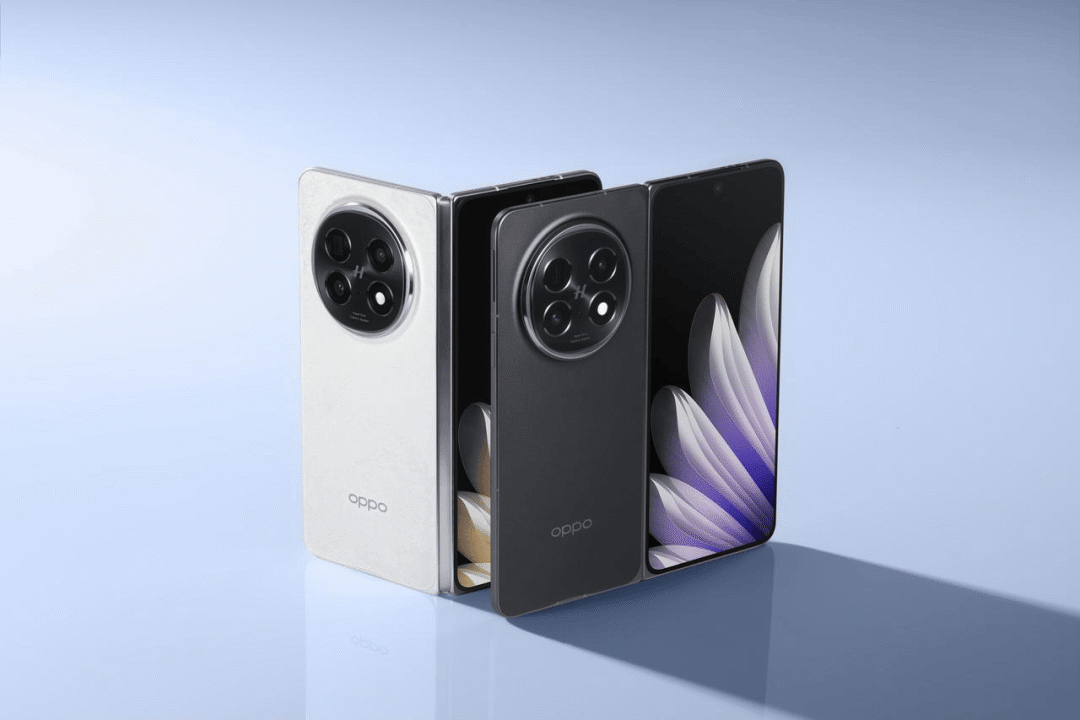
With this, OPPO's post-integration troop deployment became clear: the main OPPO brand holds the center, relying on the Reno series to stabilize its offline base and the Find series to continuously elevate its technological and brand image; the returned Realme clashes head-on with Xiaomi and Honor in the mid-to-low-end and online markets; while OnePlus continues to compete fiercely in the online performance flagship segment.
While streamlining its product lineup, OPPO further established a "dual-flagship" strategy, pairing the straight-flagship Find X series with the foldable Find N series.
Even more sensitive is the price hikes. Supply chain sources indicate that the upcoming OPPO Reno15 series and Find X9 series in April will see price increases of around 300 yuan, with the OnePlus Ace6 series nearing a 500-yuan hike.
Against the backdrop of rising costs for components like storage, price increases align with commercial logic, but whether OPPO can maintain market stability amid these hikes will test its brand appeal.
From scattered offensives to strategic retreats, from device deluge to contraction and integration, OPPO's recent moves all point to three words: consolidate inward.
Epilogue
OPPO founder Chen Mingyong has repeatedly emphasized externally that enterprises must maintain a "duty-bound" mindset of equanimity.
However, with user replacement cycles lengthening, top competitors closing in, and its established foothold facing erosion, this protracted mature-market tug-of-war imposes stricter tests than ever.
In 2025, OPPO delivered a "profitable but muted" performance, with impressive profit margins masking a decline in market buzz.
Entering 2026, with the Find X9 Ultra embarking on a global campaign, the Realme brand reintegrated, and a blanket price hike window opening, an OPPO in painful transformation during this gear shift is clearly on display to the industry.
OPPO is attempting to forcibly Pull in (translated as "shift") its massive frame from the old track of high-speed expansion into a new channel (translated as "path") of meticulous value competition.
Undoubtedly, OPPO's broad direction is correct, but it's important to note that gear shifts often entail risks—as the inertial acceleration of the old model is lost while the stable engine of the new model has yet to be established.
-
![]()
Registered Capital Slashed to 372 Million Yuan! Yutong Optical Finalizes Industrial and Commercial Change Registration
-
![]()
Zhuque-3 Successfully Lands, and 'Time Traveler' Secures Another ¥100 Million in Funding: China's Commercial Space Industry Experiences a 'Dynamic August'
-
![]()
Autohome Faces a Shrinking Window of Opportunity
-
![]()
Even a Titan Like Musk Has Faced Setbacks in Fulfilling Promises
-
![]()
AI Office: The End of the Racing Era, Context Becomes the Key to Success
-
![]()
Domestic Vehicle Chassis Revolution ②: The Steering Wheel Remains, But Mechanical Connections in the Steering System Are Decreasing
-
![]()
Exploring MiniMax Design: Can Video Editing Be as Simple as Speaking?
-
![]()
Why Can SenseTime Achieve Profitability While CloudWalk Still Faces Challenges, Despite Both Adopting Large Models?