If FSD’s Entry into China Unleashes a Wolf, Who Will Be the Lamb on the Chopping Block?
 02/12 2026
 700
700
Introduction
The Chinese intelligent driving sector in 2026 is poised for a fierce battle for supremacy.
Recently, in the North American market, Tesla has made a bold strategic move with its Fully Self-Driving (FSD) system. On one hand, it has completely eliminated the buyout option, transitioning to a subscription-only model. On the other, it has discontinued free access to Autopilot (AP), compelling consumers to opt for paid subscriptions for intelligent driving features.
Through these strategic maneuvers, Tesla has effectively 'compelled' local consumers to swiftly adapt to its new market dynamics.
As the dust settles, Musk's ambitions are laid bare.
Without exaggeration or bias, FSD stands as Tesla's most critical 'ace in the hole' in navigating the brutal competition ahead. Both revenue streams, market valuation, and even Musk's own substantial compensation hinge on the success of this intelligent driving system.
Last week, Tesla released its 2025 financial report, revealing, for the first time, the adoption rate of FSD.
By the end of the fourth quarter, a cumulative total of 1.1 million users had purchased FSD, with 330,000 opting for subscriptions. In 2025 alone, out of over 1.6 million new Tesla owners, 300,000 became FSD users, representing just over 18%.
Faced with these interim results, the road ahead remains challenging.
To boost FSD subscription rates, Tesla must not only rely on contributions from the North American market but also seek growth opportunities in Europe and China, its two major international markets.
In particular, the Chinese market has emerged as a pivotal factor in determining Tesla's success or failure. From Musk's perspective, he clearly recognizes that FSD must conquer this challenging market.
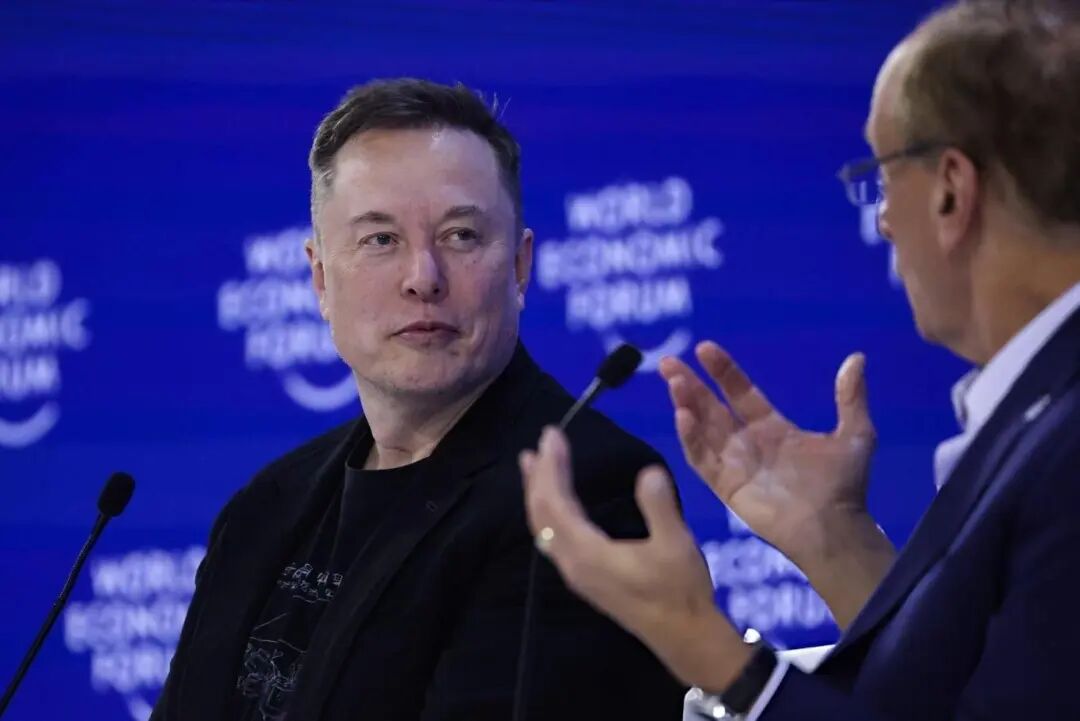
Against this backdrop, during the recent Davos Economic Forum, Musk himself hinted, 'We hope to secure regulatory approval for autonomous driving in Europe, ideally by February, and around the same time in China.'
This statement quickly sparked speculation. According to Musk, the full version of FSD's entry into China is imminent. Recently, as Tesla Vice President Tao Lin disclosed more information in media interviews, the sense that its official launch is drawing near has intensified.
'While we don't have a specific date yet, all preparations are progressing smoothly.'
'FSD has already been launched in multiple global markets, and user feedback confirms that the model trained in North America can adapt to global road conditions. The differences in Chinese road conditions account for only a small portion of the training data, requiring minor adjustments.'
'We've established a local training center in China dedicated to this adaptation. Once officially released, it will demonstrate performance on par with or even surpassing that of local drivers.'
In a nutshell, the core message is clear: The full version of FSD is ready for launch.
As additional evidence, combined with the automotive data export safety guidelines recently issued by eight departments, including the Ministry of Industry and Information Technology, which specifically emphasize that de-identified automotive data can be exported for training purposes, it is evident that external obstacles to FSD's entry into China have been thoroughly addressed.
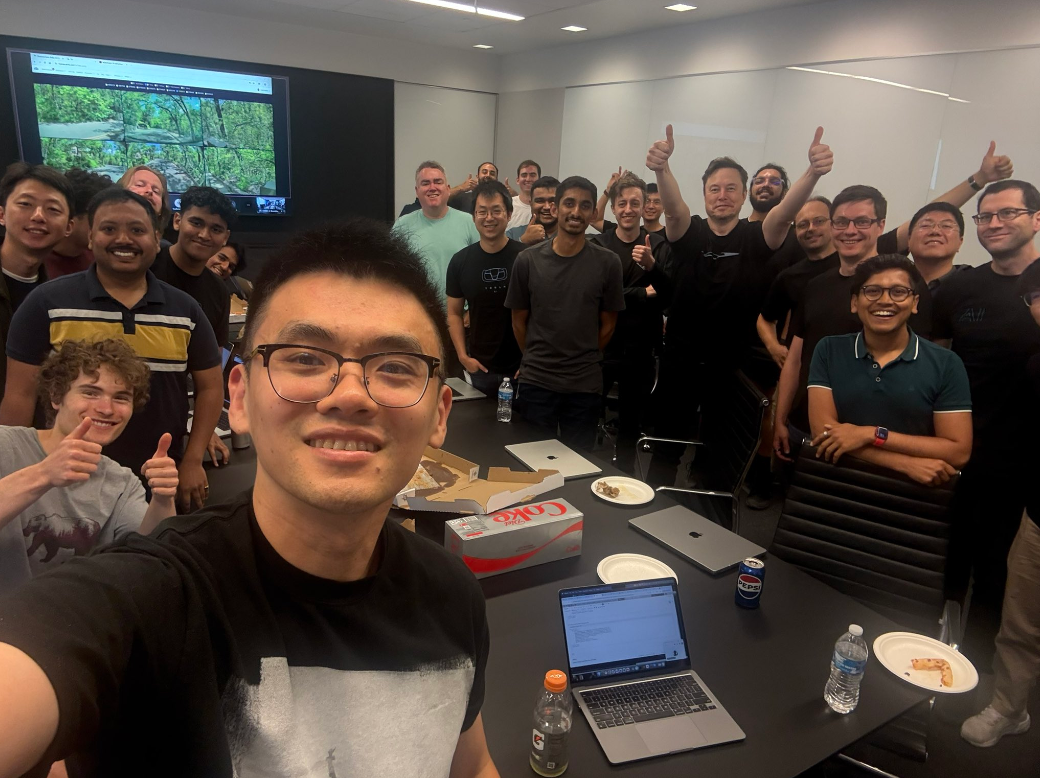
Seizing the momentum, Tesla's internal personnel adjustments have also drawn industry-wide attention. The company officially announced the promotion of Phil Duan (Chinese name: Duan Pengfei), head of FSD V14 and Robotaxi software, to Director of Autonomous Driving Engineering.
This appointment is widely interpreted as a clear signal to further strengthen localized R&D in China and accelerate the launch of the full version of FSD.
Simultaneously, it marks Tesla's strategic shift from a globally unified 'technology export' model to a 'deep dive into the battlefield' approach that prioritizes local adaptation and agile responses.
Undeniably, the wolf is at the door.
For Tesla, if the full version of FSD can gain traction and recognition in the Chinese market, it will not only significantly boost subscription rates and profits but also reverse the downward sales trend of its products, reinvigorating its competitive edge.
Of course, this is contingent upon Tesla adapting its 'combo moves' from North America to the Chinese market.
In reality, most industry insiders have little doubt about the actual performance of the full version of FSD, especially after localized fine-tuning. This intelligent driving system is poised to secure a top-tier position, if not dominate the market.
After all, in terms of model capabilities, computational power reserves, learning efficiency, and resource investment, Tesla is leveraging its 'financial clout' and 'hardware-software integration' to solidify its leading edge.
In comparison, the biggest 'hurdle' for FSD's entry into China remains pricing.
Suppose, hypothetically, the monthly subscription fee is set at around 700 RMB, exceeding 8,000 RMB annually. How many owners would be willing to pay such a hefty price?
Chinese smart EV users, accustomed to the generous offerings of domestic automakers, have rarely developed a habit of paying for services on demand. With major competitors offering lifetime free intelligent driving systems, Tesla's insistence on a subscription model faces an uphill battle from the outset.
This necessitates greater sincerity from the full version of FSD to win this fight, such as extending free trial periods or setting more reasonable monthly prices. Predictably, this battle will be far tougher than in North America.
But logically and strategically, Tesla must conquer this challenging market.
At this juncture, one final question remains: 'If the full version of FSD is the wolf, who will be the lamb on the chopping block?' More bluntly, what impact will its entry into China have?
Let's rewind to 2025. Initially, it was believed that with intense internal competition among domestic automakers and leading suppliers, China's intelligent driving sector would accelerate rapidly. However, due to various factors, particularly certain 'black swan' events, progress ultimately stalled, becoming somewhat stagnant.
The arrival of the full version of FSD will completely revitalize the entire landscape.
Of course, with the wolf at the door, a more brutal fight awaits, as the existing intelligent driving hierarchy faces another reshuffle. Without exaggeration, FSD is likely to redefine what truly constitutes a benchmark in intelligent driving.
For all competitors, from Huawei to Horizon Robotics, Momenta, and Rising Auto, as well as self-developed camps led by NIO, XPeng, and Li Auto, this means fewer opportunities for errors, shorter windows for technical adjustments, and an increasingly imminent showdown.
As the Lunar New Year approaches, nearly every player mentioned above is relentlessly rolling out new intelligent driving versions, redeploying internal teams, and sparing no effort to stay ahead.
They clearly understand the threat posed by the full version of FSD.
Moreover, they deeply recognize that the intelligent driving sector in 2026 is destined to accelerate once again. Aboard this high-speed train of opportunity and risk, a single moment of inattention could lead to catastrophic failure.
If the full version of FSD is the wolf, then others must prove through performance, experience, and continuous iteration that they are no lambs on the chopping block.
In closing, to borrow Musk's own words: 'We are in the process of transitioning from a former autonomous driving company to a future autonomous driving company.'
The future needs no further elaboration.
Editor-in-Chief: Cao Jiadong Editor: He Zengrong
THE END
-
![]()
Model Giant Jieyue Xingchen Steps into Smartphone Arena: A Strategic Alliance with Huaqin Technology
-
![]()
Big Model Firm Dives into Phone Market: StepFun and Wingtech Forge a ‘Dynamic Duo’
-
![]()
Zhongrun Optics Makes a Bold Move with 1 Billion Yuan Investment: Is a Turning Point on the Horizon for the Precision Optics Industry?
-
![]()
Deploy CLBO Crystals and YIG Single Crystals! Erythritol Leader Invests 30 Million in Youwei Optoelectronics
-
CXMT’s July 16 Subscription: Leading Domestic Memory Manufacturer—What’s the Earning Potential per Lot?
-
![]()
Rhythm Discrepancy and Premium Value Erosion: Foreign Luxury Brands Must Re-evaluate Their China Strategy
-
![]()
Half-Year, 1 Billion Yuan Financing, 7 Billion Yuan Valuation: A New Dark Horse Emerges in the Embodied AI Sector
-
![]()
Strong Rebound for Tech Stocks in Hong Kong Stock Market: Is It Time to Bottom-Fish?