BBA Can No Longer Afford to Move at a Snail’s Pace
 02/13 2026
 542
542
Lead
Introduction
The once-strong association between “luxury” and “German brands” is quietly starting to unravel.
“The pie has shrunk, and the number of people vying for a slice at the table needs to be reassessed.”
Recently, Alexander Pollich, President and CEO of Porsche China, expressed this viewpoint while discussing the company's decision to implement a “retrenchment strategy” and explaining key decisions, such as adjusting its sales network in the Chinese market.
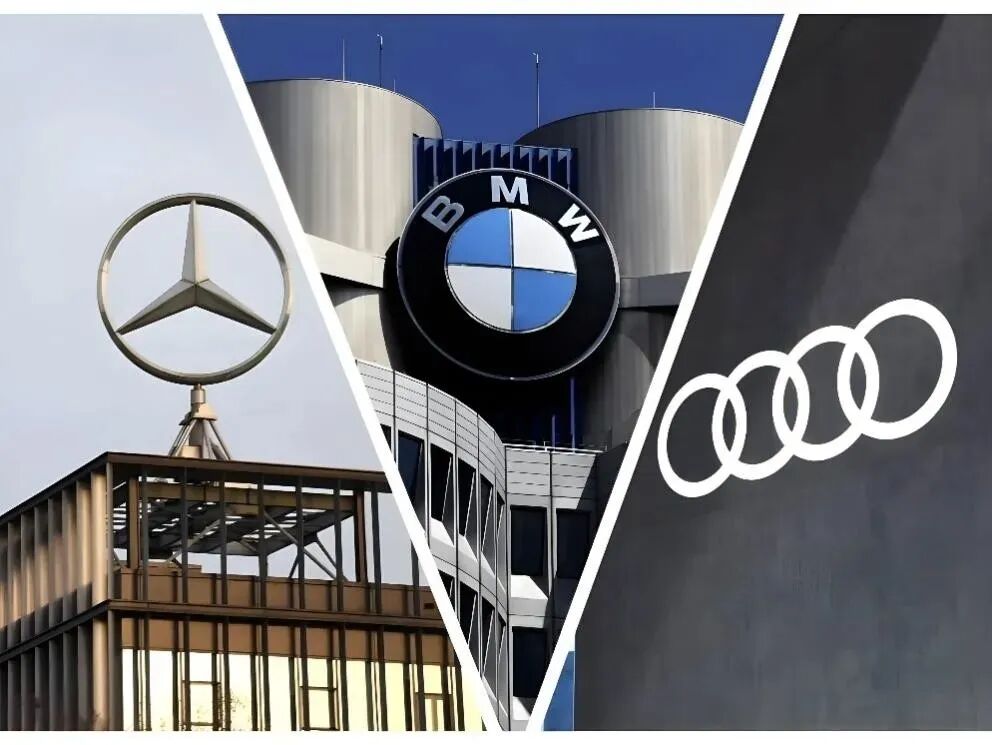
Looking back at China's luxury car market in 2025, Porsche is far from the only brand recognizing that “the pie has shrunk.” BMW, Mercedes-Benz, and Audi (collectively known as “BBA”), all part of the German luxury car阵营 (group), are also navigating this transformative shift.
According to 2025 statistics, BBA's sales in China have experienced a “two-year consecutive decline.” Over the past year, the cumulative sales of these three automakers in the Chinese market plummeted by approximately 260,000 units compared to the previous year, marking an overall decline of 12.3%.
With 260,000 fewer units sold in a year, BBA—once the dominant force firmly occupying the C-position in the luxury car market—is now collectively facing growth challenges, and their brand moats are under unprecedented pressure.
On one hand, the surge of new energy vehicles (NEVs) has turned the glory of the internal combustion engine era into a relic, and the “pie” on the table has indeed shrunk. On the other hand, local brands are closing in, accelerating the rewriting of the luxury car market's old landscape. Not only is the pie shrinking, but the competitors vying for it are also becoming more diverse. The market structure is undergoing profound restructuring, and the strong association of “luxury = German brands” in consumers' minds is quietly loosening.
01 When China Becomes the “Pain Point”
Reviewing the overall performance in 2025, China is no longer BBA's guaranteed “profit pool” and high-growth “engine.” Instead, it has become a “pain point” where their transformation is tested and market impacts are acutely felt.
From a global perspective, Audi sold 1.623 million vehicles last year, down 2.9% year-on-year. Mercedes-Benz sold 2.16 million units globally, a 10% decline. BMW, the only brand to achieve slight growth, delivered 2.463 million new vehicles last year, up 0.5% year-on-year, ranking first in BBA sales.
Notably, as the world's largest single market, BBA's sales declines in China last year all exceeded the global average.
Mercedes-Benz saw sales slump in multiple regions globally: 634,600 units delivered in Europe, down 1%; 320,600 units sold in North America, down 12%; and 747,000 units in Asia, with the year-on-year decline widening to 16%. Among them, full-year deliveries in China (including passenger and light commercial vehicles) reached 575,000 units, down 19% year-on-year—the steepest drop among major markets.
BMW Group (including BMW and MINI brands) also showed regional disparities: Europe saw counter-trend growth, with cumulative annual sales of 1.0164 million units, up 7.3% year-on-year. The Americas achieved 5.7% year-on-year growth, with sales reaching 508,200 units. The Asian market faced downward pressure, with 871,600 units delivered, down 9.3% year-on-year. China, the core of Asia, saw sales of 625,500 units, a 12.5% decline.
Audi achieved growth in its home market of Germany, with sales of 206,100 units, up 4% year-on-year. Other European regions (excluding Germany) saw sales of 464,000 units, down 0.5%—almost flat compared to the previous year. North American sales reached 202,100 units, down 12.2%. China (including Hong Kong) contributed 617,500 units, accounting for 38% of global sales, but also saw a 5% year-on-year decline.
China has long been BBA's largest and irreplaceable single market. At its peak, nearly 40% of Audi's sales and one-third of new vehicle sales for Mercedes-Benz and BMW came from China, directly determining their global rankings and economies of scale while providing a foundational profit guarantee.
However, the “BBA coalition,” which once held an 80% share of China's luxury car market, now sees its combined share shrink to around 50%. China's role as a “profit cow” is weakening, and what was once a “fertile field” for revenue gains now yields visible harvest shortfalls.
Loosening foundations in segmented markets have dragged BBA into deeper anxiety. The mid-size SUV market—once BBA's absolute stronghold and perennial top performer—also saw a symbolic power shift last year.
Changes in the sales rankings serve as a mirror: the Audi Q5L dropped to 7th place, the Mercedes-Benz GLC fell to 8th, and the BMW X3 slid out of the top 10 to 15th. The scales of victory are visibly tilting.
02 Multiple Impacts of Structural Transformation
Structural transformations are converging, intensifying pressure on BBA in China.
According to data released by the China Passenger Car Association (CPCA), China's luxury car market showed a structural contraction in 2025, directly exerting sales pressure on traditional luxury brands like BBA.
Cui Dongshu, Secretary-General of the CPCA, pointed out that driven by vehicle scrappage and renewal policies, the mid-to-low-end market rebounded, and consumption at lower price points recovered, creating a distinct trend of “shrinking high-end market, expanding low-end market” in 2025.
Specifically, the market share of models priced above 400,000 RMB dropped from 6.3% to 5.2%, while the 300,000–400,000 RMB segment fell from 9% to 8.4%. In contrast, models priced below 50,000 RMB and in the 50,000–100,000 RMB range saw their market shares grow from 2.6% to 3.5% and from 11.5% to 13.8%, respectively.
Thus, throughout 2025, consumption of mid-to-low-priced models in China rebounded significantly, with the market center of gravity gradually shifting toward economy-focused segments. Meanwhile, the high-priced model segment faced squeezed market space, particularly for models above 400,000 RMB, which saw a noticeable decline in share. This also reflects that consumers are becoming more rational in their upgrade and replacement purchases, with weaker willingness to pay premiums for luxury brands.
BBA's best-selling models fall within the declining 300,000–400,000 RMB price band, while their high-end models mostly occupy the shrinking segment above 400,000 RMB. The narrowing of these two core price bands directly compresses BBA's growth potential.
Industrial transformations are intensifying, German brands' market share in China is shrinking, and BBA faces sieges from numerous domestic competitors.
The main challenges come from three fronts:
1. New energy newcomers, represented by AITO, Luxeed, NIO, and Li Auto, have established new advantages in intelligence and electrification.
2. New market entrants like Xiaomi are disrupting BBA's core sales segments with a “catfish effect.”
3. Local premium brands under BYD and Geely are continuously diverting and converting BBA's original customers through a “value alternative” product logic, putting unprecedented pressure on BBA's brand premiums.
Take AITO, a brand under Harmony Intelligent Mobility, as an example. In 2025, the AITO M9 held the sales crown for 500,000 RMB-tier models for 20 consecutive months, while the AITO M8 topped the 400,000 RMB-tier for six straight months, rapidly capturing the 400,000 RMB-plus high-end SUV market. The brand's cumulative annual deliveries of 420,000 new vehicles should serve as a wake-up call for BBA.
This marks a new era where significant shifts have occurred in consumer value orientations and competitive dimensions across the supply chain and automakers.
Behind these changes lie two layers of transformation:
1. Migration of consumer decision-making logic.
BBA's brand moats, built on icons like the “three-pointed star” and “blue-and-white roundel,” are being deconstructed by newcomers offering new value dimensions such as intelligent cockpits, advanced driver-assistance systems, and user ecosystems. This generation of Chinese premium car buyers—especially younger consumers—has shifted their criteria for “luxury.” While legacy brand emblems remain status symbols, they are no longer the sole reason to buy.
2. Migration of technological competition dimensions.
Critics may dismiss AITO for “inferior build quality compared to BBA,” mock its “origins as a minivan maker (Seres),” or deny the weight of Huawei's intelligent technologies in purchasing decisions. However, the transition of the times does not halt for stubbornness or denial. Electrification and intelligent technologies are increasingly moving toward the core of automotive functionality.
03 The Final Golden Window
“Never imagined that the first thunderclap of the 2026 price war wouldn’t come from domestic brands but from BMW, a traditional luxury player! The one who ‘flipped the table’ was once the most entitled to sit and eat!” This was the reaction of many media friends after BMW announced price cuts on New Year's Day.
BMW's “first-mover price cut” on New Year's Day acted like a starting gun, signaling that BBA's competitive logic in China would no longer cling to brand premiums but instead fully focus on capturing market share—shifting from passive defense to proactive offense.
In the past, price wars were tactical tools for BBA to respond to market fluctuations. In the traditional luxury car narrative, BBA set the rules and anchored the pricing system, supposedly remaining unperturbed by market shifts. BMW's recent moves shattered this illusion—when market share is slipping away and the pie on the table is shrinking, continuing to “sit” is no longer dignified but dangerous. Aggressive price adjustments have become a necessary survival strategy.
When those most reluctant to lose face have already swallowed their pride, standing at the dawn of 2026, BMW's thunderclap is not an isolated market move but the beginning of a comprehensive pivot. Price is merely the surface-level signal; the true seismic shifts are happening beneath the surface.
2026 is a pivotal year for BBA.
Dense new model launches are just the visible strategy; the hidden thread is a full-scale eastward shift in R&D focus—leveraging Chinese tech companies' capabilities to strengthen localized R&D and belatedly master intelligence technologies.
In 2026, Mercedes-Benz will launch over 15 new and refreshed models as planned, including a new long-wheelbase electric GLC SUV, the first locally produced long-wheelbase GLE SUV, and a new-generation S-Class. Meanwhile, Mercedes' latest intelligent cockpit and top-tier driver-assistance systems will roll out across its entire product lineup within 12–18 months.
BMW will also enter a momentum release phase in 2026, planning to introduce over 20 new models in China covering all mobility segments. The most heavyweight launch will be the long-wheelbase version of its New Class flagship, the iX3, featuring proprietary electric drive technology, a “driving control superbrain,” and other self-developed technologies integrated with China's AI ecosystem.
For BBA, 2026 represents the most critical rebound window and the last golden opportunity to break through in China.
This year's strategic and tactical adjustments will answer several core questions for the Chinese market:
- Can past delays in product cadence be resolved at once?
- Will Chinese consumers embrace BMW's revolutionary New Class models?
- Can BBA's electric lineup produce genuine “blockbusters” to reclaim lost market share?
- Are localized R&D efforts and ecosystem collaboration decisions sufficient to support a full-scale counteroffensive?
These answers will determine the market's future trajectory.
However, the cruelty of 2026 lies in the fact that the market will not grant BBA much time for a “graceful pivot.” As the transition between old and new forces in the luxury car market enters deep waters, the scoring criteria in segmented markets are no longer solely dictated by BBA. The judges' seats are no longer occupied by BBA themselves.
Editor-in-Chief: Cao Jiadong Editor: He Zengrong
THE END
-
![]()
Model Giant Jieyue Xingchen Steps into Smartphone Arena: A Strategic Alliance with Huaqin Technology
-
![]()
Big Model Firm Dives into Phone Market: StepFun and Wingtech Forge a ‘Dynamic Duo’
-
![]()
Zhongrun Optics Makes a Bold Move with 1 Billion Yuan Investment: Is a Turning Point on the Horizon for the Precision Optics Industry?
-
![]()
Deploy CLBO Crystals and YIG Single Crystals! Erythritol Leader Invests 30 Million in Youwei Optoelectronics
-
CXMT’s July 16 Subscription: Leading Domestic Memory Manufacturer—What’s the Earning Potential per Lot?
-
![]()
Rhythm Discrepancy and Premium Value Erosion: Foreign Luxury Brands Must Re-evaluate Their China Strategy
-
![]()
Half-Year, 1 Billion Yuan Financing, 7 Billion Yuan Valuation: A New Dark Horse Emerges in the Embodied AI Sector
-
![]()
Strong Rebound for Tech Stocks in Hong Kong Stock Market: Is It Time to Bottom-Fish?