Large Models in Vehicles: Consumers Show Indifference
 04/28 2026
 613
613
By 2026, one of the most significant transformations in the automotive sector will be the widespread integration of large models into nearly all mainstream new vehicles. Data indicates that among domestic automakers, the current adoption rate of in-car large models for new energy vehicles priced over 200,000 RMB has surpassed 90%, while the adoption rate in the 100,000-200,000 RMB segment has also exceeded 65%.
Emerging automakers like Xpeng, Li Auto, and Xiaomi have all rolled out fully self-developed large models. Traditional automotive powerhouses such as BYD, Chery, and Changan have also embraced collaboration with tech giants, striving to tailor general-purpose large models for automotive applications. It can be said that the era of one large model per vehicle has officially dawned.
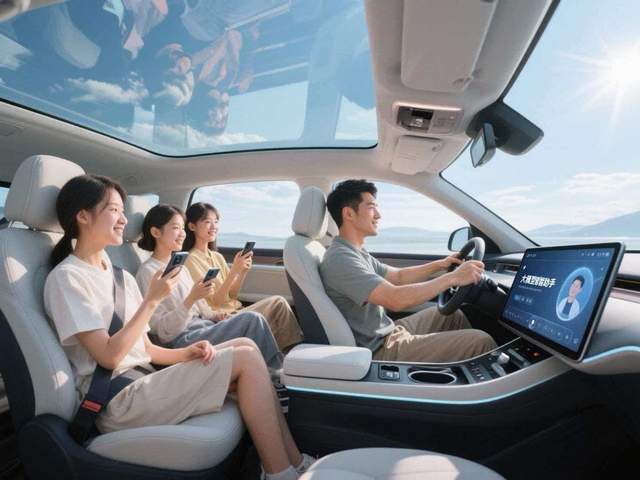
The only lingering concern with this burgeoning wave of automotive AI is the lack of enthusiasm from consumers.
According to survey data released by Jeran Road, smart cockpits rank only ninth among factors influencing users' vehicle purchase decisions, and most users are unwilling to pay extra for in-car large model functions. A casual inquiry among relatives and friends reveals that few people have strong opinions about large models in vehicles, and most are unaware of the distinction between large models and previous in-car voice assistants.
Why are automakers so enthusiastic, only to be met with a tepid response from consumers?
Behind this indifference lies a glaring mismatch between technological supply and user demand.
Tesla's Breeze, Crayfish Craze
Let's first delve into why automakers are uniformly keen on promoting large models in vehicles. Objectively speaking, this is not a technological advancement driven by consumer demand but rather a forced response by automakers driven by industrial and technological trends.
The so-called industrial trend is most directly exemplified by Tesla's move to incorporate Grok into its vehicles in the summer of 2025. To put it bluntly, when Chinese automakers develop new energy vehicles, they often first look to Tesla for inspiration. The mantra is: if the competitor moves, we move; if the competitor doesn't, we're unsure what to do. After Tesla demonstrated the value of large models in vehicles, automakers naturally followed suit, each introducing their own 'intelligent travel companion.'
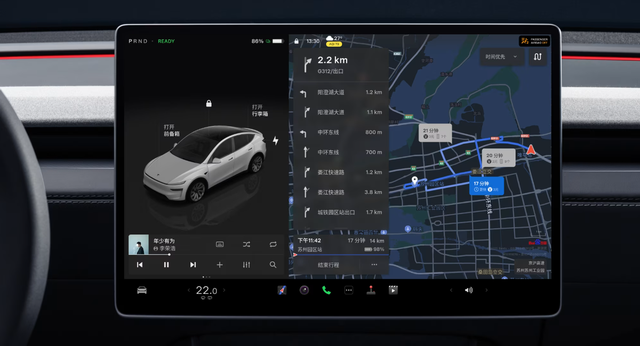
The technological trend lies in the fact that AI tools are indeed on the path to improvement and maturity. The mobile phone, PC, and IT markets are eager to implement AI, and the automotive industry is naturally no exception. Especially this year, the crayfish craze (a metaphor for the fervor around AI) has been so significant that various companies are experiencing 'crayfish anxiety,' fearful of being left behind. Moreover, vehicles are naturally multi-system integrated terminals suitable for intelligent interaction, so accelerating the adoption of large models in vehicles is a foundational step to ensure they don't fall behind in the competition for intelligent agents.
As a result, by 2026, all new domestic vehicles priced over 200,000 RMB will uniformly be equipped with large models; at the 100,000-200,000 RMB price point, the emphasis is on achieving universal access to in-car large models, claiming they are absolutely worth the price.
Industry and the times are pushing automakers to accelerate the adoption of large models in vehicles. But in this bustling scene, the voice of users has been overlooked.
Non-intrusion is the Greatest Kindness
Why is no one listening to the voice of users? Because large models talk too much, and users can't get a word in.
Especially when listening to a large model ramble on while driving, the experience can be quite jarring. Consider this: when we engage in voice interaction while driving, we obviously hope for precise and quick completion of the interaction without disturbing our subsequent driving operations. But large models are inherently flawed in this regard. Their style is natural conversation, with content that is abundant, detailed, and somewhat verbose in its exaggeration.
In short, in-car large models are much more talkative than previous in-car voice assistants. When driving, relatives and friends try their best not to disturb the driver, but large models seem to love doing the opposite—constantly outputting information. For example, when a vehicle owner says to navigate to a certain place, an operation that should take 1 second is completed. However, the large model is likely to ask you several questions, such as whether you want to stop somewhere along the way or choose a different route. It's all about adding unnecessary steps and being overly verbose. You'd think you were in a scene from 'A Chinese Odyssey' with the Tang Monk.
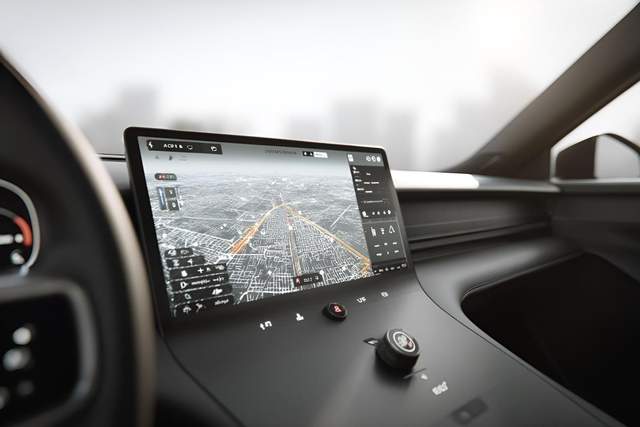
What's worse is that large models not only respond verbosely but also have a weak sense of boundaries. They are often accidentally activated or operated, inexplicably joining in-car conversations. Turning them off requires additional steps, and by then, you've forgotten what you were talking about in the vehicle.
Some in-car large models with advanced scenario-based capabilities, which come with hefty subscription fees, take intrusion to the next level. These large models identify scenarios and take proactive actions. For example, when they think the driver is fatigued, they automatically open the windows for ventilation and play music, regardless of whether the driver is genuinely tired or just has small eyes, whether it's freezing outside, or whether the music might startle the driver and cause danger. They do as they please, thinking, 'I'm AI, so listen to me.' When they detect traffic congestion ahead, they constantly recommend rest areas and parking lots, regardless of whether the driver is late for work, just suggesting you take a break.
Research by ZaoSi Auto shows that over 60% of vehicle owners say that in-car large models can only execute simple commands with fixed phrasing and often fail to respond accurately or execute complex, multi-intent, or long commands.
Perhaps these issues are temporary and can be overcome, but the costs incurred should not be borne by consumers.
After all, what consumers need is simply to be left alone by AI and drive in peace.
Too Many Jarvises, Not Enough Humans
Even if they are not frequently disturbed by large models, consumers face a new problem: What exactly is the point of having a large model?
As automakers continuously promote in-car large models as the most versatile personal assistants, the Jarvis we've been eagerly awaiting, consumers are simultaneously discovering that there are quite a few Jarvises out there, and they seem a bit excessive.
In real-world usage scenarios, consumers find themselves in a dilemma when faced with in-car large models:
While driving, attention must be focused on the road. The things automakers talk about—telling jokes, writing copy, generating travel itineraries—are absolutely useless in this context. Think about it: who in their right mind would already be driving and then ask the in-car large model to write a travel itinerary? And for the functions that might be frequently used while driving, such as navigation and answering calls, traditional AI voice assistants already cover them quite well, eliminating the need for the 'Jarvis power' of large models.

More critically, these large models emphasize 'natural language understanding and fuzzy intent recognition.' The phrase 'fuzzy intent' is quite alarming in driving scenarios. If a user says, 'I'm hot,' intending to turn up the air conditioning, the large model might vaguely understand it as the user wanting to open the windows. If this happens on the highway, it could pose a direct driving risk.
Then, when parked, you can freely and happily use the in-car large model. Just as you're about to give a command, you find yourself instinctively reaching for your phone. Isn't the large model that operates smoothly, has a complete ecosystem, and is familiar with your usage habits just lying quietly in your phone? Why bother using a crippled version on the vehicle's infotainment system?
You Fragile Little Thing
If in-car large models being useless wasn't enough, they are also often difficult to use.
As mentioned earlier, due to limited on-device computing power, many in-car large models are crippled versions that are difficult to use. To allow users to access full-fledged large models, many automakers have also introduced cloud-based versions. This is all well and good—automakers do admit that their vehicles have limited computing power, but they forget that their network capabilities are also lacking.
When in-car large models require a stringent network environment, users will find that once they encounter scenarios like underground parking garages, remote roads, or highway tunnels, the large model loses signal and directly malfunctions. What's even more frustrating is that before large models were introduced, at least the in-car voice assistant was still usable. Now, when the network is down, even basic voice commands cannot be executed. The good news is that large models have enhanced in-car AI capabilities; the bad news is that they are also more prone to failure. What kind of hellish joke is this?
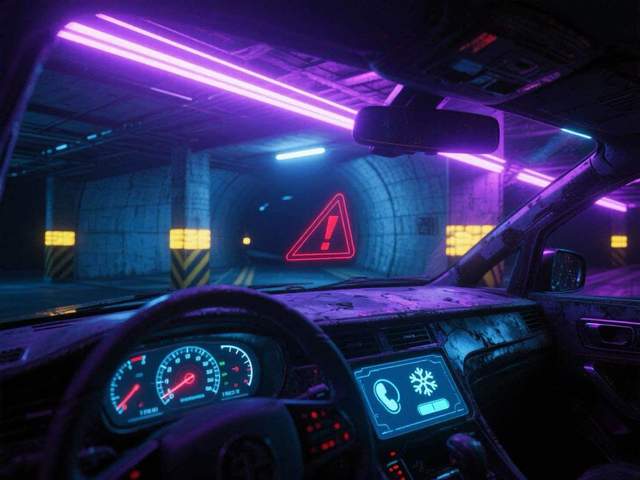
Another fragile aspect of in-car large models is what's known as 'OTA betrayal.' Many users have found that the large models they use become worse with each upgrade. They started out quite smooth, but after a few OTA updates claiming to add features, the originally useful commands can no longer be recognized, and frequent lagging and freezing occur.
Consumers say, 'I'm buying a vehicle, not chasing an inner-circle idol. I don't need this sense of fragility.'
Aren't Large Models Supposed to Be Free?
After all is said and done, the biggest gripe about large models in vehicles is that their differentiation is too small.
There is little difference between large models from different automakers; there is also little difference between in-car large models and those on phones, with the latter offering a better experience and being completely free; even more infuriating is that often, we find little difference between in-car large models and older in-car AI voice assistants. These 'not much different' aspects make it hard for users to find a reason to like them, let alone the motivation to pay for them.
More often than not, consumers use in-car large models for a couple of days of novelty after buying a vehicle and then never again. This scene is reminiscent of those useless digital products we've bought and the AI software we've installed on a whim. But the problem is that vehicles are expensive enough to require thorough purchase decisions. No matter how technologically advanced or in line with the times a product is, if it's useless to us, it can only elicit a shrug.
Automakers say, 'Large models are in vehicles now. Come buy a vehicle!'
Users respond, 'Your message has been received. The system is currently in queue. The estimated wait time is 3 to 5 years.'
-
![]()
The Allure of 'Acquisition Spree': Li Shufu's Left Turn, Xu Jiayin's Right
-
![]()
Strategic Transformation Yields Results: Phoenix Optics Reports 10.9% YoY Rise in Core Net Profit for H1 2026
-
![]()
Three Key Growth Trajectories Synergize! Crystal-Optech Reports 3.478 Billion Yuan in Revenue for H1 2026
-
![]()
Semi-Annual Report Sparks XPENG Motors Buzz
-
![]()
1.6 Billion Big Order Secured! SeeYA Technology's Revenue Soars by 287.87% in the First Half of the Year
-
![]()
Baidu's Profits Plunge by 68%: Unraveling the Mystery Behind the Numbers
-
![]()
Baidu’s Profits Tumble by 68%! Where Has All the Money Gone?
-
![]()
Hynix’s Taobao Store Shuts Down Abruptly: What Should Customers Do About Warranty Services for Memory Modules?