AIS-3700 Integrated Module | Synchronous Monitoring of PM2.5 and CO₂ for a High-Quality, Healthy Cabin
 05/22 2026
 549
549
As automotive cabins transform into 'mobile health hubs,' air safety has transcended mere presence, becoming a crucial battleground for 'enhanced precision, intelligence, and reliability.' PM2.5 and CO₂, identified as the two primary health threats within cabins, necessitate precise, swift, and stable continuous monitoring to foster a healthy and comfortable cabin atmosphere. This is unequivocally the cornerstone for OEMs to cultivate distinctive competitiveness and seize market share.
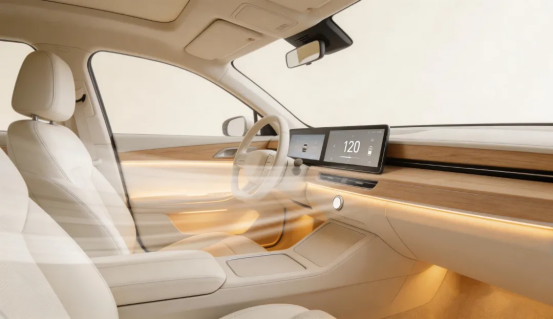
Targeting Dual Cabin Hazards: PM2.5 and CO₂
The confined and poorly ventilated cabin environment accelerates the accumulation of PM2.5 and CO₂, far surpassing outdoor levels, and posing dual health risks. This not only compromises the respiratory health of occupants but also introduces latent safety hazards during driving.
● The Invisible Respiratory Assassin - PM2.5: Fine particulate matter with a diameter of ≤2.5 micrometers in the cabin can penetrate directly into the human alveoli. Prolonged exposure to high concentrations can readily trigger respiratory sensitivities.
● The Invisible Cause of Fatigued Driving - CO₂: In internal circulation mode, CO₂ levels surge exponentially due to occupants' respiration, swiftly surpassing safety thresholds, inducing dizziness and drowsiness, and in severe cases, suffocation, leading to traffic accidents. These risks are exacerbated during long-distance journeys or with multiple passengers, seriously jeopardizing driving safety.
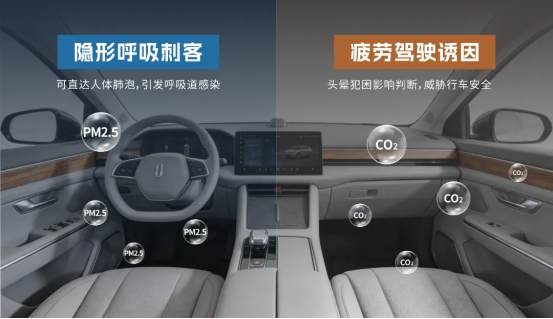
One safeguards respiratory health, while the other fortifies safety defenses. The synchronous monitoring and collaborative management of PM2.5 and CO₂ are not only core user demands for healthy cabins but also the fundamental rationale behind the development of integrated air quality modules.
Beware of the 'Pseudo-Integration' Pitfall: Integration ≠ Stacking
Many integrated sensor modules succumb to the 'pseudo-integration' trap: merely assembling two separate sensors into a single package for an 'integrated upgrade.' This approach often results in imbalanced detection accuracy, high power consumption, and poor installation adaptability, inflating OEMs' R&D, procurement, and assembly costs, leading to an 'ineffective upgrade' or even project delays.

The essence of integration lies in 'defining technology based on needs and empowering value through technology.' Integrated sensor modules must precisely cater to users' dual demands for health and safety while aligning with automakers' R&D and production imperatives for cost reduction and efficiency enhancement, thereby forging the core competitiveness of integrated sensor modules.
AIS-3700 Precisely Breaks Through: Achieving 1+1>2, Accurately Safeguarding Cabin Air Safety
Leveraging its profound expertise in gas sensing technology, Cubic Sensor and Instrument Co., Ltd. transcends the 'integration by stacking' fallacy and introduces the AIS-3700 automotive air quality sensor integrated module, capable of synchronously monitoring PM2.5 and CO₂ in real-time. The product boasts high accuracy, robust stability, and low power consumption, adapting to complex cabin conditions and assisting OEMs in safeguarding healthy cabin air quality.
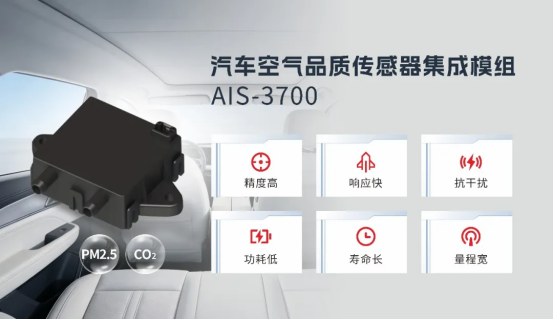
● Quality Improvement and Cost Reduction: Simplifies wiring configurations and significantly reduces redundant hardware investments, lowering procurement and maintenance costs, aligning with OEMs' core demands for 'quality enhancement and cost reduction.'
● Synergistic Enhancement: For instance, the built-in fan in the PM2.5 sensor accelerates internal airflow, enhancing CO₂ detection accuracy and response speed, achieving an environmental perception of 1+1>2.
● Flexibility and High Scalability: The module streamlines complexity by integrating CO₂ and PM2.5 sensors into one, reducing sensor quantity and product complexity, minimizing installation space, and offering more flexible positioning. Sensor combinations can be tailored according to application scenarios, providing higher scalability.
The AIS-3700 optimizes cabin layouts and reduces integration costs through its highly integrated design, accurately detecting PM2.5 and CO₂ simultaneously, alerting to CO₂ concentration overruns and dust pollution, and safeguarding cabin air health in real-time. It significantly enhances driving comfort and safety, providing core sensing support for automakers to create premium intelligent healthy cabins and solidifying the technological foundation for cabin quality upgrades.
-
![]()
The Allure of 'Acquisition Spree': Li Shufu's Left Turn, Xu Jiayin's Right
-
![]()
Strategic Transformation Yields Results: Phoenix Optics Reports 10.9% YoY Rise in Core Net Profit for H1 2026
-
![]()
Three Key Growth Trajectories Synergize! Crystal-Optech Reports 3.478 Billion Yuan in Revenue for H1 2026
-
![]()
Semi-Annual Report Sparks XPENG Motors Buzz
-
![]()
1.6 Billion Big Order Secured! SeeYA Technology's Revenue Soars by 287.87% in the First Half of the Year
-
![]()
Baidu's Profits Plunge by 68%: Unraveling the Mystery Behind the Numbers
-
![]()
Baidu’s Profits Tumble by 68%! Where Has All the Money Gone?
-
![]()
Hynix’s Taobao Store Shuts Down Abruptly: What Should Customers Do About Warranty Services for Memory Modules?