Survey | Are Fuel-Powered Cars Now 'Cabbage-Priced'? Why Can't I Find Them at Those Prices?
 06/18 2026
 567
567
Introduction
Introduction
Who Will Lift the Veil on the Pricing Confusion of Fuel-Powered Cars?
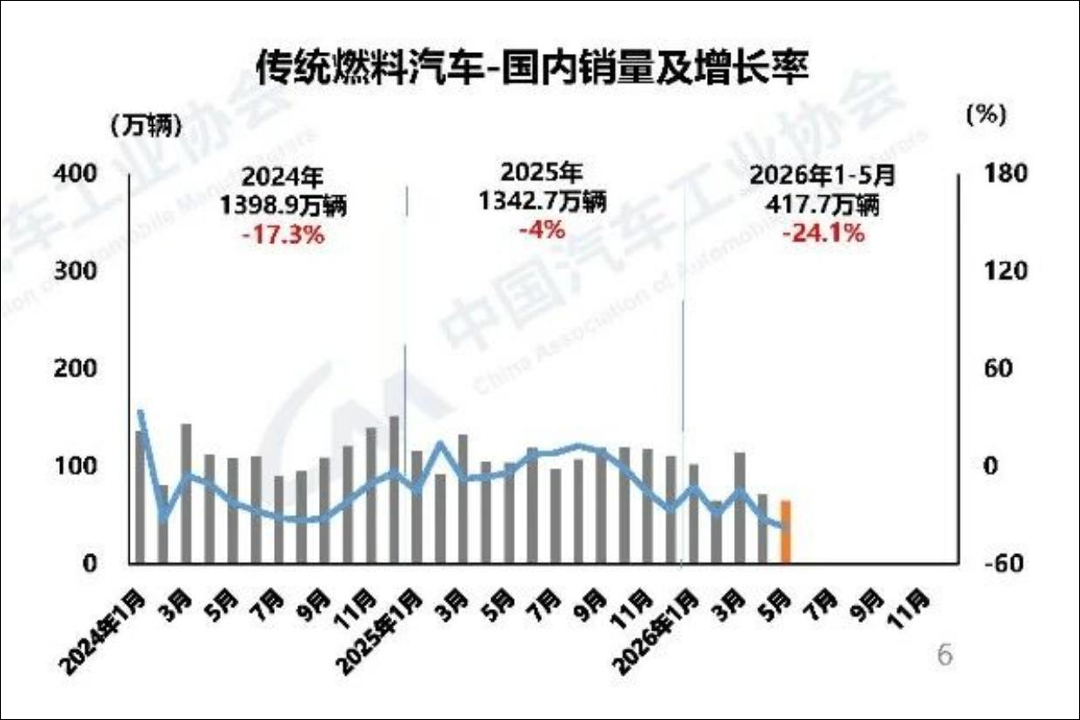
According to an analysis by the China Association of Automobile Manufacturers, in May 2026, the passenger vehicle market continued to show signs of segmentation. The domestic market, influenced by weak consumer sentiment, policy adjustments, and increasing pressure on fuel-powered vehicles, performed even more sluggishly.
Throughout May, domestic sales of traditional fuel-powered vehicles reached only 650,000 units, down another 8.4% month-on-month and 37.5% year-on-year. Including the previous few months, fuel-powered car sales for the year stood at 4.177 million units, a 24.1% year-on-year decline. Although their market share hovered around 50%, the overall market trend remained pessimistic.
Against this backdrop, from the beginning of the year to the present, as soon as one opens various social media platforms or short-video sites, information about the sharp price drops and clearance sales of fuel-powered cars for sale floods in. When everyone believes that buying electric vehicles is the best choice for the current driving environment, the consensus across the internet is that one can buy mainstream joint-venture B-class cars for over a hundred thousand yuan or acquire various second-tier luxury models at low prices.
Not long ago, channel information revealed that the terminal price of the domestically produced version of the once highly popular Land Rover Evoque had dropped to just over 170,000 yuan, a claim largely confirmed by visits from some internet bloggers.
But does this necessarily mean that the fuel-powered car market, regardless of brand, model, or category, has uniformly plunged into a wave of price reductions?
Everyone says that even joint-venture mainstays like Toyota and Volkswagen, in pursuit of sales, have resorted to extreme measures, with price cuts and promotions being the most normal operations as long as someone is willing to pay.
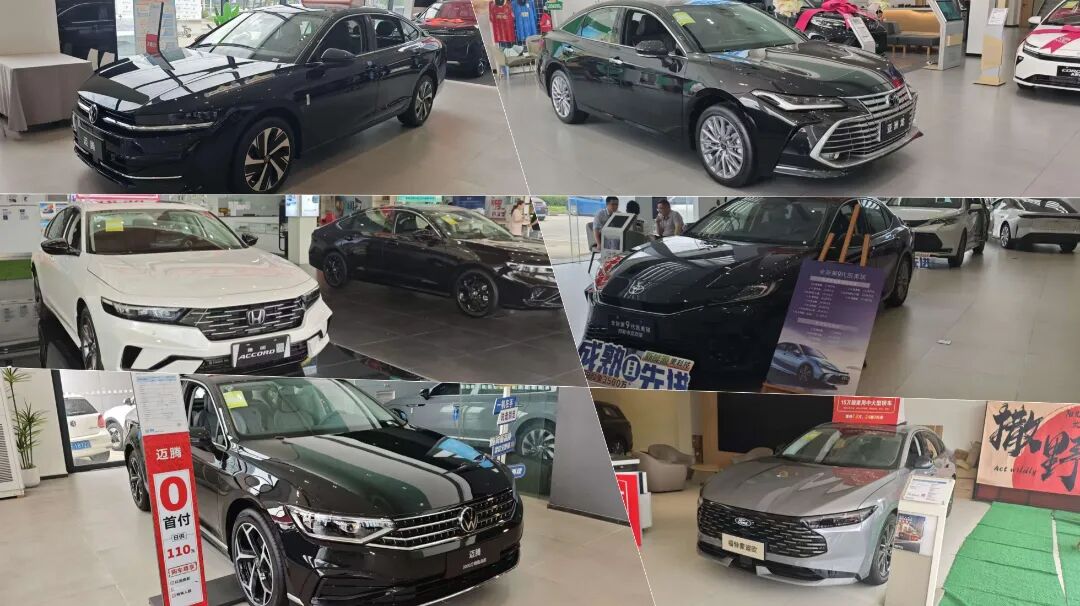
When we shift our perspective from online public opinion to the thousands of 4S dealerships across the country, the real market, stripped of the filter of online hype, always differs somewhat from the online noise. Despite claims of "cabbage-priced" fuel-powered cars, on-site inspections, price inquiries, and actual purchases reveal that so-called extreme price cuts are mostly gimmicks, and industry rumors of rock-bottom prices rarely apply to any models with mainstream configurations.
Compared to a couple of years ago, even the most mainstream new fuel-powered cars have seen significant price drops at the terminal level, a fact that no one can deny. However, I always believe that there should be limits to public opinion exaggeration. Relentlessly talking down fuel-powered cars and repeatedly attacking joint-venture brands, apart from exaggerating the market's gloom, offers little reference value to real consumers.
01 Who Is Creating the Low-Price Frenzy?
"Sales without profit are essentially just a numbers game," said Wang Xia, President of the Automotive Industry Committee of the China Council for the Promotion of International Trade, at the China Automotive Chongqing Forum on June 12. While the outside world may feel pleased about car price reductions, from an industry development perspective, such a scenario is bound to end tragically.
Objectively speaking, significant price drops in the fuel-powered car market are real, and the magnitude of reductions has indeed increased compared to previous years. Affected by the continuous penetration of new energy vehicles, overcapacity in fuel-powered vehicle production, and weak consumer demand, all mainstream automakers have had to relax price controls and abandon previous terminal price barriers.
Luxury brands' main fuel-powered models now offer unprecedented discounts, with entry-level sedans and SUVs from BMW, Audi, and Mercedes-Benz commonly seeing terminal discounts of tens of thousands of yuan, and some less popular configurations even exceeding discounts of 100,000 yuan. Joint-venture brands, the foundation of the fuel-powered car market, have also universally adopted a profit-sharing model, with mainstream models' terminal discounts becoming normalized. Formerly popular models that once commanded premium prices now offer extensive discounts.
However, the key issue is that while price cuts can boost sales, when the extreme low prices propagated across the internet are mostly isolated cases under special circumstances and lack universality, yet are infinitely amplified by online platforms, they mislead the entire market's price perception. Isn't this likely to dampen consumers' originally high enthusiasm for buying cars?
Take traditional joint-venture B-class cars as an example. The internet is flooded with messages seemingly telling us that one can buy an Accord for 110,000 yuan, a Camry for 120,000 yuan, or a Magotan for 130,000 yuan... and so on.
However, if you take the trouble to visit dealerships, you'll find that these seemingly explosive prices, once all preconditions are stripped away, do not represent the actual vehicle price, are far from the price range of mainstream models, and are even further from the final on-road price.
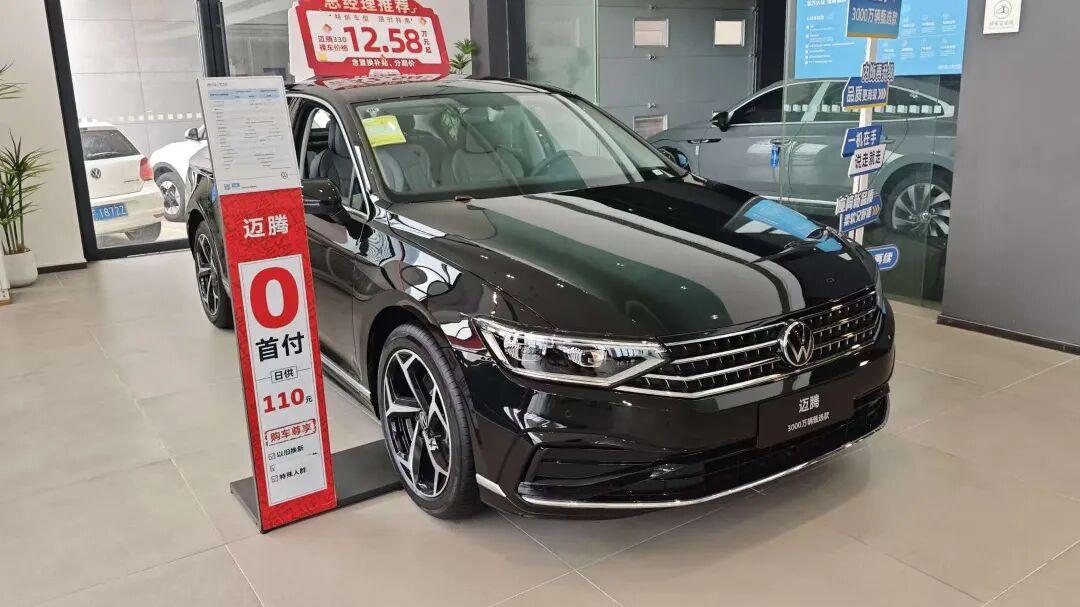
Reason will tell you that as a benchmark for joint-venture B-class cars, the Volkswagen Magotan has always had one of the highest terminal prices among similar products, and even now, it will not fall into the "cabbage-priced" category.
"The listed price is the listed price. This price includes a trade-in subsidy and is only available if you take out a loan to buy the car," explained the salesperson, looking at the Magotan in the showroom with a price tag of "starting from 125,800 yuan."
"If you pay in full, the Magotan can indeed be discounted by over 50,000 yuan, but that's for the old model. For the new Magotan, the discount is only a little over 30,000 yuan." Further inquiry reveals that the 280 version, priced low, is not actually a mainstream product for the Magotan.
In other words, while the outside world may disparage the Magotan, when you seriously go to buy a mainstream configuration of the old Magotan model, the final on-road price will still exceed 160,000 yuan, not to mention the newer models, which are priced higher yet offer fewer discounts.
Similarly, if you think that Japanese B-class sedans, such as the Nissan Altima, Toyota Camry, Avalon, and Honda Accord, which are often overlooked online, will enter the price range of just over 100,000 yuan due to the poor market environment, that is naturally impossible.
Among them, since incorporating Huawei's HarmonyOS cockpit, the Nissan Altima's perceived value has seemingly increased significantly. However, the fixed price for the official 149,900 yuan 2.0L Ultra Comfort version is only 139,900 yuan. Including purchase tax and insurance, the final price is still heading towards 160,000 yuan.
The Toyota Camry Dual Motor 2.0L Elite version, priced at 179,800 yuan, can be discounted by over 45,000 yuan, but the final on-road price will still exceed 150,000 yuan. The Avalon, another Toyota B-class sedan, due to its lower ownership and recognition, can see discounts of over 60,000 yuan on its main models. However, you should know that the guide price for the Avalon Dual Motor 2.0L Luxury version alone is as high as 216,800 yuan, making the final on-road price certainly exceed that of the Camry.
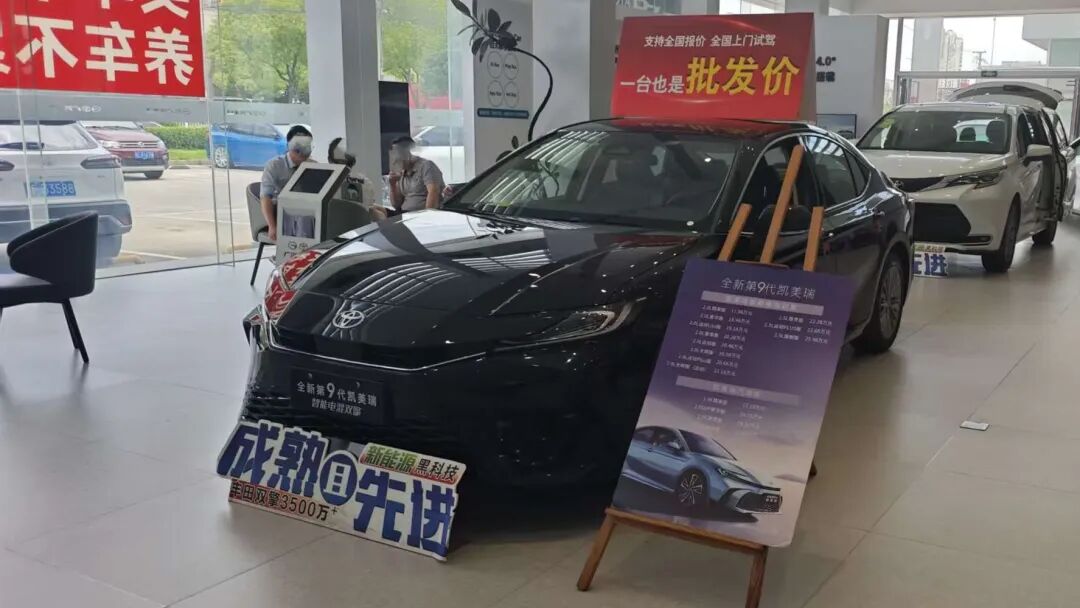
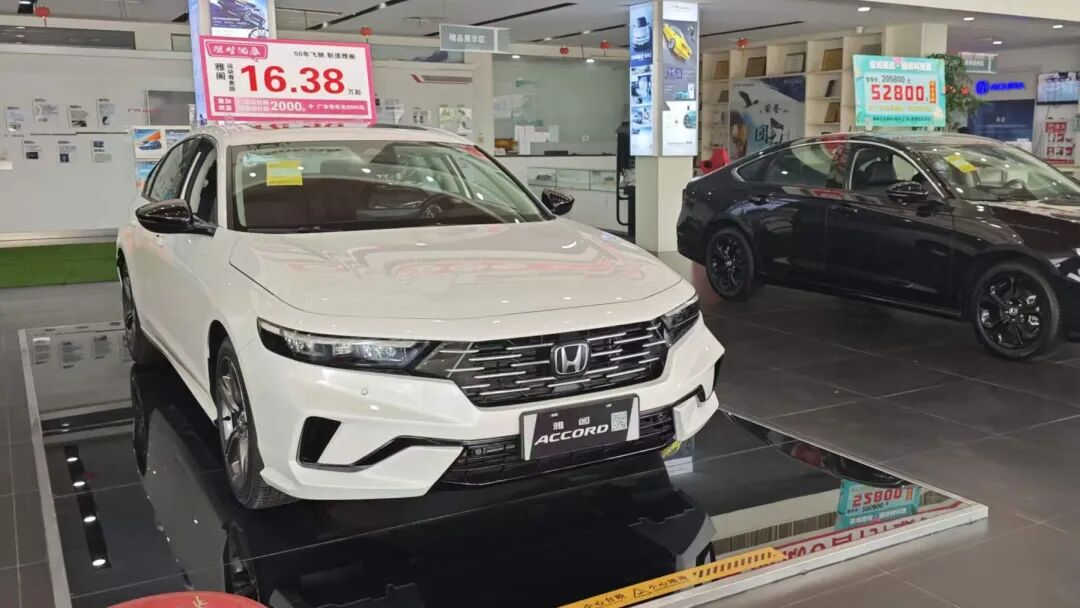
Based on configuration and discount intensity, the Honda Accord, long perceived as affordable at just over 100,000 yuan, actually has a final on-road price of around 160,000 yuan for the 1.5T Luxury version, priced at 197,800 yuan, after a 55,000 yuan discount.
02 Don't Buy a Car Without Demand
In response to such terminal prices, some may argue that the chosen channels are wrong, that large dealers and 4S stores in remote areas can certainly offer lower prices. Or they may ask why the final on-road price of the lowest-configured models isn't calculated, or why inventory cars aren't considered.
I believe that within the realm of joint-venture B-class cars, there have never been many low-price channels openly available to consumers in the past, nor have many users chosen the lowest-configured models. Today, even with a poor economic environment, when choosing a B-class sedan, such situations will still not be common.
Perhaps, given the vastness of the Chinese auto market, even mainstream joint-venture B-class cars may exhibit some price differences due to regional distribution and consumer habits. However, overall, the stark contrast between the internet's frenzy over plummeting prices and the stable, firm terminal on-road prices is, in fact, the most authentic snapshot of the current fuel-powered car market.
In other words, this is not simply a case of media exaggeration or deliberate creation of cognitive illusions. Instead, it is a unique ecosystem born from the Four party game (four-way game) among automakers, dealers, online platforms, and consumers during the painful transition period of fuel-powered cars to electrification, hiding behind it the survival logic and transformation dilemmas of the entire fuel-powered vehicle industry.
Throughout the twenty-year development history of the Chinese auto market, price wars have always been a core means of industry reshuffling, but never has a wave of price reductions been as "misaligned" as the current one.
In past auto market price reductions, terminal quotes were either basically in sync with online propaganda or secretly manipulated to provoke consumers' sensitive nerves. Nowadays, the Public opinion hedging (public opinion counteraction) brought about by the oil-electric opposition is increasingly causing the entire market landscape to collapse. In the face of online traffic, the authenticity of the terminal market has become a mystery, and consumers have become the materials in this game.
Once, the parallel import car market in Tianjin Port and the used car market in Ningbo were sources of such toxic online traffic. Now, with automotive content dissemination having long entered an era where traffic reigns supreme, real, objective, and comprehensive market interpretations are far less attractive than gimmicks like "plummeting," "bottom-fishing," and "collapse." However, in reality, all low-priced models that defy cognition (cognitive expectations) come with stringent preconditions, merely indicating that the chaos in the auto market is intensifying.
Of course, we do not deny that for some consumers, various local subsidies for trade-ins or scrapping old vehicles can further reduce the cost of purchasing a new vehicle, and the endless array of financial policies can also lower the threshold for buying a car. However, in the final analysis, in the face of the fierce onslaught of new energy vehicles, the pricing logic of fuel-powered automakers has never been about comprehensive, indiscriminate concessions.
Behind the low-price tactics is nothing but precise structural price adjustments, with the core goal of clearing inventory, optimizing product mix, and safeguarding core profits, rather than benefiting consumers universally. Looking at all brands' price reduction schemes, the models with the largest discounts are uniformly marginal models—slow-selling, low-configured, old-generation, low-displacement, or niche-configured vehicles—while the prices of mainstream, high-volume, mid- to high-configured models do not necessarily have much room for reduction.
Understanding this, the question is, how should we, as consumers, view trade-ins, additional purchases, or new purchases? Stripping away the filter of online traffic and rationally perceiving the market is the key to grasping the right time to buy a car.
When your driving needs are not that urgent, there is no need to be swept up in the anxiety of internet-wide price reductions and blindly choose so-called "ultimate bottom-fishing." Since mainstream fuel-powered models are unlikely to see significant price drops, there is no need to agonize over whether to trade in your car. A truly rational car-buying decision involves returning to the essence of the product and deeply exploring user value. Remember, your money is always in your pocket, and no matter how noisy the outside world is, its stance will never consider your perspective.
Editor-in-Chief: Shi Jie Editor: He Zengrong
THE END
-
![]()
Who’s Sounding the Alarm on ‘Rushed Vehicles’?
-
![]()
Over 5.3 Billion Yuan in Losses Over Three and a Half Years! Can Yonyou Reverse Its Fortunes Through Streamlining and AI Transformation?
-
![]()
Baidu AI Adopts Free Model: A Strategic Maneuver in Traffic and Monetization
-
![]()
Silicon-Based OLED Pioneer Unveils Financial Results: H1 Shipments Outpace Entire 2025 Volume
-
![]()
AI's First "Lost Summer"
-
![]()
Zeiss Makes Another €2.2 Million Bet: Will Eye Tracking Be the Next Big Thing in the Smart Glasses Industry?
-
![]()
RUNTO Ranking | Global Top TV ODM Factories' Shipment Figures for July 2026
-
![]()
Dealer Service Operational Prowess | How After-Sales Managers Can Harness Efficiency and Expertise to Secure Trust in the New Energy Era