After Persistent Declines, Is This Joint Venture Automaker Considering an Exit? Here’s the Official Word
 08/10 2026
 510
510
Among China’s joint venture automakers, SAIC-GM-Wuling stands out with its broad portfolio, encompassing three key brands: Chevrolet, Buick, and Cadillac. Chevrolet targets the budget-conscious segment, Buick appeals to mid-range buyers, and Cadillac caters to the luxury market. This tiered brand strategy underscores SAIC-GM’s well-rounded domestic market approach.
Thanks to its comprehensive brand lineup and diverse model offerings, SAIC-GM was once China’s best-selling joint venture automaker, surpassing FAW-Volkswagen and SAIC Volkswagen over a decade ago. By 2007, SAIC-GM-Wuling’s annual domestic sales had already hit the 1 million mark.
However, those glory days are now a thing of the past. With the rise of competitors like Volkswagen and Toyota, along with China’s shift toward new energy vehicles in recent years, SAIC-GM—the first joint venture automaker to exceed 1 million annual sales—has seen its prominence wane. Let’s examine the data.
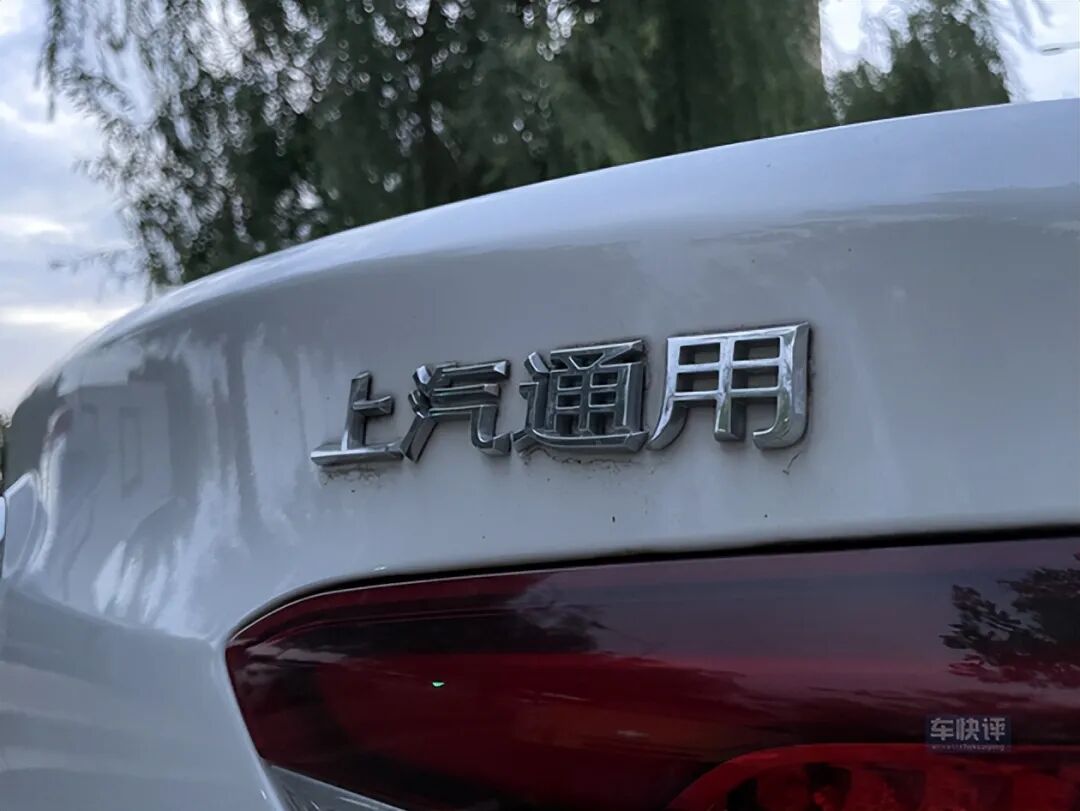
SAIC-GM’s sales peaked in 2016, with cumulative domestic sales reaching 1.984 million units. Buick alone accounted for 1.23 million units that year, while Chevrolet delivered a solid 637,000 units.
After this high point, SAIC-GM entered a prolonged decline in the domestic market. By 2025, cumulative domestic sales had plummeted to just 546,000 units. Buick’s sales fell to 437,000 units, and Chevrolet’s collapsed to a mere 8,700 units. Yes, you read that correctly—Chevrolet sold only 8,700 units nationwide last year, averaging fewer than 730 units per month.
In 2023, Chevrolet’s domestic annual sales still stood at nearly 170,000 units. By 2024, they had dropped to just 52,700 units, and in 2025, they fell below 10,000 units.
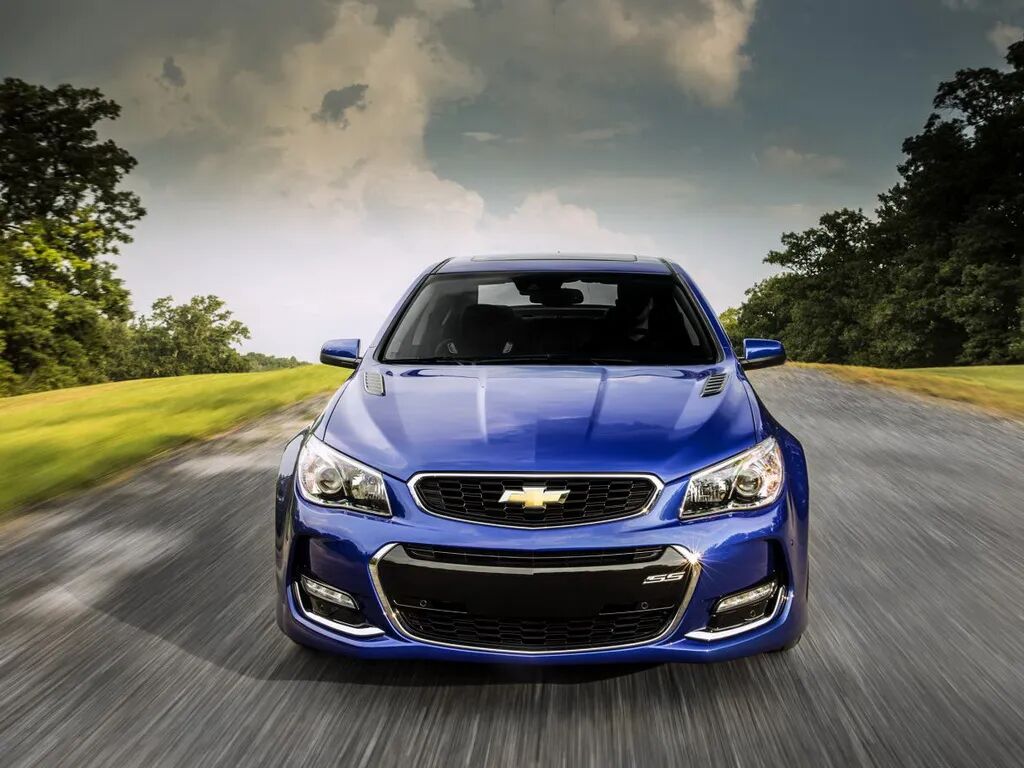
The data clearly shows that Chevrolet’s domestic sales have been in freefall over the past two years (2024–2025). Don’t be surprised—Chevrolet’s performance has worsened further this year, with only 36 units sold from January to June, ranking last among all foreign auto brands.
Alongside slumping sales, Chevrolet’s presence in the Chinese auto market is fading fast. So why did Chevrolet suddenly trend on social media recently? Let’s break down what happened.
The controversy began on August 6, when rumors circulated in the auto industry claiming that “Chevrolet will halt sales in China.” Speculation about Chevrolet’s potential exit from the domestic market quickly spread, with many netizens treating it as a foregone conclusion—after all, the sales figures left little room for doubt.
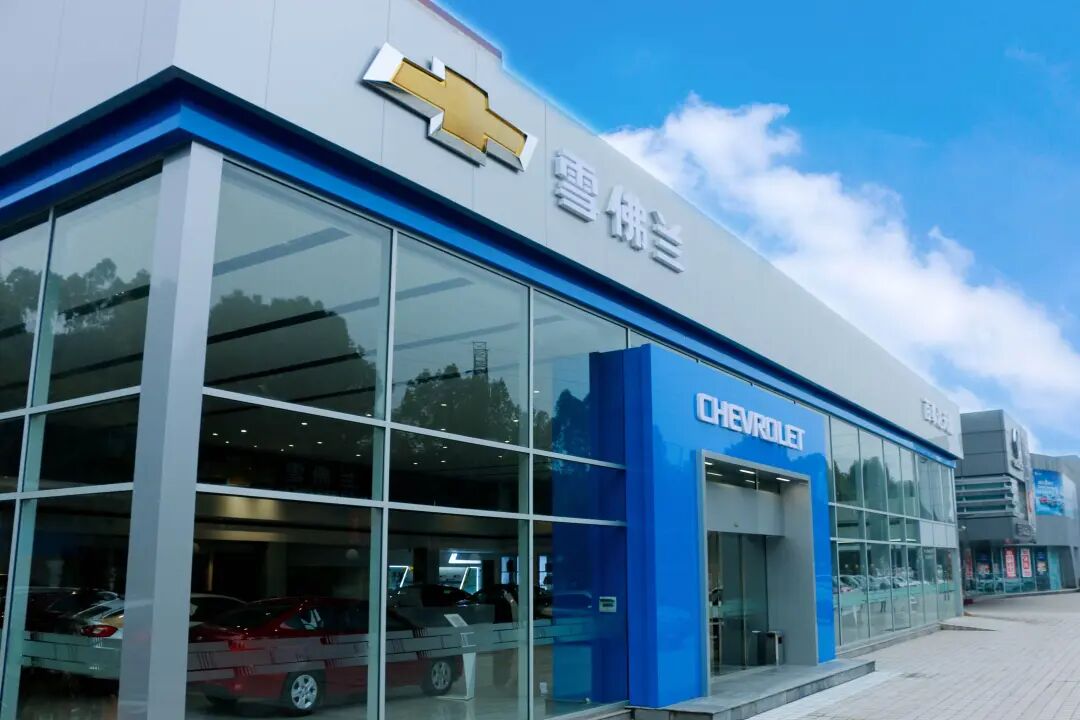
Unlike casual observers, however, many Chevrolet owners grew anxious upon hearing the news.
Why the concern? The answer is straightforward: If Chevrolet exits the Chinese market, will parts remain available? What about vehicle maintenance and after-sales service? These questions weighed heavily on owners’ minds.
A check of Chevrolet’s official Chinese website revealed that provinces and municipalities like Beijing, Chongqing, and Hubei no longer have any Chevrolet dealerships. When a journalist contacted Chevrolet’s official customer service for clarification, the response was revealing. The representative confirmed that Beijing indeed has no Chevrolet dealers and that the list of cities where Chevrolet models are sold is now extremely limited. Without dealerships, there are no cars—and no new models either. In the end, the representative suggested considering Buick instead, noting that it is also an SAIC-GM brand with a wide range of model options.
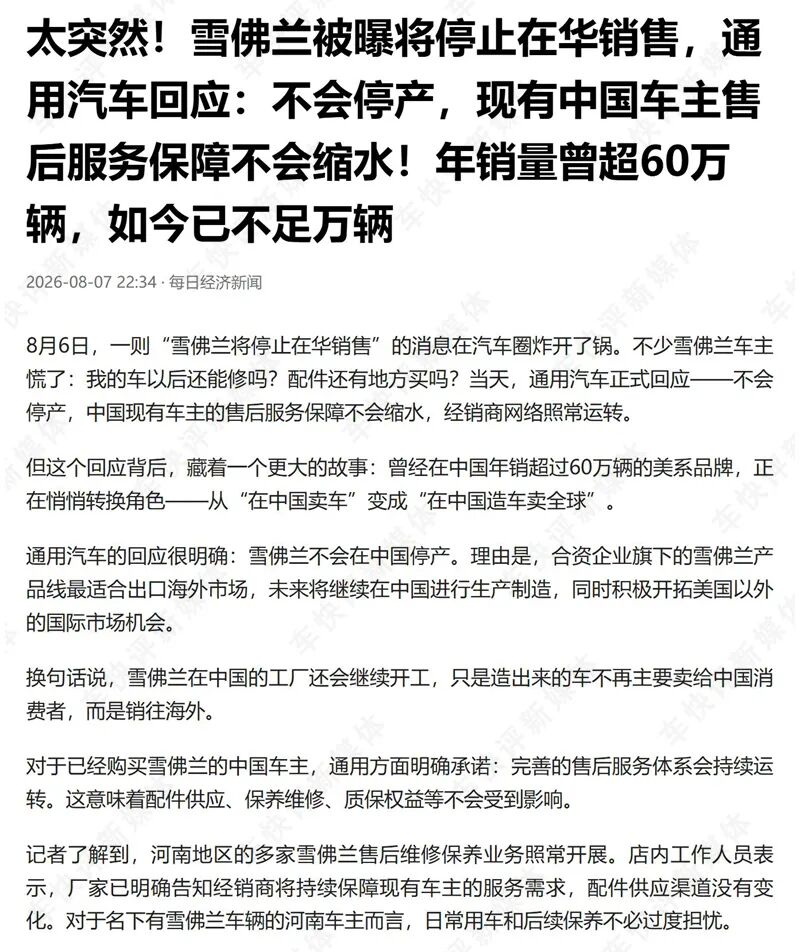
When asked whether Chevrolet would exit the Chinese market, the customer service representative clarified that no new models are being launched, and all current sales focus on Buick and Cadillac vehicles.
In addition to the official customer service response, General Motors also addressed the matter, stating that Chevrolet will continue production in China while actively exploring overseas market opportunities outside the United States. It seems Chevrolet is following a path similar to Hyundai and Kia.
Copyright Notice: This article is original content from Che Kuai Ping. Reproduction requires authorization. Unauthorized reproduction, plagiarism, or misappropriation of text or images is strictly prohibited and may result in legal action. Some images in the article are sourced from the internet, with copyright belonging to the original authors. If your work is used, please contact us for royalties or removal.
-
![]()
The Ruthless B-Side of AliExpress's Global Expansion
-
![]()
BYD's Mass Production of Photovoltaic Sunroofs: A New Opportunity for PV?
-
New Business Models in the Era of AI Agents: A2A
-
![]()
Kejinming's IPO: Diminished Fundraising, Slashed Working Capital Project, Sluggish Growth of Core Products, and a Cooling North American Market
-
![]()
Tencent Secures a Crucial Victory in AI Office Arena, While Baidu Continues to Struggle
-
![]()
DeepSeek Raises Prices, Alibaba Takes a Cut: Will Major Clients Stay or Leave?
-
![]()
After Persistent Declines, Is This Joint Venture Automaker Considering an Exit? Here’s the Official Word
-
![]()
DeepSeek Raises Prices, Alibaba Takes a Cut: Will Big Clients Pay Up or Walk Away?